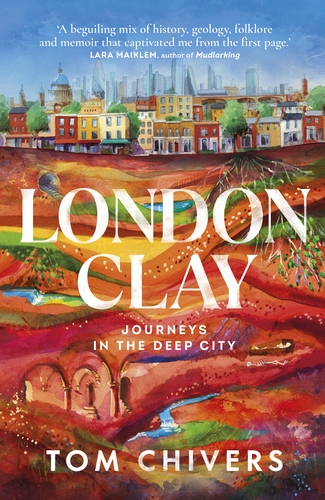
London Clay: Journeys in the Deep City, by Tom Chivers
All my life I have had recurring dreams of paths, of underground tunnels and caves, of the liminal space between land and water. And so I am drawn to explorations in prose of these places, other writers’ experiences. London Clay: Journeys in the Deep City is one of these books.
But it is more than a record of author Tom Chivers’ experiences in exploring what lies beneath the ever-changing city – the layers of history and prehistory exposed by construction, reimagined from old maps, seen in the lines of minor streets. (This too attracted me to the book, landscape history and archeology, as many of you reading this will know, is an avocation of mine.) London Clay chronicles the author’s experiences in the wastegrounds of London – sometimes literally in sewers, sometimes in the abandoned expanses of what was once the industrial docklands, sometimes in the sterility of modern developments, as he searches for traces of the past.
London Clay kept me both entranced and contemplative, thinking of what lies under other cities I know – York, Seattle, my own. History both visible and invisible, traces left from names we know and names we don’t. Throughout the book, Chivers returns to holes: entrance places into the underground pushed up by geology or dug down by humans through the London Clay of the title. Like Orpheus, he goes down into the dark, returning with only shards and shadows and stories to tell – both of London and himself. In his own words:
London is enchanted ground…a glorious hyperreality: a hundred million possible Londons, present and past, imagined, intended, forgotten and reborn. Time is all around us….
I had set out, armed with a tattered map, to discover what lies beneath the streets. But I have found myself descending deeper into the layers of my own life than I had expected…
As I embark on a modest project on the history of the city on which I live – not a book, simply a collection of articles for our community newsletter, only some of which I will write – I cannot help but think Chivers’ book will influence it. Mine is a much smaller city, and much younger, its visible history easier to find. An intended city, imagined on paper, planned. But it too has the past hidden below what is seen today, and I can’t look at it the same way as I would have before reading London Clay.
In no order, here are the fifteen books out of all I’ve read this year that have truly stuck in my mind, one way or another.
Fiction
Karen Heenan: A Wider World. Tudor historical fiction, but not about the royals. A nuanced portrait of a man caught up in the politics and intrigues of the Tudor Court.
Gregory Norminton. The Devil’s Highway. One landscape. Past, present, future. Spare and challenging.
Jonathan Nevair: The Wind Tide trilogy. Space opera at its finest: three interconnected books, with underlying ancient themes of ethics and morality and belonging.
Julie Bozza: Writ in Blood. A retelling of the story of the Earps, Doc Holliday, and Johnny Ringo – but above all about loneliness, love and acceptance.
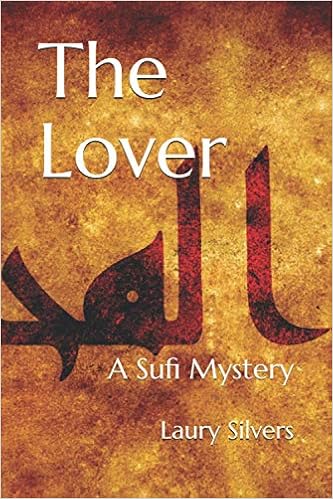
Laury Silvers: The Jealous. The second of Silvers’ trilogy of Sufi mysteries, this – and the first (The Lover) as well – brought 12th C Baghdad, and the lives of working men and women, alive.
Anne Louise Avery: Reynard the Fox. Beautifully written retelling of the medieval western European story cycle.
Non-fiction read for pleasure:
Helen MacDonald, Vesper Flights. A collection of observational and philosophical essays on nature, with an underlying sense of both wonder and sorrow.
Charles Foster, The Screaming Sky. Science and philosophy, once again, this time centred around swifts and their place in the world – and what the way we see them says about us.
Tom Chivers: London Clay: Journeys in the Deep City. Investigations into the lost landscapes of London. Layers of history and ecology and meaning. An urban, non-fiction companion to The Devil’s Highway.
Robert MacFarlane and Jackie Morris: The Lost Spells. Beautifully illustrated collection of – poems? incantations? – about the natural world.
Non-fiction read for research and pleasure:
Matthew Gabriele and David M. Perry: The Bright Ages: A New History of Medieval Europe. A survey of early-medieval Europe, discussing change, connection, and continuity, and the contributions of often historically marginalized individuals and events.
Guy de la Bédoyère: Praetorian, Gladius, and Domina. All three books have been highly readable yet still scholarly works informing me about the Praetorian guard, the Roman army, and the women who helped shape Rome and Roman politics.
L.J. Trafford: Sex and Sexuality in Ancient Rome. How could I not include this? Both funny and informative, it’s a great resource for writers looking to accurately reflect Roman attitudes, or for anyone who just wants to know what Cicero had to say about sex.
Many long years ago, I took courses from a Scottish Studies professor who, hands down, was the most entertaining lecturer I ever had. He combined serious scholarship with stories – sometimes scurrilous – that made us howl with laughter. L J Trafford’s Sex and Sexuality in Ancient Rome fits that model: solid research told in an accessible manner, and it too had me howling with laughter in places.
Divided into sixteen chapters covering everything from ideals of beauty, the sex lives of Emperors, and what constitutes good sex (from the point of view of a Roman male), this is all presented in a fairly light-handed manner. While Trafford does acknowledge that Roman morals and behaviour cannot always be judged by 21st century standards, she also does not shy away from pointing out the inequalities and lack of choice for many Romans, especially those who were enslaved.
I was pleased to see that women’s sexuality was not ignored, as it often is in books on this subject. The information (opinion) still comes from men, who were doing most of the writing at the time, and much of it is as eyebrow-raising as men’s thoughts on women’s sexuality often are…but then we have Ovid, who wrote that mutual pleasure was the goal of sex, and that women’s orgasms were important and desirable. I learned more about women’s sexuality in ancient Rome than any other topic, and for that alone the book was worth reading.
Trafford also shows how some things never change. The sex lives of prominent people, including (maybe particularly) the emperors and their wives, were topics of discussion, and the reputation of many an emperor was dragged in the dirt by the poets, satirists and orators of the day. What we would now view as homophobic slurs were common insults, but this isn’t how the Romans saw it. The gender of your sexual partner was (almost) irrelevant; what position you took – the active or passive partner – was. The passive role was unmanly, and Roman men could not be unmanly. Some of the insults remain the same to this day.
I read Sex and Sexuality in Ancient Rome as a novelist, judging it for its usefulness in world-building. It is full of tidbits that, judiciously adapted, would certainly add to the verisimilitude of historical fiction set in ancient Rome. That along the way I was entertained, educated, but also made to think reflects Trafford’s grasp of her subject as well as her skill as a writer. Highly recommended.
In The Place Below, Dan Fitzgerald brings his Maer Cycle to a satisfying conclusion. A generation after the first two books of the series, Sasha, daughter of human and Maer, is now an adult. Empathic, sensitive to touch, her natural skill with languages and communication enhanced as needed by magic, Sasha is searching out the tombs of the Ka-lar, the ‘forever kings’ laid to rest in a form of stasis hundreds of years earlier. Then one day, her empathetic connection to the minds of the dead encounters an awakened, living Ka-lar among a branch of the Maer who themselves are legendary: the underground-dwelling Skin Maer.
The book alternates between the viewpoints of Sasha and Kuun, the awakened Ka-lar, and they serve as counterbalances to each other: Kuun, who at first presents as confident and powerful, slowly reveals motives and doubts; Sasha, who presents as unsure and solitary by nature, grows into her own competence and agency. Familiar characters—Sinnie, Finn, Tcheen—are reintroduced, but as characters to support Sasha in her quest, not to direct and overshadow her.
Kuun, the scholar-scientist Forever King, choosing stasis in the face of unfinished research in a time of plague, is a nuanced and ambiguous character, his motives slowly revealed over the course of his narrative. Again, Fitzgerald’s themes of communication and understanding play into the development of his character and his actions.
Like Fitzgerald’s first two books, this is fantasy with few battles and heroics of a martial sort, but with questions asked and answered about the power of language; about acceptance of differences that are superficial; about what we might sacrifice for the good of the whole. Commonalities that connect, not contrasts that divide. Sasha, neither human nor Maer, embodies both the possibility and the questions that arise about differences between Maer and human, a question that will be, finally, answered through Kuun’s determination. Recommended (as is the whole series) for readers wanting character-centred fantasy that makes them think.
Find The Maer Cycle, including an omnibus edition with bonus features here.
Dan Fitzgerald is the fantasy author of the Maer Cycle trilogy (character-driven low-magic fantasy) and the upcoming Weirdwater Confluence duology (sword-free fantasy with unusual love stories). The Living Waters comes out October 15, 2021 and The Isle of a Thousand Worlds arrives January 15, 2022, both from Shadow Spark Publishing.
He lives in Washington, DC with his wife, twin boys, and two cats. When not writing he might be found doing yoga, gardening, cooking, or listening to French music.
He can be found on Twitter or Instagram as danfitzwrites, or on his website, www.danfitzwrites.com
If you don’t know this marvellous book, here’s my review from its release day in 2019.
Set against Iceland’s harsh but beautiful landscape in the late 19th and early 20th century, Bjørn Larssen’s debut novel Storytellers explores the multi-generational effect of the evasions, embellishments and outright lies told in a small village. The book begins slowly, almost lyrically, pulling the reader into what seems like situation borrowed from folktale: a reclusive blacksmith, Gunnar, rescues an injured stranger, Sigurd. In exchange for his care, Sigurd offers Gunnar a lot of money, and a story.
But as Sigurd’s story progresses, and the book moves between the past and the present, darker elements begin to appear. Gunnar’s reclusiveness hides his own secrets, and the unresolved stories of his past. As other characters are introduced and their lives interweave, it becomes clear that at the heart of this small village there are things untold, things left out of the stories, purposely re-imagined. Both individual and collective histories – and memories – cannot be trusted.
The book was reminiscent of Kazuo Ishiguro’s The Buried Giant, in both theme and mood. Both books deal with the unreliability of memory; both are largely melancholy books. And perhaps there is allegory in them both, too. Storytellers is a book to be read when there is time for contemplation, maybe of an evening with a glass of wine. It isn’t always the easiest read, but it’s not a book I’m going to forget easily, either.
I’m pleased to be participating in theStorytellers on Tour blog tour (Aug 29th – Sept 4th) for Jonathan Nevair’s second novel in his Wind Tide series, Jati’s Wager.
A space opera heist brimming with action, twists, and turns that doubles as a story of personal growth, mentorship, and sacrifice.
Ailo is a streetwise teen surviving alone on the remote moonbase, Tarkassi 9. She wants nothing more than to flee into the wider world of the Arm. When her chance arrives, she makes it no farther than the first ship out of the system. That’s where Jati, the Patent War veteran and general fighting the Monopolies, gives her a second chance. It’s an unlikely partnership, but Ailo’s rogue status is just what Jati’s People’s Army needs to drive the final spike of victory into a weakening Garissian Council.
A team of experts assembles and hope rests on Ailo’s skill, stealth, and tenacity to pull off the impossible. It’s a wild gambit, and a moral code may need to be bent, or broken, to achieve success. When an internal shadow rises, casting doubt on their plans, Ailo and Jati are forced to weigh the cost of revenge against honor and justice.
My Review
Your own survival is paramount when you’re a street kid. You learn to be fast, to be silent, to move in and out of the shadows; to trust your instincts; to rely on your own judgement. You develop coping mechanisms, too; mental ones, to give you support, advice; a friend you can rely on. But all your experience and all your wiles aren’t foolproof.
When stowing away on a ship leaving the moonbase she’d grown up on doesn’t go the way Ailo had hoped, she becomes part of a crew under the legendary Jati, general, Legionary, idealist. Ailo has to learn to trust more than the part of her mind she calls Gerib, her ‘imaginary friend’ who guides and counsels her, and to see herself not only as an individual but as part of a team with a larger purpose. As the links between her hidden past and the cause Jati is fighting for are revealed, skills that have lain latent in Ailo’s mind: skills of tactics and strategy, of language, and the fusing of the two that make for skilled diplomacy, begin to emerge. But those are not the only reason Ailo is valuable to Jati. Is she the last piece in the puzzle that will bring them victory against the Garassian council?
Fast paced and complex, Jati’s Wager is a book that needs your full attention. Packed with action, the story moves forward rapidly, but the action invites deeper moral questions, not just for Ailo, but for the reader. There is a war to be won, but can it be done in a way that leaves the long history of violence, of conflict and retribution, behind? What is the moral path for a warrior? – not a soldier, someone who follows orders, but a warrior, making mindful, conscious choices, aware of the myriad consequences. Is vengeance – or sacrifice – ever appropriate? The questions of personal survival versus the collective good; the role and meaning and restrictions of history, and the power of language are woven throughout the story, reinforced in many ways, large and small, creating layers of meaning and contemplation in both the reader and Ailo.
Jati’s Wager is the second book in Jonathan Nevair’s Wind Tide series, but it can be read as a standalone. Links to his first book, Goodbye to the Sun, are present and important, but sufficiently explained that the reader does not need to have read it (although I strongly suggest you do!) In the background, not only do the myths of the Trojan War have a presence, but the author has quietly included references to classic science-fiction, ideas from Carl Sagan, and – in a sentence that made me bark with laughter – a nod to Apocalypse Now.
Highly recommended, both for lovers of space opera, and readers that like books that make them think.
Prize: A print copy of Jati’s Wager by Jonathan Nevair – US/UK Only
Starts: August 29th, 2021 at 12:00am EST
Ends: September 5st, 2021 at 11:59pm EST
Book Information
Jati’s Wager (Wind Tide (#2)) by Jonathan Nevair,
Published: August 18, 2021 by Shadow Spark Publishing
Genre:Science Fiction, Space Opera, LGBTQ+
Pages: 425
CW: death of parent (mentioned), death of mentor, verbal abuse, graphic violence and death, blood, homelessness, trauma, guilt, kidnapping (mentioned)
POSSIBLE ULTIMATE TOUR EXPERIENCE TICKETS: Let’s Get The Party Started, Represent, Lost In Space, Snark It Up, The More The Merrier, The Wings Of Change
Jonathan Nevair is a science fiction writer and, as Dr. Jonathan Wallis, an art historian and Professor of Art History at Moore College of Art & Design, Philadelphia. After two decades of academic teaching and publishing, he finally got up the nerve to write fiction. Jonathan grew up on Long Island, NY but now resides in southeast Pennsylvania with his wife and rambunctious mountain feist, Cricket.
The Unseen, as well as being a police procedural set in 10th century Baghdad, is also an investigation of the balance men and women must find between their existence in the physical world and their desire for human connection and love, and the call of the immanent god to a greater purpose, the subsumation of the life of the flesh in the life of the spirit. That Laury Silvers manages to balance the temporal story of her characters with their spiritual journeys in both a setting and faith unfamiliar to many readers (including me) speaks to her skill as a writer.
The title, as always with Laury Silvers’ books, has multiple meanings within the text, but one ‘unseen’ is the Twelfth Imam. Hidden from view; his very existence is a point of debate and division among the Shia of Baghdad. With tensions already high, when a man is killed in a way that parallels the death of a martyr two hundred years earlier, the city is ready to explode into violence. Grave Crimes investigators Ammar and Tein must find the man responsible before the caliph’s troops enforce peace. But Tein’s sister Zaytuna has a prophetic dream that points to the killer – or does it? And will Ammar and Tein listen?
As in her earlier books, The Lover and The Jealous, 10thcentury Baghdad is evoked through the senses of the characters. We see the world through their eyes, smell what they smell, taste what they taste. We know, their inner doubts and turmoil as the events of their lives, personal and public, conflict with their values.
Parallels with today’s politics abound. Difference of opinion over who should lead them causes rifts among the Shia, providing opportunity for other to infiltrate and to feed those fires. Senior police officers are all too ready to provide a scapegoat for the crime. But alongside these conflicts, Zaytuna and Tein, and Ammar too, all have a chance to find a path to a modicum of contentment in their lives, although none easily.
By this third book, readers know the main characters well, and I found myself strongly invested in their personal stories, but also intrigued by the solving of the crime. Highly recommended for readers who want a book that asks a lot, emotionally and morally, of its characters, and does not pretend there are easy solutions.
Laury Silvers is a North American Muslim, raised in the United States but finally at home in Canada. Her research and publications as a historian of religion focused on early Islam, early Sufism, and early pious and Sufi women. She taught at Skidmore College and the University of Toronto. Silvers also published work engaging Islam and Gender in North America in academic journals and popular venues, was actively involved in the woman-led prayer movement, and co-founded the Toronto Unity Mosque. She has since retired from academia and activism and hopes her novels continue her scholarship and activism in their own way. She lives in Toronto.
An aging, alcoholic diplomat with memories he cannot face, filled with cynicism and guilt in equal measures, is taken hostage by freedom fighters seeking to use him as a pawn in negotiations. But the worlds of the known and inhabited galaxy have been the sites of many battles for power and dominance, and no one can be trusted. Nor, perhaps, can trust be given to memory, love, or family.
Keen is the diplomat, seeking in his chosen second career to forget the people he loved and could not – or did not – save, and the approval of his father, who makes no secret of his disdain for his son. Razor is the freedom fighter, raised in the harsh deserts that are all that left of her once-verdant planet, before the winds were captured for energy, and the ecosystems destroyed by the ruling Targitians. Together they are played by the ruling powers, buffeted by factions as politically strong, and as deadly, as the Wind Tides of Kol 2, Razor’s home planet.
Goodbye to the Sun is packed with action and political intrigue, but it is also a deeply philosophical novel. Echoing themes (and perhaps structure) from Antigone but addressing issues of privilege, gender identity and climate change within the greater questions of the tension between love of family and love of an ideal, it contains some of the most elegant and provocative writing I’ve come across in some time. It made me think, but at the same time was a fast-paced, intelligent space opera with characters I card about: a hard balance to create and maintain, but debut author Jonathan Nevair has done it.
Goodbye to the Sun is the first of a planned trilogy. I look forward to the next book immensely.
Visit Jonathan Nevair’s website for more information.
Dust and cool water; ascetism and the bonds of love. In 10th century Baghdad, Zaytuna is torn between the mysticism of Sufi practice and her need for connection to the world – and the reality of survival day to day. When a child dies in a fall, she must try to understand why, bringing her into conflict with both powerful people and her own brother, and challenging, too, her own understanding of herself and her faith.
The setting is carefully and slowly built, with great skill: I could imagine myself there in the markets and courtyards, among the crowds on the streets and on the flat roofs of houses. Characters are drawn precisely, with a beautiful economy of words, giving the reader just enough.
Laury Silvers gives us a glimpse into a world unfamiliar to most of us, that of women of medieval Islam. Not women of privilege, but women whose lives are given up to labour, the women who wash rich families’ clothes, or sweep houses and cook meals. Lives that are limited by poverty, but sometimes joyous, sometimes transcendent, and sometimes cruel.
The need for relationships – with family, with friends, with God – is central to The Lover. (The title refers to one of the faces of God.) Zaytuna is driven to investigate the boy’s death for reasons that are interwoven with her own need for love, and the value she sees in each life.
The Lover is the first of a series. I hope to read the others soon; meanwhile, I recommend The Lover strongly both as an engaging mystery, and to anyone who wishes to learn more about medieval Islam and the lives of women in that time.
Robin Lewis, once a musician in Henry VIII’s court, now a man of letters and secrets, stands charged with heresy by Mary Tudor. Only a journey of a few days separates him from inevitable execution, but journeys are liminal spaces where anything can happen. Especially when one has a mind as agile and subtle as Robin Lewis’s.
In this second book in the author’s Tudor Court collection, author Karen Heenan has taken the prickly, almost-unlikeable Robin, a supporting character in her first book Songbird, and told his rich story with consummate skill. Or, rather, Robin tells his own story, because the book is built around his reminiscences. But these aren’t the memories of a man considering his life in the face of mortality: there is a purpose to Robin’s storytelling, a fish to be caught in the net he is weaving.
With prose as close to perfect as it comes, and settings and history thoroughly researched but conveyed with a light touch, A Wider World is not only a different look at Tudor history, but a study of a man whose childhood shaped him into a wary, self-serving boy. Watching – or rather hearing – Robin’s clear-eyed examination of his own life and the experiences that transform him into the educated, introspective, and deeply honourable man he becomes makes Heenan’s book one of the finest character studies I know. Characters from Songbird make brief appearances, enough to tie the books together, but A Wider World stands on its own. It’s the best book I’ve read this year, bar none. Highly recommended.






 marianlthorpe.com
You must be logged in to post a comment.