Dying for Work

Luminous: The Story of a Radium Girl, by Samantha Wilcoxson.

Imagine you are a young working-class woman in 1920s USA. Imagine you have elderly relatives to help support, and are offered a well-paying job in your home town. You would, of course, take it.

Imagine that job will kill you. Not just you, but many of your friends. And the company will deny the dangers, smear your name, conduct false medical tests, and conceal others, while all the time ensuring that their lab personnel have all the protected equipment available at the time.

You and your friends were disposable.

This piece of history, played out in Illinois and New Jersey, is the focus of Samantha Wilcoxson’s Luminous: The Story of a Radium Girl: a fictionalized biography of Catherine Wolfe Donohue, a worker at the Ottawa, Illinois Radium Dial factory. Catherine and her coworkers, all young women, were hired to paint watch dials with radium paint, so that the numbers would glow in the dark. To create the fine point needed on the brush for the exacting, precise work, they were told to run the brush point, loaded with paint, between their lips. One by one, they began to sicken and die.

Wilcoxson begins Catherine’s story in the late summer of 1921, when she is nineteen. Fall is in the air, garden produce is being harvested, and the slow rhythms of small town life are evoked in a few brief, effective paragraphs. An advertisement for girls to work at Radium Dial is advertised in the local paper; Catherine applies and is hired.

For a while, the job seems wonderful. The pay is good and the camaraderie with other girls creates close friendships. But then the illnesses start, and the deaths: horrible deaths, in many cases.

Catherine is not one to rock the boat, but she begins to ask questions. The management of Radium Dial deny any relationship with the paint; a fact claimed in Ross Mulner’s book Deadly Glow but not mentioned in Wilcoxson’s is that in some cases the women’s symptoms were blamed on syphilis, effectively destroying both their credibility and their reputations.

When her friends continue to sicken and die, painfully and gruesomely, Catherine—now married—has also fallen ill. Wilcoxson does not shy away from the details of the illnesses, primarily bone cancers, that these women contracted. With the support of her husband, eventually she and others sue the company, a nearly hopeless cause.

The devastation that radium poisoning caused to women and their families is clearly told, and the ground-breaking fight for compensation that Donohue helped win with her deathbed testimony is an important part of the history of workers’ rights. But perhaps because the dialogue often didn’t quite ring true to me, or perhaps because the story is told over twenty years, and is therefore necessarily episodic, while I felt for the destruction of lives and the injustice of their treatment intellectually, I never quite connected emotionally with the character: I was observing Catherine’s life, not immersed in it.

Luminous: The Story of a Radium Girl is a solid work, historically accurate and a window into a terrible exploitation of workers in the name of profits and a fight for workers’ rights—rights which are under siege in many places today as profit, not people, remains the focus of too many companies. Could this happen again? Under a slightly different guise, I am afraid so.

Samantha Wilcoxson

At the End of All Things

Wolf Weather, by Miles Watson: A Review

Imagine if you had lived a life of cruel discipline from the time you were a child, and were constantly called upon to do battle for an emperor you had never seen. Now imagine that emperor orders you far off the map, into a frozen land where the sun never shines and the only light comes from the grinning moon. Imagine that once there, hundreds of miles from the warmth of civilization and the sun, you encounter supernatural beasts somewhere between wolf and man; cunning creatures who slaughter your comrades and lay siege to the fort you have built with your own hands. Imagine that one by one, your fellow legionnaires are torn to bits and consumed, or worse yet, turned into beasts themselves…until at last, only you remain. The sole survivor and inhabitant of Fort Luna. Now imagine that’s where the story begins.

I read most of Wolf Weather with a smile of appreciation on my face, and that is rare. Author Miles Watson’s ability to create a setting and a structured world in the first few pages of a very short novella was the start of that appreciation; he takes the familiar and modifies it just a bit, enough for you to know this is a fantasy world, but not so much you need pages of exposition or explanation to understand it. The character of Crowning, the narrator, is equally well-drawn: again, he is both familiar and unique.

But beyond my admiration for Watson’s deft, spare creation of another world was also respect for his ability to ask hard questions about what a man at the edge of existence might do, facing something unimaginable that his mind cannot fully realize. Crowning is a man defined by discipline; the tenets of the military to which he belongs are literally written on his skin: by discipline we live, by discipline we die. Even when he is the only soldier left alive, in a fortress under perpetual night at the arctic edge of the world, he maintains the discipline by which he lives. Even though a horror lives in the darkness, a horror that has taken all his companions. Some are dead. Some are not, but neither are they living men any longer.

But Crowning is only human, and when in exhaustion he forgets part of his routine in his endless battle against that horror,  that breach of discipline has consequences—and the central question of the novella is made clear: when we let go of the expectations of civilization, of the disciplines required by communal life, by society; when we embrace ‘at the end of all things’ the darkness and the desires that run in the tracings of our blood—what might happen? Unbridled passion can destroy, but it can also engender.

Deceptively simple, Wolf Weather is a story I won’t soon forget.

Miles Watson

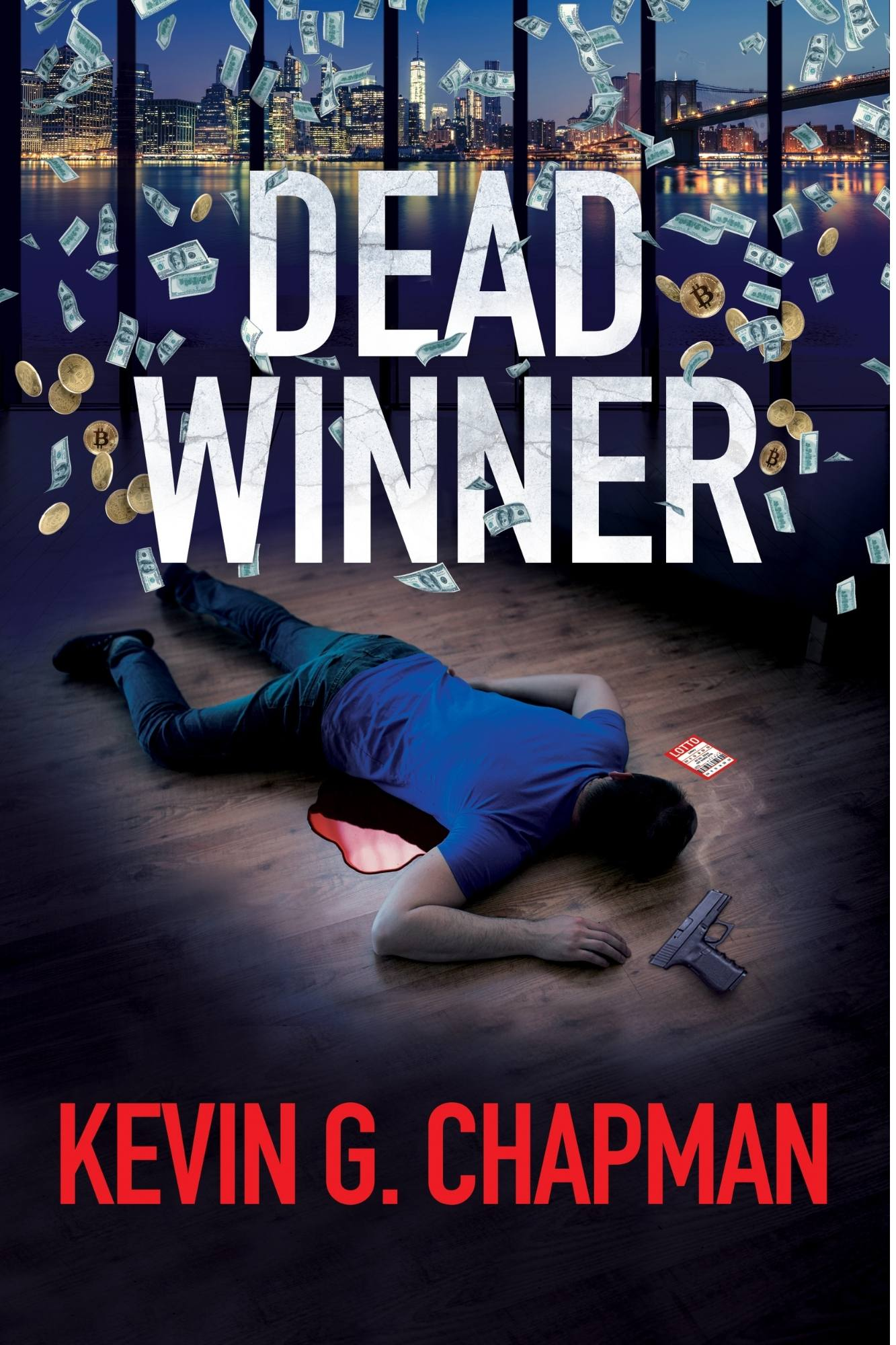
Dead Winner, by Kevin G. Chapman

Rory McEntyre is a New York estate lawyer in a reputable firm: competent, hard-working, and single. One afternoon, his new clients turn out to be his old university friends Tom and Monica Williams, with an unusual request. They’ve won a share of one of New York’s mega-lotteries, and need his help to set up a trust to smokescreen their good fortune. Rory, who still pines for Monica but thinks that the better man won her heart and hand, obliges. But then Tom dies, apparently by his own hand, and the grieving and confused widow needs Rory’s help and support in every step of negotiating the labyrinth of complex investigations and revelations resulting from Tom’s suicide.


Dead Winner is a pacy, twisty comedy-thriller. At least, I hope it was supposed to be a comedy-thriller. That’s how I read it, and that’s how I’m reviewing it. Without spoilers, let me say I read it that way because the plot was obvious to me from the first chapters, and my enjoyment was in watching Rory getting deeper and deeper into something that wasn’t going to end well for him.


Side characters added to my chuckles. The executive assistant who was an Olympic judo contestant uses those skills in a scene reminiscent of Emma Peel in her leathers. The head of security who has ‘muscle envy’ on seeing the build of the (of course) probably-Russian hitman. Each character fit their role – harried and overworked detectives, ex-cop security, cold and efficient head of the investment firm for which Tom had worked – perfectly, instantly recognizable, taking their places in the unfolding events like the stock characters of a Christmas pantomime. As in a pantomime, there were many places when I wanted to figuratively shout ‘look behind you!’ at Rory – but then again, that would have spoiled the fun.


Recommended, but not – at least for me – to be taken seriously.


Reviewed for Coffee and Thorn Book Tours.


ABOUT THE AUTHOR

Kevin Chapman is an attorney specializing in labor and employment law.  His passion (aside from playing tournament poker and rooting for his beloved New York Mets) is writing fiction. He recently completed the first five books in his multi-award winning Mike Stoneman Thriller series.

Kevin writes: “The process of writing crime thrillers involves hours of thinking about and talking about how to kill people. And how to get away with it. It also involves figuring out how my protagonist detectives might solve the case. But mostly it’s about planning out ingenious ways to murder people. My wife is a willing participant in this process (so she must trust me). My current book is more of a mystery, and a little bit of a tragic romance. But all the stories are about the characters. If you don’t care about them, then I’m not doing my job.”

TO CONTACT THE AUTHOR

Kevin G Chapman welcomes communication from his readers – including comments, ideas, disagreements and critiques. He can be contacted via any of the links below:

Author website: https://kevingchapman.com/

The Mike Stoneman Thriller Group on Facebook

Email him at kevin[at]kevingchapman[dot]com

He is also on Twitter (@KGChapman)