The Abdication, by Justin Newland: A Review

Justin Newland’s The Abdication is a complex, layered, philosophical novel. Like Philip Pullman’s His Dark Materials, it explores the concept of free will against obedience to an authoritarian higher power: the protagonist, Tula, is seeking the guidance of the angels of the town of Unity in her quest for a spiritual life. To reach Unity, across the forbidden Via Angelica bridge, she must first pass through the human town of Topeth, ruled by avarice and corrupt religious leaders.

The Abdication is deceptively simple, seen through the eyes of a young woman on a journey to understand the visions she has and the voices she hears. The town – Topeth – she believes a haven is instead a place of terror and corruption, turned away from its founder’s vision of a community where human free will can be allowed to grow and develop. The proper expression of free will, she learns, is hard; it is easier to obey a set of rules, even when they are the rules of a vindictive, false religion in league with a destructive, profit-driven elite.

Newland has created a world that feels both familiar and strange. Tula inhabits a world that seems to be ours: there are references to ancient Earth cultures; the flora and fauna are real. The mythology of Unity and Topeth is based, in my limited recognition and understanding, on Abrahamic teachings – pre-Christian interpretations of both gods and angels and the powers of both.

Aspects of The Abdication reminded me of two books from my childhood: a youth’s version of The Pilgrim’s Progress, and Charles Kingsley’s The Water Babies: the former for the allegorical obstacles the protagonist must overcome on the journey to the city of their desire and enlightenment; the latter for the motif of the shedding of skins on the way to becoming the purest self.  Throughout the book, the image of winged beings, both helpful and threatening, repeats, reinforcing and reflecting the idea of angels as many people imagine them, and perhaps also suggesting the revelations of the ending.

If I have one niggle with The Abdication, it is the almost non-stop action of the last chapters. For a book asking hard questions about the balance – in a world where gods and angels are real and powerful – between blind obedience and the exercise of free will, there was little time for the reader to contemplate what Tula has learned and the choices she makes. It felt a little like the last chapters of a thriller, where, as the protagonists reach the climax of the plot, rapid reversals leave the reader barely able to draw breath.

Overall, The Abdication is an intriguing book, leaving me with the feeling that if my understanding of the religious underpinnings of its world-and-mythology building was better, I would have found it even more captivating. Even without that, its questions about what free will means and the choices made in its pursuit made it both challenging and compelling.

Justin Newland was born in Essex, England, three days before the end of 1953. He lives with his partner in plain sight of the Mendip Hills in Somerset, England.
Justin gives author talks in libraries and does books signings in Waterstones, WH Smiths and indie bookshops. He has appeared at literary festivals and regularly gives media interviews.
He writes secret histories in which real events and historical personages are guided and motivated by numinous and supernatural forces – that’s history with a supernatural twist.

https://www.justinnewland.com/

Water and Blood, by Rik Lonsdale

A Review

When disaster strikes, you want your family around you—don’t you?

When the collapse of an Antarctic ice sheet causes catastrophic, world-wide flooding and the disintegration of society, Lucy Marchand thinks she’s safe on her family’s smallholding in the west of England. But family tensions that could be ignored when they were buffered by a larger society begin to become evident when her older brother Ben flexes his way to a position of power within the family.

Set against a dystopic world all too easy to imagine—and already real in parts of the globe—Water and Blood is a psychological study of narcissism, manipulation, and the responses of a family trying to survive, and trying too to believe that one of their own has their best interests in heart.

The choices made by each individual in on the smallholding are distinct, and the reasons behind their decisions believable and layered. Each person has a point at which they either say ‘no more’ or embrace the philosophy of the leader. Many things influence that choice, especially when it becomes a question of your own life or death. As winter deepens and starvation threatens, does morality matter at all?  

I read Water and Blood in two days, and found it hard to put down. Well-paced, it asks some probing questions about how societies, even in microcosm, work. A solid debut novel, Water and Blood is out March 22. My thanks to the author for an advance review copy.

All purchase links at https://linktr.ee/riklonsdale

Time, Vision, Reality: Alan Garner’s Treacle Walker

Alan Garner’s books are understood not intellectually, but in gut and bone and perhaps in a long collective memory. Deeply seeded in and emerging from a specific landscape, Treacle Walker tells us a tale of a boy with a lazy eye who one day meets a rag-and-bone man offering a trade: for rags and bones he gives a pot and a stone. The boy invites the man into his strangely adult-less house, where time is measured by the whistle and clack of the train that passes by at noon every day. And from there the boy–and the reader–learn that time and place may be fluid; that the past and the present may intertwine; that vision and sight are not the same thing; that objects are more than they seem and dreaming and being are inseparable.

Treacle Walker is a brief book, without a superfluous word. Language matters, has power; words can invite something in or keep something out, summon or banish. As brief and spare as Treacle Walker is, it is not simple. Its imagery is that of reflection: of the real and the virtual (as defined in the science of optics) and the place at which they diverge – or converge. The mirror, the train that divides the day in two; the boy’s two eyes that each see different worlds, if he frees one from its obscuring patch.

There are echoes of the surreality of Alice through The Looking Glass; there are echoes of earth magic and childhood games passed down for generations; there are echoes of others of Garner’s books. There is no definitive way to put Treacle Walker neatly into a genre, or even to say what it’s about, except that it is something both rich and strange.

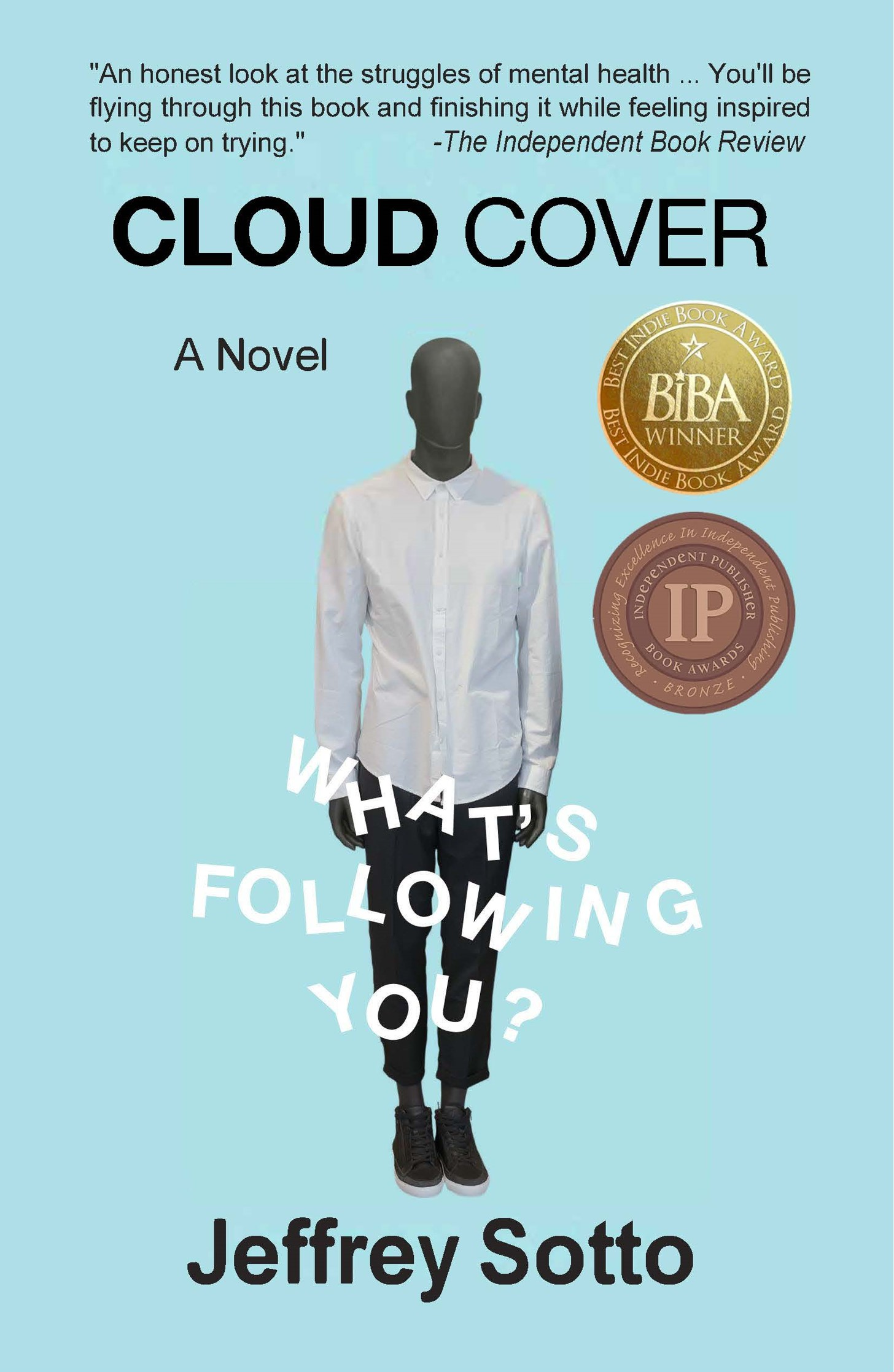
Cloud Cover, by Jeffrey Sotto: A Review.

Cloud Cover balances the specific with the universal with ease and elegance, a tribute to the author Jeffrey Sotto’s skill. The protagonist of the book is a 30-something, gay, Filipino man living in Toronto, which could have made some readers feel the story is beyond their experience. The character of Tony is drawn with precision: he is not an everyman. He is himself, flawed and damaged, from external and internal causes, and relatable to anyone who has dealt with personal loss or rejection.

This isn’t to say Cloud Cover is an easy read. Tony’s bulimia is described in some detail, and he is likely to exasperate the reader as much as he does his friends. On the other hand, parts of Cloud Cover are laugh-out-loud funny, a nice balancing act from the author.

I found myself really caring what happened to Tony, both in his new, hopeful relationship and in his work towards healing. Sotto moves Tony past his ‘identity’ to find commonalities of the human experience: the devastation of grief; the joy of true acceptance; the pressure to conform. Nor is Tony’s life always bleak: he finds contentment, sometimes happiness, in parts of his life; a compromise, but one that will be well understood by many readers.

Sotto develops the story with compassion tempered by a clear look at the realities of a mental health disorder. Ultimately Cloud Cover is a hopeful book, but in a realistic way. There is no easy fix, no person but Tony who can turn his life onto a track less damaging, and not without significant, difficult work. But he can, by the end, see at least a hint of the sun behind the clouds, and the reader is left believing in a better future for Tony. Strongly recommended for readers of contemporary novels with believable, realistic protagonists.

Reviewed for Coffee and Thorn Tours.


Author Jeffrey Sotto

Jeffrey Sotto graduated from The University of Toronto, majoring in Film Studies and English Literature. He was the screenwriter and script consultant of the Canadian short films The Tragedy of Henry J. Bellini (2010) and Sara and Jim (2009), respectively.
Cloud Cover, his first novel, published in 2019, won a Best Indie Book Award (BIBA) for LGBTQ Fiction, an Independent Publisher Bronze Medal Book Award (IPPY), and a Literary Titan Book Award. It also briefly topped the Amazon bestseller list in LGBTQ fiction upon release. He published his second novel, The Moonballers: A Novel about The Invasion of a LGBTQ2+ Tennis League … by Straight People (GAY GASP!) in Spring 2022.


Jeffrey is also an advocate for mental health and eating disorder awareness and recovery, having shared his story on CBC Radio, Global News, and Sheena’s Place. He is currently a peer mentor at Eating Disorders Nova Scotia (EDNS). He will be contributing to the anthology Queering Nutrition and Dietetics: LGBTQ+ Reflections on Food Through Art, to be released in December 2022. Finally, in 2023, he will be appearing in the docuseries Wicked Bodies by Truefaux Films, which focuses on fostering positive culturally competent engagement in treatment and support centres, universities, and non-profit programs working with LGBTQ+ groups with disordered eating and body dysmorphia.


He is a self-proclaimed “cubicle dreamer,” tennis addict, and compulsive social media duckfacer.

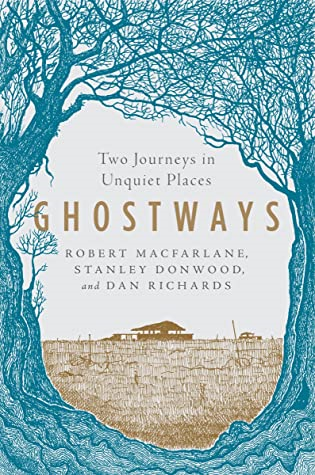
Ghostways: Two Journeys in Unquiet Places

Robert MacFarlane is among my top five favourite writers, fiction or non-fiction. The two pieces collected in Ghostways are very different: Ness, not-quite-a-play, not-quite-poetry, but to my mind meant to be read aloud, explores the depths and layers and secrets of Orford Ness, a shingle spit in Suffolk-a place I know as a birding site and nature reserve, but one that has another history. It is both haunting and disturbing, in the way T.S. Eliot’s Four Quartets are. Its imagery will stay with me a long time.

Holloway, a prose exploration of a deep-worn, sometimes hidden path of Dorset is both a personal journey, a memoriam for fellow author Roger Deakin, and a wider discourse on landscape and meaning. ”Stretches of a path might carry memories of a person just as a person might of a path.” MacFarlane writes, and “paths run through people as surely as they run through places….” As a writer exploring the meaning of memory and place as filtered through grief in my current book, and as a person with a deep interest in how landscapes shape both individual and collective consciousness, MacFarlane (and his co-authors) as always, challenges and inspires me.

Storytellers: New Cover!

Like interior decoration and wardrobes, book covers can need updating. Bjørn Larssen has a new cover for his haunting novel Storytellers, and I’m pleased to show it to you today.

If you don’t tell your story, they will.

Iceland, 1920. Gunnar, a hermit blacksmith, dwells with his animals, darkness, and moonshine. The last thing he wants is an injured lodger, but his money may change Gunnar’s life. So might the stranger’s story – by ending it. That is, unless an unwanted marriage, God’s messengers’ sudden interest, an obnoxious elf, or his doctor’s guilt derail the narrative. Or will the demons from Gunnar’s past cut all the stories short?

Side effects of too much truth include death, but one man’s true story is another’s game of lies. With so many eager to write his final chapter, can Gunnar find his own happy ending?


My 2019 Review:

Set against Iceland’s harsh but beautiful landscape in the late 19th and  early 20th century, Bjørn Larssen’s debut novel Storytellers explores the multi-generational effect of the evasions, embellishments and outright lies told in a small village. The book begins slowly, almost lyrically, pulling the reader into what seems like situation borrowed from folktale: a reclusive blacksmith, Gunnar, rescues an injured stranger, Sigurd. In exchange for his care, Sigurd offers Gunnar a lot of money, and a story.

But as Sigurd’s story progresses, and the book moves between the past and the present, darker elements begin to appear. Gunnar’s reclusiveness hides his own secrets, and the unresolved stories of his past. As other characters are introduced and their lives interweave, it becomes clear that at the heart of this small village there are things untold, things left out of the stories, purposely re-imagined. Both individual and collective histories – and memories – cannot be trusted.

The book was reminiscent of Kazuo Ishiguro’s The Buried Giant, in both theme and mood. Both books deal with the unreliability of memory; both are largely melancholy books. And perhaps there is allegory in them both, too. Storytellers is a book to be read when there is time for contemplation, maybe of an evening with a glass of wine. It isn’t always the easiest read, but it’s not a book I’m going to forget easily, either.


Bjørn Larssen is an award-winning author of historical fiction and fantasy, dark and funny in varying proportions. His writing has been described as ‘dark,’ ‘literary,’ ‘cinematic,’ ‘hilarious,’ and ‘there were points where I was almost having to read through a small gap between my fingers.’

Bjørn has a Master of Science degree in mathematics, and has previously worked as a graphic designer, a model, a bartender, and a blacksmith (not all at the same time). He currently lives with his husband in Almere, which is unfortunately located in The Netherlands, rather than Iceland.

He has only met an elf once. So far.


Purchase links on Bjørn’s website.

The Silver Crystal, by Ryan Lanz


The Silver Crystal
is the first of The Red Kingdom trilogy, introducing the three major characters of the series: Rhael, a bounty hunter; Phessipi, the leader of a hated and persecuted minority, and Levas, a high-ranking officer of The Order. In a medieval world, the ‘Corrupted’ – men and women with abilities that go beyond those common to all people—are hunted down and mutilated in a way that destroys their extra powers. Hunting ‘Corrupted’ for The Order is Rhael’s job, when we meet him at the beginning of the story.

The Silver Crystal is more character-focused than action-focused, although it has its share of action too. In this first book, the usual hero’s journey of fantasy is given a twist, and the other main characters grapple with the decisions and consequences of leadership and rebellion – costs both personal and professional. Heavy on dialogue, including some passages of banter that are meant to lighten the mood but to this reader stood out as devices designed to do exactly that, not integral to the story – the story still moves along at a good pace, the point of view alternating between Rhael and Phessipi, until fairly far into the book, when Levas is introduced.

This late introduction of the third main character felt a little off-balance, but as this is the first book of a trilogy, in the context of the full story it makes sense. The world-building is sketched lightly but sufficiently, and characters fit their roles. Rhael’s sidekick, Gobo, might provide light relief for some readers, but I found him annoying, like an Ewok in Star Wars. (But then, other people love Ewoks.) Overall, an intriguing fantasy suitable in my judgement for readers twelve and above, with themes of discovery, acceptance, and understanding of differences running through the story.

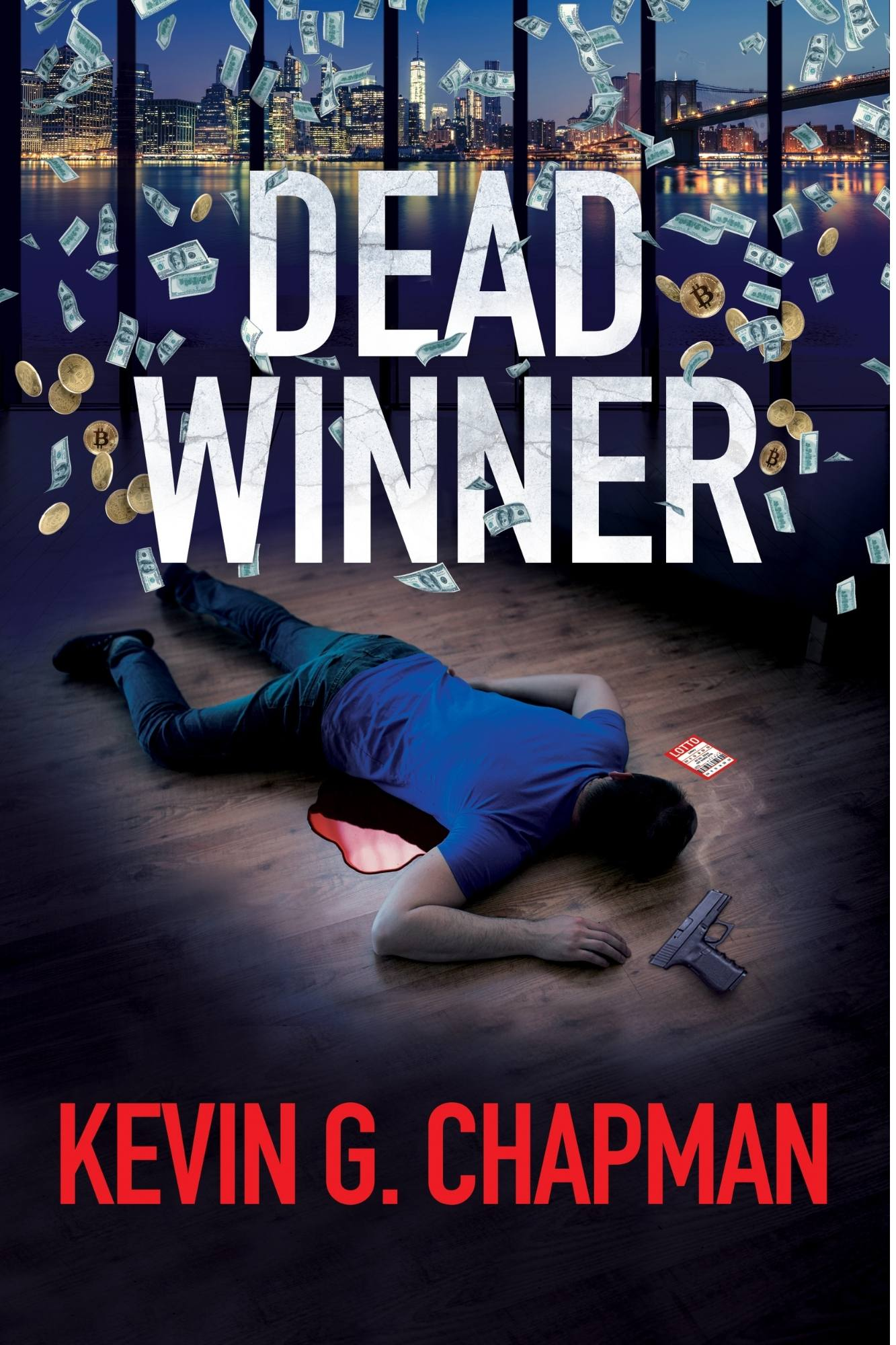
Dead Winner, by Kevin G. Chapman

Rory McEntyre is a New York estate lawyer in a reputable firm: competent, hard-working, and single. One afternoon, his new clients turn out to be his old university friends Tom and Monica Williams, with an unusual request. They’ve won a share of one of New York’s mega-lotteries, and need his help to set up a trust to smokescreen their good fortune. Rory, who still pines for Monica but thinks that the better man won her heart and hand, obliges. But then Tom dies, apparently by his own hand, and the grieving and confused widow needs Rory’s help and support in every step of negotiating the labyrinth of complex investigations and revelations resulting from Tom’s suicide.


Dead Winner is a pacy, twisty comedy-thriller. At least, I hope it was supposed to be a comedy-thriller. That’s how I read it, and that’s how I’m reviewing it. Without spoilers, let me say I read it that way because the plot was obvious to me from the first chapters, and my enjoyment was in watching Rory getting deeper and deeper into something that wasn’t going to end well for him.


Side characters added to my chuckles. The executive assistant who was an Olympic judo contestant uses those skills in a scene reminiscent of Emma Peel in her leathers. The head of security who has ‘muscle envy’ on seeing the build of the (of course) probably-Russian hitman. Each character fit their role – harried and overworked detectives, ex-cop security, cold and efficient head of the investment firm for which Tom had worked – perfectly, instantly recognizable, taking their places in the unfolding events like the stock characters of a Christmas pantomime. As in a pantomime, there were many places when I wanted to figuratively shout ‘look behind you!’ at Rory – but then again, that would have spoiled the fun.


Recommended, but not – at least for me – to be taken seriously.


Reviewed for Coffee and Thorn Book Tours.


ABOUT THE AUTHOR

Kevin Chapman is an attorney specializing in labor and employment law.  His passion (aside from playing tournament poker and rooting for his beloved New York Mets) is writing fiction. He recently completed the first five books in his multi-award winning Mike Stoneman Thriller series.

Kevin writes: “The process of writing crime thrillers involves hours of thinking about and talking about how to kill people. And how to get away with it. It also involves figuring out how my protagonist detectives might solve the case. But mostly it’s about planning out ingenious ways to murder people. My wife is a willing participant in this process (so she must trust me). My current book is more of a mystery, and a little bit of a tragic romance. But all the stories are about the characters. If you don’t care about them, then I’m not doing my job.”

TO CONTACT THE AUTHOR

Kevin G Chapman welcomes communication from his readers – including comments, ideas, disagreements and critiques. He can be contacted via any of the links below:

Author website: https://kevingchapman.com/

The Mike Stoneman Thriller Group on Facebook

Email him at kevin[at]kevingchapman[dot]com

He is also on Twitter (@KGChapman)

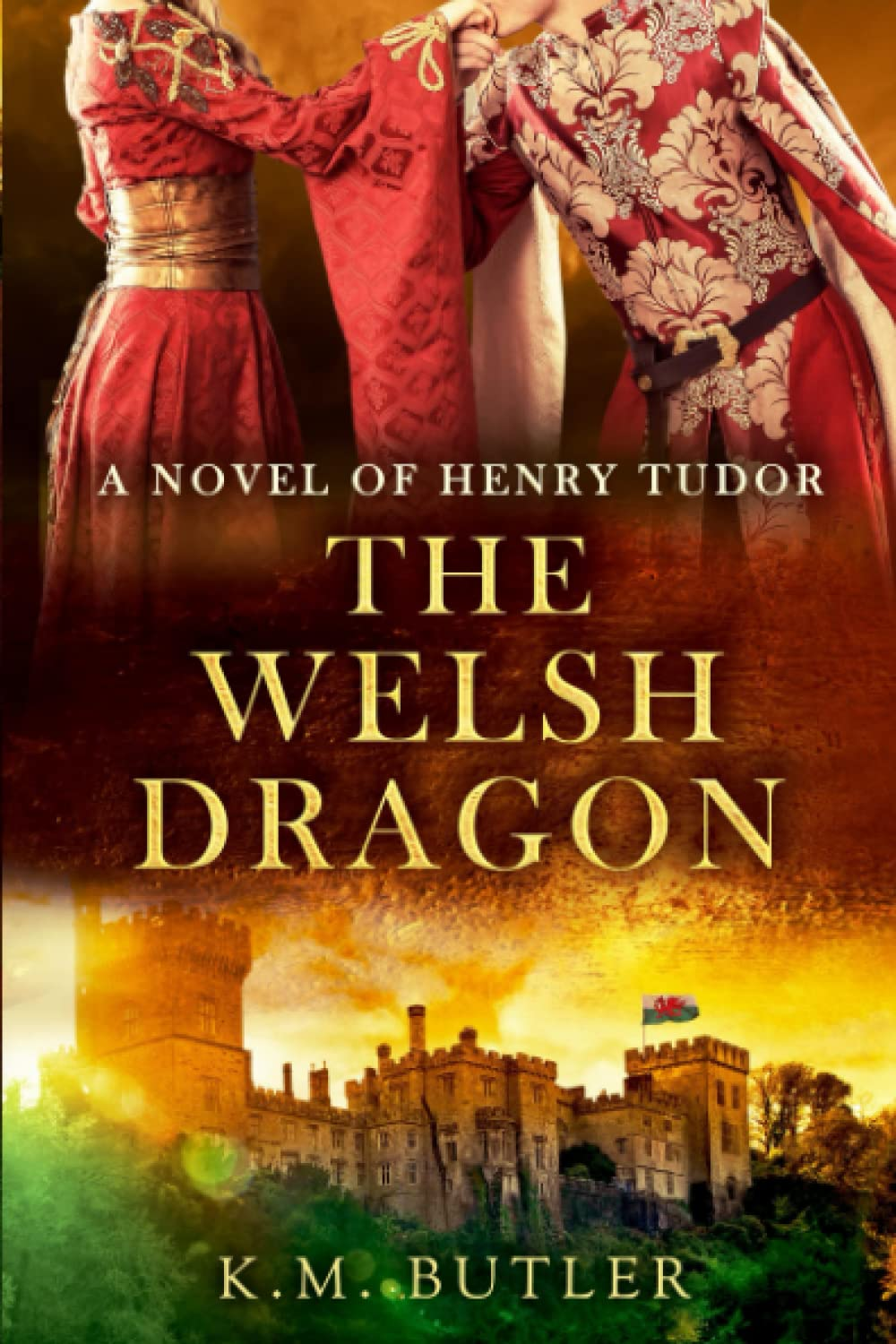
The Welsh Dragon, by K.M.Butler

A Review

Henry Tudor—the victor of Bosworth who defeated Richard III to claim the crown and become Henry VII of England, beginning the Tudor dynasty – had a weak claim to the throne. Descended on his mother’s side from the royal prince John of Gaunt and his mistress Katherine Swynford, Henry was barred from the line of succession by this illegitimacy. But Henry’s father Edmund Tudor was half-brother to the king, through his mother’s second marriage to Owen Tudor, and this too brought a potential claim.

When Edward IV took the throne from Henry VI in 1461, amidst the complex politics and battles of The Wars of the Roses, Henry Tudor and his uncle Jasper fled to Brittany. It is the fourteen years that Henry spent in exile that is the focus of nearly the first half of The Welsh Dragon – a period of which little historical fact is known. Author K.M Butler therefore had a fairly free hand to imagine this time in Henry’s life.

Butler shows us a young man attempting to live a life free of the politics of court and crown, in love with a commoner, the competent merchant Jehane, and learning to be useful and skilled in trade. A small life, perhaps, but a free one. But his mother’s (and others’) letters from England, the emissaries who come, and his own sense of duty can’t let him forget who he is. Nor can his enemies: Henry’s life is frequently in danger.

History takes its course, and Henry accepts his role. Butler handles the complexities of factions, allegiances and intrigue well (a small caveat here: I am familiar with this period and the historical people portrayed here – for someone new to it, it might still be a touch confusing) and does not, thankfully, underrepresent the role of the powerful and politically astute women on both sides.

One of the enduring mysteries of this time is the fate of the Princes in the Tower, Edward IV’s last two legitimate sons, imprisoned by Richard in the Tower of London. While generally considered to have been murdered by Richard’s orders, there are other theories. The one proposed by Butler was new to me – but plausible.

Henry may have been reluctant, but his acceptance of the expectations of his birth and upbringing rings true; Butler portrays him as a sympathetic character who grows into maturity and what he sees as his duty, accepting his role in the larger tapestry of politics and history, rather than his personal desires. The book ends with the victory at Bosworth: it is the making of a king, rather than his reign, that is brought to vivid life in The Welsh Dragon.

September’s Books

OK, it’s a little late…but here’s a roundup of books I read/listened to in September, along with some I’ll be starting soon, with some brief thoughts on each.

The Lion of Skye, by J.T.T. Ryder.  The sequel to his debut Hag of the Hills, set in iron-age Skye in a world where myth and legend walk with humans, for those with eyes to see. Fast paced, sometimes bloody, and definitely not a 21st C worldview. Full review here.


Gallows Wake, by Helen Hollick. The sixth book in the Captain Jesamiah Acorne series: piracy with a touch of the paranormal. Expert writing, engaging characters, a solid plot, and no need to have read the first five. Full review here.


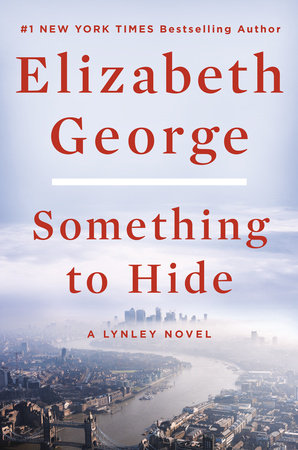
Something to Hide: A Lynley Novel by Elizabeth George. The 21st Lynley novel; competent, twisty, the plot focused on FGM among Nigerian and Somali communities in London. Readable, but overall it felt tired, as if the author is putting her characters through their paces reluctantly.


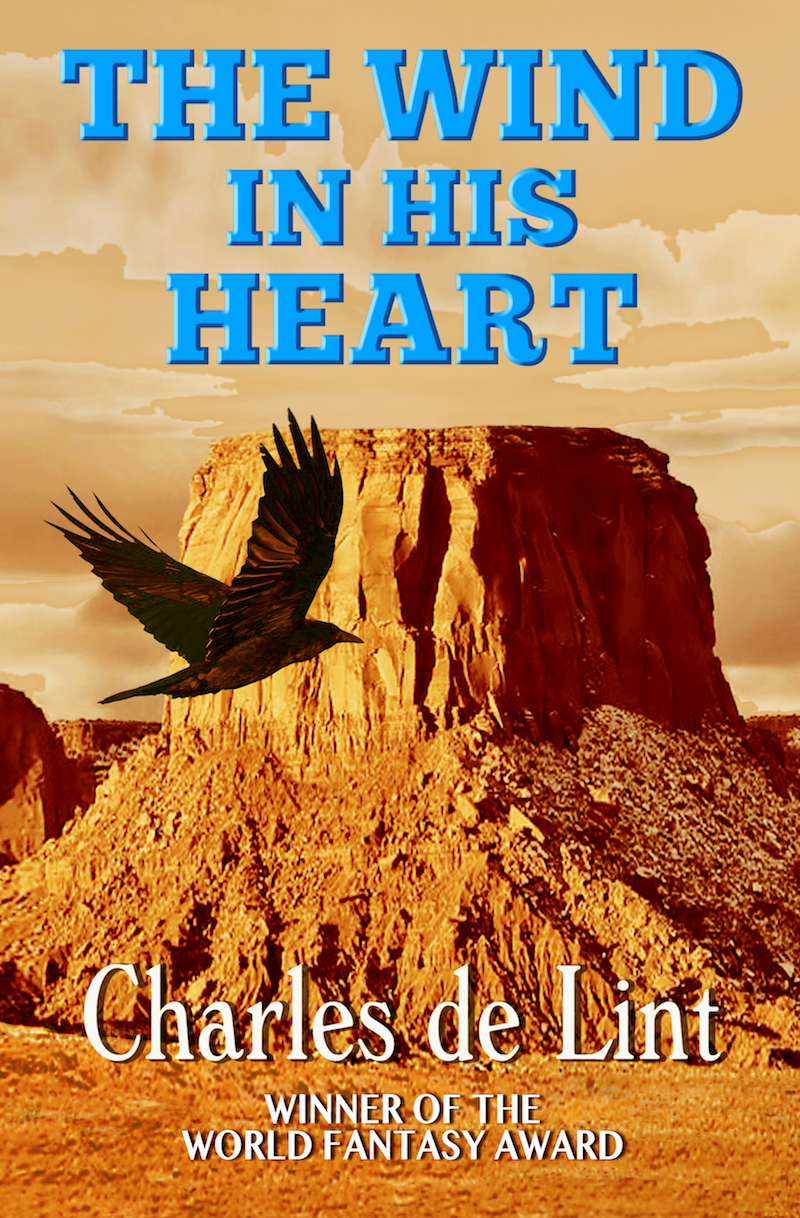
The Wind in His Heart by Charles de Lint. I’ve been a huge de Lint fan for many many years; this one, set well away from his usual fictional city of Newford, had some interesting elements, but overall was too similar in theme and some aspects of plot with others he’s written, even if the mythology was primarily Native American and not Celtic. Enjoyable, but not his best.


A Prayer for the Crown-Shy: Monk & Robot Book II, by Becky Chambers (audiobook). Along with the first book in the series, A Psalm for the Wild-Built, hands down the most delightful, hopeful, and subtly thought-provoking novellas I’ve read in a very long time. Highly recommended for those tired of dystopias (and perhaps real life).


Begun but not yet finished (NOT DNFs)

The Welsh Dragon, by K.M Butler. A historical novel about Henry Tudor, focusing on the years before he defeated the Lancastrian forces at Bosworth, ending the Cousins’ War (The Wars of the Roses) and taking the throne as Henry VII. So far, I’m thoroughly enjoying it; review to come.


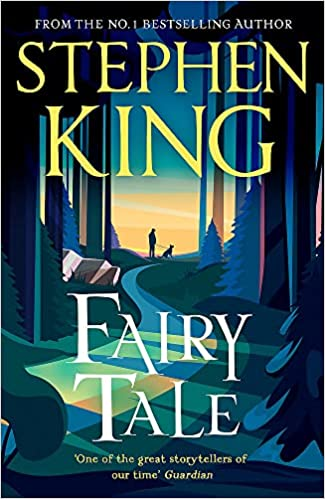
Fairy Tale, by Stephen King. (audiobook).  I have a long way to go in this…like most of King’s books, it’s not short. Reserving my opinion for now, because this is a book with two distinct parts, and I’ve only just begun the second story. 


Embrace Fearlessly the Burning World, a collection of essays by the late Barry Lopez. Like authors Annie Dillard and Robert MacFarlane, Lopez’s nature writing goes far beyond a set of empirical observations. I’m only not finished because I’m pacing myself, giving myself time to think about what he’s saying about human societies, the importance of place and belonging, and our relationship with the rest of the planet.

Although there are one or two statements among all the gems that don’t ring true, overall, a thought-provoking and sometimes lyrical book.


In the Queue:

Singing for Our Supper: Walking an English Songline from Kent to Cornwall, by W.R. Parsons. I’ve been following Will Parsons on his modern pilgrimages around the UK for some years, via Facebook, Twitter and his website. Walking in Britain has been both a place of peace and a source – the source, probably – for my novels, and my own walk across England, from the Irish Sea to the North Sea, a highlight of my life.  I, however, can’t sing a note. I am very much looking forward to this book.


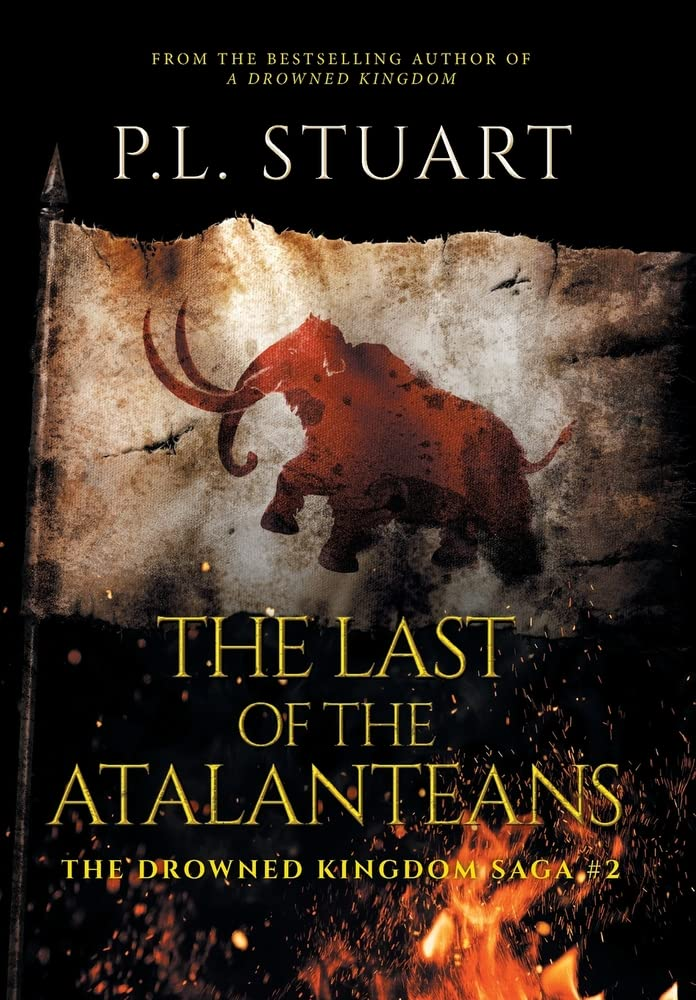
The Last of the Atalanteans (The Drowned Kingdom Saga, Book II) by P.L. Stuart. The second book in Stuart’s magnificently imagined world, with that hardest of protagonists to do well (and Stuart does) – an unlikeable one. Will Othrun’s hubris and ambition lead him to glory or to the ashes of his dreams? I’ll find out soon.