“Show, don’t tell.” Every writer has heard this axiom. But there are times when telling is appropriate, briefly – and times when too much definitely gets in the way of a compelling story. In my work with developing writers, I ask them to analyze their manuscripts for two types of telling: exposition, and telling within conversation. Both can be problematic, when they occur in large clumps.
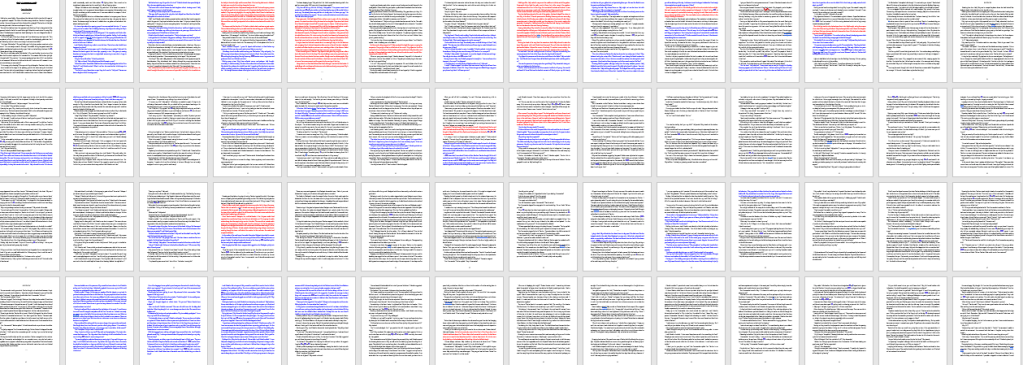
In this screenshot of part of a manuscript, red is expositional telling, and blue is conversational telling. By looking at his work in this way, the author could see two problematic areas: first, the large section of red (exposition) in the first eight pages of the story, and then the three-and-a half pages of conversational telling in the last row. (A closer look also shows us that in the first 10 pages, there’s a lot of conversational telling too, especially when considered alongside the exposition. This is the classic mistake of a huge info-dump in the first pages of a book.)
I find that by having a writer identify this on their own, it’s less threatening, less of a style critique and more of an impersonal analysis. We’d had some solid discussions about what telling looks like, and what are alternatives, before he began this. He’s learned to recognize both forms of telling, and is better placed to judge his own use.
Colour-coding has other applications, too. Right now this same author and I are working through his stories to see if he’s included all the 12 steps of the hero’s journey. (Do you have to include them all? That’s a discussion for another day.)
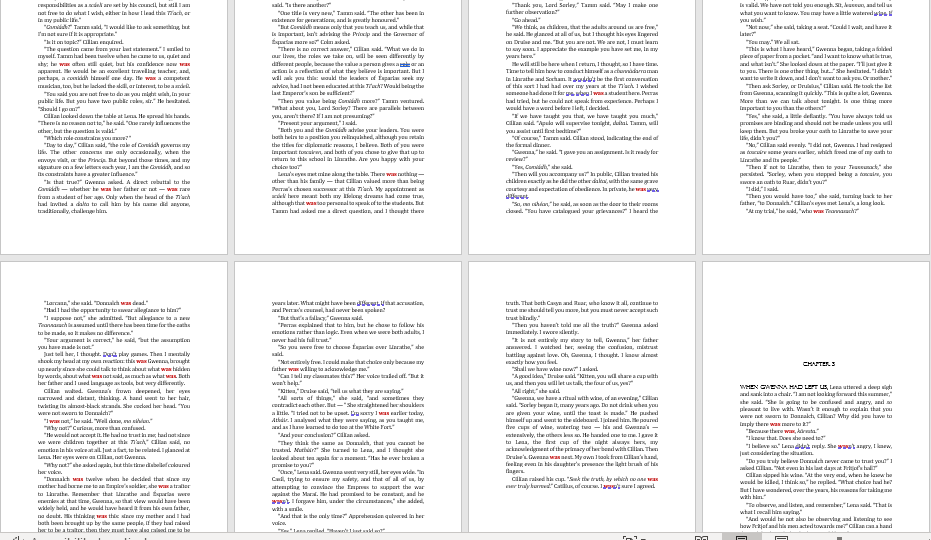
Another version of colour-coding is using the Find & Replace function to colour words. (Instructions below.) Here’s an example. Using the Advanced feature of Find & Replace, I asked Word to make every ‘was’ in my most recent manuscript red.
It’s a quick visual to show me which pages to analyze, without having to read the entire book again. (Plus, I tend to get lost in my own story when I do that, and miss what I’m there to edit!)
How do you use colour-coding? I’d love to hear your ideas!
*****
Here are the screenshots showing you how to use Find & Replace to colour words:
From the pulldown menu, choose Advanced Find.
Then, enter ‘was’ in both the find and replace boxes. Click in the Replace box, and then go to the Format button on the lower left. Choose the settings illustrated, and then choose Replace All in the first dialogue box.
Yesterday I had a discussion with someone regarding what my new book, Empire’s Reckoning, is really about: not its plot, but its theme. Its deeper story, if you will. (There are no spoilers here; you can keep reading.) “Courage comes in many forms: a hero’s weapon is not always a sword,” I have written in the pre-publication advertising. But that could say: “Courage is seeing a life past betrayal,” because that is closer to the heart of the book.
By betrayal, I do not necessarily mean duplicity, or disloyalty (or not only), but also the tiny betrayals of expectation: expectations of others, of our governments, of our cultures and friends and loves, and, importantly, of ourselves. Of our own best intentions, of our belief in our own abilities and motives and actions. All my main characters but one– and there are five now, in one of the two timelines in the book – face this loss, this realization of imperfection in ourselves and those we love.
My characters react to those betrayals, large and small, external or internal, in different ways, and to say more would be spoiling the story. I began Empire’s Reckoning two summers ago, long before COVID, but I can’t help thinking about its theme now in the face of our collective confusion and sense of betrayal. I’ve written before about how the overall theme of the series is about the power and limits of love to provide shelter and sanctuary in a turbulent world. In Reckoning, I ask that question again, but this time the turbulence is mostly from within, from the breaking of implicit contracts and the shattering of beliefs.
We too have had beliefs shattered, implicit contracts broken as the world grapples with COVID. We too are facing loss, bewildered by the change in our lives. We are afraid, angry, confused, exhausted, but also compassionate, generous, altruistic. We focus on ourselves, and we worry for others. I’m not saying Reckoning is a guidebook to navigating the changed world we find ourselves in. But as I emerge from the cocoon of creating a book, and am thinking more about what the post-COVID world might be, I wonder. Can I be as brave as my characters, and find in this upheaval the guideposts to uncharted ways, to a different way of living in this world?
In Neil Gaiman’s 8 Rules of Writing, the one that has always resonated with me is this one: “Remember that, sooner or later, before it ever reaches perfection, you will have to let it go and move on and start to write the next thing. Perfection is like chasing the horizon. Keep moving.”
The tendency to keep refining my work is there. I can agonize over ever word, moving them around, adding, subtracting, to see if my intent is better expressed, if the emotion is stronger, the scene more intense. But if I do that, my books will never see the light of day. And I have more writing to do.
Empire’s Reckoning is done. It’s been structurally-edited, line-edited, revised, copy-edited, beta-read, sensitivity read, revised again, and the first ARCs are out. Twenty-two months of the most difficult writing I’ve done. I threw out the first draft almost completely and began again after 80,000 words. I excised 45K to become the novella Oraiáphon. I had difficulty finding my protagonist’s voice; I had difficulty with the two-timeline structure. And I had difficulty telling the story, because to tell my characters’ stories honestly and authentically, I challenge perceptions and presumptions about them. Not all my readers will be comfortable with how the story unfolds, I think, and that too was another difficulty.
“Move on, and write the next thing,” Mr. Gaiman says, but I can’t, not yet. I need time to let these characters who have lived so intensely in my mind for up to twenty years step back. They’re not disappearing, but they are giving way to the next generation; they will become secondary characters over the next two books in the series. I need time to get to know my new protagonist as an adult, to hear her voice clearly. I know the major story arcs of the next book, political and personal – or at least I think I do – but she needs to be living those conflicts, not being a puppet I move around within them.
I’ve lived, over the past almost-two years, a period of about eighteen months in my characters’ lives, a period for them of intense emotion, political intrigue, and personal growth. When I see them again, they’ll all be four years older, my original main characters feeling the aches – physical and spiritual – of middle age; the young ones the challenges and frustrations that come with taking their places in the world. It’ll be a bit like visiting friends or family you only see once or twice a decade, and get holiday and birthday cards from, but not much else: there will be a lot of catching up to do.
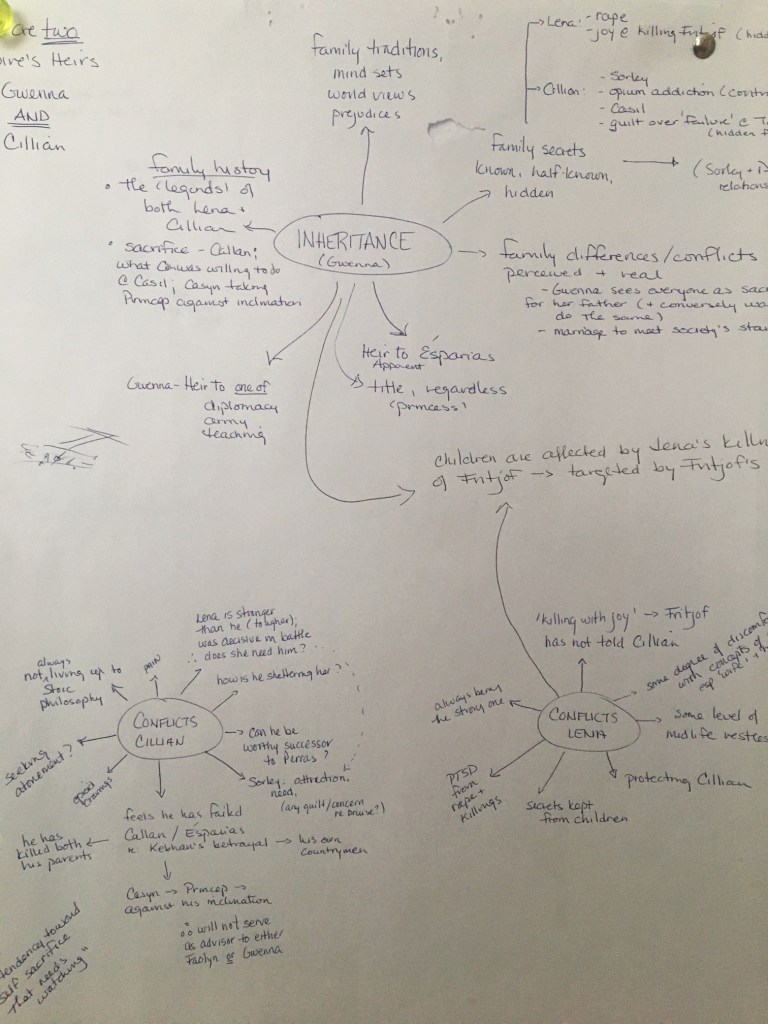
Sometime in the next week or two, I’ll clean up my study. I’ll take down the pictures of the actors that represent my characters at the stage of life they were at in Reckoning, and the pictures of northern Scotland and Vindolanda and Hadrian’s Wall and the Caledonian Forest that have kept me in the landscape of my book. The mindmaps and charts and even the song lyrics that line my study wall will go in a banker’s box and be relegated to the basement. I’ll back up all the files.
And then, in a few weeks, I’ll start replacing them: I’ll find pictures of my new protagonist as a young woman, not the girl she is in Reckoning. I’ll find the pictures of Rome that will inform the streets of Casil, its analogue city in my series and where most of the story of Empire’s Heir will take place. Empire’s Reckoning will be out in the world, for better or worse, and it will really be time to move on. Knowing that, following one more of Neil Gaiman’s rules, I’ve written my story as it needed to be written, honestly, and as best I can.
I used to work in a job so multi-faceted and complex that when I left, I was replaced by two people. I had dozens of projects on the go, several teams of people to oversee, and a huge budget to manage. There is no doubt I worked too hard and too long, and I left burnt out, but I also learned some very valuable lessons in managing time and projects that I still use today in my third career as a writer, editor and the coordinator of a small indie collective press.
I’ll throw in my usual caveats here: I’m in my 60s; no children, and this is what I do full time. I’m not balancing another job, children, elderly parents, house renovations, commuting…life. (I did, though, minus the children, and that’s why my first book took 12 years to write.)
I recognized my lack of organizational skills somewhere in grad school. I have ADHD, which has both its own challenges and its own rewards, the ability to hyperfocus for long periods of time on certain things being the most obvious positive feature (for me). But I needed processes to replace my poor executive function, because without them, it was and is all too easy to be overwhelmed with the amount of work in front of me. And if I get overwhelmed, I simply do nothing.
I won’t bore you with a list of the books I read and the methods I tried. Most didn’t work; they required too much time and focus. But I took bits from most of them, and now I have a system that works fairly well. It’s quick and it’s visual, both requirements for me.
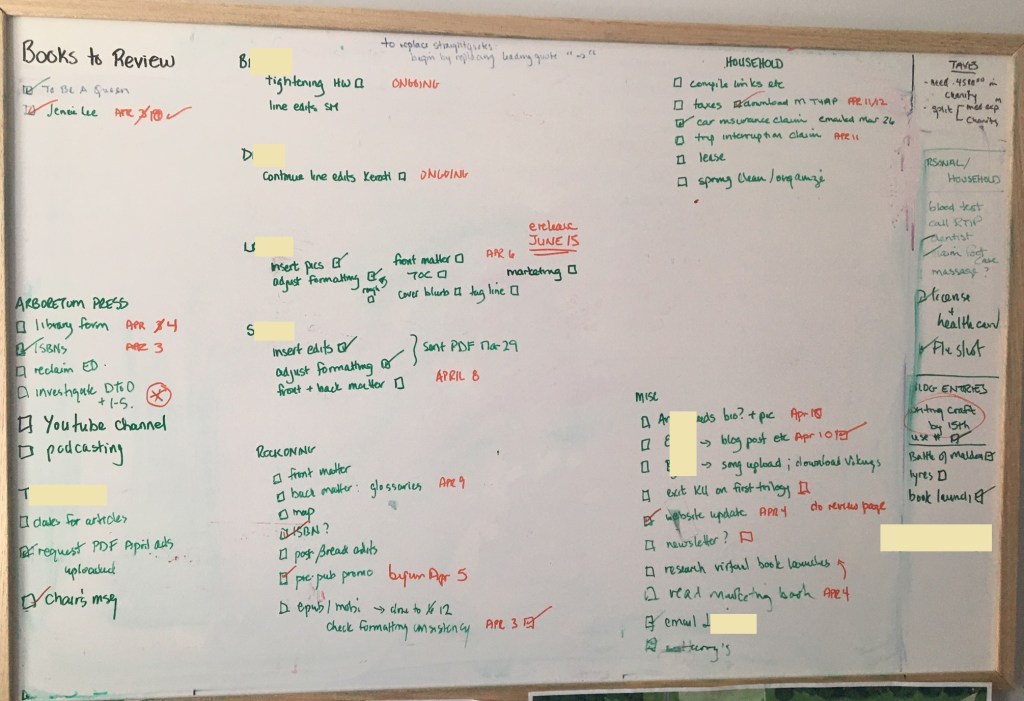
As you can see, I use a series of checklists, and a forward-projection of the dates on which each project needs to be completed. This allows me to then subdivide the project into chunks, and schedule those, as well, working backwards from the completion date.
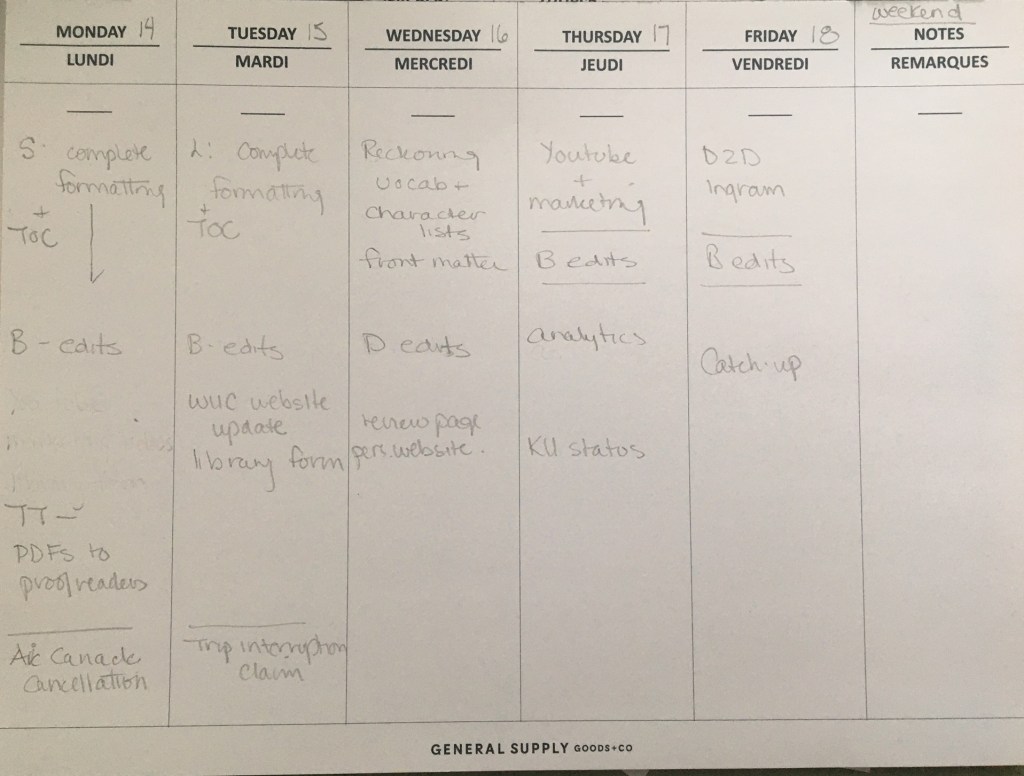
Then I use a daily planner. I know I’m most productive in the mornings, so between 8:30 and 11:30 is my intensive work time. That’s my time to work on my own book, when I have one in progress – and when I am actively writing, it’s nearly every day. I don’t wait for creativity to strike: most of the time, once I start, the words will flow. Perhaps not as well as I’d like, but as the saying goes, you can’t edit a blank page.
When I’m not actively writing, this is the time I use to learn something new or do in-depth research: whatever the big tasks are that the board shows me I need to complete. I take a couple of breaks, for movement and coffee, usually sneaking in a load of laundry or some other household chore.
After lunch I’ll generally check emails & social media, deal with anything important (or amusing) and then work on non-writing projects (that includes editing other people’s work or doing video meetings with other writers) for an hour or two. Exercise next, a walk or cycling for at least an hour and then another hour or so on ‘little’ things, tasks that don’t take a lot of creativity, such as updating websites, checking analytics, filling out forms, sending information out. But even most of those – barring an urgent response – have been scheduled, again to prevent me from feeling overwhelmed by the sheer number of them. Then I settle down with a cup of tea and read – books for review and/or pleasure – for 15 minutes to half an hour.
A few nights a week I work between about 10 and midnight: that’s a different sort of creative time for me, the time I write scenes that never make it into the book, but teach me about my characters and their responses; the time I do mindmaps of the major themes and conflicts of the story, the free-flowing ‘right brain’ associations and lateral thinking taking over. I’m about half-way between the poles of pantser and plotter, and this time is completely necessary to my writing process, and very different from the task-oriented approach I use the rest of the time. I’ll likely have music on, songs that relate to my work-in-progress in some manner. I might read poetry, looking for epigraphs or just for the expression of emotion I too am looking to convey.
Of course, life gets in the way of any schedule. One of the best pieces of advice I ever read was to not overschedule your day, so that there is room for the interruptions and minor ‘emergencies’. Friday afternoons are unscheduled, for catch-up, and my weekends look different from Monday to Friday: I may work for myself, but I still get weekends! Groceries and cleaning and movie matinees and dinners with friends (well, not the two last ones just now, in the middle of COVID-19 social distancing) are all part of the week too.
Does it work perfectly? Of course not. I have days when I’m just too scattered, and that’s likely a day I choose to do something that I know I will hyperfocus on – designing ads, doing layout, or very detailed editing on my own work – and sometimes I just need to walk away from everything. But when I come back, the structure is there to guide me as to priorities: I don’t have to reinvent them. It keeps my mind calmer, and when my mind is calm, I’m productive.
Oh, and I have one other necessary ingredient in all this: coffee!
Twenty years ago, I wrote the following words: “I was seventeen, the year Casyn came home.” I had an image in my mind – a geography: it is always place, landscape, that I begin with – and a concept of a lone fishing village, and a young woman. Fifteen years later, two major rewrites and a failed publisher, Empire’s Daughter went out to meet the world. A standalone young-adult novel, I thought.
Then I learned two things, from the early reviews, from comments made to me by readers: my audience wasn’t young adult, and they wanted more of Lena’s story. Today, on my 62nd birthday, Empire’s Reckoning, the fourth full book (plus one novella) set in Lena’s world became available for Kindle pre-order. It’ll be published at the end of May.
The first trilogy takes place over about four years. The new book is a two-time line story, bringing the narrative forward fifteen years from the last chapter of Empire’s Exile, to the next generation of characters. The planned next two books will jump forward another four years for Empire’s Heir, and then yet another ten or so for Empire’s End.
My major characters from the first trilogy: Lena, the narrator; Cillian, Sorley, Druisius: all these figure into the next two books, watching their dreams and goals pass to the next generation; counselling, guiding, worrying, but also living their own complex and meaningful lives. Lena will have gone from a young woman of almost eighteen to a grandmother in her fifties; Druisius and Sorley a few years older, and Cillian will be…well, just a little older than I am now.
The plots of the next two books are outlined. But what will be the greater challenge, I think, is reflecting the changes life brings, the regrets and compromises, the wisdom and judgment, as I jump characters forward several years at a time. It took me a long time to truly find Sorley’s voice (he’s the narrator of Empire’s Reckoning) at 39: I had to work out a lot of backstory to understand who he is, this middle-aged musician, and how he got there from the trusting, naïve 24 year old in Empire’s Exile. The others, too – who were they, fifteen years later?
Gwenna, the main character and narrator of the planned next book, is fourteen in Empire’s Reckoning; she’ll be eighteen (fully adult, in my fictional world) and facing a very difficult choice in Empire’s Heir. I’ll spend time this summer learning who she is – and because of the way my mind works, that means writing a lot that will never make it into the book – before I truly begin the first draft. (My goal is to begin the book in September: years in academia programmed me to think this is when new work really starts, and that’s been true for the previous books.)
And sometimes I wonder what would have happened if the demands of life had been fewer, and I’d finished Empire’s Daughter while I was still in my 40s, and it had been published then. Would I have found the same audience? Would the stories have been the same? How many of my own life lessons, how much of my own personal growth, is reflected in my characters’ journeys, things that, knowing how my mind works, I couldn’t have articulated without writing them into fiction? Heraclitus wrote “No man ever steps in the same river twice, for it’s not the same river and he’s not the same man.” Nor can we step into the same flow of creativity at different times in our lives. I am curious to see who my characters are when they’re four years older, and to see, too, what that tells me about myself.
A tremendous final book in a stunning trilogy, this is a gripping and sometimes moving book in which a young woman has to find a new way of surviving. Following on from “Empire’s Daughter” and “Empire’s Hostage” this book goes seriously beyond an Empire with a strong resemblance to the Roman Empire into vastly new territory. These books present an alternative history which is nevertheless impeccable in its research and holds together brilliantly; it is a consistent tale in both its setting and characters. Lena has changed much over the preceding two books, from an older girl who loved and lost her partner Maya over the need to defend their women’s village from a seaboard attack. Not only did she learn to become an effective warrior in defence of her home village over a period of some days, but also she began to learn and appreciate the problems and possibilities…
You may have noticed I failed to include the blurb for the novella – that was on purpose due to potential spoilers as this novella follows what is one of my favorite trilogies out there: Empire’s Legacy!
Now, there is a small chance that you have missed out on reading my reviews for the trilogy. Fear not, and you are forgiven, here are the links again for your comfort 😉
As a brief, this trilogy starts off with some serious girl power vibes, moves into the very intriguing political atmosphere and has complicated web of personal relationships throughout with some of the most epic and sweat inducing love stories (inc same sex love stories) I have ever come across. The most important vibe…
Without readers, where would writers be? We are storytellers, and while I like telling my characters’ stories to myself, I prefer telling them to other people. But some of those readers become highly invested in the characters, and want to know more.
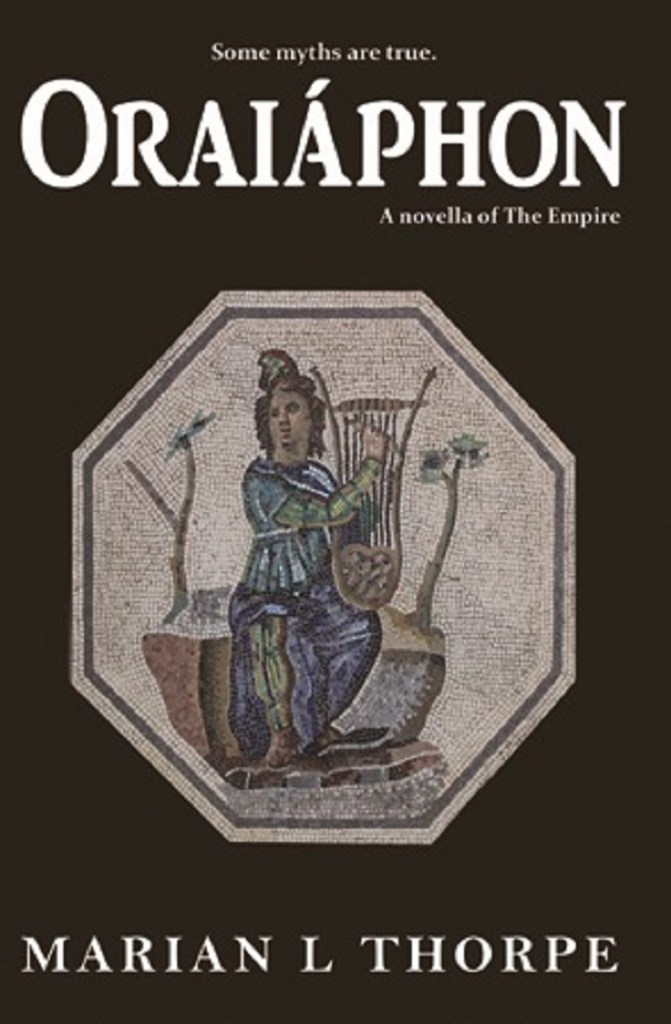
The last book of theEmpire’s Legacytrilogy ended on an ambiguous note, with an epilogue that makes things clearer (for most readers. Some truly didn’t get it, even then.) But between the end of the last chapter and the brief epilogue is a three-year gap, and some important things happened in that time. I might have just left them to the reader’s imagination, except three things happened.
One was that in beginning the next, related trilogy, I realized there were a couple of major backstory pieces that had to be explained, and two, quite a few of my readers begged to know what happened in those missing years. The third consideration was that I was switching narrators (I write in 1st person), and while readers knew my new MC as a supporting character from the first trilogy, I thought they needed an opportunity to get to know him a bit better.
So I wrote those loyal readers a story that I hope meets their wishes, explains the backstory, and moves the character Sorley from supporting actor to a leading role. It launches February 29th in all markets. Here are the links:
“Exactly so,” Gnaius agreed. “May I say more? I have lived in many of Casil’s provinces over the years. A physician travels with the army, if he wishes to become a skilled surgeon.”
– from Oraiáphon: A Novella of the Empire, 2020.
In my Empire’s Legacy series and its sequels (both completed and planned), the supporting character Gnaius plays, and will play, an important role. Gnaius is a physician, erudite and highly skilled, who has held many positions with both the army and to the Empress of Casil. He is a product of my imagination, of course, but he is based on the historical physician Claudius Galenus, best known to the modern West as Galen.
Galen (public domain)
I want to talk about Galen not so much in terms of the historical person, but as an example of how, in my alternate-world historical fiction, I use history to inform my world without being bound by it. The city in my world, Casil, is physically based on 4th century Rome, but politically it’s a blend of Rome and Byzantium. However, many of the conflicts that occur are from later in Europe’s history, between about 600 and 1000.
Galen lived in the 2nd century of the common era, at the same time as the emperor Marcus Aurelius, who appears as a figure from the past in my series (under a different name, of course). But this doesn’t matter: I’m not writing history. What matters is that Galen did almost everything I wanted Gnaius to have done: travelled extensively, learned about surgery and wound treatment in the field, practiced medicine in the capital city and became the personal physician to Emperors. So I have, effectively, lifted Galen out of the 2nd century and inserted him into my world at a later date.
There are both pros and cons to doing this. Readers will fall roughly into three categories: those who know nothing about early-medieval medicine, and will assume I’ve made Gnaius up entirely; those who have some knowledge of Galen, may well recognize consciously or unconsciously that Gnaius seems familiar, or right for the times; and those who know a fair bit about the subject, and may object to him being dragged forward several centuries.
My goal throughout the series has been to create a world that feels familiar to a reader brought up on the history of Britain and northern Europe, but has enough dissonance to make readers think about the questions raised by the conflicts with which the characters must deal, both personal and political. The real-life Galen fits neatly into the world, he’s just in the wrong century. (Certain readers may throw the book across the room in disgust at recognizing Gnaius as more-or-less Galen, although if they are that wedded to historical accuracy, they’ve probably given up on the series long before Gnaius makes his appearance 2/3 of the way through the third book.)
By some combination of serendipity and synchronicity, I learned in my research trip to Rome last week that Galen had lectured extensively at The Temple of Peace in the Forum, and indeed had stored his writings there for safekeeping. This plays right into the plot outline for the book (#5) I was there to research…and then I learned a fire at the Temple destroyed a fair number of those works. I’d already considered a fire in that general location as a plot device; now I have a historical occurrence to build around. The fire is not just plausible, it happened, and the destruction of some of Galen/Gnaius’s writings may well feed part of the plot of book #6, which is now little more than a concept.
The Temple of Peace in 1749 (public domain)
Gnaius is a minor character, although an important one. But by using Galen’s life as the basis for his, the verisimilitude of setting, character and plot is strengthened. Reviewers frequently comment on the depth and quality of world-building in my books: this is one way I do it. What are your methods for creating believable worlds?
When both writing and travel are important, how do you balance the two? I’m on the road far too often to not write while travelling, or I’d never get my books finished. Over the years they’ve been written at picnic tables in campsites and parks all over North America; in cafes across the world; in planes and trains and ships; and in tents in Mongolia and cottages in England.
There are three major considerations to writing while travelling: teaching yourself to write anywhere; keeping your work safe, and managing the technology. I didn’t used to be able to write unless I had complete privacy. Some of that was the beginner writer’s desire for secrecy, the reluctance to reveal to the world what I was doing. As I became more confident, and as I had deadlines to meet, that reluctance dissolved. The deeper I am into a story, the easier it is for me to write absolutely anywhere.
If noise distracts you, consider earplugs or listening to music. Or start with planning, writing character sketches, descriptions: background information you’ll need, if you can’t get into your story in a public place. I do better with dialogue; often I’ll fill in the description and actions afterwards, but I can almost always ‘hear’ the discussion between my characters, wherever I am.
Several years ago, just before a 9-week, 4-country, 27-flights trip, I bought a tiny laptop: not a netbook, because I am almost always places without internet. It fits neatly into my backpack, cost me $300 Canadian, and it has SD-card storage, as well as USB. Several points here: if I lose the laptop, or it’s stolen, or broken, it was cheap. Secondly, the removable storage was important. My work is not on the hard drive. It’s saved to the SD card, and to a flash drive, and those two things are kept (separately) on my body with my passport and wallet. Plus, I back up to cloud storage whenever and wherever possible, so my work is as secure as I can make it. It’s easy to get sloppy about doing this, but so far I’ve maintained the discipline…and when my laptop stopped working in Fiji (it didn’t like the 100% humidity) I could relax, knowing I wasn’t losing work. (It began working again back in drier, air-conditioned Canada, and has kept on working ever since.)
Managing the technology is again mostly a matter of discipline. Charge the laptop whenever you can: this means ensuring you have adaptor plugs. Carry a spare charge cord – unlike iPhone charge cords, which I’ve been able to buy everywhere in the world except Antarctica, it’s not easy to get a replacement laptop cord. Because my husband and I have identical laptops, we always have two charging cords. If access to electricity is rare, run your laptop on airplane mode, with the Wifi search off too – it will save power. Dim your screen. Turn it OFF, not to sleep. And of course, carry notebooks and pens or pencils. Writing doesn’t require a laptop – I just prefer it.
Finally, don’t leave your laptop at security after it’s been x-rayed. That may sound self-evident – but for all my experience, I’ve done it twice, in busy airports where security was busy and crowded. Luckily both times we were called back!
What are your tips for writing when traveling? Please share!








 marianlthorpe.com
You must be logged in to post a comment.