A Book Develops, Part VI

Pages from The Diwan of Al-Mutanabbi,
Khalili Collections / CC-BY-SA 3.0 IGO, CC BY-SA 3.0 IGO https://creativecommons.org/licenses/by-sa/3.0/igo/deed.en, via Wikimedia Commons

Inspiration and understanding can come from the most unexpected sources. In my other blog, which focuses mostly on writing – mine and others’ – about the natural world, I mentioned, a week or two ago, that I was reading a collection of essays about landscape and place called Going to Ground.  One of these essays is by Amina Khan, on the link between Islamic writing about nature and the Romantic movement in English poetry and prose.

My fictional world isn’t ours, but I can’t pretend it isn’t based on ours, and in the cultures I’m writing about, trade with my equivalent of North Africa and the Middle East is an important part of the story. In an earlier instalment of this series, I wrote about my youngest point-of-view character, Audun, and his love for the sea and sky and saltmarshes of Torrey, where he grew up. Audun is seventeen, academic, and of course he’s written some juvenile poetry.

Audun, being who he is, is expected to travel, to learn more of the world before he enters a life of teaching, his dream being to eventually be the head of my equivalent of a medieval university. His great-uncle, whom he hopes to emulate, spent a few years in his youth travelling east, gathering histories, settling down to a life of translation and comparison with the histories of the west. Luce, his aunt, is a doctor, much of her learning done in eastern lands as well.

But what Audun was going to learn in those travels (outside of life lessons, of course) I didn’t know. Until I was showering today (why do ideas so often arrive in the shower?) and my mind made the connection between Audun’s love for nature and the Islamic writing Amina Khan described in ‘A Wild Tree Toward the North’, her essay in Going to Ground.

Organized religions don’t exist in my books, replaced by philosophy and personal faiths in a wide range of deities.  But religious writing can also be read for its poetry, and that’s how I’ll approach this. The bonus here is I’ll read some poetry that I probably wouldn’t have otherwise, and my world, like Audun’s, will expand.

A Book Develops, Part V

Trade routes from central Africa to the Mediterranean, c 12-13th C. Illustration Cleveland Museum of Art. My photo.

Inspiration comes from many places, some random, serendipitous, some sought out. This week I drove the 1000+ km to and from Cleveland, to see an exhibition at the Cleveland Museum of Art called ‘Africa & Byzantium’, an exploration of mostly religious art produced in or resident in the lands of North and East Africa influenced by Byzantium.

But there’s no religion in your books, you might say. This is true – or rather, there are no large organized religions; personal faith is another matter – but it’s not religion per se that matters here. It was the communication, the translation of concepts and ideas I was interested in. The icon pictured below was possibly gifted to its Sinai monastery by Emperor Justinian himself, as he endowed the monastery in the mid-500s. It – and many other pieces of ancient art and writing – have been a part of the library of the Holy Monastery of St. Catherine since then.

In the new series set in my fictional world, the role of monasteries as repositories of knowledge and houses of learning is replaced by what the Ti’acha, the schools, of the Empire series have evolved into – the equivalent of the medieval universities not just of Europe but of the middle East and north Africa as well. So what writings – of philosophers from Casil and Heræcria and lands further east and south; of Heræcrian and Ikorani and Marai travellers, or even, at a more personal (for my new characters) level, of Cillian’s or Colm’s, Lena’s or Tarquin’s or Gnaius’s – might have found there way there, in original or copy, for Gerhart or Luce or Kirt to discover and learn from in their travels? Trade, medicine, history, mathematics, music, science: the knowledge held, exchanged, sometimes forgotten, the disciplines and interpretation of thought and ideas – all that still holds, even removing organized religion from the world.

I learned more practical, tangible things, too: the gifting of large brass trays, beautifully inscribed, as diplomatic gifts from the Mamluk sultanate; that a written language called Old Nubian existed; the trade routes from central Africa to the Mediterranean (invaluable); what block-printed linen of the period looked like; the three sources of treasured ivory. All useful things to be tucked away and possibly used, if and when they fit.

And, with pure serendipity, wandering the galleries before my entrance time to the exhibition, I walked into a room and saw – whatever the artist intended nearly 200 years ago – a portrait of my character Luce as a young student, studying medicine in an eastern school.

The Young Eastern Girl, Friedrich Amerling, 1838. Cleveland Museum of Art.
My photo.

Driving home along Interstate 90, I could feel this information slotting into the background of my world, hear the characters taking it in, shaping it to their experiences (and being shaped by it), becoming part of the world and character building. Both the book(s) and I are richer for it.

A Book Develops, Part IV

I am deep into a book with the unprepossessing title of Trade and Institutions in the Medieval Mediterranean. It is, if I understand correctly, an adaptation of its author’s (Jessica Goldberg) Ph.D. thesis, and it is, for me, absolutely fascinating.

This is, in part, how the world – and sometimes the plots – of my books develop: I read a research book, and every few sentences I think, “Oh, I can use that!” There are four trade alliances in The Casillard Confederacy series (as I currently envision it): one based on the Hanseatic League, one on the Scandinavian Kalmar alliance , one (well, ok, this isn’t an alliance) based on a blend of the Italian city-states – think Genoa with some aspects of Venice – and one based in my equivalent of North Africa.

I had some varying degrees of knowledge about the Hanse and the city-states and the Scandinavian alliance. (They all still need research, though.) I had none at all about North African trade in the 11-13th centuries, except to know, barely, it existed. But in the Empire series, I’d made my character Druisius’s family traders and merchants operating both in my Rome analogue, Casil, and from the southern coast of the Nivéan Sea, which is, of course, basically the Mediterranean.  The Casillard Confederacy is the same world, 500 years later, and the major characters are descendants of my original cast. Druisius’s family – some of them, anyhow – are still merchants and traders. Hence my need to learn about how trade worked in that period.

There are aspects of this book that don’t fit my fictional world – the focus is on the trade networks of Jewish merchants – the Maghribi traders – operating primarily in the eastern end of the Mediterranean (for an overview of the documents this detailed analysis is based on, see https://en.wikipedia.org/wiki/Cairo_Geniza) – but the organization of trade, the commodities, the methods of communication and transport, the difficulties to be overcome, how merchant apprenticeships worked – I can use all these. (And tidbits like the fact Jewish bankers in Old Cairo in the 11th C were using a double-entry bookkeeping system, predating any known usage in the Italian city-state banking systems.  Maybe. If I can slip that in without it sounding like, look, I did my research!)

This is just one aspect of how I build both a world and a character. I immerse myself in the history – in this case the world of Mediterranean trade  that Goldberg has so masterfully laid out, and it becomes part of one or more character’s story. If I’m lucky, that transfer will happen naturally, shaping who the character is, how they think, their loyalties, their presumptions of how the world works, the conflicts and dissonances that happen when confronted with another way of thinking and doing business.

But it’s not the only aspect. People are shaped by their cultural environment, but as I alluded to in the last entry in this occasional series, they’re shaped by their landscape, too. That will require a different sort of research. Meanwhile, back to bales of indigo and flax, and the tribulations of weather, markets, and unreasonable customs charges.

A Book Develops, Part III

A novel – or its components: character, theme, plot, setting, language – has  many sources, many experiences, real and imagined, that work together to create something whose whole is greater than its parts. I am a writer of place, of landscape, and of characters who are shaped by the places they call(ed) home. Many of those places are drawn from my own experiences.

In An Unwise Prince, one of my characters, Cenric, has stuck close to home, a medieval trading centre. Kirt, his partner, has travelled widely, an explorer, a risk taker. Luce has travelled too, but in pursuit of her education in medicine. Then there’s the fourth—young Audun, Cenric’s son, seventeen or eighteen, just finished what might be considered his secondary education, hoping to go home for a while before his next term of study.

I knew Audun was from Torrey, a coastal village (it has a few brief mentions in the Empire series) where his mother runs a workshop making baskets from the reeds and willows of the marshes. I’ve been reading pretty widely on the pre-drainage landscape and ways of life in the fen country of England—not so much for research but because it’s a landscape I love, a love that perhaps has its roots in my genes—or at least in family stories. I’d had a few thoughts about how to use this information to flesh out Audun’s character a little, but they hadn’t coalesced.

Then I started to read Nick Acheson’s The Meaning of Geese, a book about the flocks of geese that return each year to north and west Norfolk to escape the Icelandic and Scandinavian and Russian winters. Acheson—who is a friend of the friend who insisted I needed to read this book—writes in part about his own teenage experiences in the coastal marshes of north Norfolk; about places I know, have walked, can picture in detail. I can hear and feel and smell and see the birds, the wind, the salt in the air, the long views. And suddenly, I had my key to Audun.

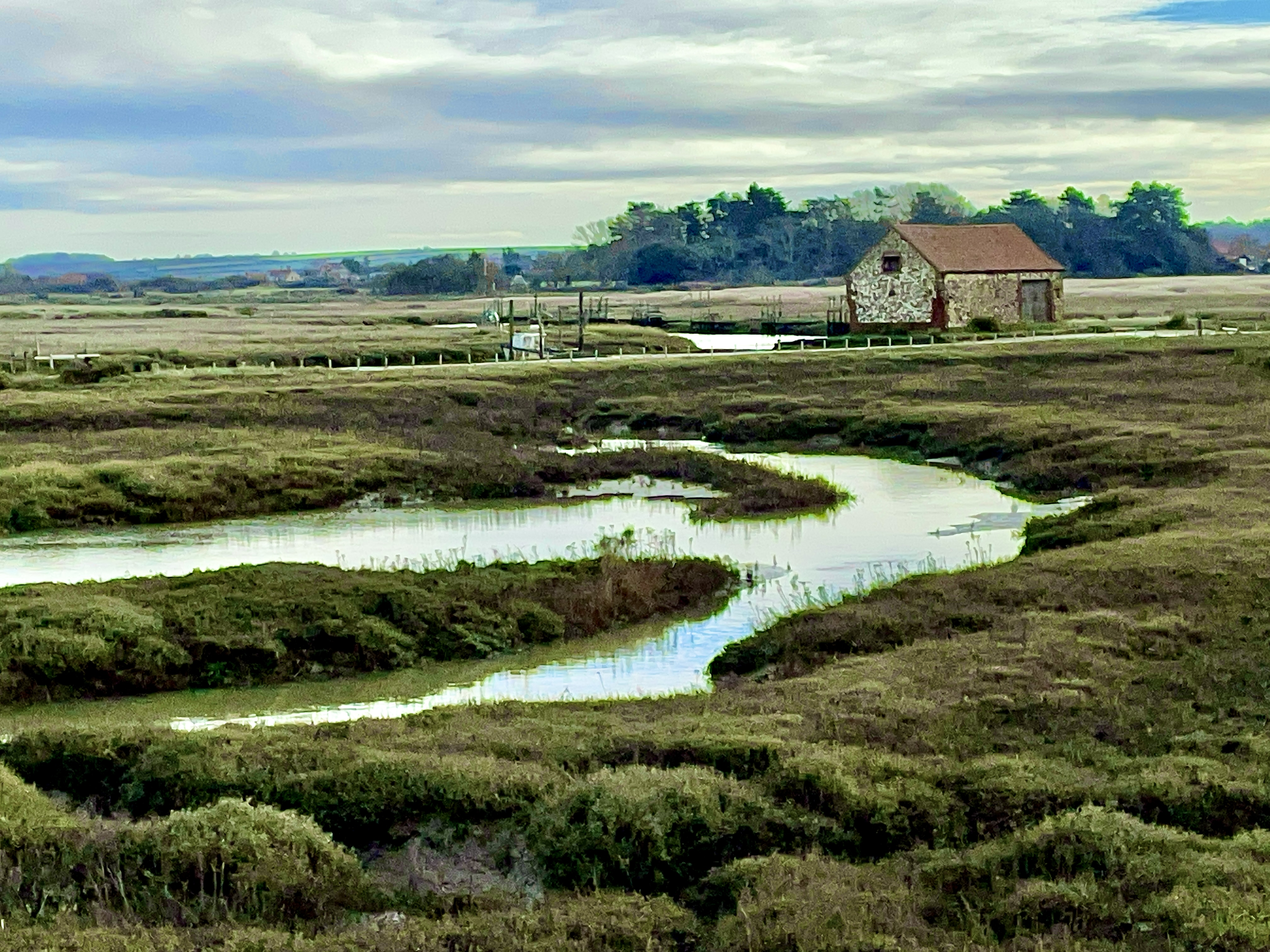
The Coal Barn, Thornham Staithe. My photo.

It’s not all there is to Audun, of course, but it lies at the heart of who he is. And gives him a knowledge that may prove useful, later in the story. Or so I think, at this moment in time!

A Book Develops, Part II

Well, I didn’t expect it to be almost three months before I had anything more to say about the next novel! (The first part of this occasional series is here.) January, though, was mostly taken up with finishing other tasks, primarily getting Empire’s Passing ready for release and completing a contracted edit. February took us to Spain, a road trip for birds and Roman ruins and medieval city centres; one of the things I wanted to experience was how remnants of the Roman Empire (or the Eastern Empire, in my fictional world) appeared in a countryside that wasn’t Britain. Something beyond the familiar, to make me see.

Sadly, I don’t have a photo of the image that had the most impact: part of an aqueduct in a random field, and in that field, a man walking his dog. Living with this ancient piece of infrastructure as background to his everyday life. That was the sense I wanted; it will metamorphose, by whatever alchemy happens in a writer’s mind, into what it’s like, 500 years after we last saw my world, to live with the remnants — tangible and intangible –of a past empire.

One of the hardest things I had to find was some scholarly books with a good overview of European history of the later middle ages – roughly 1000 to 1400. Eventually, through discovering the online syllabus to a university course covering that period, and checking its reading list, I ordered two books:

I’ve also signed up for a six-week online course on medieval universities, as the Ti’acha of the first series have developed into something fairly similar (but without the religious context).

I’m still writing exploratory short stories, which can be found, one a month from January onward, on the A Muse Bouche Review. This is a way for me to get to know my characters, and some of the conflicts that the story will be based around.

As my research and character development continues, I’ve realized there are two big challenges ahead of me: which bits of European history to cherry-pick for the books (there’s a LOT going on in Europe and around the Mediterranean in these centuries), and, maybe even harder, to write a novel or novels with at least four POV characters. Two is the most I’ve done before.

But as the book gestates, moving from concept to reality, its lack of a working title was nagging at me. (Titles and book covers make an idea more solid, at least for me.) So here’s a cover mock-up: a place-holder image, and the working titles for both the book and the (presumed) series: All of which may change between now and publication!

‘A wise prince should establish himself on that which is in his own control and not in that of others; he must endeavour only to avoid hatred.’
The Prince, Chapter XVII
Niccolò Machiavelli

Varril, the elected Princip of Ésparias when the story opens (at this point, at least!) is not a wise prince. Not at all. And on that, it seems, will hang the tale.

(As for the Casillard Confederacy – think of the Hanseatic League, often simply called the Hansard.)

More when there’s more to say!

A Book Develops: Part I

Even before Empire’s Passing, the last book in the Empire’s Legacy series, was partially written, people were asking ‘what’s next?’ To be fair, I had a glimmer of an idea – the same world, about 500 years later, with some aspect of the story derived from the trade alliance of the Hanseatic League.

Passing is done now; I’m just awaiting the paperback proof. It’ll be out in February. I’m in no hurry to write this next book, for many reasons. Key among them is that I know little of 13-14th C history, so I have a lot of research to do. But books evolve not just from plot but from characters—after all, it is the characters’ responses to the problems and conflicts they are faced with that makes a book interesting. And for me as a writer, characters simply appear, with much of their personalities in place, immutable except through personal growth, their responses to the circumstances of their lives.

Over the next—how long?—year? more?—I plan to record the development of this next book, as much to see if I can elucidate my own process as for anyone else. But you’re welcome to come along on the journey as this yet-without-a-working-title book emerges from research and imagination and craft.

So: where am I now?

Five characters of some importance, so far; one minor ones. Who do we have?

Cenric bé Casille, who describes himself as ‘a man of mature years and a merchant of standing and not insignificant influence’. He’d be about forty.

Kirthan del Candre de Guerdián en Leste, more usually known as Kirthan de Guerdián, another merchant, described by Cenric as ‘made of autumn oak leaves, shades of gold and brown from the short curls of his hair to the tips of his polished boots.’  A few years older than Cenric, known to his intimates as Kirt.

Luce bé Casille, Cenric’s sister. Physician, musician, mid-thirties.

Of some importance is Cenric’s son, Audun, who is about seventeen, and currently attending the equivalent of a cathedral school (equivalent because organized religion continues to play no part in my world) at which his great-uncle (Cenric and Luce’s uncle) teaches. The so far unnamed great-uncle will be an important secondary character, I think.

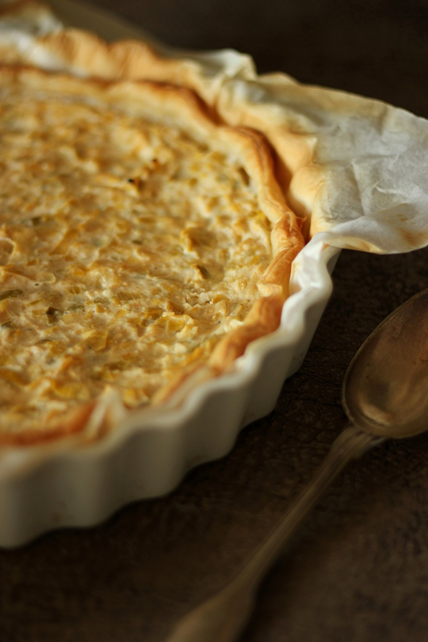
The first three characters (and the minor one of Cenric’s housekeeper) are introduced in an exploratory short story called The Onion Tart, published this month in A Muse Bouche Review. There will be more of these character-exploring stories: some may become part of the book, some won’t. I don’t think The Onion Tart will, but its description of the meeting of Cenric and Kirt will be background (and canon!).

Image by magdus from Pixabay

Meanwhile, while Cenric and Kirt and others tell me little bits about themselves, my first research book is Seb Falks’s The Light Ages: The Surprising Story of Medieval Science. Its focus is the 14th C, but the advantage of writing historically inspired speculative fiction is I can borrow from adjacent centuries, as long (my own rule) I’m not blatantly anachronistic with technology.

More to come, when there’s more to say!

Part II is here.

The Call of Home

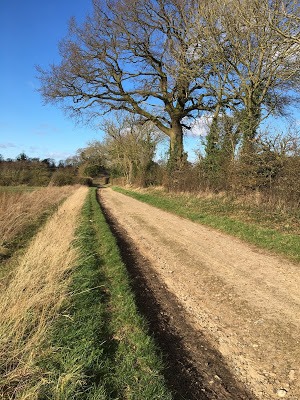
I walk steadily up the slight incline, my boots thumping rhythmically on the hard soil. Nearly two millennia past, Roman troops were doing the same: the track follows the line of a Roman road. It’s likely older than that; bronze age barrows lie to either side, on the high ground above the river valley below, and it ends very close to the place the wooden circle of uprights known as Seahenge was uncovered.

Within a few miles of my temporary, inherited house are three ringed enclosures (hillforts, as they’re generally known, whether or not they’re on a hill) that date to Iceni times. One corresponds with Tacitus’s description of the Iceni defensive structures during Boudicca’s rebellion. The line of another Roman road which approaches that hillfort lies to its south, perhaps a response to the Iceni uprising, perhaps part of the Saxon Shore defenses.

The Romans stayed another four hundred years, before Rome’s wars and finances made them withdraw. More invaders – or migrants – arrived from the continent, the people we call Saxon and Angles. They built in wood, not stone, except for the round towers of a few churches, leaving their mark in place names, a few roads, and moot hills. The Vikings arrived in the 800s and were ousted – at least in rule – in the 900s. The settlers stayed, though, and both archaeological finds and place names attest to this. And then it’s 1066 and William of Normandy winning at Hastings, and the rulers – not just the king, but the landholders and princes of the church – change again.

After that, sheep bring wool-wealth to Norfolk, huge churches in every village, and a Hanseatic port at King’s Lynn. The plague arrives, some medieval villages disappear, and the population plummets. In the 17th century agricultural improvement – fen drainage and sea-wall construction, then the work of ‘Turnip’ Townsend and Coke of Norfolk in crop rotation and soil improvement – slowly move Norfolk from grazing to crop production. The Enclosure Act changes who has access to land, and where. Hedges are planted. More medieval villages disappear,  because major landowners move them off their deer parks. New roads are built, others disappear, to become bridleways and footpaths.

Because of all this, and my family’s long connection (on one side) with west Norfolk, I love this place. I could claim it’s in my DNA, which reflects the series of migration – violent and peaceful – that I’ve encapsulated here, but the scientist I once was raises an eyebrow at that statement. It is, I think, more about stories: my grandmother’s, my father’s, the cousin who made me her executor and beneficiary. Environment, too: I was brought up in a house where history mattered.

I’ve been here eight weeks; I’ll be here just about another two. It’s not the first long stay – we wintered here after retirement until the pandemic, January to March of every year, trading Ontario’s snow and ice and cold for the relative warmth and good walking of west Norfolk. But it’s the first time I’ve been here alone, my husband staying, for good reasons, in Canada.

I find myself like my character Sorley, torn between who he loves and where he loves. Because part of me wants to stay. This land and its long history is the wellspring of my creativity, the source of my invented lands and their histories and the details of worldbuilding readers love. I lay my fiction lightly on this place, seeing it reflected all around me.

But in Canada are the people I love: my husband, my extended family, my friends. And, a city I love in a different way, for its cafes and bookshop and trails for bike and foot; for its university and the two rivers and the farmers’ market, and for the writing community I’m part of.  So in 12 days, I will go home, both gladly and sadly.

The question of what and where home is echoes through my books, one of the themes of the series. In the work-finally-in-progress, Empire’s Passing, it will be a key question for my MC Lena. “I had always turned for home. But where is home for the tamed falcon, when there is no falconer to hold out his arm?” Some of the intricacies of that question – and its answer – will be shaped by my own divided heart.

You might just like….

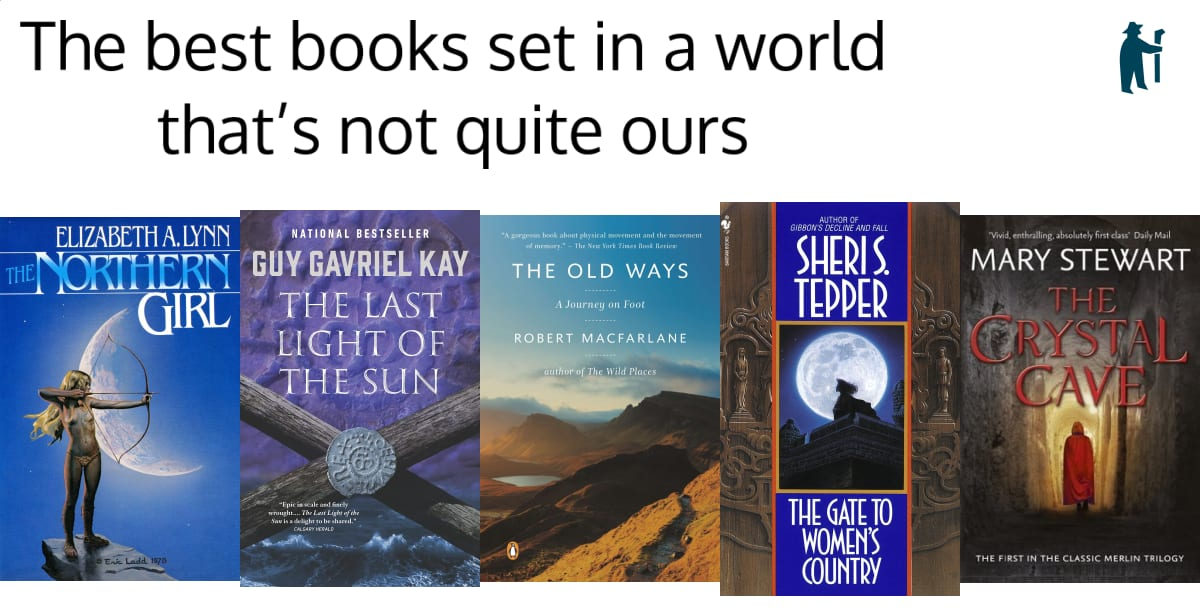
What are all these blue books?

This is my Shepherd.com list (find it at https://shepherd.com/best-books/set-in-a-world-thats-not-quite-ours)

(Hold on, you might be saying. What’s’ not our world’ about the non-fiction The Old Ways, by Robert Macfarlane? Well, it’s a way of seeing the world that isn’t, in my opinion, mainstream, although I wish it were, so I slipped it in. )

And if you’re a reader of my books, you probably think worldbuilding is important, so check out these other recommended books with outstanding worldbuilding.

I Began with a Landscape

Thoughts on Worldbuilding, Part I

“Observing the interplay of minute details…within the larger, overall picture, sensing the tension between the revelatory particular and the general condition…the written stories we most trust about life begin to take shape.” 

Barry Lopez

Worldbuilding. There are a thousand blogs and articles and books on how to worldbuild in fiction. I wouldn’t be adding to them, except I was asked to. For years, my response to the readers and authors who ask me how I created the (apparently) immersive, believable, world of my books has simply (and honestly) been, “I don’t know. I just write.” 

But being asked to share my ‘wisdom’ on this subject made me analyse it – or try to. With the serendipity or synchronicity that often, I find, happens, I had started to read Barry Lopez’s last book, Embrace Fearlessly the Burning World, a collection of essays. Lopez is a writer I have returned to over and over; like Annie Dillard and Robert MacFarlane, his relationship with the natural world goes far beyond empiricism. And from the quote above, I began to see a way to explain how my fictional world came into being. At the heart of that creation is the often-given advice: write what you know.

Earlier in the summer I’d begun a stop/start/continue exercise to combat a growing sense of irritation and dissatisfaction with my life. Part of the exercise is to define what is important to you; what you truly care about. I knew that during the pandemic years, I’d lost sight of some of it.             

Here’s what that analysis showed me:

As I studied this result, I realized that these are not just the things I care about deeply. These are the things I know and have spent my days on. And as Annie Dillard wrote: “How we spend our days is, of course, how we spend our lives.”

Write what you know. What do we know better than how we spend our days and our lives?

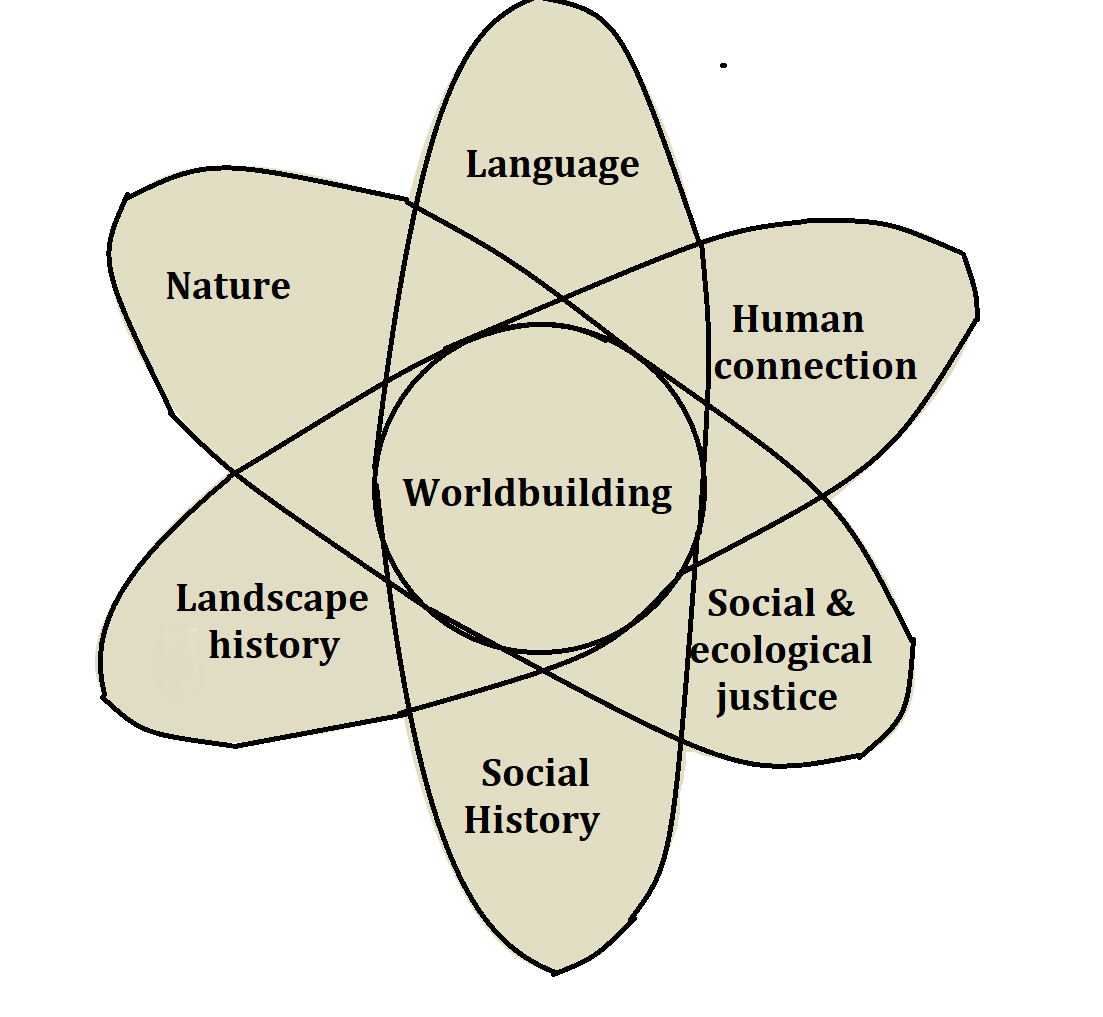
I took those eight identified foundations of my life, simplified it a bit, and created this slightly wonky Venn diagram:

At the intersection of these six passions, where their interplay of both detail and general weave together, is where, for me, worldbuilding occurs.  The world of my books – its ecology, geography, history; even its languages, arose from what I have spent a large part of my time on for over fifty years. Tolkien, the philologist, began with languages and built a world around them. I began with a landscape.

And I always did. Right from my first ‘apprentice novel’, begun when I was seventeen, the major theme of all my work has remained the same: the interrelationship between place and identity: what keeps us there, what drives us—or calls us—from it, how it shapes who we are both in its presence and its absence. In Empire’s Reckoning, the young Gwenna, visiting her mentor Sorley’s boyhood home with him, asks him about what it means to him. (The first-person speaker here is Sorley.)

“This all should have been yours.”
“I gave it to my brother,” I said.
“But you still love it here.” She shook her head in frustration. “That’s not right. More than love, but I don’t know how to say it.”
“Dùthcas.” She looked up at me quizzically. “I can’t translate it,” I said. “Belonging is close. It’s as if I carry this place deep inside me, and I hear it calling to me, always.”

This is the basis, the core of creation of a world for me. The bedrock. Place and culture are—or were—inextricably linked. The knowledge held and expressed in the tundra and taiga of northern Canada and the vast expanse of Australia are not the same, nor is the knowledge needed to navigate life in a big city the same as that needed to live on a ranch fifty miles from the next one. The next step in worldbuilding is showing that knowledge and its attendant skills in context, whether the world in question is real, quasi-real, or entirely fictional.

To be continued….

Inspiration and Memory

Image by GeorgeB2 from Pixabay 

I had an aunt (well, my father’s first cousin, but as she was of his generation we called her aunt) who lived a life that seemed to me both exotic and exciting. Born an estate-worker’s daughter on a large rural farming and shooting estate in Norfolk, England, her mother died in a death pact with her lover when my aunt (I’ll call her Polly) was very small. Her father remarried, and sent the girls (Polly and her older sister) away to a boarding school which was a female equivalent of Dotheboys Hall, from what I can tell. Perhaps his new wife didn’t want them around. Perhaps he wondered if they were his at all.  But away they went.

But my family was and is full of strong women, so as soon as she could, my grandmother rescued Polly from the boarding school and basically employed her as an au pair, helping take care of my father and his sister while my grandmother cared for her dying father. (Older sister had left by then, found employment, soon married and disappeared from the family.)  And probably because of connections through the family who owned this large estate, Polly found herself taken on by a very wealthy industrialist’s family as a nursemaid, and then by another as a companion/secretary….and somewhere along the way she met a very eligible, well-placed Danish man and married him. Just as World War II broke out.

He and she were part of the Danish resistance: he spoke fluent and impeccable German and had connections in Germany, so he was thought to be a collaborator. She was his English wife, and beautiful, and ferried gun parts and more around Copenhagen strapped under her skirt. When dementia was taking its toll on her mind in her last years, she’d tell these stories over and over again: how she learned to take the guns apart and put them back together again in the dark; about flirting with German officers while carrying false documents, remembering the danger.

They survived, the war ended. The business he worked for flourished, and when they came to North America (via Cunard steamers – she hated flying) to mix business and pleasure, hobnobbing with the Kennedys at Hyannis Port (she didn’t like Jack), they took time to visit her cousins – my family, and that of my actual aunt in Alabama. Then her husband died, suddenly, and she was left well off and well connected.

She took herself of on an around the world cruise, had an affair, thoroughly enjoyed herself. For the next twenty-five years or so she travelled, entertained, mixed with people who were the equals of that family who owned the big estate in Norfolk. And then age and dementia took its toll. She died at 95, well taken care of in a private nursing home in England.

“Polly” is the inspiration for the grandmother of one of my two MC’s of Empress & Soldier, Eudekia. When she said to her granddaughter ‘My dear, how lovely to see you,’ and offers her cheek for a kiss, I heard that—unexpectedly—in  Polly’s voice. And I thought what a perfect model for this character, who is ambitious for this granddaughter of hers, who knows the power of sexuality and how to use it, who won’t listen to those who say that the man Eudekia loves is socially beyond her grasp.

I’ve written before how my mother’s and my aunts’ service during WWII inspired the first book of the Empire series, Empire’s Daughter. This inspiration is a bit more direct!