Launching a Book – and an Idea.

Five thousand kilometers away from where I currently am, a book is being launched this afternoon. I didn’t conceive of this book, or write it, but I have a lot invested in it, and I’m sorry to be missing the launch.

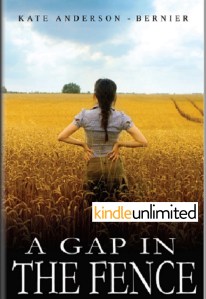
A Gap in the Fence, by Kate Anderson-Bernier, is the first book other than my own EBOOK COVER kuthat I have published as the sole proprietor of a tiny publishing company, Arboretum Press. I’m also an editor, and Kate and I met at a writers’ discussion group. She was looking for an editor, so we started to work together. While Kate’s wasn’t the first book I’d edited by far, she was the first client who lived in the same town as me. And over the months we worked together, I started to see a new vision for the press.

What if, I’m wondering, the press is a cooperative? I’m already doing a lot of work on an exchange-of-skills basis – and – (and I realize this is important) – I don’t need the press to make money, just not lose it. Right now, I operate Arboretum Press as a not-for-profit company, so all income beyond the royalties on my books, and only my books, go to a literacy charity.

But what if (the starting point for all good stories) there were a group of writers and editors and cover designers running Arboretum Press? What if we shared expertise and talents and marketing (and that’s a big, big one in this business) but at little or no financial risk: an investment of time and talent, not money. As long as we stay small, focus on the local independent bookstore market (as well as distribution through the big on-line retailers, if the author chooses) I think it’s workable. I envision it being fluid, people moving in and out of the co-op as their time and interest allow.

I’ll be discussing the idea with some of my writing friends-and-colleagues when I get home in April. We’ll start very small, if we start, and if it doesn’t fly, well, I’ll just keep on with the press as it is, publishing a few books a year – I have three lined up for the next 18 months. But writing and indie publishing can be a very solitary business, and perhaps a publishing cooperative can help alleviate that. It’s worth a try.

If you’ve ever been involved in anything like this, drop me a line with your experiences!

LGBT history and the Empire’s Legacy Series

This is a reblog of a post I wrote some time ago, but in honour of LGBT History month here in the UK, which is where I am living until the end of March, I’m reposting it.

Lena’s World: Sexuality in the Empire: Empire’s Legacy Backgrounder IV

In Lena’s world, the world of the Empire, sexuality is varied and fluid.  This is, I hope, presented simply as part of the background and the culture of this world, but to some extent it is also based on history.

Sexuality is both innate, sexual preferences and gender identity something we are born with (and that do not necessarily conform to the gender identity we are assigned at birth) but the strength of sexuality as a basic human need can also mean that sexuality can be situational.  Men or women deprived of the company of their preferred sexual partners for long periods will seek and find sexual release and comfort where they can.  In the Empire, the structure of the society, where men and women live separately for all but a couple of weeks per year makes situational sexuality a normal and accepted practice in the lives of both men and women.

But of course, there is a wide range of sexual preference within this society, as there is in any, so the partnerships range from the men and women who prefer their own sex: Finn, the young officer; Siane and Dessa, at Tirvan; those who prefer the opposite sex: Tali, whose love for Mar keeps her living alone throughout her life; and those who are more fluid: Lena, the protagonist;  many of the women of the villages, many of the men of the army.  One or two characters may be construed as transgendered: Halle would be one.  My intent was not to define the characters by their sexuality, but let them be whatever they are, incidental, for the most part, to the story.

Where did this come from?  Greek and Roman societies were well known for accepting sexual love among athletes and soldiers of the same sex.  The Oxford Classical Dictionary, paraphrased on Wikipedia, states:

The ancient Greeks did not conceive of sexual orientation as a social identifier as modern Western societies have done. Greek society did not distinguish sexual desire or behavior by the gender of the participants, but rather by the role that each participant played in the sex act. (Oxford Classical Dictionary entry by David M. Halperin, pp.720–723)

The Sacred Band of Thebes was a 4th Century BCE troop of elite soldiers, comprised of 150 pairs of male lovers from the city of Thebes in Greece.  The troop, whose historical existence is accepted by most scholars, given its mention by classical writers such as Plutarch, was destroyed by Philip of Macedon (Alexander the Great’s father) in 338 BCE. Indeed, some military commanders of the classical era believed troops of lovers fought the hardest, because they were defending those whom they loved, not just the state.

Less is known about female same-sex relationships.  The Greek poet Sappho was head of a thiasos, an educational community for girls and young women, where same-sex relationships were part of life. The same may have occurred in Sparta.

Moving forward to the Roman era, many of the same attitudes regarding male to male sex continue, with the exception being within the military. In the Republican period (4th to 1stcenturies BCE) soldiers were forbidden, by penalty of death, to have sex with each other, although sex with male slaves appears to have been acceptable. In the Imperial period, this prohibition may have been lifted, as marriage was forbidden to soldiers.

Hadrian, the Roman Emperor from 117 – 138 CE, whose British wall is the model for the

Wall in Empire’s Daughter and Empire’s Hostage (and the upcoming final book in the trilogy, Empire’s Exile) had a lover named Antinous, one, likely, of Hadrian’s ‘harem’ of both male and female lovers.  But when Antinous drowned, Hadrian mourned him publicly, founding the Egyptian city of Antinopolis in the boy’s memory and having him deified, suggesting (strongly) that his attachment to him was deep and serious. In the British Museum’s exhibition marking fifty years since the decriminalization of homosexuality in England and Wales, the heads of Hadrian and Antinous stand side by side, honoring their relationship. (Hadrian’s the one with the beard.)

So, like most of the cultural structures in the Empire’s Legacy series, the sexuality is rooted in historical fact, although I do not pretend it is historically accurate. I write alternative history, or historical fantasy, (choose your category), not historical fiction!  But I also chose to honor the existence of these relationships in history, because so many books of this type seem to gloss over or totally ignore love that is not heterosexual, and that’s just not the way it was, or is.
Empire’s Exile milestone 1

Here’s one of those ‘milestones’ a writer reaches; I’ve got the first draft of the first third of Empire’s Exile written. That’s about 40,000 words. Writing this one is an interesting experience.

There are the logistics to consider: making sure I tie up all the loose ends and unanswered questions from Books 1 & 2.  There is making sure I stay true to the theme of exile:  in Book 1, Empire’s Daughter, Lena was barely adult, still a ‘dutiful daughter’ in many ways, just beginning over the course of the book to realize that truth comes in many forms.  In Empire’s Hostage, Book 2, Lena is a hostage both actually and figuratively, her fate in the hands of rules and traditions. In this third and last volume, I’m exploring the theme of exile, again both actual and figurative.  It doesn’t always make for easy writing.

Then there are my characters.  I thought I knew the basic story arc, but they had different ideas. Listening to what they told me (or what my subconscious told me, if you prefer), had led to Exile being a different story than what I thought it was going to be, introducing other forms of displacement into the narrative. It also left me with an enormous dilemma about the ending…which I have resolved in a way that is both true to the story and satisfying for me. (If you’re wondering why I’m talking about the ending when I’m only 1/3 into the book, it’s because I need to know what the ending is, so I can work towards it.)

So I’m going to take a breather for a few days, work on two unrelated editorial projects, get organized and packed for our escape from winter, and once we’re settled in there, start the middle third.  Quite a bit of research is associated with this third, and I need to plot out the major conflicts and crises, but I’m hoping to have this section done by March.  I’ll need to work flat out if I’m going to get this book out for the Christmas 2018 market…which is my current goal….but, just maybe, I will make it.

Updates, excerpts, backgrounders as I have time and they are appropriate!

“Granny” from Bedtime Stories for Grownups by Andrew Joyce

Today I welcome author Andrew Joyce, with a guest blog introducing his new book, Bedtime Stories for Grownups.  1Bedtime-cover

Hello, my name is Andrew Joyce. I have a new book out entitled Bedtime Stories for Grown-Ups. It came about because my editor hounded me for two years to put all my short stories into one collection. Actually, it was supposed to be a two-volume set because there was so much material. I fended her off for as long as possible. I didn’t want to do the work of editing all the stories. There were a lot of them. But she finally wore me down. Instead of two volumes, I put all the stories into a single book because I wanted to get the whole thing over with. I had other books to write.
Bedtime Stories is made up of fiction and nonfiction stories and some of ’em are about my criminal youth. I must tell you, I never thought any of these stories would see the light of day. I wrote them for myself and then forgot about them. By the way, there are all sort of genres within its pages, from westerns to detective stories to love stories and just about anything else that you can imagine.
There are a whole lotta stories in the book—700 pages worth. Enough to keep you reading for the foreseeable future.
Anyway, here’s one of the shorter stories from the book.

Granny

This tale is mostly true.
My great-grandmother crossed the Great Plains in a covered wagon … going to the promised land of California. The year was 1866. She left St. Louis, Missouri, eight months after the end of the Civil War.
Her name was Rebecca Joyce. Her husband, Michael, drove the wagon as Rebecca walked alongside. Then they would switch, and Michael would walk and Rebecca would drive the team. They could not afford the extra weight of even one person. The wagon carried all the things needed to start a new life. Rebecca walked a thousand miles of their two-thousand-mile trek.
I know this because my family still has her diary. It recounts the harrowing journey across an unexplored land.
One hundred and sixty-six men, women, and children left on that fateful journey. One hundred and fifteen lived to see California—fifty-one souls did not.
Forty-two days after leaving Missouri, Rebecca reloaded her husband’s long gun as he fought off Indians from under their wagon. Twelve people were killed in that encounter. When they crossed the Green River, six of their party drowned. On the high plains, cholera hit; thirty-three died over a two-day period.
I tell you of these things for a reason. You younger folks of today have it easy, but still you complain. Well, what do you think of this? Rebecca crossed a continent—an untamed continent—with just an iPhone 1 and only 2G service! And no video camera! Can you imagine the hardship? Can you picture what that poor woman had to go through to keep up with the goings-on of the Kardashian clan and what was trending on Twitter? The horror!
The next time your phone takes all of 0.0002 seconds to connect to Facebook and you think that’s an eternity, please remember Rebecca Joyce fighting off disease and Indians and—worse still—being in the dark on the latest news concerning Kim’s butt.
Andrew Joyce
Slightly under the influence on this Christmas Day, 2016

AndrewAndrew Joyce left high school at seventeen to hitchhike throughout the US, Canada, and Mexico. He wouldn’t return from his journey until years later when he decided to become a writer. Joyce has written five books. His first novel, Redemption: The Further Adventures of Huck Finn and Tom Sawyer, was awarded the Editors’ Choice Award for Best Western of 2013. A subsequent novel, Yellow Hair, received the Book of the Year award from Just Reviews and Best Historical Fiction of 2016 from Colleen’s Book Reviews.
Joyce now lives aboard a boat in Fort Lauderdale, Florida, with his dog, Danny, where he is busy working on his next book, tentatively entitled, Mahoney: An American Story.

A Writer’s Nightmare

Can there be any worse nightmare for a writer than having your laptop die? sadcomputer-800px

To be fair, it had been giving me hints. “I’m injured,” it said. “I wrote a novel, I edited a novel, I spent hours on the internet while you uploaded and downloaded. And did you honour me for this?  No. You dropped me, instead, onto the cement floor of the garage. My hard drive has concussion, and likely brain damage.” (I actually dropped the bicycle saddlebag that held the laptop, but that’s splitting hairs.)

I heeded the warnings. I ran diagnostics and fixes; I did a clean reload of Windows; I removed every last unneeded program and app. It held on, let me back it up one last time…..and then it died.

“I’m ok,” I thought. “I backed it up to my external hard drive.”  I bought a new laptop, set it up, plugged in the hard drive to retrieve a file.  It wasn’t there.

Nor was the next one I tried. The back-up had failed.  I tried not to panic.  The manuscripts to both previous novels were uploaded to both the e-book production software, and to the print-on-demand site, so those were ok. My short stories and poetry were on the external hard drive. But my research for book III, and the beginnings of Chapter 1 of that book (and a bunch of other non-writing files) just weren’t there.

With fingers and toes crossed, and a silent prayer to the writing gods, I plugged the old laptop in again and booted it.  It woke up, slowly, like an old tortoise emerging from hibernation. It groaned and hummed-and-hawed and blinked, but eventually it let me access File Explorer, and then after another interminable wait the Documents folder.  I plugged in the external hard drive, and began to drag each folder across.  Each one took minutes: one, close to an hour.  But after a very long afternoon, I had all my files copied.

I said nice things to the old laptop, and then I let it go back to computer oblivion. After another chunk of time, all those files exist in three places: my external hard drive, my new laptop, and the cloud, and the auto-synch is set.  Now, if I can just get my fingers used to the slightly-different keyboard layout, I can get back to writing!


Local Support!

Writers need support.  Yes, we work alone, in silence or not, depending on our individual preferences, and much of our thinking and plotting and creating is done in solitude, too.  But we need colleagues to talk to, and when we get to publication, we need a different sort of support: publicity.  So I was very pleased when our local arts council asked to interview me for their website.  Here’s the link:

https://guelpharts.ca/marian-thorpe-launches-the-empire-s-hostage

Thanks again to the Guelph Arts Council!

The (Successful) Book Launch

Friday – yesterday, the day after my book launch for Empire’s Hostage – I was an exhausted wreck.  Partly dueme reading ebar cropped to only four hours sleep (more on that later); partly due to the adrenaline-overload aftermath.  The launch was beyond-my-expectations successful.  The room was full, the applause after the readings generous, and I sold a lot of books.

So how did this happen?  I put posters up in all the cafes downtown, and did lots of Twitter and Facebook promotions, which were generously retweeted and shared by a lot of people and organizations in our town. The local arts council put the event on their calendar, and did their share of advertising. The bookstore in whose upstairs bar the event was being held did their share with an in-store display and advertising on their website. And then I crossed my fingers, ordered nibbles for twenty-five people, and hoped for the best.

I had asked a couple of my writing friends, one a poet with a newly-published book, one an established writer of genre fiction, to read that night as well.  That broadened the appeal a bit, I hope, and provided some new exposure for both of them, as well. Anyhow…it all worked.  I could have ordered a lot more food; the beer and wine flowed nicely at the bar, people stayed for the whole evening.  I signed my name on title pages many times. It felt like a good night.

But I am not a night person.  I start falling asleep about 8:30 most nights, and struggle to stay awake till 10 pm. The first thing I’d done when arriving to set up at 6:30 was order a coffee.  It was quite a large coffee, and I drank it all.  So I was very awake for the whole evening…and the late evening….and the early morning…. Even the pint of beer I’d had after my reading didn’t help. I finally fell asleep about 2 am, and slept till 6 am.  Yesterday felt like the day after an overnight flight. I managed to send thank-you emails and twitters and facebook posts. I organized breakfast for my overnight guests (even baking muffins); I remembered our appointment with our lawyer to sign our wills.  I went grocery shopping (and didn’t forget anything).  And then I crashed. The day is a blur from early afternoon onward.

Would I do it again?  Definitely!  But next time (perhaps when Empire’s Exile comes out) I won’t drink a large coffee at 6:30 pm.  Mid-afternoon might be better….

Here’s the link to the books on Amazon.  The e-books are free through Sunday the 28th.

(The less-than-wonderful photo is a friend’s phone shot.)

Book Launch Night! and some freebies.

This evening is the official launch of Empire’s Hostage, Book II of the Empire’s Legacy spinesseries.  It’s being held in a bar downtown, one that is part of an independent bookstore/cinema/restaurant complex that hosts many cultural events, from book launches to indie bands to art shows to indie filmmakers. I’ve invited a couple of other writers to share the stage with me, a poet and a novelist. (I figured that way their friends would come too!)

So how do you spend the day prior to a book launch?  I practiced the excerpt I’m reading one more time. I packed bags with books and cash, raffle tickets, tape, pens, business cards, bookmarks, a receipt book.  That took maybe an hour.  Otherwise…

I went grocery shopping. I did laundry, and made beds. I cleaned bathrooms and bedrooms and the kitchen. I made cookies. Because I have family coming for the launch, and staying overnight, and needing dinner and breakfast. I’m not complaining….but I am curious.  Were I a male writer, would I be doing all this?  Share your thoughts!

And in honour of the official launch, the Kindle editions of both Empire’s Daughter and Empire’s Hostage are free on Amazon until Sunday, August 27th.  Grab them both while you can!

Meanwhile, I still have to figure out what to wear…


Walls in Empire’s Hostage, walls in history.

The advantage of writing historical fantasy is that it is fantasy – in the case of my Empire’s Legacy series, the fantasy isn’t the dragons and wizards sort, but the creation of a world loosely based on cultures, historical events, and people, all of whom existed.  But I have taken huge liberties with timelines, geography, and cultures, so while the setting and background of the books may seem familiar, it isn’t anywhere you really might know.

In previous installments of this occasional series, I’ve talked about various aspects of Lena’s world. (Lena is the protagonist of Empire’s Daughter and Empire’s Hostage, in case you are new to this blog).  In the newly-published Empire’s Hostage, Lena’s world expands to include the lands north of the Wall.  The Wall is based on Hadrian’s Wall, the Roman wall in the north of England built by the Emperor Hadrian in AD 122 to mark the dividing line between civilized Britannia to the south, and uncivilized (and unconquerable) Caledonia to the north.  It plays the same role in my books, dividing the ‘civilized’ Empire from the unconquered lands of Linrathe.

Linrathe, though, has another wall, further north, an earth-and-wood rampart called The Sterre.  Where did this come from?  Well, although it has a very different role in the world of Empire’s Hostage, it’s based on the Antonine Wall, another Roman wall – this one built by the Emperor Antoninus Pius, in AD 142, in an attempt to move the boundary of Roman occupation farther north.   In Empire’s Hostage, the character Perras, quoting a work of  history to Lena, tells her “… ‘they did not find the conquest of the northern lands easy, for the inhabitants knew the hills and valleys, forests and caves well, and used them to their advantage’. It is a wild land, Lena, and very difficult, and more so as you go north. But they did try; the Sterre, the other wall you noticed yesterday on the wall map: they built it, but could not hold it for more than a dozen years, if that. Their armies retreated south, and left these lands in peace, more or less.”  The Romans held the Antonine Wall for only eight years, before retreating back to Hadrian’s Wall, likely for all these same reasons.

Antonine_wall

Here’s a picture of what the Antonine Wall looks like now, nearly two thousand years after it was built.

In the next installments, I’ll be talking more about how early-to-late medieval Scottish history influences Empire’s Hostage.  In the meantime, if you’re intrigued, here is the link to the books!


Photo of the Antonine Wall  by: Excalibur [GFDL (http://www.gnu.org/copyleft/fdl.html) or CC-BY-SA-3.0 (http://creativecommons.org/licenses/by-sa/3.0/)%5D, via Wikimedia Commons

Second Books are like Second Children

I’m the third sibling of three…the baby.  My father was an amateur (and then professional, for a while) photographer.  There are hundreds of pictures of my sister, the oldest. (Remember this was 1948, when black & white film had to be hand-developed.) Hundreds. 

When my brother came along, six years later, there are fewer.  A couple of requisite baby shots, the christening, a few more.  But his presence clearly wasn’t as exciting, didn’t need to be recorded in the same way.

This is fairly typical, from what I’ve seen with the photos and video of my nieces and nephews, too.  The first baby gets a lot of attention; the rest…not as much. (There are even fewer photos of me.)

And that’s pretty much how I’ve been reacting to the publication of my second book, Empire’s Hostage. Yes, I’m pleased to see it in print. I’m doing my part to promote it.  But I lack the ‘look at what I produced!  It’s the best baby ever!’ excitement that first child/book engendered. Don’t get me wrong…I think it’s a fine book, a worthy sequel to the first. I’m proud to have written it. Some of the reviews have blown me away. But it’s the second child. I’m more realistic about its prospects and the work involved in getting in out into the world. And with the first still needing attention, and my mind already pregnant with the third, it’s going to fight for its share of my time. Do me a favour? Pay it some attention; it wants to be read.  And its older sibling is free right now, on Amazon, for the Kindle reader or app….so for a minimal price, you can have them both.  Think of it as a kindness. If I know other people are giving them their share of attention, I can focus on gestating the third baby!