This Morning’s Walk – Random Obervations from April 17th

Courting yellow-shafted flickers, the male at the top of a dead branch, the female lower on the same branch. The male drums, moves his head to the left, fans his tail. The female moves her head to the right. Back and forth they do this, the male drumming every third or fourth time, heads moving back and forth in precise time. He’s dressed to impress, every black dot on his buff-yellow breast crisp, his red nape gleaming, his tail feathers glowing gold in the morning sun. The dance goes on for about five minutes, until the male flies to another drumming perch to beat a louder cannonade. There is no visible response from the female.

A small, thin, whistle from high in the maples catches my attention. Looking up, thinking to find a small bird, I find instead a male wood duck, standing on a branch. I watch his bill open and close as the thin ‘zeeting’ is repeated. Definitely him. An unexpected sound from a duck.

Walking through Victoria Woods, a funnel of leaves rises and falls from the forest floor, rising to no more than a foot or so off the ground, falling nearly to nothing, then rising again, moving east to west. I can see the track of disturbed leaves several meters into the woods. It looks animate, or animated by something invisible – which of course it is: a small whirlwind. But the experience had an odd feel, as if I was seeing something of faerie, not this world.

Horrible Words?

A link to a timely article for all writers from the Guardian.  I admit to ‘alright’ being one of my pet peeves, but I’ve bowed to common usage in my reviewing and stopped commenting on it. I still wouldn’t write it, though….

http://www.theguardian.com/books/2016/mar/25/epic-fail-to-hotdesk-guesstimate-an-a-z-of-horrible-words?CMP=fb_gu

Free Book!

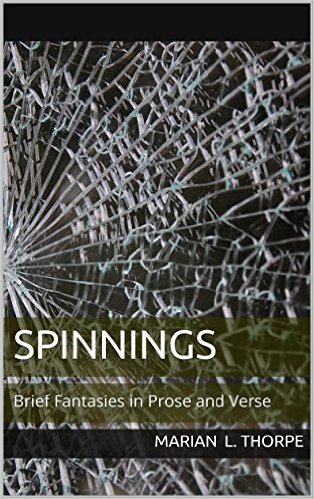
On March 25th my new ‘mini-book’ Spinnings goes on sale at Amazon.  FSpinnings Final Coveror the first five days of its publication, you can also download my novel Empire’s Daughter from Amazon for free. This is a limited-time offer…so spread the word and take advantage!

You will have to pay for Spinnings…but it’s priced as low as Amazon will allow.


Coming Soon! The Ballad of Allyn-a-Dale, by Danielle E. Shipley

I’ll be reviewing this novel soon…it looks intriguing, weaving some of my favourite stories into a new setting!

Cover and Spine, Ballad of Allyn-a-Dale


The Ballad of Allyn-a-Dale:  The Outlaws of Avalon, Book One

by Danielle E. Shipley

Contemporary Fantasy / Young Adult

Novel Release Date = July 12, 2016

Goodreads Link = https://www.goodreads.com/book/show/28595730-the-ballad-of-allyn-a-dale

Author Website = http://deshipley.com/

Cover Artwork by = Lars van de Goor ( http://larsvandegoor.com/ ) and Milan van de Goor ( http://milanvandegoor.nl/ )

Novel Summary 

Welcome to Avalon, a Renaissance Faire where heroes of legend never die. Where the Robin Hood walking the streets is truly the noble outlaw himself. Where the knightly and wizardly players of King Arthur’s court are in fact who they profess to be. Where the sense of enchantment in the air is not mere feeling, but the Fey magic of a paradise hidden in plain sight.

Enter Allyn-a-Dale. The grief of his father’s death still fresh and the doom of his own world looming, swirling realities leave the young minstrel marooned in an immortal Sherwood Forest, where he is recruited as a member of Robin Hood’s infamous outlaw band. But Allyn’s new life may reach its end before it’s scarcely begun. Their existence under threat, the Merry Men are called upon to embark on a journey to the dangerous world Outside – ours – on a quest which must be achieved without delay, or eternity in Avalon will not amount to very long at all.

About the Author  Danielle E. Shipley, jpeg

Danielle E. Shipley is the author of the Wilderhark Tales novellas, the novel Inspired, and several other expressions of wishful thinking. She has spent most of her life in the Chicago area and increasing amounts of time in Germany. She hopes to ultimately retire to a private immortal forest. But first, there are stories to make.

The Author’s Thoughts on the Cover 

The Outlaws of Avalon trilogy is my baby, so I knew its faces had to blow me away. For Book One’s cover, there were a couple elements I for sure wanted to highlight: 1, the forest (because SHERWOOD), and 2, the lute (because Allyn-a-Dale). The rest, I mostly left up to my designers – photographer Lars van de Goor, and his son Miles.

A couple drafts later, this was the gorgeous result. The elegant swirls! The delightful rosette on the spine! Of all the darling touches – a ROBIN perched over “Ballad”s second A! And, of course, the must-have lute sitting sedately amongst the trees.

The minstrel blue, the greenwood green, the magical splash of sunlight… This cover doesn’t just say “The Ballad of Allyn-a-Dale”: It sings it.

Excerpt 

Allyn would have known Will Scarlet for a relation of Robin Hood’s even had he not been introduced as his cousin. Though clean-shaven, younger, and framed by thick locks of gold tinged with the color of his name, Will’s face was patently similar to Robin’s, with the same blue eyes that sparkled cheerily at Allyn when the two were presented to each other.

“And where’d you pick this fellow up, then, Robin?” he asked blithely.

“In my tent,” replied Robin, “with Marion.”

Will’s brows leapt toward his crimson cap’s pointed brim. “Wish I were Allyn!”

“Will…”

“Joking, joking,” Will waved aside Marion’s halfhearted rebuke. He coughed. “…Mostly. So, Allyn-a-Dale — looking to join the Merry Men, are you?”

“I don’t really know,” Allyn said doubtfully. “What are the Merry Men?”

To Allyn’s heart-thudding dismay, Will answered, “We’re an infamous band of outlaws.”

“Not really,” Marion hastened to jump in.

“Not anymore,” Little John amended.

“It’s complicated,” said Robin. “But we’re really not at liberty to tell you much more about it until we’ve spoken to Merlin.”

“That would be King Arthur’s chief counselor and illustrious wizard,” Will said in answer to Allyn’s questioning expression. “He literally runs the show around here, so—”

“No,” said Little John, his gaze a grim weight on Will Scarlet.

“Oh, would you chillax, you pedant?” Will huffed, facial muscles ticking with minor irritation. “I know you think the Outsiders have been using the word with nary a care to its meaning, of late, but I know what ‘literally’ means, and in this case, I literally meant ‘literally’!”

The marginal lowering of Little John’s brow silently warned what he would literally do to Will if he said that word but once more.

“And they’re off,” said Robin, shaking his head. “Don’t worry, Allyn, they only bicker like this when they’re both breathing.”

Allyn’s lips twitched toward the beginnings of a smile, but froze halfway, his mind only just now becoming fully conscious of what he’d heard. “Robin,” he said, fighting a sudden swell of anxiety. “Did Will just say we’re off to see a wizard?”
Winner of the ‘If I Had 100 Dollars’ Contest

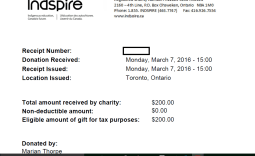
D.M. Wiltshire has chosen my entry in her “If I had 100 Dollars” contest as the winner, which means my nominated charity, Indspire, is the recipient of not $100, but $200, as she has doubled the initial amount promised.  I am honoured by my entry being chosen, and have matched her donation to Indspire.

You can read my original entry here.

indspire receipt

Reblogged on WordPress.com

Source: Winner of the ‘If I Had 100 Dollars’ Contest

Spinnings garners more 5 star reviews!

Many thanks to reviewers Liz Scanlon at Cover to Cover and K.T. Munson at Creating Worlds With Words for their generous reviews of Spinnings: Brief Fantasies in Prose and Verse.  Read their reviews at the links below:

Cover to Cover

Creating Worlds With Words

Spinnings can be pre-ordered from Amazon; release date is March 25th.

Reverse Migration: A Discourse into the Spirit of Place: Excerpt 4

Movement

The great chalk arable uplands of Norfolk have very little of wild left, being intensively farmed to wheat and barley, rapeseed and sugarbeet.  But even here, hedgerows, lanes, and verges have life, and many farms are part of stewardship schemes, leaving ‘weedy’ margins, not cutting hedgerow and lane verges, putting up nestboxes.

The bird I notice most ‘up’ here (up being by Norfolk standards only) is the yellowhammer, singing its ‘little bit of bread and no cheese’ song. (To me, it sounds more like ‘see me see me see me please’.)  It’s a bunting (ammer means bunting in Germanic (Saxon?) dialect, so, yellow-ammer = yellow bunting) of dry, open country, and these wide fields suit it well.  I am walking, on a  warm and sunny day, a section of the Roman road known as the Peddar’s Way, running north from Thetford to Holme.  It’s a lane here, bordered on both sides by hedges, with occasional opening s to the fields.  A hare lopes toward me:  it hasn’t seen me yet.  In every spot of shade it stops.   Eventually it realizes I’m here, although I’ve stopped and am as still as I can be, and it disappears into the hedge.

round barrow
Bronze Age round barrow near Anmer

The land slopes slowly down, south and west, to the valley of the Babingley.  On the highest ground are several Bronze Age barrows, round, slightly conical hills.  On the lower slope would have been the fields, and below that, closest to the water, some industry.  The barrows were ancient when the Romans – or more likely, auxiliary troops from somewhere in the Empire – built this road nearly two thousand years ago. There is a good chance they were from Pannonia, a Roman province lying south and west of the Danube, based on a military diploma – a document granting citizenship after twenty-five years of service – found in Norfolk a few years ago. Walking away from Pannonia to service in Rome’s most northerly province, they would have heard yellowhammers singing along the road.

***

If I continue south, I will come to the B1145, the old Saxon road running across Norfolk west to east, from the port of King’s Lynn to Aylsham, north of Norwich, where it meets a north-south road. If I walk north, I will come to the road from Flitcham to Docking called the Norman Road. I can find no documentary evidence to tell me this is truly a Norman road, but the name is tantalizing. Roman, Saxon, Norman roads, intersections of time and history.

In the triangle of land bordered by the Peddar’s Way, the Norman Road, and the by-way from Anmer to West Rudham lies another Bronze Age burial mound. This one is reputed to have had a second use: that of the moot-hill for the hundred, the administrative unit of the area in Saxon times. Moot-hills were the location for the courts and administrative debate and rulings and were supposed to be as close to the centre of the hundred as practicable. I walk by it on on a sunny January day, the track beneath my feet muddy and rutted. Did my Saxon ancestors come this way, to hear judgment at this ancient hill, walking in the same mud up from what is now West Newton?

Roads are not static things: they come in to being and they disappear. Sometimes traces remain only as cropmarks seen from aerial photographs and as earthworks on the ground, or even only as excavated archaeology, as is the case with some of the oldest trackways across the fens. Changes in land ownership moved roads; villages were deserted in medieval times by plague or by planned changes by the landowners and roads fell into disuse; enclosure of common lands removed access. But many of the roads shown on old maps of this area are still in use, as bridleways and footpaths. East of Castle Rising the old road from the village to the watermill on the Babingley is now a footpath leading to the bus stop on the A149.

Partridge run from the side of the track; here, they are mostly grey partridge, the native bird, and growing rare in most of Britain. Management practices on the two huge estates bordering the Peddar’s Way here have allowed it to maintain reasonable populations; the same practices allow the yellowhammers to flourish. Harriers – marsh, hen and this winter a vagrant Pallid Harrier – are winter hunters over these upland fields, joined by barn owl and short-eared owl, common and rough-legged buzzard, and little owl. Once, a road, extant on the 1797 map, ran across the Peddar’s Way to the hamlet of Flitcham, where an abbey stood before the dissolutions. No trace of the road, even as footpath or cropmarks, remains west of the Roman road, although it continues in use as a footpath to the east. But were it there, and I could walk it to Flitcham, I would come to Abbey Farm, where the remnants of the fishponds and water management canals of the abbey are now overlooked by a bird hide, and a huge old oak is home to a pair of little owls. These tiny owls – they are about the size of a starling – might have been known to the Roman soldier, but not from here. Nor would my Saxon ancestor have known them (although their first Norman overlords, born in France, might have). Introduced to England in the latter half of the 19th century, they are a bird native to Europe and Asia. It is just possible that my father, as a boy, would have seen them hunting mice over the pastures.