A Book Develops, Part IV

I am deep into a book with the unprepossessing title of Trade and Institutions in the Medieval Mediterranean. It is, if I understand correctly, an adaptation of its author’s (Jessica Goldberg) Ph.D. thesis, and it is, for me, absolutely fascinating.

This is, in part, how the world – and sometimes the plots – of my books develop: I read a research book, and every few sentences I think, “Oh, I can use that!” There are four trade alliances in The Casillard Confederacy series (as I currently envision it): one based on the Hanseatic League, one on the Scandinavian Kalmar alliance , one (well, ok, this isn’t an alliance) based on a blend of the Italian city-states – think Genoa with some aspects of Venice – and one based in my equivalent of North Africa.

I had some varying degrees of knowledge about the Hanse and the city-states and the Scandinavian alliance. (They all still need research, though.) I had none at all about North African trade in the 11-13th centuries, except to know, barely, it existed. But in the Empire series, I’d made my character Druisius’s family traders and merchants operating both in my Rome analogue, Casil, and from the southern coast of the Nivéan Sea, which is, of course, basically the Mediterranean.  The Casillard Confederacy is the same world, 500 years later, and the major characters are descendants of my original cast. Druisius’s family – some of them, anyhow – are still merchants and traders. Hence my need to learn about how trade worked in that period.

There are aspects of this book that don’t fit my fictional world – the focus is on the trade networks of Jewish merchants – the Maghribi traders – operating primarily in the eastern end of the Mediterranean (for an overview of the documents this detailed analysis is based on, see https://en.wikipedia.org/wiki/Cairo_Geniza) – but the organization of trade, the commodities, the methods of communication and transport, the difficulties to be overcome, how merchant apprenticeships worked – I can use all these. (And tidbits like the fact Jewish bankers in Old Cairo in the 11th C were using a double-entry bookkeeping system, predating any known usage in the Italian city-state banking systems.  Maybe. If I can slip that in without it sounding like, look, I did my research!)

This is just one aspect of how I build both a world and a character. I immerse myself in the history – in this case the world of Mediterranean trade  that Goldberg has so masterfully laid out, and it becomes part of one or more character’s story. If I’m lucky, that transfer will happen naturally, shaping who the character is, how they think, their loyalties, their presumptions of how the world works, the conflicts and dissonances that happen when confronted with another way of thinking and doing business.

But it’s not the only aspect. People are shaped by their cultural environment, but as I alluded to in the last entry in this occasional series, they’re shaped by their landscape, too. That will require a different sort of research. Meanwhile, back to bales of indigo and flax, and the tribulations of weather, markets, and unreasonable customs charges.

A Book Develops, Part III

A novel – or its components: character, theme, plot, setting, language – has  many sources, many experiences, real and imagined, that work together to create something whose whole is greater than its parts. I am a writer of place, of landscape, and of characters who are shaped by the places they call(ed) home. Many of those places are drawn from my own experiences.

In An Unwise Prince, one of my characters, Cenric, has stuck close to home, a medieval trading centre. Kirt, his partner, has travelled widely, an explorer, a risk taker. Luce has travelled too, but in pursuit of her education in medicine. Then there’s the fourth—young Audun, Cenric’s son, seventeen or eighteen, just finished what might be considered his secondary education, hoping to go home for a while before his next term of study.

I knew Audun was from Torrey, a coastal village (it has a few brief mentions in the Empire series) where his mother runs a workshop making baskets from the reeds and willows of the marshes. I’ve been reading pretty widely on the pre-drainage landscape and ways of life in the fen country of England—not so much for research but because it’s a landscape I love, a love that perhaps has its roots in my genes—or at least in family stories. I’d had a few thoughts about how to use this information to flesh out Audun’s character a little, but they hadn’t coalesced.

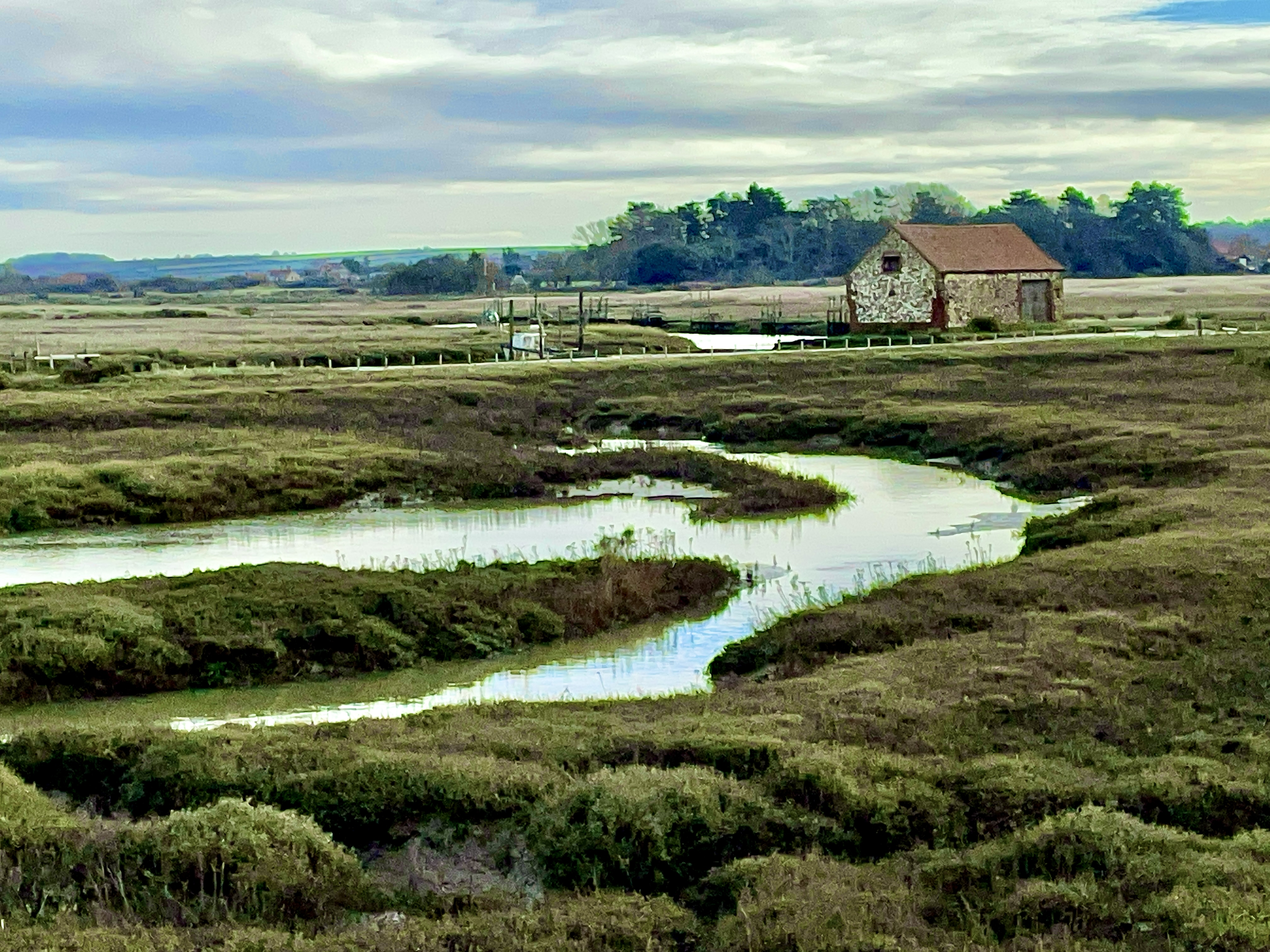
Then I started to read Nick Acheson’s The Meaning of Geese, a book about the flocks of geese that return each year to north and west Norfolk to escape the Icelandic and Scandinavian and Russian winters. Acheson—who is a friend of the friend who insisted I needed to read this book—writes in part about his own teenage experiences in the coastal marshes of north Norfolk; about places I know, have walked, can picture in detail. I can hear and feel and smell and see the birds, the wind, the salt in the air, the long views. And suddenly, I had my key to Audun.

The Coal Barn, Thornham Staithe. My photo.

It’s not all there is to Audun, of course, but it lies at the heart of who he is. And gives him a knowledge that may prove useful, later in the story. Or so I think, at this moment in time!

A Book Develops, Part II

Well, I didn’t expect it to be almost three months before I had anything more to say about the next novel! (The first part of this occasional series is here.) January, though, was mostly taken up with finishing other tasks, primarily getting Empire’s Passing ready for release and completing a contracted edit. February took us to Spain, a road trip for birds and Roman ruins and medieval city centres; one of the things I wanted to experience was how remnants of the Roman Empire (or the Eastern Empire, in my fictional world) appeared in a countryside that wasn’t Britain. Something beyond the familiar, to make me see.

Sadly, I don’t have a photo of the image that had the most impact: part of an aqueduct in a random field, and in that field, a man walking his dog. Living with this ancient piece of infrastructure as background to his everyday life. That was the sense I wanted; it will metamorphose, by whatever alchemy happens in a writer’s mind, into what it’s like, 500 years after we last saw my world, to live with the remnants — tangible and intangible –of a past empire.

One of the hardest things I had to find was some scholarly books with a good overview of European history of the later middle ages – roughly 1000 to 1400. Eventually, through discovering the online syllabus to a university course covering that period, and checking its reading list, I ordered two books:

I’ve also signed up for a six-week online course on medieval universities, as the Ti’acha of the first series have developed into something fairly similar (but without the religious context).

I’m still writing exploratory short stories, which can be found, one a month from January onward, on the A Muse Bouche Review. This is a way for me to get to know my characters, and some of the conflicts that the story will be based around.

As my research and character development continues, I’ve realized there are two big challenges ahead of me: which bits of European history to cherry-pick for the books (there’s a LOT going on in Europe and around the Mediterranean in these centuries), and, maybe even harder, to write a novel or novels with at least four POV characters. Two is the most I’ve done before.

But as the book gestates, moving from concept to reality, its lack of a working title was nagging at me. (Titles and book covers make an idea more solid, at least for me.) So here’s a cover mock-up: a place-holder image, and the working titles for both the book and the (presumed) series: All of which may change between now and publication!

‘A wise prince should establish himself on that which is in his own control and not in that of others; he must endeavour only to avoid hatred.’
The Prince, Chapter XVII
Niccolò Machiavelli

Varril, the elected Princip of Ésparias when the story opens (at this point, at least!) is not a wise prince. Not at all. And on that, it seems, will hang the tale.

(As for the Casillard Confederacy – think of the Hanseatic League, often simply called the Hansard.)

More when there’s more to say!

A Book Develops: Part I

Even before Empire’s Passing, the last book in the Empire’s Legacy series, was partially written, people were asking ‘what’s next?’ To be fair, I had a glimmer of an idea – the same world, about 500 years later, with some aspect of the story derived from the trade alliance of the Hanseatic League.

Passing is done now; I’m just awaiting the paperback proof. It’ll be out in February. I’m in no hurry to write this next book, for many reasons. Key among them is that I know little of 13-14th C history, so I have a lot of research to do. But books evolve not just from plot but from characters—after all, it is the characters’ responses to the problems and conflicts they are faced with that makes a book interesting. And for me as a writer, characters simply appear, with much of their personalities in place, immutable except through personal growth, their responses to the circumstances of their lives.

Over the next—how long?—year? more?—I plan to record the development of this next book, as much to see if I can elucidate my own process as for anyone else. But you’re welcome to come along on the journey as this yet-without-a-working-title book emerges from research and imagination and craft.

So: where am I now?

Five characters of some importance, so far; one minor ones. Who do we have?

Cenric bé Casille, who describes himself as ‘a man of mature years and a merchant of standing and not insignificant influence’. He’d be about forty.

Kirthan del Candre de Guerdián en Leste, more usually known as Kirthan de Guerdián, another merchant, described by Cenric as ‘made of autumn oak leaves, shades of gold and brown from the short curls of his hair to the tips of his polished boots.’  A few years older than Cenric, known to his intimates as Kirt.

Luce bé Casille, Cenric’s sister. Physician, musician, mid-thirties.

Of some importance is Cenric’s son, Audun, who is about seventeen, and currently attending the equivalent of a cathedral school (equivalent because organized religion continues to play no part in my world) at which his great-uncle (Cenric and Luce’s uncle) teaches. The so far unnamed great-uncle will be an important secondary character, I think.

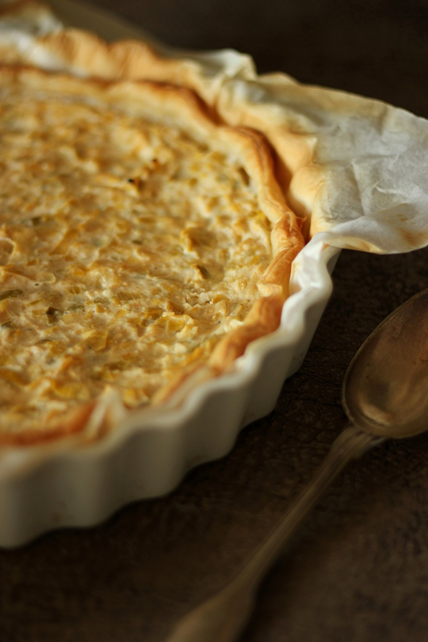
The first three characters (and the minor one of Cenric’s housekeeper) are introduced in an exploratory short story called The Onion Tart, published this month in A Muse Bouche Review. There will be more of these character-exploring stories: some may become part of the book, some won’t. I don’t think The Onion Tart will, but its description of the meeting of Cenric and Kirt will be background (and canon!).

Image by magdus from Pixabay

Meanwhile, while Cenric and Kirt and others tell me little bits about themselves, my first research book is Seb Falks’s The Light Ages: The Surprising Story of Medieval Science. Its focus is the 14th C, but the advantage of writing historically inspired speculative fiction is I can borrow from adjacent centuries, as long (my own rule) I’m not blatantly anachronistic with technology.

More to come, when there’s more to say!

Part II is here.