Show, Tell, Hint

Working with one of my editorial clients a few weeks ago, I pointed out to him that he had several dropped story threads in his novel.  “But,” he said, “the entire action takes place over only a few days. Not everything can be resolved in that time.”

My response?  There’s a difference for the reader in leaving a story thread in a place where the reader can speculate about it, and just dropping it.  In one case in my client’s novel, the protagonist had expressed (to himself) his interest a woman he worked with. And that was it. The brief scene was there for a number of reasons, but mostly to show that, regardless of personal grief and a building complex political situation, the protagonist wasn’t entirely wrapped up in those two things. But it went nowhere, leaving the reader unsatisfied.

I made a few suggestions, and in the next draft there were a two more brief scenes of interaction between the two which fit smoothly into the narrative, and leave the reader with the hint that this relationship’s going somewhere. We don’t know it, but we can sense it, and that’s enough. Readers don’t need every thread tied up neatly; in fact, it’s good to leave a few minor open-ended questions for them to speculate about, a technique that helps keep a book in their minds.

In my own work, I have a few of these, the most prominent being a question of what happened to two of my characters. No one really knows, but suggestions are made, the search for them has a role, but in the end, I leave it to the reader to decide whether they’ve survived or not.

There’s another way to use ‘hints’ instead of showing or telling, again to leave questions in the reader’s mind, and that’s to be ambiguous. Not often, but this is the classic ‘is Deckard a replicant or not?’ question from Blade Runner. But the ambiguity doesn’t need to be that central; it can be about a characters’ motivation, or the nuances of a relationship.

Here’s an example from one of my books:

“Cannot we both just be content with what we have, at least for a little while?” I said, straightening. “You are alive, and recovering, and you have Lena, and the baby very soon.”

His hand was still on my arm. “And you, mo duíne gràhadh?”

My beloved man. A sudden restriction in my throat made my voice hoarse. “I have enough,” I managed to say, “being here. With you.”

The first-person narrator here interprets the question ‘And you?’ to mean ‘can you be content?’ – a reasonable response to the first statement he makes to the second character.  But there’s a second interpretation: he has gone on to say ‘you have Lena, and the baby…’  The question ‘And you?’ can also mean: ‘Do I have you, too?’ 

In this case, I know which of these two questions was really being asked (and no, I’m not telling.) But occasionally, I don’t know the answer, or not at the time I write it. And sometimes these ambiguous hints get clarified later in the story, and sometimes they don’t – allowing, again, for speculation.

I believe that for a reader to be fully immersed in a story, there needs to be these unanswered questions that involve them in the world, not just show it to them. What did happen to the Entwives in The Lord of the Rings?  What was it Ada Doom saw in the woodshed? Does Shane ever return?

(By the way, I think Deckard is a replicant. Your thoughts?)

Lady, In Waiting, by Karen Heenan: A release day review.

Robin Lewis – a man who can handle the intrigue and diplomacy of the Tudor courts but prefers his books to people, is skilled enough with words to weave a web with them to save his life but can’t express his feelings, and is no one’s idea of either graceful or handsome – is by far my favourite fictional character from all the books I’ve read in the last few years. Robin is also a man for whom marriage is an unlikely union, especially in middle age, solitary and set in his ways.

But marry he has, to Margaery Preston, an unconventional young woman of intelligence and learning, at her proposal. A marriage of convenience, a compromise that allows Winterset, Margaery’s family estate in Yorkshire, to return to her while allowing Robin, who has rented it for some years, to continue to live there among his books and the isolation he craves.

Written in Heenan’s impeccable prose, Lady, in Waiting is told through Margaery’s eyes – and what a narrator she is!  Robin, many years older than his bride, has one idea of what this marriage should be: in name only. Margaery has another: she wants to be Robin’s wife in all ways. But this is far from the only tension between them: Robin is called back to the court to work for Queen Elizabeth’s principal secretary, William Cecil, and Margaery is to be one of her women, a chamberer, spending her days in the queen’s presence to do her – or her ladies-in-waiting’s – bidding. Neither should speak to the other of what they learn, but which vow takes precedence: the oath to the Queen, or the bonds of marriage?

Margaery’s doubts and fears, her determination, her joys, and her sometimes wry sense of humour: ‘my virginity lingered like a bad cough’ as she grows into both her roles make for compelling reading. As she comes to both understand and love the complex man she has married, she comes to understand herself, as well. As the years progress, Margaery’s life is not always easy. Trauma, loss and grief shape her life as certainly as love and politics, and growth and acceptance are sometimes very hard. Heenan neither glosses over this nor over-dramatizes it, but expresses Margaery’s reactions in a sensitive, realistic way.

The personal story  of Margaery and Robin’s marriage provides the window through which we see the politics of the day: Elizabeth’s possible (or impossible) marriage options ; the unwise, dangerous secret marriage of another Tudor descendent; the implications of Mary, Queen of Scots’ marriage to Lord Darnley. These were important decisions, choices made that had repercussions both personal and political.  The combination of the story that Margaery tells of her marriage and private life, contrasted with these acts on a larger stage, sets the story fully in its time, without robbing it of its intimacy and universality. Highly recommended.

Purchase link: http://Books2read.com/tudorlady

Let’s Talk Success – Again

I spent half an hour yesterday consoling? advising? a new indie writer about ‘success’.  They have one book out, another on its way. They’re worried about sales, about marketing, about making a name for themselves. Here’s what I, the ‘seasoned indie author’ told them.

We live in a world where the popular measure of success is celebrity; fifteen minutes of fame and making the big bucks. But the chances that you can make a living from writing novels, and only writing novels, is miniscule. Look around you, I said. In this very bookish town in which we live, we had three nominees for the Governor General’s Award (Canada’s major literary fiction award) this year. All but one have other careers, and the one who doesn’t is a retired professor. In the ‘before days’, when there was an open writing space freely available to all on Monday mornings, I’ve shared table space with yet another Governor General’s Award short-listed author (who also has another career) and an Edgar-nominated mystery author (who also has another career) and a Stephen Leacock award short-listed writer (who also, etc….). I’ve read at literary festivals with some pretty big names, too – and almost all these writers do something else other than write novels: teach, practice law or work in warehouses, are system analysts or build houses.  And these examples, I will note, are all (except two) traditionally published authors.

This doesn’t mean your writing is a hobby. It doesn’t mean it isn’t viable. It doesn’t mean there aren’t a few people who can make a living at it. And maybe you’re one of them.

And maybe you’re not. But if you’re not, you’re in very good company in the literary world. You shouldn’t think less of yourself, or that you’re a failure. I consider myself a successful writer, but the actual profit from my books isn’t a major part of my yearly income.

But:

  • ‘your books got me back into reading’
  • ‘your books are my go-to when I need to escape this world for a while’
  • ‘I dread the day when you stop writing this series’
  • ‘I’m waiting for your new release more than any other book in 2022’

and many other similar expressions of what some people find in my books is my measure of success. If your stories resonate with a few readers; if they bring smiles to their faces or make them ask themselves hard questions; if they read until 3 a.m. because they can’t put them down, or leave the light on to sleep because you terrified them – isn’t that success?

Did the new author take this in? I don’t know. But I hope so. Because they are talented, and have stories to offer to the world that some readers will fall deeply into. I’d hate them to waste their time and energy and talent worrying about only one definition of a successful writer.

Image by Gerd Altmann from Pixabay 

Spotlight on: The Sins of the Father, by Annie Whitehead

The Sins of the Father: Tales of the Iclingas Book 2 by [Annie Whitehead]

The Sins of the Father is out today, September 15th!                                        

Here’s the author to tell us a little about this long-awaited sequel to Cometh the Hour.

The Sins of the Father is the follow-up to my novel Cometh the Hour, about Penda, the last pagan king of Mercia, his struggles to achieve and maintain independence from the aggressive kingdom of Northumbria, and his quest to avenge his kin, especially his womenfolk.

Now, his sons have come of age, as have the children of Penda’s nemesis in Northumbria. All of them are affected by their fathers’ antipathy. The new novel tells the stories of the members of this next generation, and how they try either to emulate their fathers, or plough their own paths, and how this leads to tension and, ultimately, war.

Matters have been complicated by the fact that some of these children have married into the other family, thus blurring the lines of loyalty.

From this tangled web Ethelred, the youngest of Penda’s children, a boy when all the major battles of the first book occurred, feels he has less investment in the feud, but this leads to massive guilt on his part that he might let his kin down by his lack of ambition. He sees his warrior brother wearing their father’s mantle, feels cold in that large shadow, and all he really wants to do is live quietly with his Welsh love.

Fate intervenes when, just as in his father’s day, the womenfolk of Mercia must be avenged. Now Ethelred’s task is to end the feud, once and for all. Can he honour his father’s memory yet keep his conscience clear, and find his way back to his Welsh love?

What few have realised is that wars are not always fought by men on the battlefield, and the daughter of the Northumbrian king has been given a deadly task of her own. Will she become the murderer that her father and brother wish her to be, or can she turn away from her heritage? For all involved, the stakes are high and even victory demands a heavy price.

Available from Amazon

Bjørn Larssen’s Storytellers in Audiobook Format

From Tantor Media September 7th.

If you don’t know this marvellous book, here’s my review from its release day in 2019.

Storytellers-cover

Set against Iceland’s harsh but beautiful landscape in the late 19th and  early 20th century, Bjørn Larssen’s debut novel Storytellers explores the multi-generational effect of the evasions, embellishments and outright lies told in a small village. The book begins slowly, almost lyrically, pulling the reader into what seems like situation borrowed from folktale: a reclusive blacksmith, Gunnar, rescues an injured stranger, Sigurd. In exchange for his care, Sigurd offers Gunnar a lot of money, and a story.

But as Sigurd’s story progresses, and the book moves between the past and the present, darker elements begin to appear. Gunnar’s reclusiveness hides his own secrets, and the unresolved stories of his past. As other characters are introduced and their lives interweave, it becomes clear that at the heart of this small village there are things untold, things left out of the stories, purposely re-imagined. Both individual and collective histories – and memories – cannot be trusted.

The book was reminiscent of Kazuo Ishiguro’s The Buried Giant, in both theme and mood. Both books deal with the unreliability of memory; both are largely melancholy books. And perhaps there is allegory in them both, too. Storytellers is a book to be read when there is time for contemplation, maybe of an evening with a glass of wine. It isn’t always the easiest read, but it’s not a book I’m going to forget easily, either.

Release Day Reality

My sixth book is out today.

The cat just loudly deposited a hairball on the rug. Her retching woke me.

The dishwasher needs emptying; the birdbath filling.

My day planner tells me I have a guest post due today, reading to do for a book review, and various tasks related to my volunteer job as editor of our community newsletter, as well as feedback notes to write for a first-time author I’m mentoring.

In other words, the world hasn’t stopped because I have a new book out, and, you know, that’s ok.

Brian and I will go out for ice cream at our favourite place by the river a little later today, to celebrate. (Normally, we go out for a meal, but as it’s also our 40th wedding anniversary this week, we’ll do that on Friday.) Friends are sending congratulations. I am suffused with the sense of accomplishment and pleased with the book’s reception so far. It’s the sixth book in a series; there will be a small spike in sales this week, and then it will trail off, to be purchased as people work their way through the first five. Six years and six books into the life of an indie author, I know it’s a long game.

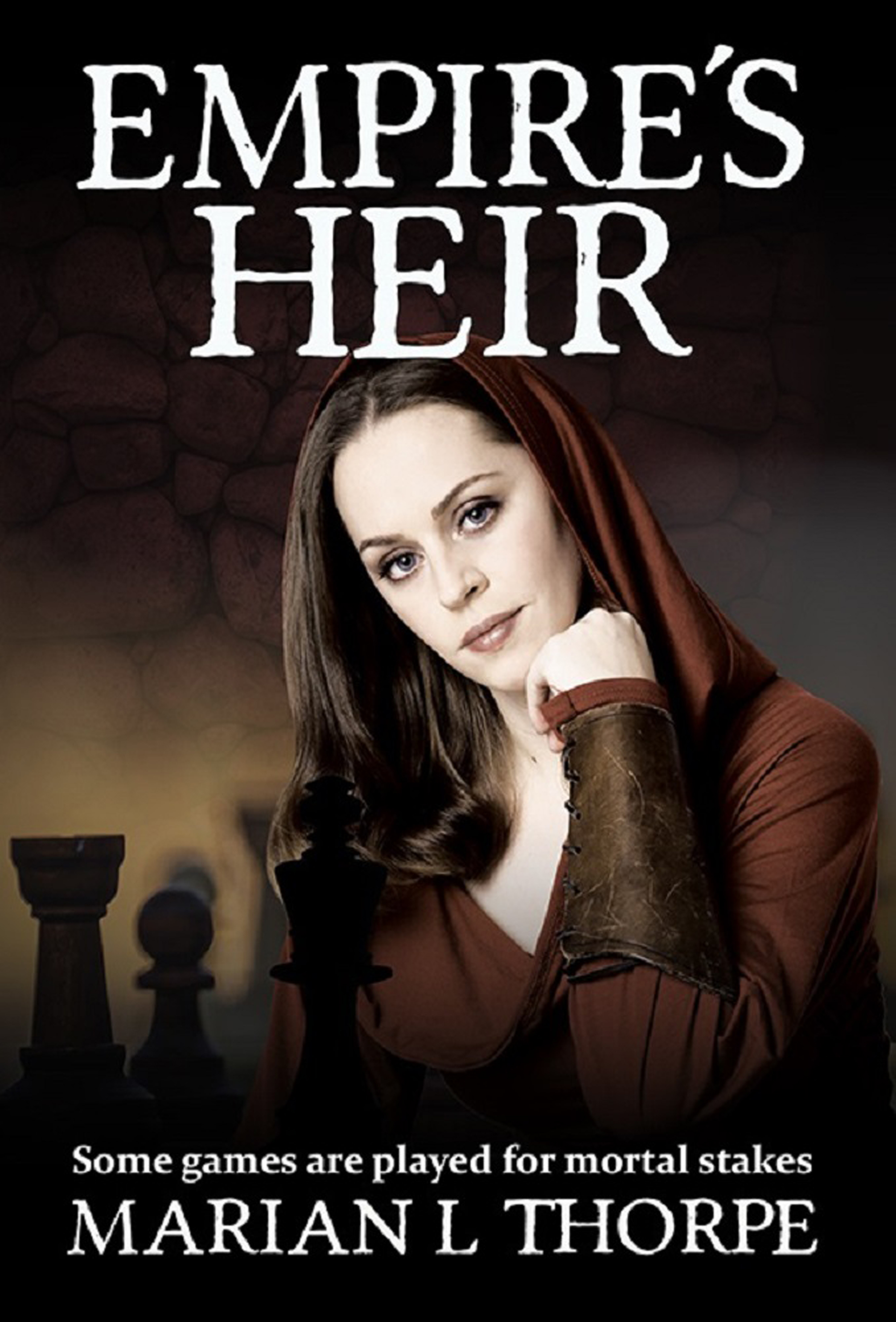
Next week I’m taking a holiday, travelling a couple of hours north to Lake Huron and Georgian Bay, for a few days walking and birding, leisurely brunches on outdoor patios, some pleasure reading, and whatever else catches my fancy. After this short break. Heir will take up some of my time – guest blogs, interviews, a blog tour, perhaps some readings, but it’s out in the world, no longer mine alone but belonging too to its readers, to make what they will of it. Both the next two books – Empress & Soldier and Empire’s Passing – are nudging me: work needs to start in earnest there.

As it will. Alongside dishwashers to empty, and meals to cook, and community work…and hairballs.

The Unseen, by Laury Silvers: A Release Day Review

The Unseen, as well as being a police procedural set in 10th century Baghdad, is also an investigation of the balance men and women must find between their existence in the physical world and their desire for human connection and love, and the call of the immanent god to a greater purpose, the subsumation of the life of the flesh in the life of the spirit. That Laury Silvers manages to balance the temporal story of her characters with their spiritual journeys in both a setting and faith unfamiliar to many readers (including me) speaks to her skill as a writer.

The title, as always with Laury Silvers’ books, has multiple meanings within the text, but one ‘unseen’ is the Twelfth Imam. Hidden from view; his very existence is a point of debate and division among the Shia of Baghdad. With tensions already high, when a man is killed in a way that parallels the death of a martyr two hundred years earlier, the city is ready to explode into violence. Grave Crimes investigators Ammar and Tein must find the man responsible before the caliph’s troops enforce peace. But Tein’s sister Zaytuna has a prophetic dream that points to the killer – or does it?  And will Ammar and Tein listen?

As in her earlier books, The Lover and The Jealous, 10thcentury Baghdad is evoked through the senses of the characters. We see the world through their eyes, smell what they smell, taste what they taste. We know, their inner doubts and turmoil as the events of their lives, personal and public, conflict with their values. 

Parallels with today’s politics abound. Difference of opinion over who should lead them causes rifts among the Shia, providing opportunity for other to infiltrate and to feed those fires. Senior police officers are all too ready to provide a scapegoat for the crime. But alongside these conflicts, Zaytuna and Tein, and Ammar too, all have a chance to find a path to a modicum of contentment in their lives, although none easily.

By this third book, readers know the main characters well, and I found myself strongly invested in their personal stories, but also intrigued by the solving of the crime. Highly recommended for readers who want a book that asks a lot, emotionally and morally, of its characters, and does not pretend there are easy solutions.

Laury Silvers is a North American Muslim, raised in the United States but finally at home in Canada. Her research and publications as a historian of religion focused on early Islam, early Sufism, and early pious and Sufi women. She taught at Skidmore College and the University of Toronto. Silvers also published work engaging Islam and Gender in North America in academic journals and popular venues, was actively involved in the woman-led prayer movement, and co-founded the Toronto Unity Mosque. She has since retired from academia and activism and hopes her novels continue her scholarship and activism in their own way. She lives in Toronto.

Laury’s website

Amazon.com link

A Conversation with Susan Hancock

Dr. Susan Hancock is a retired university lecturer, now writing a unique science fiction series. Set in Elizabethan England, Anstey’s Kingdom involves travel in time and space and the conflicts between love, safety, and freedom in a dangerous world. I’m waiting to finish the first trilogy before reviewing the books, but the premise was so intriguing I asked Susan to chat with me about her books.

Tell a new reader a bit about your books: setting, concept, main characters.

The setting for my Anstey’s Kingdom trilogy is split between sixteenth-century Devon, England and a planet in the Auriga Constellation. Since the latter is the home world of my protagonists, I have named the planet Domum-Orbis. There is a rationale behind the Latinate oddments, but I can’t reveal it without giving a massive spoiler relating to Anstey’s Legacy: No Greater Love (the third book.)

The books began with a series of ‘what if’ questions. What would it feel like to suddenly discover that you weren’t human? What would it be like, as a refugee fleeing from war on a far planet, to find yourself in the power of the man who had appeared to offer you freedom…at a price? How would you cope with being so very different in a time and place where such difference could endanger your life?

Kat (Kathryn Wrenn) is my female lead. She has been brought up in a comfortable household in Elizabethan England and has no idea at all that, while she has a human father, her mother is from Auriga and not human at all.

Thomas Alban escaped to Earth with his parents when he was just 5 years of age. He knows his origins, but is contracted to work for the eponymous Anstey for the rest of his life, as one of the technicians running the underground complex in which the exiles hide.

Do you have a favourite character? If so, why?

Oh yes, Thomas is such a lovely, mixed-up man. Book two, Anstey’s Revenge: Will Love be Enough? Is really his book, as he struggles to come to terms with extreme depression and thoughts of self-harm. I suppose, in a bizarre way, I feel guilty about everything I’ve put him through. I’ve certainly cried at my laptop over his struggles.

Given the time period and setting, it’s possible to read your books as an allegory for religious persecution in Tudor times. Is there any basis for that, or is that just the Tudor history geek in me reading too much in?

I can see how you might read it in that way, but it’s more of a distanced comment on the endless persecution of the vulnerable, for whatever reason, and the ways in which refugees can be exploited. I’m thinking, in particular, of people smugglers and sex-traffickers here. I’m not underplaying the extreme dangers of existing in the Tudor times, but it is perhaps telling that James, whose relationship with human Robert would mean death if they were caught, prefers to take his chances in the outside world rather than endlessly labour, unpaid, in Anstey’s Kingdom. A freedom/safety conundrum. The violence of the times is more than matched by the violence perpetrated by Anstey, and his resident thugs, on anyone who defies him.

How did you research the period, specifically regarding the setting and the real places mentioned?

I spent a lot of time working in the North Devon Records Office in Barnstaple, Devon. Everyone there was very helpful and it was fascinating to read so many books relating to the history of the area, together with maps and reproductions of wood-cuts, all giving a real ‘feel’ for the period. Of prime interest—details of the pirates who occupied Lundy Island at that time (I later visited Lundy) and information on the floods which swept down the Bristol Channel during the period covered in book 2. I had to shift the date of the floods slightly, but was able to make reference to specifics of a scene which is the subject of a woodcut from 1607.  

Staying at the Royal and Fortescue Hotel in Barnstaple, which was once the Fortescue Arms where Kat and Thomas also stayed, gave me a really shivery feeling, particularly looking at the ceiling in their bistro which dates from 1620. [Forgive the tendency to refer to my protagonists as if they are real people—they have come to feel as if they are to me.]

I also researched on-line and made good use of books such as Ian Mortimer’s invaluable The Time Traveller’s Guide to Elizabethan England.

Your academic specialty, if I’ve done my research correctly, is children’s literature, especially the concept of the child within literature. So, two questions arising from this: Do you have a favourite children’s book – and if you do, why that book? Second question: what drew you to write adult books?

My instinctive reaction to your first question is to say Ursula Le Guin’s Earthsea books. However, I’m conscious that this is the choice of the adult reader in me (perhaps evidenced by the fact that Tehanu, the perhaps-adult fourth book, is my favourite of these.) Going back to my own childhood, I was totally enthralled by the books of Rosemary Sutcliffe, Geoffrey Trease and Henry Treece. As a rather solitary child, I used to creep about the house and garden in my favourite emerald green dress, pretending to be one or other of the Celtic or Ancient British characters from fiction (only occasionally a Roman.)

I’m sure, however, that I’ve missed out loads of other significant books and will immediately think of them once this interview is concluded!

There is a fairly lengthy hiatus between my non-fiction writing on children’s literature and my embarking on writing adult books. For a relatively long period I was wrestling internal demons and had no desire to write anything (in fact I did a lot of very inexpert painting and was convinced I would never write again.) I can’t really explain why I suddenly became obsessed with a story and a ‘people’ taking shape in my mind (answering the ‘what if’ questions I outlined earlier.) All I know is that the words fairly poured out of me, and the characters took a firm grip on my psyche, demanding that their stories be told. I think of myself more as a story-teller than a writer, and perhaps that is a legacy of my children’s literature studies. So many incredible plots and happenings people that world. That said, my books are, I confess, very violent and sexually explicit.

I have only a superficial knowledge of Jungian thought, but I believe you have quite a bit more. How has this influenced your writing? Are there aspects of your book that should be viewed through Jungian concepts?

My interest in Jungian psychoanalytic criticism arose from my research into the ways in which child-characters are formed in literature for children and in myth, legend and folk tale. A part of that involved looking at miniature characters, giants (the ultimate hyperbolic child), and what such constructions—from Tom Thumb to Tommelise to Nils Holgersson to Issun-Boshi—reveal of the societies in which they come to life. So, the short answer to your question is “no” I don’t think it has influenced me (consciously at least!) A psychoanalytic critic might well have a field day analysing my books, but that critic is no longer me.

Did you read science fiction prior to writing your series? If so, what are your favourite books? And if not, what drew you to this genre?

I enjoy an eclectic mix of books, with my science fiction reading coming from books such as Anne McCaffrey’s early dragon books, concerning colonists from Earth who settle on the fictional planet of Pern, and the Crystal series. My late uncle, who had a PhD in nuclear physics from Cambridge and was at one time President of the British Interplanetary Society, loved her more space-oriented books, in particular the ‘Brain and Brawn Ship’ series, and introduced me to some of them.

Do you listen to music for inspiration? Did any songs (or poems or other books or movies/tv) inspire or shape your concepts or characters in your series?

Words from poems and plays do float through my head while I’m writing. Certain lines suggest themselves as analogous with certain characters and actions. For example, my WIP currently involves my character feeling the compulsion to share her story, no matter who it is with—in this case her sleeping baby daughter. It made me think, inescapably, of Coleridge’s The Rime of the Ancient Mariner.

I enjoy listening to music, but my choices are more about mood than any influence on my writing. Although, thinking of it, perhaps love songs for some of my scenes.

Who are your greatest support people for your writing?

My husband Peter, who loves to read my work and is quick to point out plot holes and bits that don’t work, is my main person. My neighbour, Yvonne, is also very supportive and encouraging as a rough draft reader. Latterly my granddaughter (who has an MA in publishing) did some excellent editing work (pointing out problem areas rather than a line-by-line edit) but refused, point-blank, to look at any ‘sex’ scenes written by me.   

And is there a four-legged furry friend (or two) who helps out?

Sadly, my furry friends did not survive to see the publication of my books. I’m sure they would have enjoyed sitting on them. Jasper and Rosie (ginger tom and sister tabby) were our much-loved feline friends and dear Lucy, a rescue cross between a Jack Russell terrier and a German shepherd (I know, the mind boggles) was our canine companion. They were a great age when they finally succumbed (18, 17 and 16 respectively) and we haven’t had the heart to replace them.

What’s next?

I have just completed a sequel to the ‘Anstey’ books, which concerns Kat’s and Thomas’s three children. This is currently away for editing, cover design etc. and should be out in September. Work is also in progress with a prequel, which is currently giving me problems—the form of the solo narrator’s voice and single POV are not my usual mode of working…we shall see.  

This last question is very personal. As one cancer survivor to another, there is a theme of anger, of violation and PTSD among your characters. Do you think this is a reflection of what we go through in diagnosis and treatment, expressed in your books? If so, was this conscious – a form of therapy?

Yes, the writing was definitely cathartic: there is also a lot of me written out in Thomas, plus the books gave me a way of regaining a feeling of purpose in my life. A couple of things about the cancer affected me badly: the first was developing a sense of guilt that I was still alive when so many weren’t. I became very numb, depressed and uncertain why I should be living. What was the point of my survival? How many better and more purposeful lives could have been saved in my place? Also affecting me was a certain anger at the complete loss of agency in my life. I had difficulty in coming to terms with damage to the nerves in my spine (a mix of the effects of radiotherapy and the activity of the original tumours themselves.) It took a while to get used to not being able to walk about, to being stuck in the house, totally dependent on help to go out. Starting writing was a little like a dam bursting. A point to my life and something I didn’t need to be able to walk to do.

I appreciate being given the opportunity to talk about it.

Thank you, Susan. Your answers will make your second and third books (still on my TBR list) all the more intriguing!

An image posted by the author.

You can find more information about Susan on her website, or connect with her on Twitter.

Featured Image: Eighteenth century view of Barnstaple, Museum Of Barnstaple And NorthDevon. Public Domain.

Shaman Machine the Mentor, by Trenlin Hubbert: A Review

On one level a meditation on sentience and consciousness, on another a story of shaman-machineexploration and adventure on a water-world, Shaman Machine the Mentor contains some beautifully-written and insightful passages:  “A commotion of scraping chairs opened a slim gap of welcome.”; or, “I grew up in a house filled with chaos,” he replied. “I was crowded out by indifference.  There was no room for a child in there.”

Both these passages occur in the first third of the book, where the writing is noticeably stronger than the rest of the narrative.  After a promising beginning, introducing us to the robot Chance, the wandering free spirit Ziggy, and the contained city in which Ziggy tries to find some semblance of freedom, the story extends outward to encompass another group of characters, and then another, and a different world.  In this widening of the scope and themes, the story loses its centre. The core characters in the next two-thirds of the book, the troubled architect Alex and the bot Chance, are trying understand each other and their worlds. Alex uses shamanic drugs and alcohol to try to still his critical, sarcastic mind but refuses to accept a different reality when it’s presented to him.  Chance uses its programming and its capability to learn from conversation to expand and encompass the new experiences presented to it. The machine appears to be master to the man.

There’s a good novel in Shaman Machine the Mentor. The book would have benefited from a developmental editor who could have guided the author towards a tighter and more focused narrative. As it stands now, there are too many events that don’t seem to really add to the story and an almost scatter-gun approach to events which the reader then needs to tie together. Some of the technology as proposed was fascinating but not fully fleshed out: the use of sound-clips from a new world to create interwoven agglomerations of spheres as the building blocks for a new city on that world, for example, should have been more important than it was, given the world’s reaction to that city. I wanted to know why the sentient beings of this world reacted as they did to a city based on their own ambient sounds, and how (if) that technology was used as they moved forward.  And while the ending is ultimately beautiful and appropriate, it is reached as an epilogue.

But regardless of its flaws, both the structural ones I have discussed and its need for a copy-editor to weed out inappropriate commas and semi-colons, and the very occasional mis-used word, I find myself contemplating the themes of, and questions raised in, Shaman Machine the Mentor well after I finished the book.  They are not superficial questions, but ones that ask us to think about the meaning of ‘humanity’.  Overall, 3 stars.

I received a copy of this book in exchange for an honest review.

Coffee, anyone?

It’s the first of the month, the day my Amazon payments show up in my bank account.  T.S. Eliot wrote “I have measured out my life in coffee spoons,”….well, I measure my royalties by how many cups of coffee I can buy.  This month it’s two, as long as they’re from Tim Horton’s or McDonalds, and nowhere fancier.

I’m not complaining…. I knew I’d never make a lot of money at this, and if a few people are still buying one of the books each month, that’s good.  There are a few more dollars trickling in from paperback sales at different sources too.  This afternoon I’m heading downtown to a couple of other stores that I’ve heard are open to carrying indie author books, and to give a few copies away to the annual books-for-kids (up to 18 years, so Empire’s Daughter, as a young adult book, qualifies).  And I’ll probably stop at my favourite coffee shop….and blow my entire month’s Amazon royalties on one cup of coffee!