A Cat’s Cradle, by Carly Rheilan: A Review

A Cat’s Cradle is not a book for everyone. It is certainly not a book for those who rush to judgement, either of the author or her characters, nor is it a book for those who see the world in black and white, or who turn away from the realities of sexual abuse. (And yet, those things are exactly what the book is about.) It must have been a difficult book to write; it is a difficult book to read.
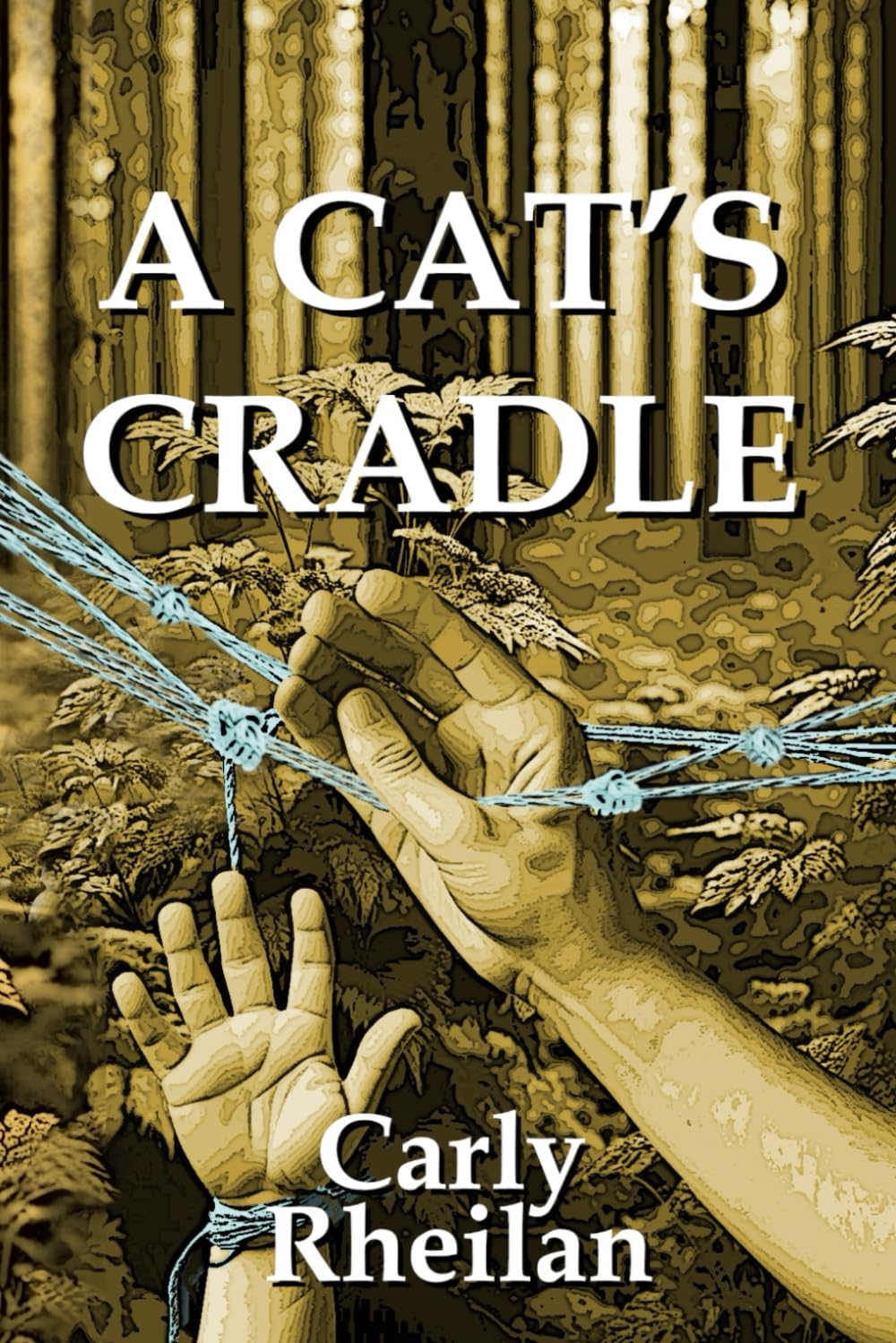
Mary, seven, lives in a small village where she is viewed suspiciously as an incomer, warned against being  ‘forward’ by her new teacher, and discouraged from making friends by her mother, who considers herself superior to the local people. Mary has no one to play with but her older brothers, who, in the way of older brothers, both torment and ignore her, using any excuse to leave her on her own. Her father has left the family, something her mother is trying to hide while also desperately attempting to keep up appearances.

Fourteen years earlier, Ralph Snedden abused and murdered a girl he was babysitting. He has served his time and been released. On a rare visit to his ailing mother, he encounters Mary. They are drawn to each other: Mary thinks she has found a special, secret playmate; Ralph convinces himself he can control his urges and be the friend Mary craves.

All villages have their secrets, their dark sides which are never spoken of, whether they are rural villages or urban ones. This one is no different. Families have them too, and when everyone is related to almost everyone else, much that is known is never spoken of, never explained. What happened fourteen years earlier is never discussed, but Ralph’s mother is a pariah, abandoned in her failing health by all but the district nurse and an exploitative carer. So many silences, so much shunning, so many layers of judgement and pride – and pain hidden under those layers. Would anything have changed, if honesty and openness had prevailed?

Author Carly Rheilan allows the characters’ words and thoughts and action to tell the story without judgement. Both Mary and Ralph’s decisions and motives are dispassionately shown in the context of their troubled lives, the elements that draw the two together. We are observers of Mary’s loneliness, of the inklings of danger she suppresses in the name of good behavior and politeness, but also of Ralph’s rationalization and self-deception, and his ultimate and inevitable lack of self-control.

Even after the climax of the novel – an ending I won’t spoil – secrets and self-deception remain, and it is up to the reader to interpret  the actions of characters, their compulsion to hurt and exploit or ignore the pain of others, the loss of many sorts of innocence, the desire to not admit to wrongs done or wrongs imposed; the desire not to see. A powerful, searing book for a mature, thoughtful reader.

Purchase link: https://mybook.to/CatsCradle

About the Author

Carly Rheilan was born in Malta and lives in the UK. She was educated in Oxford University (which she hated and left) and then at Brunel (a small-town technological university where she stayed for a PhD). As an academic and a psychiatric nurse she has done research into criminal justice, taught in universities and worked for many years in the NHS. She has children of her own and has also fostered two children with mental health problems.

Her novels address issues at the edges of psychiatry, crime and personal trauma.

A Book Develops, Part VI

Pages from The Diwan of Al-Mutanabbi,
Khalili Collections / CC-BY-SA 3.0 IGO, CC BY-SA 3.0 IGO https://creativecommons.org/licenses/by-sa/3.0/igo/deed.en, via Wikimedia Commons

Inspiration and understanding can come from the most unexpected sources. In my other blog, which focuses mostly on writing – mine and others’ – about the natural world, I mentioned, a week or two ago, that I was reading a collection of essays about landscape and place called Going to Ground.  One of these essays is by Amina Khan, on the link between Islamic writing about nature and the Romantic movement in English poetry and prose.

My fictional world isn’t ours, but I can’t pretend it isn’t based on ours, and in the cultures I’m writing about, trade with my equivalent of North Africa and the Middle East is an important part of the story. In an earlier instalment of this series, I wrote about my youngest point-of-view character, Audun, and his love for the sea and sky and saltmarshes of Torrey, where he grew up. Audun is seventeen, academic, and of course he’s written some juvenile poetry.

Audun, being who he is, is expected to travel, to learn more of the world before he enters a life of teaching, his dream being to eventually be the head of my equivalent of a medieval university. His great-uncle, whom he hopes to emulate, spent a few years in his youth travelling east, gathering histories, settling down to a life of translation and comparison with the histories of the west. Luce, his aunt, is a doctor, much of her learning done in eastern lands as well.

But what Audun was going to learn in those travels (outside of life lessons, of course) I didn’t know. Until I was showering today (why do ideas so often arrive in the shower?) and my mind made the connection between Audun’s love for nature and the Islamic writing Amina Khan described in ‘A Wild Tree Toward the North’, her essay in Going to Ground.

Organized religions don’t exist in my books, replaced by philosophy and personal faiths in a wide range of deities.  But religious writing can also be read for its poetry, and that’s how I’ll approach this. The bonus here is I’ll read some poetry that I probably wouldn’t have otherwise, and my world, like Audun’s, will expand.

Necessary Busyness

Watching the penultimate episode of Doctor Who last night, I realized (afterwards) that it was a rare hour in which my brain was totally engaged with story as it was unfolding. I wasn’t analyzing structure, looking for breaks in continuity or… well, I was going to say things that didn’t make sense, but then again, it was Doctor Who. Nonetheless, this is a rare occurrence now, my writer-and-editor’s brain always weighing if the narrative works, if it could be improved.

My brain is rarely still. It never was, but as a child my (undiagnosed) ADHD, of the day-dreaming, messy, begin-something-and-not-finish-it sort found what it needed by discovering new worlds in books. I once read six library books in a day (and they weren’t children’s books.) The Lord of the Rings was swallowed in three. Either that, or I was inventing my own elaborate worlds based on Star Trek or The Man from Uncle, or out in the fields and woods learning trees and birds and wildflowers. And like most people with ADHD, I could focus on a preferred subject for hours.

Somewhere in my sixty-six years, I learned to control my unquiet brain to some extent. But it can’t stand to be idle: I’m less obviously day-dreamy now, because that’s been channeled into the imaginary world of my books. But even though it’s a ‘preferred subject’ I can only write or plan for a few hours a day. And if I don’t have something else to focus on, I get bored. Moody. Unproductive. ‘Give me work!’ brain demands. (It doesn’t mean cleaning the cupboards, of course.)

Busy-ness is necessary for me. (And deadlines.) So, brain, looking at the year ahead – researching and writing the next book, a few short stories to write, a couple of editing jobs, chairing the community newsletter, said, ‘nope, this isn’t enough. Remember that creative writing group you were asked to lead?’  

I live in a 55+ community of active, retired adults. How many want to try creative writing?  Thirty. An impossible number for one group. Or even two. It’ll be four, occupying my Tuesday afternoons for the foreseeable future. Mostly beginners – but some novelists and poets already-published or agented-and-querying as well, people who have more formal education in writing than I do. I’ll get to learn, as well as teach, which is a bonus. But – the moment I agreed to do this, brain, which had been futzing around with character vignettes and some plot outlines for the next book, but no serious writing, said, ‘All right! Now it’s time to write! Fingers on keyboard, please!’  and began to unroll the story.

As perhaps I had secretly hoped it would. Maybe I do understand my brain a bit after sixty-six years. I will no doubt swear and whine and growl at it over the next months – but I will be writing and teaching, and researching and learning – all the things I love to do – and I won’t be bored.

But the cupboards probably won’t get cleaned, either.


Featured : Image by Megan Rexazin Conde from Pixabay

A Book Develops, Part V

Trade routes from central Africa to the Mediterranean, c 12-13th C. Illustration Cleveland Museum of Art. My photo.

Inspiration comes from many places, some random, serendipitous, some sought out. This week I drove the 1000+ km to and from Cleveland, to see an exhibition at the Cleveland Museum of Art called ‘Africa & Byzantium’, an exploration of mostly religious art produced in or resident in the lands of North and East Africa influenced by Byzantium.

But there’s no religion in your books, you might say. This is true – or rather, there are no large organized religions; personal faith is another matter – but it’s not religion per se that matters here. It was the communication, the translation of concepts and ideas I was interested in. The icon pictured below was possibly gifted to its Sinai monastery by Emperor Justinian himself, as he endowed the monastery in the mid-500s. It – and many other pieces of ancient art and writing – have been a part of the library of the Holy Monastery of St. Catherine since then.

In the new series set in my fictional world, the role of monasteries as repositories of knowledge and houses of learning is replaced by what the Ti’acha, the schools, of the Empire series have evolved into – the equivalent of the medieval universities not just of Europe but of the middle East and north Africa as well. So what writings – of philosophers from Casil and Heræcria and lands further east and south; of Heræcrian and Ikorani and Marai travellers, or even, at a more personal (for my new characters) level, of Cillian’s or Colm’s, Lena’s or Tarquin’s or Gnaius’s – might have found there way there, in original or copy, for Gerhart or Luce or Kirt to discover and learn from in their travels? Trade, medicine, history, mathematics, music, science: the knowledge held, exchanged, sometimes forgotten, the disciplines and interpretation of thought and ideas – all that still holds, even removing organized religion from the world.

I learned more practical, tangible things, too: the gifting of large brass trays, beautifully inscribed, as diplomatic gifts from the Mamluk sultanate; that a written language called Old Nubian existed; the trade routes from central Africa to the Mediterranean (invaluable); what block-printed linen of the period looked like; the three sources of treasured ivory. All useful things to be tucked away and possibly used, if and when they fit.

And, with pure serendipity, wandering the galleries before my entrance time to the exhibition, I walked into a room and saw – whatever the artist intended nearly 200 years ago – a portrait of my character Luce as a young student, studying medicine in an eastern school.

The Young Eastern Girl, Friedrich Amerling, 1838. Cleveland Museum of Art.
My photo.

Driving home along Interstate 90, I could feel this information slotting into the background of my world, hear the characters taking it in, shaping it to their experiences (and being shaped by it), becoming part of the world and character building. Both the book(s) and I are richer for it.

A Book Develops, Part IV

I am deep into a book with the unprepossessing title of Trade and Institutions in the Medieval Mediterranean. It is, if I understand correctly, an adaptation of its author’s (Jessica Goldberg) Ph.D. thesis, and it is, for me, absolutely fascinating.

This is, in part, how the world – and sometimes the plots – of my books develop: I read a research book, and every few sentences I think, “Oh, I can use that!” There are four trade alliances in The Casillard Confederacy series (as I currently envision it): one based on the Hanseatic League, one on the Scandinavian Kalmar alliance , one (well, ok, this isn’t an alliance) based on a blend of the Italian city-states – think Genoa with some aspects of Venice – and one based in my equivalent of North Africa.

I had some varying degrees of knowledge about the Hanse and the city-states and the Scandinavian alliance. (They all still need research, though.) I had none at all about North African trade in the 11-13th centuries, except to know, barely, it existed. But in the Empire series, I’d made my character Druisius’s family traders and merchants operating both in my Rome analogue, Casil, and from the southern coast of the Nivéan Sea, which is, of course, basically the Mediterranean.  The Casillard Confederacy is the same world, 500 years later, and the major characters are descendants of my original cast. Druisius’s family – some of them, anyhow – are still merchants and traders. Hence my need to learn about how trade worked in that period.

There are aspects of this book that don’t fit my fictional world – the focus is on the trade networks of Jewish merchants – the Maghribi traders – operating primarily in the eastern end of the Mediterranean (for an overview of the documents this detailed analysis is based on, see https://en.wikipedia.org/wiki/Cairo_Geniza) – but the organization of trade, the commodities, the methods of communication and transport, the difficulties to be overcome, how merchant apprenticeships worked – I can use all these. (And tidbits like the fact Jewish bankers in Old Cairo in the 11th C were using a double-entry bookkeeping system, predating any known usage in the Italian city-state banking systems.  Maybe. If I can slip that in without it sounding like, look, I did my research!)

This is just one aspect of how I build both a world and a character. I immerse myself in the history – in this case the world of Mediterranean trade  that Goldberg has so masterfully laid out, and it becomes part of one or more character’s story. If I’m lucky, that transfer will happen naturally, shaping who the character is, how they think, their loyalties, their presumptions of how the world works, the conflicts and dissonances that happen when confronted with another way of thinking and doing business.

But it’s not the only aspect. People are shaped by their cultural environment, but as I alluded to in the last entry in this occasional series, they’re shaped by their landscape, too. That will require a different sort of research. Meanwhile, back to bales of indigo and flax, and the tribulations of weather, markets, and unreasonable customs charges.

A Book Develops, Part III

A novel – or its components: character, theme, plot, setting, language – has  many sources, many experiences, real and imagined, that work together to create something whose whole is greater than its parts. I am a writer of place, of landscape, and of characters who are shaped by the places they call(ed) home. Many of those places are drawn from my own experiences.

In An Unwise Prince, one of my characters, Cenric, has stuck close to home, a medieval trading centre. Kirt, his partner, has travelled widely, an explorer, a risk taker. Luce has travelled too, but in pursuit of her education in medicine. Then there’s the fourth—young Audun, Cenric’s son, seventeen or eighteen, just finished what might be considered his secondary education, hoping to go home for a while before his next term of study.

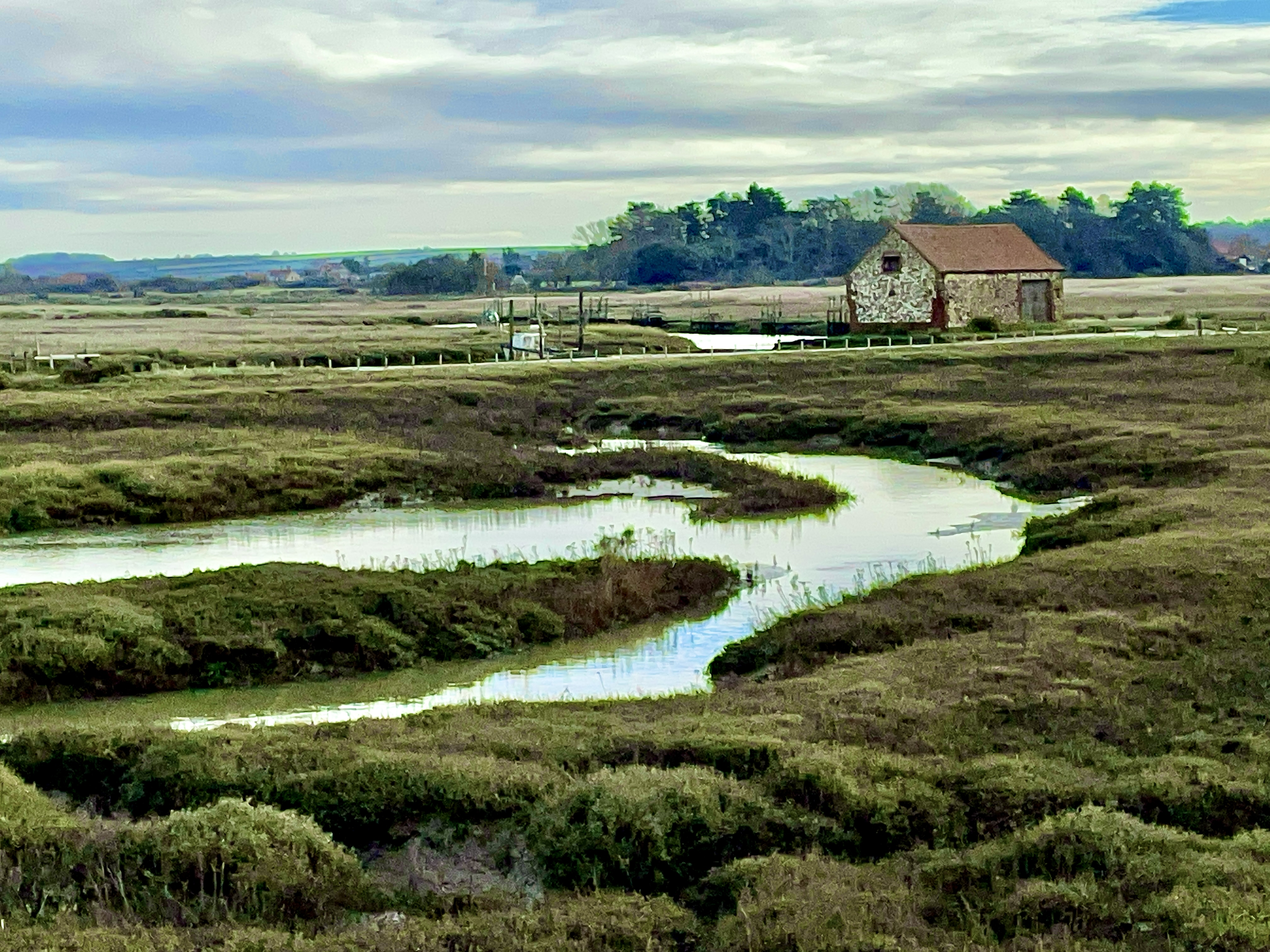
I knew Audun was from Torrey, a coastal village (it has a few brief mentions in the Empire series) where his mother runs a workshop making baskets from the reeds and willows of the marshes. I’ve been reading pretty widely on the pre-drainage landscape and ways of life in the fen country of England—not so much for research but because it’s a landscape I love, a love that perhaps has its roots in my genes—or at least in family stories. I’d had a few thoughts about how to use this information to flesh out Audun’s character a little, but they hadn’t coalesced.

Then I started to read Nick Acheson’s The Meaning of Geese, a book about the flocks of geese that return each year to north and west Norfolk to escape the Icelandic and Scandinavian and Russian winters. Acheson—who is a friend of the friend who insisted I needed to read this book—writes in part about his own teenage experiences in the coastal marshes of north Norfolk; about places I know, have walked, can picture in detail. I can hear and feel and smell and see the birds, the wind, the salt in the air, the long views. And suddenly, I had my key to Audun.

The Coal Barn, Thornham Staithe. My photo.

It’s not all there is to Audun, of course, but it lies at the heart of who he is. And gives him a knowledge that may prove useful, later in the story. Or so I think, at this moment in time!

A Book Develops: Part I

Even before Empire’s Passing, the last book in the Empire’s Legacy series, was partially written, people were asking ‘what’s next?’ To be fair, I had a glimmer of an idea – the same world, about 500 years later, with some aspect of the story derived from the trade alliance of the Hanseatic League.

Passing is done now; I’m just awaiting the paperback proof. It’ll be out in February. I’m in no hurry to write this next book, for many reasons. Key among them is that I know little of 13-14th C history, so I have a lot of research to do. But books evolve not just from plot but from characters—after all, it is the characters’ responses to the problems and conflicts they are faced with that makes a book interesting. And for me as a writer, characters simply appear, with much of their personalities in place, immutable except through personal growth, their responses to the circumstances of their lives.

Over the next—how long?—year? more?—I plan to record the development of this next book, as much to see if I can elucidate my own process as for anyone else. But you’re welcome to come along on the journey as this yet-without-a-working-title book emerges from research and imagination and craft.

So: where am I now?

Five characters of some importance, so far; one minor ones. Who do we have?

Cenric bé Casille, who describes himself as ‘a man of mature years and a merchant of standing and not insignificant influence’. He’d be about forty.

Kirthan del Candre de Guerdián en Leste, more usually known as Kirthan de Guerdián, another merchant, described by Cenric as ‘made of autumn oak leaves, shades of gold and brown from the short curls of his hair to the tips of his polished boots.’  A few years older than Cenric, known to his intimates as Kirt.

Luce bé Casille, Cenric’s sister. Physician, musician, mid-thirties.

Of some importance is Cenric’s son, Audun, who is about seventeen, and currently attending the equivalent of a cathedral school (equivalent because organized religion continues to play no part in my world) at which his great-uncle (Cenric and Luce’s uncle) teaches. The so far unnamed great-uncle will be an important secondary character, I think.

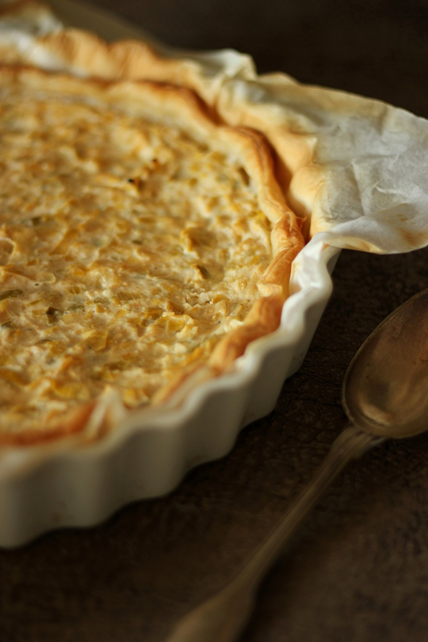
The first three characters (and the minor one of Cenric’s housekeeper) are introduced in an exploratory short story called The Onion Tart, published this month in A Muse Bouche Review. There will be more of these character-exploring stories: some may become part of the book, some won’t. I don’t think The Onion Tart will, but its description of the meeting of Cenric and Kirt will be background (and canon!).

Image by magdus from Pixabay

Meanwhile, while Cenric and Kirt and others tell me little bits about themselves, my first research book is Seb Falks’s The Light Ages: The Surprising Story of Medieval Science. Its focus is the 14th C, but the advantage of writing historically inspired speculative fiction is I can borrow from adjacent centuries, as long (my own rule) I’m not blatantly anachronistic with technology.

More to come, when there’s more to say!

Part II is here.

The Abdication, by Justin Newland: A Review

Justin Newland’s The Abdication is a complex, layered, philosophical novel. Like Philip Pullman’s His Dark Materials, it explores the concept of free will against obedience to an authoritarian higher power: the protagonist, Tula, is seeking the guidance of the angels of the town of Unity in her quest for a spiritual life. To reach Unity, across the forbidden Via Angelica bridge, she must first pass through the human town of Topeth, ruled by avarice and corrupt religious leaders.

The Abdication is deceptively simple, seen through the eyes of a young woman on a journey to understand the visions she has and the voices she hears. The town – Topeth – she believes a haven is instead a place of terror and corruption, turned away from its founder’s vision of a community where human free will can be allowed to grow and develop. The proper expression of free will, she learns, is hard; it is easier to obey a set of rules, even when they are the rules of a vindictive, false religion in league with a destructive, profit-driven elite.

Newland has created a world that feels both familiar and strange. Tula inhabits a world that seems to be ours: there are references to ancient Earth cultures; the flora and fauna are real. The mythology of Unity and Topeth is based, in my limited recognition and understanding, on Abrahamic teachings – pre-Christian interpretations of both gods and angels and the powers of both.

Aspects of The Abdication reminded me of two books from my childhood: a youth’s version of The Pilgrim’s Progress, and Charles Kingsley’s The Water Babies: the former for the allegorical obstacles the protagonist must overcome on the journey to the city of their desire and enlightenment; the latter for the motif of the shedding of skins on the way to becoming the purest self.  Throughout the book, the image of winged beings, both helpful and threatening, repeats, reinforcing and reflecting the idea of angels as many people imagine them, and perhaps also suggesting the revelations of the ending.

If I have one niggle with The Abdication, it is the almost non-stop action of the last chapters. For a book asking hard questions about the balance – in a world where gods and angels are real and powerful – between blind obedience and the exercise of free will, there was little time for the reader to contemplate what Tula has learned and the choices she makes. It felt a little like the last chapters of a thriller, where, as the protagonists reach the climax of the plot, rapid reversals leave the reader barely able to draw breath.

Overall, The Abdication is an intriguing book, leaving me with the feeling that if my understanding of the religious underpinnings of its world-and-mythology building was better, I would have found it even more captivating. Even without that, its questions about what free will means and the choices made in its pursuit made it both challenging and compelling.

Justin Newland was born in Essex, England, three days before the end of 1953. He lives with his partner in plain sight of the Mendip Hills in Somerset, England.
Justin gives author talks in libraries and does books signings in Waterstones, WH Smiths and indie bookshops. He has appeared at literary festivals and regularly gives media interviews.
He writes secret histories in which real events and historical personages are guided and motivated by numinous and supernatural forces – that’s history with a supernatural twist.

https://www.justinnewland.com/

Water and Blood, by Rik Lonsdale

A Review

When disaster strikes, you want your family around you—don’t you?

When the collapse of an Antarctic ice sheet causes catastrophic, world-wide flooding and the disintegration of society, Lucy Marchand thinks she’s safe on her family’s smallholding in the west of England. But family tensions that could be ignored when they were buffered by a larger society begin to become evident when her older brother Ben flexes his way to a position of power within the family.

Set against a dystopic world all too easy to imagine—and already real in parts of the globe—Water and Blood is a psychological study of narcissism, manipulation, and the responses of a family trying to survive, and trying too to believe that one of their own has their best interests in heart.

The choices made by each individual in on the smallholding are distinct, and the reasons behind their decisions believable and layered. Each person has a point at which they either say ‘no more’ or embrace the philosophy of the leader. Many things influence that choice, especially when it becomes a question of your own life or death. As winter deepens and starvation threatens, does morality matter at all?  

I read Water and Blood in two days, and found it hard to put down. Well-paced, it asks some probing questions about how societies, even in microcosm, work. A solid debut novel, Water and Blood is out March 22. My thanks to the author for an advance review copy.

All purchase links at https://linktr.ee/riklonsdale