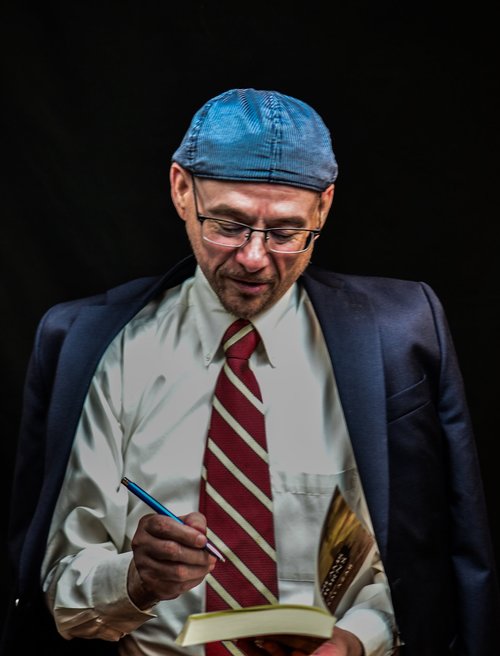
Overcoming Fear and Self-Doubt: J.C. Salazar on the journey to become a writer.

I want to write. I have always wanted to write. I published my first book at the age of 61. So what took me so long? Fear and self-doubt. I’ll explain later. I am a late bloomer. As such, I came late to writing. My path to the place where I could don the title of writer with full confidence was a long and frustrating one.

I won’t go into the myriad of personal setbacks, though there were many, so I will just give an overview of my journey. I was an immigrant child at the age of nine. I arrived in Houston, along with my family of seven, in 1965. My life seemingly began that summer.

In reality I had been a dreamer of a child, with notions of creativity since infancy in my family’s farm in Mexico. I discovered this, along with a richness of other facts about myself and other family members once I embarked in writing my first book in earnest. I wrote Of Dreams & Thorns much later than 1965. It wasn’t till after my retirement as a college professor and administrator of a federal college program that I was able to clear my head and heart of all negativity regarding my proclamation that I was indeed a writer.

Of course, in reality I had been writing Dreams since my adolescence, at least. It came to me as vague notions of something that ought to be written down and shared. Aspects of it, bits and pieces, phrases, images, characters speaking their mind, shouting out for attention. I kept telling them I wasn’t ready, or I wasn’t the one. I was afraid to let them down if I lacked skill. After all, I had studied the best writers in the world. How could I presume to join their ranks?

I studied writing even as I taught freshman composition. I eventually learned about a pathetic disconnection between academic and creative writing. I studied poetry (last year I published my book of poems, states of unitedness) and I attended a couple of courses in fiction, taught by members of our University of Houston’s award-winning creative writing program. Alas, it seemed the more I studied, formally and independently, the more I knew that the best way to write and finish a book is to just do it, to borrow from Nike. So I began my book in 2017.

Before that, I wrote lots of poetry and ideas that I never threw away. Forty years wasted, it seems like sometimes. But more often than not, I believe that, for me with my history and circumstances, those 40 years were necessary preparation. Of course, I could have cut that time in half had I made a conscious assessment and decision to just get started. By the time of my retirement, and finally embracing my total freedom of choice, it was 2014.

It took a year to get reacquainted with myself and sort out all types of elements that defined me. All that assessment pointed indubitably to my being a writer. I finally had no more excuses not to act on my truest impulses. I wrote the book in six months, but in reality I had been writing it for forty years, at least at some basic level. The writing experience unleashed a pent-up craving to master the novel form. I made myself go beyond most basic writing book advice, and I assumed the mantle of writer in my own right.

With that, it was as if I gave myself permission to never again let self-doubt or fear of criticism slow me down. When you are a Mexican immigrant child, when you see yourself as a poor country peasant, when you doubt if you have mastered the English language enough to use it creatively, it builds up self-doubt and insecurities. Well, I somehow managed to shed all that garbage. I was well accomplished in many other areas, after all; I certainly had the wherewithal to do it.

I wrote, and I studied, and I wrote. I edited, and edited, and edited. I hired professional cover and book interior designers, and I hired two professional editors. I was investing in my book as if I were a minor “traditional” publisher. I learned the business, and it taught me that my route was to be an independent publisher. The aspects of publishing a book and getting it to market, or “in shelves,” end up falling into a category of business that we creative types seem to hate. I certainly do.

I will not expound much on the trials and tribulations of the modern status of publishing as regards novice writers, but I do recommend a thorough study of it if you are planning to embark in a writing career or adventure of your own.

So there it is — My short version of how I became a writer late in life as opposed to the more ideal time of my twenties through forties. I do regret that I started late, but only because with age come health issues and other things that slow me down. I have so many projects I want to complete. I have grown considerably as a writer since first publishing my two books, but that is part of the process.

Of Dreams and Thorns is available on Amazon in Kindle, paperback, and audiobook formats.

You May Say that I’m a Dreamer

Like many baby-boomers, Dianna Hammond remembers watching the Beatles on Ed Sullivan. Too young to really crush on them, she grew up appreciating the music, and their seemingly unlimited talent. She reads a lot, but mostly non-fiction. So what was she to think when she awoke one September morning after a dream with a title, characters and story arc in her head?

Time X 2 is a time travel love story involving Paul McCartney, pre-1966. Now, that date doesn’t mean a lot to some people, but others firmly believe Paul McCartney was killed in 1966 and replaced with the person currently portraying him. Dianna wasn’t in that camp when the dream came to her; she had to look up the term “PIDer” (one who believes Paul Is Dead), although she does remember thinking “That’s not Paul” when Sergeant Pepper came out in 1967.

Dianna began listening to interviews, watching videos, using the things she saw to make Paul as authentic as she could in her story. In the process, she became convinced that Paul is indeed dead, saying, “I can in seconds flat tell you which picture is Paul or his replacement. The mannerisms of Paul pre-1966 and the current one are inconsistent, as are their speaking voices.”

Why is this important so many years later?

It shows the cognitive dissonance that we all exhibit as we look at life. In the book I use John Lennon’s lyric, ‘Living is easy with eyes closed, misunderstanding all you see.’ Written in late 1966 early 1967, coincidence?

What would you like people to take away from the book?

I hope to bring some ‘ah-ha’ moments to people who read it much as Dan Brown did with The DaVinci Code. Please understand, I am in no way comparing myself to him, just using the fact that his book sparked conversation.

Have your life experiences influenced what you are writing in any way?

Yes and no, Paul and Emily have a very healthy relationship even though they come from different times. Personally, my relationships have been one-sided. I’ve been married twice, but I am not sure I have ever been truly in love, so I observed couples who are, mainly my son and his wife, to understand what it must be like to give yourself to another but still hold on to your own individuality.

What do your family and friends think of this new venture? Are they supportive, dismissive, neutral?

My family and friends are very supportive and encouraging. Some (the younger generation) have mocked me for writing about Paul McCartney, but that’s alright, at least they know who he is. My son is currently reading the book to help in mechanics of it. I have had friends read it and they seem to enjoy it. My 91-year-old father says I’m the ‘Grandma Moses’ of writing. I don’t know about that but it has given me enjoyment and I feel as if Paul and Emily are my other children.

Do you have a real-life writing community? 

No, I don’t at the moment. I am looking to reach out to local writers here in Atlanta and join a group soon.

Are you going to pursue an agent, a traditional publishing contract, a smaller indie house, or self-publication…and what’s driving that choice? Or is it too soon to tell?

I am on the 4th draft and final editing. I plan to pursue traditional publishing through an agent. I think I would feel more comfortable with an agent guiding my way. Let the querying begin!.

What’s next?

I retired early at the age of 61, I am now 63. I am single so I have unlimited freedom to pursue this new adventure. I’ve been thankful that this has given me a purpose in retirement I am outlining the second in the series which will be called Time X 4. Keeping the theme going.

Dianna can be found on Twitter @DiannaHammond90

In our arts we find our bliss

Cats and writing go together. Hemingway famously had polydactyl cats, their descendants still inhabiting his house at Key West. William S. Burroughs led an unconventional life, but he loved his cats. Macavity the Mystery Cat, a verse written by T.S. Eliot to amuse his godchildren, is one of the first poems I remember delighting in as a child.

My own cat, Pye, keeps me company most of the hours I write. She’s licking my forearm as I type now. Sometimes she’ll curl up beside the laptop; sometimes she installs herself in the good-on-one-side-paper basket that sits on top of my printer.  Mostly, she drapes herself across a shoulder.

This relationship – cats and writers – is as old as writing and domesticated cats, I think. Medieval manuscripts frequently include cats, as marginalia, as decoration, as accidental contributors to the text. In my own medieval historical fantasy series, one of the characters is a scholar and a writer. In the current book of the series, the one I’m writing now, there will be a scene involving a white kitten that has adopted him. The scholar’s friend comes in after a time away, sees that he is writing a poem, and asks what it is.

What it is, with all the artistic license writers can use, is an imagining of a scene from the 9th century, a little later than my setting, but no matter. In the Reichenau Primer, an early 9th century manuscript written almost entirely in Old Irish, is a poem about a writer and his cat and the parallels between their lives. It is this poem that my character Cillian is writing, to his white cat.

Here is the best-known translation, by Robin Flowers*, the one I learned as a child:

I and Pangur Bàn my cat, 
‘Tis a like task we are at: 
Hunting mice is his delight, 
Hunting words I sit all night.

Better far than praise of men 
‘Tis to sit with book and pen; 
Pangur bears me no ill-will, 
He too plies his simple skill.

‘Tis a merry task to see 
At our tasks how glad are we, 
When at home we sit and find 
Entertainment to our mind.

Oftentimes a mouse will stray 
In the hero Pangur’s way; 
Oftentimes my keen thought set 
Takes a meaning in its net.

‘Gainst the wall he sets his eye 
Full and fierce and sharp and sly; 
‘Gainst the wall of knowledge I 
All my little wisdom try.

When a mouse darts from its den, 
O how glad is Pangur then! 
O what gladness do I prove 
When I solve the doubts I love!

So in peace our task we ply, 
Pangur Bàn, my cat, and I; 
In our arts we find our bliss, 
I have mine and he has his.

Practice every day has made 
Pangur perfect in his trade; 
I get wisdom day and night 
Turning darkness into light.

This small scene is a conceit, a darling I won’t kill*. It adds to the world-building for some, to Cillian’s character for others, and will, I suppose, do nothing at all for some readers. But it’s a tribute to my Pye, and all the other cats who have kept me company over the years.

(Update: I did kill it. But it survives as a short story, here.)

* https://www.ling.upenn.edu/~beatrice/pangur-ban.html

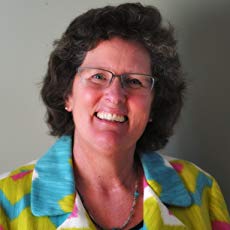
Critical Learnings: Eileen Curley Hammond on becoming an author after 60.

Other writers: “I penned my first story at 13.” “I started writing at an early age.” “I always knew I wanted to write.”

Not me. I was perfectly comfortable in the corporate world. Sure I dipped my toe in on occasion, when necessary, but I always kept my eye on the next most profitable move. Enter age 50: I lost my job.

Then a wonderful thing happened. They sent me to an outplacement service. The service made me focus on what was most important in my life. Through that I realized I wanted to write. And if I didn’t have some semblance of writing in my life I’d be unhappy. It was a revelation.

I’d like to tell you that I immediately whipped out pen and paper. No, I still had to pay the bills. But I found a great company for which to work. And in every venue, I strove to tell a succinct story well.

When I was 57 I was diagnosed with breast cancer. That was another turning point. Although I’ve now been cancer free for nearly six years (Yay!), it was time for some changes. I set a goal to retire from corporate life at 60 and to write a book after retirement. And I did.

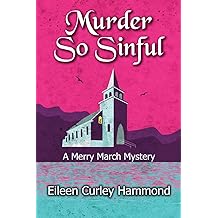
While writing the first book in the Merry March cozy mystery series, I researched various publishing options. I bought books, attended writer conferences, and badgered everyone I knew. After examining all the options, (and reading Arielle Eckstut and David Henry Sterry’s great book The Essential Guide to Getting Your Book Published) I decided that the independent route was best for me. Being older, I didn’t want to spend my time knocking on agents and then publishers’ doors.

Some critical learnings on my path to becoming an author:

Hire an editor. It was an investment, but it was a critical step. The old adage, you don’t know what you don’t know, was absolutely true in my case. Miranda from Editing Realm edited my first two books and she was wonderful.

Read Stephen King’s book On Writing. He writes 2,000 words a day, no matter what. And if he has a good day, he gets done early. He suggested that newbie writers hit a lower target, 1,000 words. Why was this so helpful? Because I always felt guilty. If I wasn’t writing, I felt bad. If I was writing, I felt I should be getting things done around the house. And worst of all, I retired, gosh darn it, and that meant I should be able to have some fun in my life. This one piece of advice made my life manageable again.

Understand that self publishing is hard. You are in charge of everything. Cover design selection, interior book formatting, copyright and Library of Congress applications, etc. Helen Sedwick’s book Self-Publisher’s Legal Handbook helped me think about the steps I might need to take.

Where am I now? I’ve published three books in the Merry March series and am finalizing the first draft of the fourth. It’s been a struggle on occasion, but it’s also been incredibly fulfilling.

Follow Eileen Curley Hammond:

Twitter: @curleyhammcozy

Website: eileencurleyhammond.com

Amazon author page: https://amzn.to/2YdzKbw

Deal with the Pain

Øle Ø is a former member (retired 2016) of SAG-AFTRA – the Actors’ union, and has a B. A. in Theatre and a minor in communication from the University of Minnesota, Duluth.(2000). He’s also worked in the construction trades in NYC (carpenter’s union) and many other various jobs in the Mid-West – too numerous to list. He puts memories on paper in humorous, sometimes sad ways.

“I’ve recently started calling my memories: “Bones,” after reading Natalie Goldberg’s book – Writing Down The Bones and when I write, I consider my writing as: “Crushing Bones”.

Think about being worried, in a hospital or going to the doctor “AGAIN.” Dealing with bad times or unexpected times – life issues stopping you cold from that deadline.

Why should I start writing again? I mean, I go from one uncompleted project for three weeks to another, because of my health.

I’ve been on crutches and can’t go to the bathroom without – excruciating pain. Who can write?!

But wait, I can deal with the pain. No one knows the pain I’ve been through. A small virus in my intestines is nothing like having your chest cracked open 3 times since you were 5 years old. OMG. No one knows that pain.

I swear at my parents. I swear at my doctors. I swear at myself. I swear at the gods that did this to me and realize I can’t do a fucking thing about it.

I AM THE PAIN. I LEARN THE PAIN. I DEAL WITH THE PAIN. (then I thank the doctors and nurses for the meds that temporarily stop my pain…)

My leg or arm wasn’t blown off in a bomb attack. I can’t think of that type of pain. Yet, pain is pain. It impedes a good writing session.  No argument – hands down.

When I’m healthy, I can work – either with my hands or my head. Things are much easier then. Much simpler. AND, all those teachers and professors since the third grade saying to me: “You Should Write!”

HELLO?

It’s difficult when I can’t feel creative or looking at my heart rate monitor in a hospital and I’m being held hostage for four days because they can’t figure out what the hell is going on with my heart rhythm.

Yet I feel fine. They try to convince me otherwise and I start to wonder if I’m in a Twilight-Zone episode. Everyone in the hospital – especially the administration idiots in pig masks are messing with my head. Most of all, they’re LIARS. I threaten legal action and they take their masks off.

They can’t wait to sign me out.

But I won’t sign a damn thing. I get back at them for messing with my creative writing. Making them pay for their lack of knowledge.

I know my body better than anyone.

I get home and self-doubt enters my consciousness as I worry about my blood pressure rising every time I take it, 5 times in a row, starting to think I should call 911, when I’m trying to write.

But, I stop and rest and think hard.

Yes – I ate 5 pieces of bacon at the Windmill restaurant. They made a mistake with the “small order” of sausage links and brought five delicious, smelly bacon slices and my wife is on a plane to Denver for a week and she won’t know I’m eating them and the waitress swore allegiance to me and won’t tell.

I love her.

Did she know it could kill you? No. Anyway – It’s not her fault. She doesn’t know I’m a writer. Where are the words?

American writer Ernest Hemingway (1899 – 1961) working at a portable table while on a big game hunt in Kenya, September 1952. (Photo by Earl Theisen/Getty Images)

Reblogged from: https://storiesofoleo.blog/2019/07/10/challenges-in-writing-at-sixty-or-older/

Follow Øle Ø on Twitter: https://twitter.com/doleolesen

Sorley’s Song for Cillian

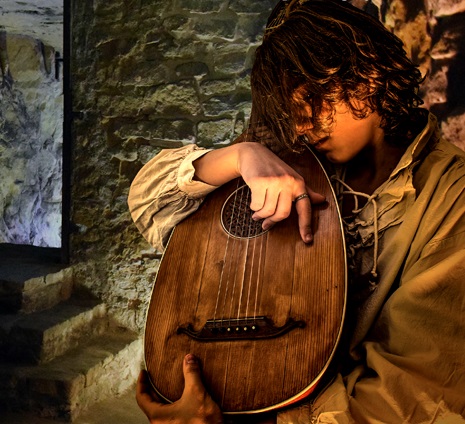
“Another soft, mournful descent of notes faded into the dark, and with the next, Sorley began to sing. Nothing disturbed the music: drinking cups were lowered, conversation ended. His voice, deep and slightly rough, told his anguish and grief to the night, to the stars, to all the world. A lament, I knew, for what he could not have…”

Paths Untrodden
(c) 2019 Marian L Thorpe
Sorley ladhar crop

Sorley, who is the narrator of the novella Oraiáphon and Empire’s Reckoning first appears in Empire’s Hostage as a minor character and becomes an important supporting character in Empire’s Exile, is in love with Cillian, the main male character of Hostage and Exile, and has been since he was sixteen. Sorley is a musician, and as all musicians and poets do, he’s written a song about his unrequited love.

Paths Untrodden

My true love’s eyes are darkly gleaming

In candlelight and music’s lure;

One night alone, at spring’s fair dawning

To keep me longing through the years,

To leave my soul bereft and mourning.

You danced that night with grace unfettered,

A glance my way, a touch bestowed.

Your dark hair swept by supple fingers.

Too soon the day, the calling road,

The shaken head when asked to linger.

A long, long path, and distance boundless,

Years of sorrow and empty days

Till chance or fate together brought us,

So far from home, in summer’s blaze,

With war behind and war before us.

The gods and time have blessed us both

With love’s reward for all our years

Of wandering on lonely ways;

A respite offered for our cares,

A soul to hold ours, all our days.

But candlelight and music’s memory,

Dark eyes gleaming over wine

Revive that youthful love and longing

For graceful fingers touching mine

For kisses left at day’s first dawning.

My life’s companion loves me truly

My heart is his and his is mine,

But older love is not forgotten

There is, by fate, or god’s design

A yearning still for paths untrodden

You danced that night with grace unfettered,

A glance my way, a touch bestowed.

Your dark hair swept by supple fingers.

Uncharted ways might be explored,

Still dreams this wistful, loving singer.

A Writer’s Nightmare

Can there be any worse nightmare for a writer than having your laptop die? sadcomputer-800px

To be fair, it had been giving me hints. “I’m injured,” it said. “I wrote a novel, I edited a novel, I spent hours on the internet while you uploaded and downloaded. And did you honour me for this?  No. You dropped me, instead, onto the cement floor of the garage. My hard drive has concussion, and likely brain damage.” (I actually dropped the bicycle saddlebag that held the laptop, but that’s splitting hairs.)

I heeded the warnings. I ran diagnostics and fixes; I did a clean reload of Windows; I removed every last unneeded program and app. It held on, let me back it up one last time…..and then it died.

“I’m ok,” I thought. “I backed it up to my external hard drive.”  I bought a new laptop, set it up, plugged in the hard drive to retrieve a file.  It wasn’t there.

Nor was the next one I tried. The back-up had failed.  I tried not to panic.  The manuscripts to both previous novels were uploaded to both the e-book production software, and to the print-on-demand site, so those were ok. My short stories and poetry were on the external hard drive. But my research for book III, and the beginnings of Chapter 1 of that book (and a bunch of other non-writing files) just weren’t there.

With fingers and toes crossed, and a silent prayer to the writing gods, I plugged the old laptop in again and booted it.  It woke up, slowly, like an old tortoise emerging from hibernation. It groaned and hummed-and-hawed and blinked, but eventually it let me access File Explorer, and then after another interminable wait the Documents folder.  I plugged in the external hard drive, and began to drag each folder across.  Each one took minutes: one, close to an hour.  But after a very long afternoon, I had all my files copied.

I said nice things to the old laptop, and then I let it go back to computer oblivion. After another chunk of time, all those files exist in three places: my external hard drive, my new laptop, and the cloud, and the auto-synch is set.  Now, if I can just get my fingers used to the slightly-different keyboard layout, I can get back to writing!


Book Launch Night! and some freebies.

This evening is the official launch of Empire’s Hostage, Book II of the Empire’s Legacy spinesseries.  It’s being held in a bar downtown, one that is part of an independent bookstore/cinema/restaurant complex that hosts many cultural events, from book launches to indie bands to art shows to indie filmmakers. I’ve invited a couple of other writers to share the stage with me, a poet and a novelist. (I figured that way their friends would come too!)

So how do you spend the day prior to a book launch?  I practiced the excerpt I’m reading one more time. I packed bags with books and cash, raffle tickets, tape, pens, business cards, bookmarks, a receipt book.  That took maybe an hour.  Otherwise…

I went grocery shopping. I did laundry, and made beds. I cleaned bathrooms and bedrooms and the kitchen. I made cookies. Because I have family coming for the launch, and staying overnight, and needing dinner and breakfast. I’m not complaining….but I am curious.  Were I a male writer, would I be doing all this?  Share your thoughts!

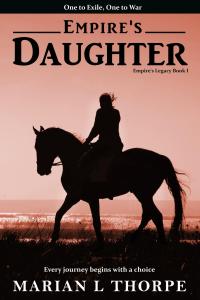
And in honour of the official launch, the Kindle editions of both Empire’s Daughter and Empire’s Hostage are free on Amazon until Sunday, August 27th.  Grab them both while you can!

Meanwhile, I still have to figure out what to wear…


Second Books are like Second Children

I’m the third sibling of three…the baby.  My father was an amateur (and then professional, for a while) photographer.  There are hundreds of pictures of my sister, the oldest. (Remember this was 1948, when black & white film had to be hand-developed.) Hundreds. 

When my brother came along, six years later, there are fewer.  A couple of requisite baby shots, the christening, a few more.  But his presence clearly wasn’t as exciting, didn’t need to be recorded in the same way.

This is fairly typical, from what I’ve seen with the photos and video of my nieces and nephews, too.  The first baby gets a lot of attention; the rest…not as much. (There are even fewer photos of me.)

And that’s pretty much how I’ve been reacting to the publication of my second book, Empire’s Hostage. Yes, I’m pleased to see it in print. I’m doing my part to promote it.  But I lack the ‘look at what I produced!  It’s the best baby ever!’ excitement that first child/book engendered. Don’t get me wrong…I think it’s a fine book, a worthy sequel to the first. I’m proud to have written it. Some of the reviews have blown me away. But it’s the second child. I’m more realistic about its prospects and the work involved in getting in out into the world. And with the first still needing attention, and my mind already pregnant with the third, it’s going to fight for its share of my time. Do me a favour? Pay it some attention; it wants to be read.  And its older sibling is free right now, on Amazon, for the Kindle reader or app….so for a minimal price, you can have them both.  Think of it as a kindness. If I know other people are giving them their share of attention, I can focus on gestating the third baby!