Know What You Don’t Know

In Empire’s Hostage, my protagonist Lena is told of a historic battle, one that forced an uneasy peace and the setting of a border. But I truly have no talent for writing battles, even one where it’s only a story being told, all the rough and bloody action reduced to a tale.

Image by Gioele Fazzeri from Pixabay 

Many many long years ago, in another life entirely, I had to write my first grant application for major funding – several hundred thousand dollars – for the research lab I was responsible for. I’d never done this before, and it was going to fund my lab (and pay my salary) for several years. But, I knew someone who had done this successfully the previous year. So, nicely, I asked if I could see his application, which he gladly shared with me. I read it, analyzed it, and then used it as a template for the one I wrote. Not a copy, because we worked on different things and needed different equipment. But a framework. He read it, made some suggestions, which I incorporated. I got the grant.

Ever since then, when I need to write something I have no expertise in, I look for a template. A model. So when it came to writing this battle tale for Hostage, I went looking for an account of a battle fought across a river in an early medieval setting. That’s all I needed, and I found it, a beautifully written account of the Battle of Stamford Bridge.  I took its details, and placed them in my setting, and wrote the tale Lena is told:

“Word came that the Marai were up the Tabha,” Donnalch continued. “The summer had been wet, wetter than normal, and so the boats of the Marai could be rowed up the river much further than usual, nearly to this spot. They found naught but sheep; the shepherd lads or lasses had fled at the sight of the boats. But one of those lads at least was fleet of foot, and so word reached his torp quickly, and from there a man and horse rode out across the hills, to find Neilan’s army at the coast.”

If you know the Battle of Stamford Bridge well, it might be recognizable from what happens. But even if it is, I don’t find that a problem. It can only add to the historical feeling of my invented world.

Importantly, in my mind, I did all this with the permission of the original author of the piece I used as a model. It took a little while to track him down: first I had to contact the webmaster of the source site, who contacted his writer, who contacted me. But he was glad to share, and I ensured that both he and the website are credited in Empire’s Hostage. (I sent him a copy of the paperback, too.)

The lessons I learned writing that grant application back in the early 80s have stayed with me across three careers: know what you don’t know; find a model and use it; ask for help. I’ve used this in every book since, whether it’s in writing the last battle in Exile, the music for the song in Reckoning, or the descriptions of Casil in both Exile and the upcoming sixth book, Empire’s Heir.

But there’s one more thing. In Empire’s Heir, the character Cillian is thinking about the responsibilities of those who teach:

“I believe that when the records are written, to be remembered as the teacher of Colm of Ésparias will be a great honour, ” Gnaius said. A reminder to me, I knew, of the responsibility we shared, the unbroken line of learning we had to maintain. We honoured those who had taught us, while expecting one or two students in our lives who would both exceed and succeed us.

I became very good at writing grant applications. Very good. Which leads me to the final piece of advice, if advice this is:  give back. Pay it forward. Share your expertise with others, give them a hand. Provide the model and the assistance, and perhaps your student will exceed you. If so, wouldn’t that be wonderful?

Featured Image: Mudassar Iqbal from Pixabay 
A Different Perspective

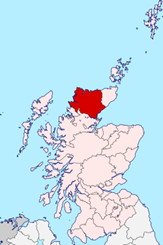
This is a map of Scotland; the county shown in red is Sutherland. Suðrland, in Old Norse, Southland, even though it is some of the most northerly land in mainland Britain. But from the point of view of the Norse, who ruled parts of what is now northern Scotland from the 8th to the 15th centuries, it was south.

We are used to maps with north at the top, but if you’re a northern people, that’s not the most useful view.  A rotated, south-up map of western Europe gives you a sense.  Sutherland is the red star.

By Tyrannus Mundi at English Wikipedia, CC BY-SA 3.0,

I borrowed this concept in its entirety for Empire’s Hostage: Sorham, the name for the land north of Linrathe, means ‘south-home’ in one of my semi-invented languages. Like northern Scotland, this area bounces between Linrathe and Varsland, my Norse-analogue country: disputed territory, with many treaties and much intermarriage.

Lena, the protagonist, sent into Linrathe as a hostage to a treaty, encounters this concept through, literally, a map turned upside down. Lena will learn many things in Linrathe, many of which – most – will change her understanding of not just her country and its history, but of the subjective nature of what she has been brought up to believe is truth. A different perspective.

Featured image: by Santa3 from Pixabay

The Sterre

I scanned the map. I found the roads I had ridden, and Karst, and followed the road with my eyes back to the Wall. Then I let my eyes travel down toward the bottom of the map. I could not read the names, but I could see the line of another wall, and named villages, and then a gap of ocean where the islands lay, and then just the edge of another land. “There is another Wall!” I said. “And what lands are these, here?” I pointed to the bottom of the map.

“The land to the far north, at the bottom, is Varsland, and the islands belong to it.” Perras said. “The other Wall—it is not a stone wall, or not mostly, but an earthen dyke for the greatest part—is The Sterre.”

Empire’s Hostage

160 kilometers north of Hadrian’s Wall, another wall spans Scotland, from the Firth of Forth to the Firth of Clyde. Sixty-three kilometers long, twelve years in the building, the Antonine Wall was abandoned a mere eight years after its completion.

Hadrians_Wall_map.pngCreated by Norman Einstein, September 20, 2005

There’s little of it left. Other than its foundation, it wasn’t a stone wall, but built of soil and turf and probably topped by a wooden palisade. The Emperor Antoninus Pius ordered it built to subdue the Caledonians.

I borrowed the concept of the Antonine Wall, but in my world it is a dividing line not between the ‘civilized’ south and the wild north, but between the country of Linrathe and the disputed territory north of it, Sorham. Sorham has been controlled by both Linrathe and Varsland, a country of seafarers even further north, just as parts of Scotland were under Norse rule until well into the 13th century. In Empire’s Hostage, it belongs to Linrathe.

This map of my imagined world has a different orientation than what we’re used to: south is up. This is how the nation of Varsland sees the world.

Why ‘The Sterre’?  I wish I could remember. One thing I should have was keep a record of how I developed words in my constructed languages. But its purpose in my books is to have kept the people south of it – the people of Linrathe – from moving north during a time of plague, many generations before the events of Empire’s Hostage.  It’s still a border, though, and a defensive earthwork, so it can be repurposed as politics demand – and they will.

Featured image: Antonine Wall at Barr Hill near Twechar, by Excalibur, CC 3.0

Bards, Monasteries, and Education

The concept of the Ti’acha – the elite schools of Linrathe – is introduced in Empire’s Hostage, when Lena, standing as hostage to a truce between Linrathe and her country, is sent to one. What is a Ti’ach, and where did the idea come from?

Ti’acha are boarding schools. Both boys and girls attend: depending on which Ti’ach, the focus may be history and politics, or mathematics and science, or the healing arts, but music and languages are always part of the learning. Children of landholders mix with children of the peasantry: while the wealthy pay for their children to attend, demonstrated intelligence or skill will always guarantee a place.  The schools are based—loosely—on the monastic and cathedral schools of Ireland, Scotland, and England.

Image by MAGIC BOIRO, SL BOIRO from Pixabay 

In the mid-500s, the Irish monastic movement began, possibly at the monastery of Clonard, and spread out across Ireland and into what is now Scotland. Most monasteries had a school attached, both for young men who had a religious vocation and for those who would take their place in government or the military: boys of the land-holding class, for the most part. Latin and Greek were part of their education, as was a study of classical authors such as Virgil and Socrates, as well as mathematics, astronomy, and music. These subjects are what are taught in my world too.  I changed the names of the Greek and Roman writers, but their thoughts remain the same.

At the Ti’ach Lena is sent to, the Comiádh, or head of school, is a man named Perras. In A Smaller Social History of Ancient Ireland (1906, and a rather romanticized view) Patrick Joyce writes of the Fer-leginn, the ‘man of learning’ who was responsible for the educational direction of the school, in concert with the abbot, who was responsible for the religious aspects of the monastery. Organized religion doesn’t exist in my invented world, so there is no one to direct a religious side. There is a ‘Lady’ of the Ti’ach, Dagney, who is also the scáeli (bard) attached to the house. Her authority is equal to that of Perras, but he teaches history and politics; she music and literature.

For Dagney’s expertise, I borrowed from the tradition of bardic schools, which may have existed in pre-Christian Ireland, taught (perhaps) by Druids and likely by bards. Their role was to pass on oral history and literature, continuing in some form into the 19th century.

I simply combined the bardic schools and the monastic ones. Is it accurate? No. Does it feel familiar? Yes, and that’s what I wanted.

Other types of formal education do occur. Younger children of landholders, or those not suited to the rigors of advanced study, may be taught by a travelling teacher. These men and women, themselves taught at the Ti’acha, may stay for a season or many years. Again, this is based on a long tradition throughout Europe of itinerant teachers, attached both to noble households and wealthier towns.

But women in the Ti’acha? In the real early-medieval world, women weren’t all as badly educated as popular culture would have us believe, but neither were they included in mixed schools. Daughters of the nobility were tutored in mathematics and sciences, languages and history; nuns in certain houses were taught Latin and Greek. I deviated quite a bit from real history, but I had my reasons: the exploration and challenging of gender roles is one of the themes of the series.

Diplomacy was one of the roles played by the English scholar Alcuin at the court of Charlemagne, in the mid-700s. Columba of Iona, two hundred years earlier, undertook diplomatic negotiations between the Kingdom of Dalriada and the Kingdom of Ireland. Diplomacy needs educated, agile minds: those who acted as envoys and negotiators must have been taught well, either at the monastic schools or by teachers who themselves had learned there.

The role of the Ti’acha in politics and diplomacy continues to be important in the books following Empire’s Hostage, including the book releasing in September, Empire’s Heir.

This article has been modified from one first published at https://rwranniewhitehead.blogspot.com/2020/06/guest-post-marian-l-thorpe.html

Featured Image: By Fulda – Manuscript: Wien, Österreichische Nationalbibliothek, cod.652, fol. 2v (Fulda, 2nd quarter of the 9th century), Public Domain, https://commons.wikimedia.org/w/index.php?curid=380431

Thinking about Success

This is likely to be a rambling piece, because when I’m trying to work out how I feel about something, I write about it. And that’s what I’m doing now.

Image by Gerd Altmann from Pixabay

What I’m puzzling over is how we – I – measure success. I write for the love of the art of writing, and the need to tell stories, and the desire to tell the stories that present themselves to me in the best possible way, not to make money. (Yes, I realize the privilege inherent in that statement, but this is a personal essay, and my reality.) So why do I find myself falling into the trap of equating ‘success’ with commercial success?

Most of us want both reviews and sales; our hearts and confidence are riven or rewarded by what we see on the KDP graphs and the stars on Goodreads and Amazon. There is no doubt these things validate us as writers. But then I think back to my two previous careers: as a research scientist, and as an educator. In the first, I did good, solid, and to some extent ground-breaking work in a specific area. That work mattered to – how many people? A good question. So I did a Google Scholar search for citations of the nine research papers my name is on.  Based only on that search method, just under 50 people have cited one of more of those papers. Others may have read them, but they didn’t cite them. Not a huge number – but I never felt unsuccessful as a scientist.

I spent 25 years as an educator, both as a teacher of secondary students and then in a district-wide position, working with the most complicated of students and their parents. Over the years, perhaps a double handful of parents and another handful of students expressed their appreciation for what I did. But I never felt unsuccessful in this position, either.

Nor, actually, do I feel unsuccessful as a writer. I sell a few books every month. Occasionally, people take the time to tell other readers what they think of them, via reviews, and a few let me know personally.  I appreciate that: that there are readers out there who love my imagined world and my characters as much as I do remains a source of wonder and delight. But it is so easy to let the comparisons creep in.

If I walk away from social media for a while, and evaluate what I do, I am completely content. I get to work with words for most of my day, either my own work or the work I do as an editor or beta reader for others. I get to read books on things that interest me as research. That I have fewer reviews than many writers (and more than others) isn’t a measure of the quality of my book, just its reach. I remember I have other aspects of my life that bring me joy. And more than anything else, I remember I love writing.

The pandemic has taken a toll on our collective mental health. It’s taken me a little while to notice and evaluate this particular negative aspect of social media – which otherwise keeps me connected with other writers, and informed of developments in my research fields like nothing else could – and I haven’t quite decided what to do about it. But the first step in solving a problem is acknowledging there is one, right? 

Your thoughts on this subject are most welcome.

Featured Image: Image by Gerd Altmann from Pixabay 

Hostages

In the modern mind, the term ‘hostage’ conjures up someone taken by force – the Iranian Embassy hostages; the person grabbed by a gunman in a robbery. But in Empire’s Hostage, Book II of the Empire’s Legacy series, ‘hostage’ is used in an older way.

“What does it mean, to be a hostage?” I asked. I saw something flicker in Turlo’s eyes. He grinned again.

“Exchanging the children of high rank as hostages is an old and honoured tradition,” he answered, “although not one we have respected, in some generations, and in truth needed to be reminded of. We’ll treat Donnalch’s son, and the other boy they are sending—his brother’s son—with every courtesy. They will lodge in the White Fort for now, and then be sent south to the Eastern Fort when the weather improves, to learn with our senior cadets. Darel, you will basically live the life that Donnalch’s son would have, whatever the education, in arms and tactics and books, they deem appropriate. That is the gist of it: we exchange our heirs, in surety for each side’s good behaviour. You will not be mistreated, but, understand, neither will you be truly free.”

In Hostages in the Middle Ages[1], Adam Kosto points out that:

In medieval Europe, hostages were given, not taken. They were a means of guarantee used to secure transactions ranging from treaties to wartime commitments to financial transactions. In principle, the force of the guarantee lay in the threat to the life of the hostage if the agreement were broken. 

Who were these hostages?  In her review[2] of Kosto’s book, Shavana Haythornthwaite tells us the preference was for sons of the family, but ‘the question of exactly who a hostage was in the Middle Ages was in fact part and parcel of the question of what the structures of power were.’ And that’s who stands as hostage to the treaty in my book.

He grinned. Nothing, ever, seemed to keep Turlo’s spirits down. “But the treaty, my lad, and lassie,” he added, “requires hostages. Donnalch’s son and another to us, and two children of our leaders to them.”

But peace treaties weren’t the only reason for hostages, and the interpretation can be broad:

Hostages were taken and held as surety for various reasons: the holding of property, the promise of paying off debts, the securement of peace. Hostages could be taken for social reasons, if broadly read. The fostering of sons is a form of social contract involving the holding of a boy by another family to strengthen a network of alliances. Betrothals and marriages of daughters and sisters, especially in the cases of making treaties between warring factions, served much the same purpose as a hostage or a fostered son: a promise of peace held in the body of a person.[3]

In later books in the series, almost all these broad definitions of hostage are part of the story, just as they were part of life in the middle ages.


[1] Kosto, Adam J. Hostages in the Middle Ages, 2012, Oxford University Press: https://oxford.universitypressscholarship.com/view/10.1093/acprof:oso/9780199651702.001.0001/acprof-9780199651702

[2] Haythornthwaite, Shavana.  Review of Hostages in the Middle Ages, (review no. 1579)
https://reviews.history.ac.uk/review/1579

[3] Medieval Hostageship c.700-c.1500: Hostage, Captive, Prisoner of War, Guarantee, Peacemaker. Matthew Bennett & Katherine Weikert, eds., Routledge, 2019

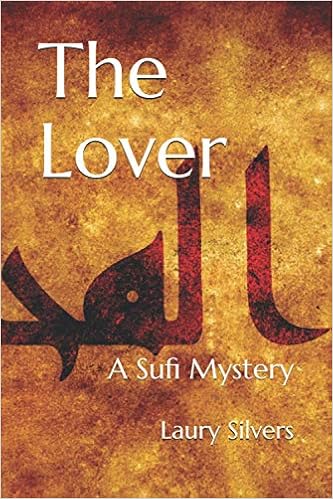
The Lover: A Sufi Mystery, by Laury Silvers

Dust and cool water; ascetism and the bonds of love. In 10th century Baghdad, Zaytuna is torn between the mysticism of Sufi practice and her need for connection to the world – and the reality of survival day to day. When a child dies in a fall, she must try to understand why, bringing her into conflict with both powerful people and her own brother, and challenging, too, her own understanding of herself and her faith.

The setting is carefully and slowly built, with great skill: I could imagine myself there in the markets and courtyards, among the crowds on the streets and on the flat roofs of houses. Characters are drawn precisely, with a beautiful economy of words, giving the reader just enough.

Laury Silvers gives us a glimpse into a world unfamiliar to most of us, that of women of medieval Islam. Not women of privilege, but women whose lives are given up to labour, the women who wash rich families’ clothes, or sweep houses and cook meals. Lives that are limited by poverty, but sometimes joyous, sometimes transcendent, and sometimes cruel.

The need for relationships – with family, with friends, with God – is central to The Lover. (The title refers to one of the faces of God.) Zaytuna is driven to investigate the boy’s death for reasons that are interwoven with her own need for love, and the value she sees in each life.

The Lover is the first of a series. I hope to read the others soon; meanwhile, I recommend The Lover strongly both as an engaging mystery, and to anyone who wishes to learn more about medieval Islam and the lives of women in that time.


Discover more of the history behind Laury Silvers’ books on the author’s website.

Featured image: Girl Reciting the Qurān (Kuran Okuyan Kız), an 1880 painting by the Ottoman polymath Osman Hamdi Bey. Public Domain.

A Wider World by Karen Heenan: A Release Day Review

Can stories save a life?

56860771. sy475

Robin Lewis, once a musician in Henry VIII’s court, now a man of letters and secrets, stands charged with heresy by Mary Tudor. Only a journey of a few days separates him from inevitable execution, but journeys are liminal spaces where anything can happen. Especially when one has a mind as agile and subtle as Robin Lewis’s.

In this second book in the author’s Tudor Court collection, author Karen Heenan has taken the prickly, almost-unlikeable Robin, a supporting character in her first book Songbird, and told his rich story with consummate skill.  Or, rather, Robin tells his own story, because the book is built around his reminiscences. But these aren’t the memories of a man considering his life in the face of mortality: there is a purpose to Robin’s storytelling, a fish to be caught in the net he is weaving.

With prose as close to perfect as it comes, and settings and history thoroughly researched but conveyed with a light touch, A Wider World is not only a different look at Tudor history, but a study of a man whose childhood shaped him into a wary, self-serving boy. Watching – or rather hearing – Robin’s clear-eyed examination of his own life and the experiences that transform him into the educated, introspective, and deeply honourable man he becomes makes Heenan’s book one of the finest character studies I know. Characters from Songbird make brief appearances, enough to tie the books together, but A Wider World stands on its own. It’s the best book I’ve read this year, bar none. Highly recommended.

Wine, Anyone?

On the southern coast of my fictional land, in what is roughly the 7th century, the southern village of Karst grows grapes for wine. Given that this land is an analogue of Britain, how reasonable is this?

Grapes have been grown for millennia; six thousand years ago, grapes were grown in an area reaching from the far east of Europe to Asia Minor and through the Nile Delta. Grape cultivation spread westward with the Hittites, into Crete and Thrace as early as 3000 BCE. (The first written laws governing the wine trade are from Hammurabi, in 1700 BCE.) The Phoenicians took grapes ever further west, and Rome brought them to Britain shortly after its conquest in the first century CE.[1]

Even before the Roman conquest, wine was being imported to Britain.[2]  But Rome saw wine as a necessity, available (in differing qualities) to everyone. Wine was imported to its outposts, but vineyards were also established wherever possible, to save the cost of shipping. Increasing consumption of wine in Romanized Europe also meant less of it was available for import, so growing their own was a sensible solution.  

After Rome left Britain ‘to see to their own defences’, winemaking primarily fell to the monasteries. As Christianity – or any widely organized religion – doesn’t exist in my world – I didn’t incorporate it. But the idea that grapes grow in the south of my land is based on historical record. In the Domesday Book, that great record of population and agriculture and land ownership compiled in the late 11th Century, there were 42 vineyards in England, all below a line from Cambridgeshire to Gloucestershire.[3] 

Domesday Book vineyards are all south of this line.

So what Lena sees, looking south from an escarpment towards Karst could, possibly, have been seen in England too, at the equivalent time to the setting of Empire’s Daughter.

Below us, the forest gave way to fields, each planted with precise, parallel rows of trellised vines. Dirt tracks ran between the fields, houses, and outbuildings scattered among them. Smoke rose from the houses, and in the far distance, I spotted a larger building with a tower: the central meeting hall. Beyond that were more fields, and then a shimmer at the horizon: the sea.  


[1] https://ipm.missouri.edu/MEG/2013/8/Grapes-A-Brief-History

[2] New Light on the Wine Trade with Julio-Claudian Britain. PAUL R. SEALEY Britannia Vol. 40 (2009), pp. 1-40 (40 pages)

[3] https://www.realclimate.org/index.php/archives/2006/07/medieval-warmth-and-english-wine/

Featured image Image by Bruno /Germany from Pixabay

Lena and Maya: Can This Relationship Be Saved?

Lena and Maya, characters in Empire’s Daughter, are partners in life and work; like many young village couples, they’ve known each other all their lives, moving from playmates to a closer bond. They apprenticed together, and now as adults – which they’ve been for a year, in their world – they work together on a co-owned fishing boat. Maya is six months older than Lena, practical, organized, disliking of change. “Maya needed order and predictability,” Lena thinks. “In our business partnership, her need for stability balanced my impulsiveness. In our personal relationship, it had always cast a small shadow.”

Image by prettysleepy1 from Pixabay 

Lena describes herself as a dreamer, given to mood swings and doubts.  But Maya sees something else: “You think this is an adventure, Lena?” she accuses. “Something new? Something different? You always want to sail a little further, find another cove, even though the ones we know provide us with all the fish we need.”

Now the Emperor has made an audacious request: will the women of his land learn to fight, to help protect their country from invasion?  They’re needed, in his judgment: the men alone cannot win, not without leaving the northern frontier underguarded and vulnerable. It’s a departure from hundreds of years of tradition, an abandonment of the Partition agreement that structured the lives of men and women into distinct roles. Men fight; women fish and farm.

Lena doesn’t admit to Maya that, yes, she sees an adventure in the choice that has been presented. Fishing needs all her wits: the seas can turn nasty in a moment. It should be enough to deal with that day to day. But there’s a drive in her – inherited from her father, although she doesn’t know that – for new horizons, new challenges.

Maya just wants things not to change. Tradition is important to her. She wants her village to refuse the request: it’s the men’s job to protect the land, not women’s. And she thinks if they agree to this, and survive it, what else will change?  The idea frightens her, and she’s become rigid in her thinking.  “Don’t make up my mind so soon?” she snaps. “I know how I feel, Lena. What Casyn is asking, what the Empire is asking, is wrong. I know that, and so do you.  Women don’t fight. We don’t kill or harm others.”

This relationship had some issues before this divisive request. So, readers, here’s your question:  even if the request to fight had never come, could this relationship survive?

Empire’s Daughter is available from Amazon.

Featured image by Gerd Altmann from Pixabay