The Abdication, by Justin Newland: A Review

Justin Newland’s The Abdication is a complex, layered, philosophical novel. Like Philip Pullman’s His Dark Materials, it explores the concept of free will against obedience to an authoritarian higher power: the protagonist, Tula, is seeking the guidance of the angels of the town of Unity in her quest for a spiritual life. To reach Unity, across the forbidden Via Angelica bridge, she must first pass through the human town of Topeth, ruled by avarice and corrupt religious leaders.

The Abdication is deceptively simple, seen through the eyes of a young woman on a journey to understand the visions she has and the voices she hears. The town – Topeth – she believes a haven is instead a place of terror and corruption, turned away from its founder’s vision of a community where human free will can be allowed to grow and develop. The proper expression of free will, she learns, is hard; it is easier to obey a set of rules, even when they are the rules of a vindictive, false religion in league with a destructive, profit-driven elite.

Newland has created a world that feels both familiar and strange. Tula inhabits a world that seems to be ours: there are references to ancient Earth cultures; the flora and fauna are real. The mythology of Unity and Topeth is based, in my limited recognition and understanding, on Abrahamic teachings – pre-Christian interpretations of both gods and angels and the powers of both.

Aspects of The Abdication reminded me of two books from my childhood: a youth’s version of The Pilgrim’s Progress, and Charles Kingsley’s The Water Babies: the former for the allegorical obstacles the protagonist must overcome on the journey to the city of their desire and enlightenment; the latter for the motif of the shedding of skins on the way to becoming the purest self.  Throughout the book, the image of winged beings, both helpful and threatening, repeats, reinforcing and reflecting the idea of angels as many people imagine them, and perhaps also suggesting the revelations of the ending.

If I have one niggle with The Abdication, it is the almost non-stop action of the last chapters. For a book asking hard questions about the balance – in a world where gods and angels are real and powerful – between blind obedience and the exercise of free will, there was little time for the reader to contemplate what Tula has learned and the choices she makes. It felt a little like the last chapters of a thriller, where, as the protagonists reach the climax of the plot, rapid reversals leave the reader barely able to draw breath.

Overall, The Abdication is an intriguing book, leaving me with the feeling that if my understanding of the religious underpinnings of its world-and-mythology building was better, I would have found it even more captivating. Even without that, its questions about what free will means and the choices made in its pursuit made it both challenging and compelling.

Justin Newland was born in Essex, England, three days before the end of 1953. He lives with his partner in plain sight of the Mendip Hills in Somerset, England.
Justin gives author talks in libraries and does books signings in Waterstones, WH Smiths and indie bookshops. He has appeared at literary festivals and regularly gives media interviews.
He writes secret histories in which real events and historical personages are guided and motivated by numinous and supernatural forces – that’s history with a supernatural twist.

https://www.justinnewland.com/

Creating King Arthur – in Post-Roman Britain

By Helen Hollick

Pendragon’s Banner Celebration Tour April 2023

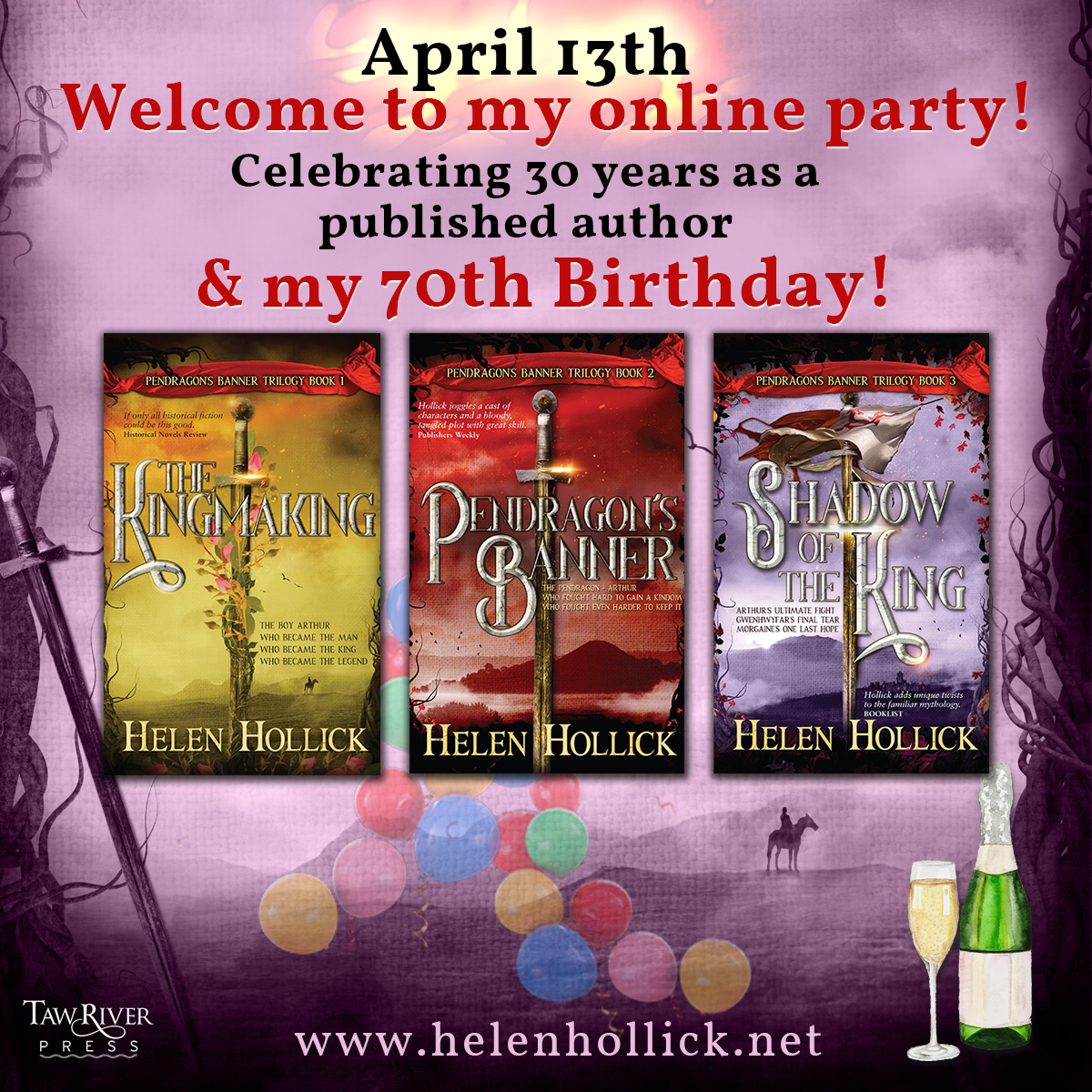
Thirty years ago in April 1993, one week after my 40th birthday, I was accepted by William Heinemann (now a part of Random House UK) for the publication of my Arthurian The Pendragon’s Banner Trilogy. It had taken me more than ten years to reach that stage of my dream to become a real writer – more than that if you count that I had been scribbling stories since the age of thirteen.

So why King Arthur? I had never liked the Medieval tales of knights in armour, the Holy Grail and courtly chivalry – I couldn’t stand Lancelot (what on earth did Guinevere see in him?) Why did Arthur go off on a religious quest for so many years? For me, none of those tales had the believability that writers today create in their novels of historical fiction. Arthur and the people of his court, if they existed, (and it’s a very big IF!) had no place in factual history after the Norman conquest of England. Those Medieval tales are merely entertaining stories, with the Holy Grail quest perceived, perhaps, to encourage men to join the Holy Crusades, and maybe the Arthur story mirrors the fact that Richard I spent many years away on his own ‘quest’ and very little time in his kingdom of England.

I was intrigued, therefore, when I discovered that there were earlier tales of Arthur, not only pre-Norman but pre-Anglo-Saxon. These were the Welsh legends, stories and poems of a warlord who fought against the incoming Germanic tribes. To place an Arthur figure during the upheaval and chaos of fifth-century Britain made sense. The period is not known as The Dark Ages for nothing, for written evidence, the whys and wherefores, are few and far between – we are, very much, ‘in the dark’ for the years around 430-550 AD.

So this is when I set my Arthurian tale, it is fiction – let’s face the fact, ‘Arthur’ as a king did not exist. (Sorry!) But even if he didn’t exist the earlier stories about him are wonderfully exciting.

I researched, as well as I could, the detail of post-Roman Britain (no internet back in the 1970s/’80s!) using archaeological evidence to add into the many, many imagined fictional bits, which include the Welsh tales and writing of clerics such as Nennius, who mentioned twelve battles that Arthur (supposedly) fought.

My character of Arthur, therefore, is a fifth-century warlord, passionate about fighting for his rightful place as King, and fighting as hard to keep it. As passionate, is the love of his life, Gwenhwyfar, who in my tale remains loyal to her lord, Arthur, despite their many ups and downs, hopes, fears, achievements and disappointments. Despite their laughter and tears.

I wrote my Arthur as a real man – warts an’ all. He is not the Christian king of the Medieval tales, he is a soldier, leader of the cavalry, the Artoriani, a man trying to sort the chaos Rome left behind, a man living in a world of upheaval, where Christianity is still in a state of embryonic flux, where pagan beliefs are still very much to the fore, and a world where Britain is changing, through battle and peaceful settlement, from a Province of Rome’s authority into the emerging kingdoms of Englalond – Anglo-Saxon England.

But maybe, just maybe, my story as told in the Pendragon’s Banner Trilogy is the base for how the enduring legend of King Arthur really happened…

© Helen Hollick

Helen’s new, self-published, editions with beautiful covers designed by Cathy Helms of www.avalongraphics.org are, alas, only available outside of USA and Canada, where the same books are published by Sourcebooks Inc. (The new covers were offered – free – to Sourcebooks, but the offer was declined.)

ABOUT THE KINGMAKING (Book 1)

The Boy Who became a Man:

Who became a King:

Who became a Legend… KING ARTHUR

There is no Merlin, no sword in the stone, and no Lancelot.

Instead, the man who became our most enduring hero.

All knew the oath of allegiance:

‘To you, lord, I give my sword and shield, my heart and soul. To you, my Lord Pendragon, I give my life, to command as you will.’

This is the tale of Arthur made flesh and bone. Of the shaping of the man who became the legendary king; a man with dreams, ambitions and human flaws.

A man, a warlord, who united the collapsing province of post-Roman Britain,

who held the heart of the love of his life, Gwenhwyfar – and who emerged as the most enduring hero of all time.

A different telling of the later Medieval tales.

This is the story of King Arthur as it might have really happened…

“Helen Hollick has it all! She tells a great story and writes consistently readable books” Bernard Cornwell

“If only all historical fiction could be this good.” Historical Novels Review

“… Juggles a large cast of characters and a bloody, tangled plot with great skill. ” Publishers Weekly

“Hollick’s writing is one of the best I’ve come across – her descriptions are so vivid it seems as if there’s a movie screen in front of you, playing out the scenes.” Passages To The Past

“Hollick adds her own unique twists and turns to the familiar mythology” Booklist

“Uniquely compelling… bound to have a lasting and resounding impact on Arthurian literature.” Books Magazine

The Kingmaking: Book One

Pendragon’s Banner: Book Two

Shadow of the King: Book Three

(contains scenes of an adult nature)

BUY THE BOOKS:

THE PENDRAGON’s BANNER TRILOGY 

New Editions available worldwide except USA/Canada

https://mybook.to/KingArthurTrilogy

Available USA/Canada 

US TRILOGY: https://www.amazon.com/gp/product/B074C38TXN

CANADA TRILOGY: https://www.amazon.ca/gp/product/B074C38TXN

ABOUT HELEN:

First accepted for traditional publication in 1993, Helen became a USA Today Bestseller with her historical novel, The Forever Queen (titled A Hollow Crown in the UK) with the sequel, Harold the King (US: I Am The Chosen King) being novels that explore the events that led to the Battle of Hastings in 1066. Her Pendragon’s Banner Trilogy is a fifth-century version of the Arthurian legend, and she writes a nautical adventure/fantasy series, The Sea Witch Voyages. She has also branched out into the quick read novella, ‘Cosy Mystery’ genre with her Jan Christopher Murder Mysteries, set in the 1970s, with the first in the series, A Mirror Murder incorporating her, often hilarious, memories of working as a library assistant.

Her non-fiction books are Pirates: Truth and Tale sand Life of A Smuggler. She lives with her family in an eighteenth-century farmhouse in North Devon and occasionally gets time to write…

Website: https://helenhollick.net

All Helen’s books are available on Amazon: 

https://viewauthor.at/HelenHollick

Subscribe to Helen’s Newsletter:  https://tinyletter.com/HelenHollick

Her Blog: https://ofhistoryandkings.blogspot.com/

Facebook: https://www.facebook.com/helen.hollick

Twitter: @HelenHollickhttps://twitter.com/HelenHollick

Follow Helen’s Celebration Tour https://www.helenhollick.net/

Water and Blood, by Rik Lonsdale

A Review

When disaster strikes, you want your family around you—don’t you?

When the collapse of an Antarctic ice sheet causes catastrophic, world-wide flooding and the disintegration of society, Lucy Marchand thinks she’s safe on her family’s smallholding in the west of England. But family tensions that could be ignored when they were buffered by a larger society begin to become evident when her older brother Ben flexes his way to a position of power within the family.

Set against a dystopic world all too easy to imagine—and already real in parts of the globe—Water and Blood is a psychological study of narcissism, manipulation, and the responses of a family trying to survive, and trying too to believe that one of their own has their best interests in heart.

The choices made by each individual in on the smallholding are distinct, and the reasons behind their decisions believable and layered. Each person has a point at which they either say ‘no more’ or embrace the philosophy of the leader. Many things influence that choice, especially when it becomes a question of your own life or death. As winter deepens and starvation threatens, does morality matter at all?  

I read Water and Blood in two days, and found it hard to put down. Well-paced, it asks some probing questions about how societies, even in microcosm, work. A solid debut novel, Water and Blood is out March 22. My thanks to the author for an advance review copy.

All purchase links at https://linktr.ee/riklonsdale

The Call of Home

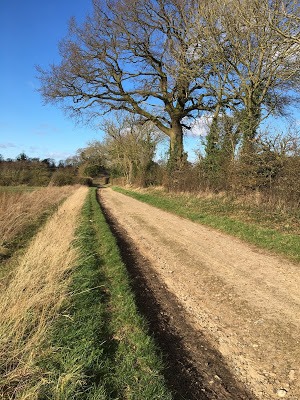
I walk steadily up the slight incline, my boots thumping rhythmically on the hard soil. Nearly two millennia past, Roman troops were doing the same: the track follows the line of a Roman road. It’s likely older than that; bronze age barrows lie to either side, on the high ground above the river valley below, and it ends very close to the place the wooden circle of uprights known as Seahenge was uncovered.

Within a few miles of my temporary, inherited house are three ringed enclosures (hillforts, as they’re generally known, whether or not they’re on a hill) that date to Iceni times. One corresponds with Tacitus’s description of the Iceni defensive structures during Boudicca’s rebellion. The line of another Roman road which approaches that hillfort lies to its south, perhaps a response to the Iceni uprising, perhaps part of the Saxon Shore defenses.

The Romans stayed another four hundred years, before Rome’s wars and finances made them withdraw. More invaders – or migrants – arrived from the continent, the people we call Saxon and Angles. They built in wood, not stone, except for the round towers of a few churches, leaving their mark in place names, a few roads, and moot hills. The Vikings arrived in the 800s and were ousted – at least in rule – in the 900s. The settlers stayed, though, and both archaeological finds and place names attest to this. And then it’s 1066 and William of Normandy winning at Hastings, and the rulers – not just the king, but the landholders and princes of the church – change again.

After that, sheep bring wool-wealth to Norfolk, huge churches in every village, and a Hanseatic port at King’s Lynn. The plague arrives, some medieval villages disappear, and the population plummets. In the 17th century agricultural improvement – fen drainage and sea-wall construction, then the work of ‘Turnip’ Townsend and Coke of Norfolk in crop rotation and soil improvement – slowly move Norfolk from grazing to crop production. The Enclosure Act changes who has access to land, and where. Hedges are planted. More medieval villages disappear,  because major landowners move them off their deer parks. New roads are built, others disappear, to become bridleways and footpaths.

Because of all this, and my family’s long connection (on one side) with west Norfolk, I love this place. I could claim it’s in my DNA, which reflects the series of migration – violent and peaceful – that I’ve encapsulated here, but the scientist I once was raises an eyebrow at that statement. It is, I think, more about stories: my grandmother’s, my father’s, the cousin who made me her executor and beneficiary. Environment, too: I was brought up in a house where history mattered.

I’ve been here eight weeks; I’ll be here just about another two. It’s not the first long stay – we wintered here after retirement until the pandemic, January to March of every year, trading Ontario’s snow and ice and cold for the relative warmth and good walking of west Norfolk. But it’s the first time I’ve been here alone, my husband staying, for good reasons, in Canada.

I find myself like my character Sorley, torn between who he loves and where he loves. Because part of me wants to stay. This land and its long history is the wellspring of my creativity, the source of my invented lands and their histories and the details of worldbuilding readers love. I lay my fiction lightly on this place, seeing it reflected all around me.

But in Canada are the people I love: my husband, my extended family, my friends. And, a city I love in a different way, for its cafes and bookshop and trails for bike and foot; for its university and the two rivers and the farmers’ market, and for the writing community I’m part of.  So in 12 days, I will go home, both gladly and sadly.

The question of what and where home is echoes through my books, one of the themes of the series. In the work-finally-in-progress, Empire’s Passing, it will be a key question for my MC Lena. “I had always turned for home. But where is home for the tamed falcon, when there is no falconer to hold out his arm?” Some of the intricacies of that question – and its answer – will be shaped by my own divided heart.

The old order changeth…

Yesterday all the planters and garden statuary that my cousin and her partner had collected over their forty years in this house were removed, going to new homes. Nearly at the top of the long sloping garden, one remains, a Grecian figure carrying wine jugs. It draws the eye, now all the distractions are gone.

The house is free of boxes and much of the furniture, too, cleared two days past by the auctioneers. A door long blocked by a bookcase is now open, creating flow and light in the house. There isn’t a lot left to do, except some cosmetic improvements and the slow bureaucracy of probate.

And with the clutter, both mental and physical, gone, my mind is bubbling with ideas and dialogue and scenes for  the book I’ve had to put off for the last few months. There is flow and focus and illumination, thoughts pushing themselves out of my subconscious like the bulbs bursting into bloom in the garden.  

Empire’s Passing, I already know, is a complex, multi-layered book, not surprisingly. The last book of a long saga has a lot of threads to bring together, questions to answer, farewells to be made. The title is a deliberate nod to ‘This too will pass’, the adage that reminds us that all things, good or bad, are fleeting. “For one brief shining moment…” But there will be hope too, at the end.

It’s going to be a challenge. But one I can finally give the time and attention it needs.

Image by Greg Montani from Pixabay 

You might just like….

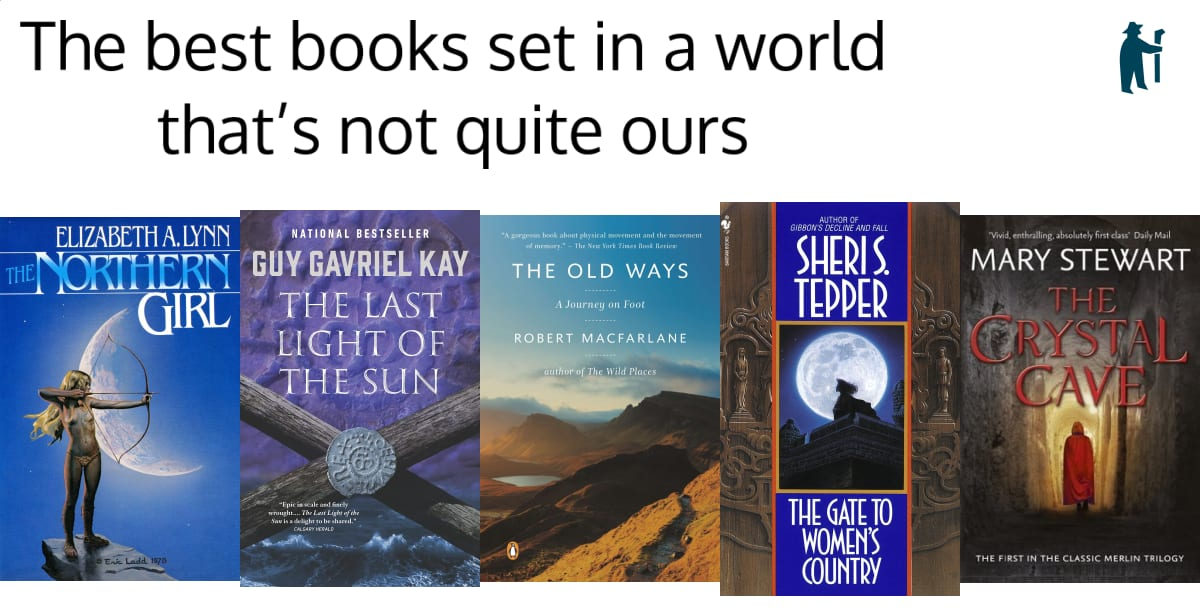
What are all these blue books?

This is my Shepherd.com list (find it at https://shepherd.com/best-books/set-in-a-world-thats-not-quite-ours)

(Hold on, you might be saying. What’s’ not our world’ about the non-fiction The Old Ways, by Robert Macfarlane? Well, it’s a way of seeing the world that isn’t, in my opinion, mainstream, although I wish it were, so I slipped it in. )

And if you’re a reader of my books, you probably think worldbuilding is important, so check out these other recommended books with outstanding worldbuilding.

Time, Vision, Reality: Alan Garner’s Treacle Walker

Alan Garner’s books are understood not intellectually, but in gut and bone and perhaps in a long collective memory. Deeply seeded in and emerging from a specific landscape, Treacle Walker tells us a tale of a boy with a lazy eye who one day meets a rag-and-bone man offering a trade: for rags and bones he gives a pot and a stone. The boy invites the man into his strangely adult-less house, where time is measured by the whistle and clack of the train that passes by at noon every day. And from there the boy–and the reader–learn that time and place may be fluid; that the past and the present may intertwine; that vision and sight are not the same thing; that objects are more than they seem and dreaming and being are inseparable.

Treacle Walker is a brief book, without a superfluous word. Language matters, has power; words can invite something in or keep something out, summon or banish. As brief and spare as Treacle Walker is, it is not simple. Its imagery is that of reflection: of the real and the virtual (as defined in the science of optics) and the place at which they diverge – or converge. The mirror, the train that divides the day in two; the boy’s two eyes that each see different worlds, if he frees one from its obscuring patch.

There are echoes of the surreality of Alice through The Looking Glass; there are echoes of earth magic and childhood games passed down for generations; there are echoes of others of Garner’s books. There is no definitive way to put Treacle Walker neatly into a genre, or even to say what it’s about, except that it is something both rich and strange.

Hiatus

I’ve been mostly absent from social media, blogging, promoting my books, and generally any on-line presence for most of January. Since the 9th of the month, I’ve been in England, getting here just in time to see and have lucid, intelligent conversations with a very elderly cousin before she died four days later, and since then, dealing with all the responsibilities of an executor. The death to register, the lawyers to meet, the funeral to arrange, the house and contents to be valued, banks and utilities to be informed – anyone who’s been through this knows there is a lot to do. I’ll be here a few weeks yet: the house will go up for sale, the valuable contents will be auctioned, with some items needing specialist sales (more research). There’s a piano to be shipped. An energy audit required on the house. The list sometimes looks endless.

In between, of course, I do the grocery shopping and take carloads of things to charity shops (both involving an hour’s round trip from the tiny north Norfolk village my cousin called home), and call people to take away the stairlift and the mobility scooter…and once in a while I take a couple of hours off and go birding, for sanity.

And somewhere, in this last week, I stopped agonizing over the book that isn’t being written, or the retweets that aren’t happening, or the books I’m not reviewing, or the promotions I’m not posting. For two major reasons: one practical, one—philosophical, perhaps?

Practically, there aren’t enough hours in the day; at two months short of 65, I don’t have the energy I once did. Just getting through what needs to be done, taking time for at least a short walk, and preparing three meals a day, simple as they are (and cleaning up) is all I’m going to do.

I’m not 40-something now, even if my mind thinks I am.

Philosophically, there’s also the processing of loss, of saying goodbye. I won’t say I’m grieving, exactly: my cousin was nearly 102, had lived a marvelous life, and was ready to go. I’ll miss her, though: miss her stories of Oxford in the war years and of her first teaching job in a remote Cumberland village; miss her erudite and incisive opinions of literature classic and modern (don’t get an MFA, she told me, everyone who does writes in the same way). I’ll miss her ability to quote long passages of the metaphysical poets and Macauley’s Lays of Ancient Rome. She once spent some considerable time working out if my Latin-based conlanguage has proper grammar. (It doesn’t.) She liked my books: they made her think, she said. She left me, specifically, her library.

Sorting through the remnants and memories of a life takes time, and it takes attention. I was entrusted with this task because she said I’d know what was important. Honouring that takes time and attention and energy, too. So Empire’s Passing will wait, and I’ll lose followers on social media and my other books sales will drop. But I will have kept a promise, and that matters more.

And someday–maybe–I’ll be back.

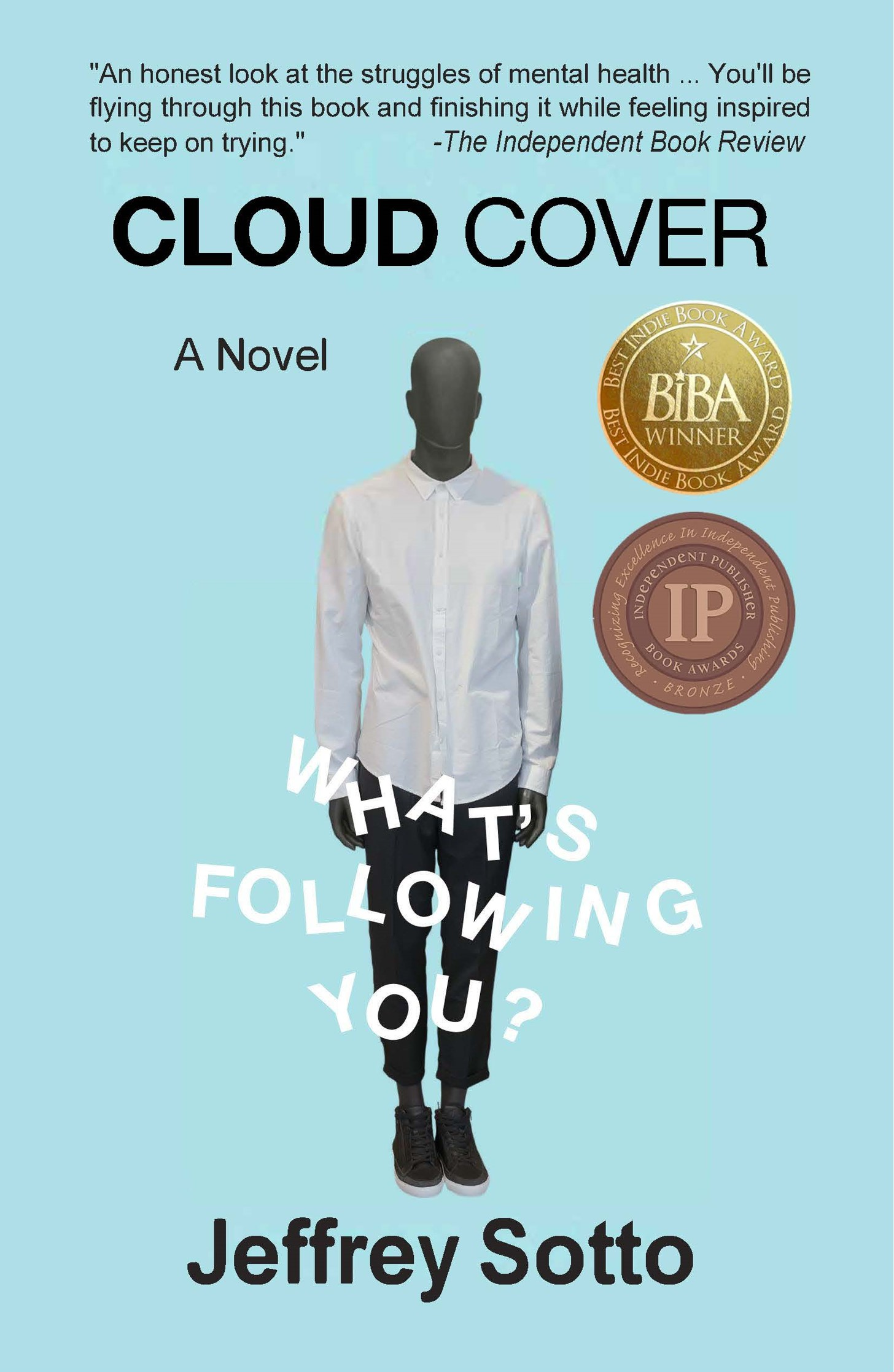
Cloud Cover, by Jeffrey Sotto: A Review.

Cloud Cover balances the specific with the universal with ease and elegance, a tribute to the author Jeffrey Sotto’s skill. The protagonist of the book is a 30-something, gay, Filipino man living in Toronto, which could have made some readers feel the story is beyond their experience. The character of Tony is drawn with precision: he is not an everyman. He is himself, flawed and damaged, from external and internal causes, and relatable to anyone who has dealt with personal loss or rejection.

This isn’t to say Cloud Cover is an easy read. Tony’s bulimia is described in some detail, and he is likely to exasperate the reader as much as he does his friends. On the other hand, parts of Cloud Cover are laugh-out-loud funny, a nice balancing act from the author.

I found myself really caring what happened to Tony, both in his new, hopeful relationship and in his work towards healing. Sotto moves Tony past his ‘identity’ to find commonalities of the human experience: the devastation of grief; the joy of true acceptance; the pressure to conform. Nor is Tony’s life always bleak: he finds contentment, sometimes happiness, in parts of his life; a compromise, but one that will be well understood by many readers.

Sotto develops the story with compassion tempered by a clear look at the realities of a mental health disorder. Ultimately Cloud Cover is a hopeful book, but in a realistic way. There is no easy fix, no person but Tony who can turn his life onto a track less damaging, and not without significant, difficult work. But he can, by the end, see at least a hint of the sun behind the clouds, and the reader is left believing in a better future for Tony. Strongly recommended for readers of contemporary novels with believable, realistic protagonists.

Reviewed for Coffee and Thorn Tours.


Author Jeffrey Sotto

Jeffrey Sotto graduated from The University of Toronto, majoring in Film Studies and English Literature. He was the screenwriter and script consultant of the Canadian short films The Tragedy of Henry J. Bellini (2010) and Sara and Jim (2009), respectively.
Cloud Cover, his first novel, published in 2019, won a Best Indie Book Award (BIBA) for LGBTQ Fiction, an Independent Publisher Bronze Medal Book Award (IPPY), and a Literary Titan Book Award. It also briefly topped the Amazon bestseller list in LGBTQ fiction upon release. He published his second novel, The Moonballers: A Novel about The Invasion of a LGBTQ2+ Tennis League … by Straight People (GAY GASP!) in Spring 2022.


Jeffrey is also an advocate for mental health and eating disorder awareness and recovery, having shared his story on CBC Radio, Global News, and Sheena’s Place. He is currently a peer mentor at Eating Disorders Nova Scotia (EDNS). He will be contributing to the anthology Queering Nutrition and Dietetics: LGBTQ+ Reflections on Food Through Art, to be released in December 2022. Finally, in 2023, he will be appearing in the docuseries Wicked Bodies by Truefaux Films, which focuses on fostering positive culturally competent engagement in treatment and support centres, universities, and non-profit programs working with LGBTQ+ groups with disordered eating and body dysmorphia.


He is a self-proclaimed “cubicle dreamer,” tennis addict, and compulsive social media duckfacer.

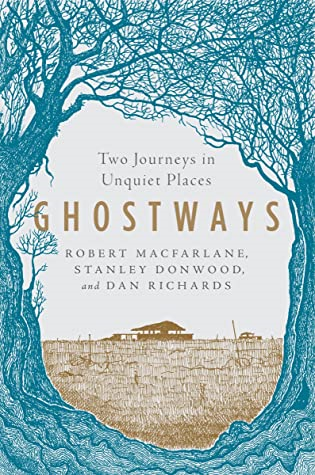
Ghostways: Two Journeys in Unquiet Places

Robert MacFarlane is among my top five favourite writers, fiction or non-fiction. The two pieces collected in Ghostways are very different: Ness, not-quite-a-play, not-quite-poetry, but to my mind meant to be read aloud, explores the depths and layers and secrets of Orford Ness, a shingle spit in Suffolk-a place I know as a birding site and nature reserve, but one that has another history. It is both haunting and disturbing, in the way T.S. Eliot’s Four Quartets are. Its imagery will stay with me a long time.

Holloway, a prose exploration of a deep-worn, sometimes hidden path of Dorset is both a personal journey, a memoriam for fellow author Roger Deakin, and a wider discourse on landscape and meaning. ”Stretches of a path might carry memories of a person just as a person might of a path.” MacFarlane writes, and “paths run through people as surely as they run through places….” As a writer exploring the meaning of memory and place as filtered through grief in my current book, and as a person with a deep interest in how landscapes shape both individual and collective consciousness, MacFarlane (and his co-authors) as always, challenges and inspires me.