October Updates

This past month, when I wake in the night, there’s almost always a tawny owl calling outside – which is a hint that I’m not in Canada. Several things brought us to England in September, largely research for An Unwise Prince, my work-in-slow-progress: a chance to tour a medieval merchant’s house that’s only open a few times a year; the Silk Roads exhibition at the British Museum (and its medieval exhibits); Peterborough Cathedral, built as an abbey in the 13th C, which will become the physical model (more or less) for the school in the new book.

Peterborough Cathedral Precinct. My photo.

But also, of course, the birds, and the long walks, and in the four weeks we’ve been here we’ve had four days of serious rain. Most have been sunny. We caught the last of the summer birds, chiff-chaffs still singing, and the first of the winter migrants, pink-footed geese and redwings, as well as two birds new for the UK for us, yellow-browed warbler and cattle egret. The saltmarshes are washed pink with sea lavender, the hedges are bright with rose hips and hawthorn fruit and blackberries, and filled with red admiral and fritillary and cabbage white butterflies. Deer – roe and muntjac, fallow and Chinese water – browse field edges and park, and on the mud of the marshes probe godwit and golden plover, redshank and curlew.
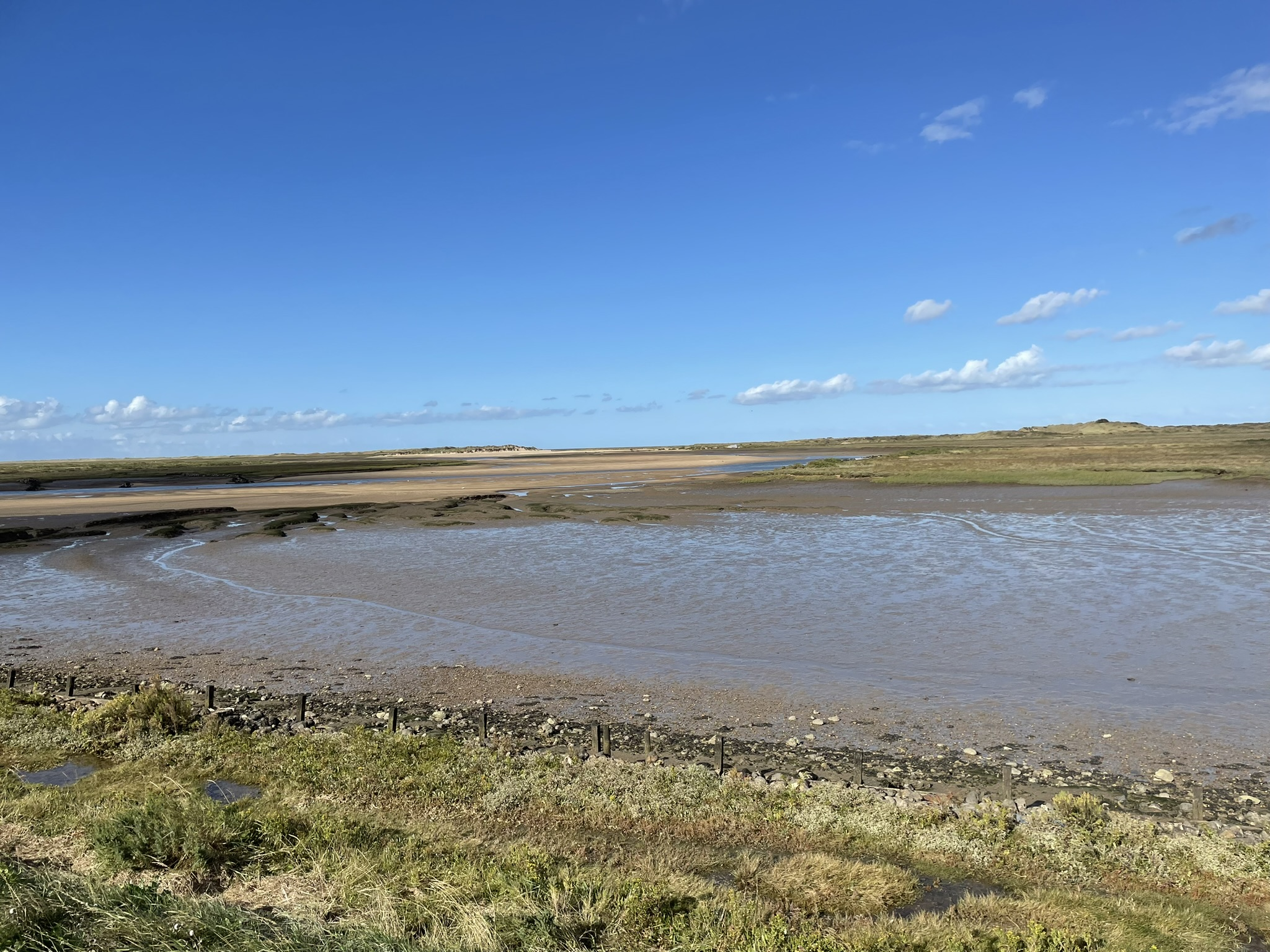
Burnham Overy Staithe harbour. My photo.

Yes, but how’s the book coming, you ask? I’m about 30,000 words into the first draft of what’s going to be the most complex book(s) I’ve ever tackled. It’s already clear it isn’t one book. I thought there were four point-of-view characters. Ha! I’ll be lucky to get through the story without adding at least another four. I’m borrowing from the Hanseatic League, medieval universities, Byzantium-North African-Arabic interaction, 12th C silk roads trade, intellectual exchange around the entire Mediterranean, the Mongol invasion of both the middle east and eastern Europe, Genoa’s near trade monopoly in the eastern Med, and the first crusade. All I can do is trust the process – do the research, let it marinate, and write down the words my characters dictate.

This are the tentative covers for the first two books. If it turns out to be more than a duology, the theme is easy to work with.

You may have noticed I’m not doing many updates here now. I will try to do monthly ones, but a much easier way to keep up with what I’m writing – short stories, poetry, non-fiction and a chance to read Empress & Soldier for free as a serialized novel – is to join me on Substack. My fiction site is History & Imagination; my non-fiction site is Landscapes of Memory.

Until November (I hope).

Marian
Cover Reveal!

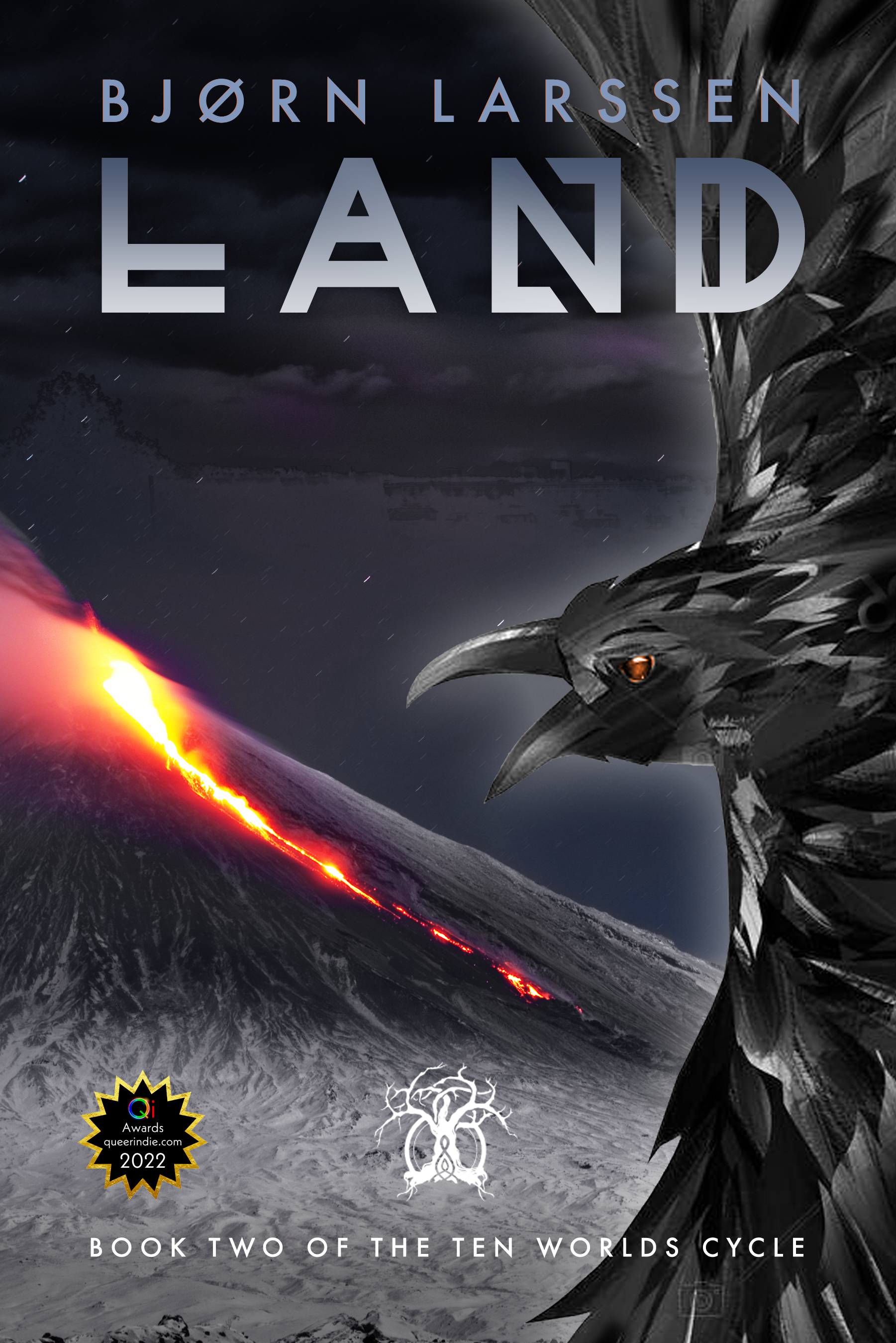
The Ten Worlds #2: Land, by Bjørn Larssen

Loss. Love. Land. Happy Never After. (A grimdark retelling of the discovery of Iceland. )

The truth Maya fought for all her life turns out to be a lie a thousand years long. She neither understands nor knows how to wield her hidden power, simultaneously endless and limited, forcing her to face responsibility for the harm she causes and parry countless questions she has no answers to. Neither time nor space can stop her – but can she stop herself?

Bound with an unbreakable love spell, Magni and Thorolf, both raised in darkness and pain, only share one thing: the fear of revealing their truths. One was born to be a God; the other only knows a slave’s life. One craves peace and quiet; the other believes peace is a brief reprieve between wars. As they mourn those they have lost, the constant war of their own threatens to destroy all they have left – each other.

Haunted by Gods old and new, in the shadow of Odin’s raven, they head to conquer the new Ásgard. Apart from their demons, nothing and nobody is what it seems. Unwilling to give up love, freedom, or land they’re fated to live happily never after… unless destiny can be altered after all?

The book includes strong language, depictions of sexual, physical, and emotional violence. Full list of triggers, which may contain minor spoilers, will be provided.

Preorder link:
https://www.books2read.com/thetenworlds2

Website link:
https://www.bjornlarssen.com/land/

Goodreads link:
https://www.goodreads.com/book/show/217183142-land

Social media:
https://www.bjornlarssen.com/sm/

Bio:

Bjørn Larssen is an award-winning author of historical fiction and fantasy, dark and funny in varying proportions. His writing has been described as ‘dark,’ ‘literary,’ ‘cinematic,’ ‘hilarious,’ and ‘there were points where I was almost having to read through a small gap between my fingers.’

His debut novel, Storytellers, won a Readers’ Favorite Gold Medal (Best Historical Fiction Novel) and was shortlisted for Eric Hoffer Grand Prize Award. His fantasy works, Children and Why Odin Drinks have been shortlisted for eleven (11) Indie Ink Awards – so far; Children was also nominated for a Stabby Award (Best Indie Novel of 2020). Bjørn is a Queer Indie Award laureate (best speculative fiction author) and very proud of it.

Bjørn has a Master of Science degree in mathematics, and has previously worked as a graphic designer, a model, a bartender, and a blacksmith (not all at the same time). He currently lives with his husband in Almere, which is unfortunately located in The Netherlands, rather than Iceland.

He has only met an elf once. So far.

His upcoming release, the second book in The Ten Worlds cycle – Land – is coming out on November 5, 2024.

What if the world you create becomes real?

A spotlight on J.M. Tibbott’s fantasy series, The Pridden Saga.

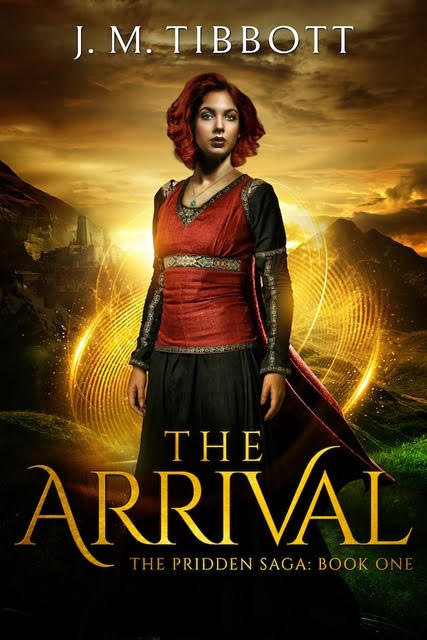
A prickly young game designer finds herself in a medieval world reminiscent of the video games she creates. Magic, dangerous creatures, and political intrigue were fine as a fantasy, but navigating them all in real life is a different challenge. Will Kat find her way through the maze of this new existence?

An enchanting adult fantasy, The Arrival is Book I of The Pridden Saga. Six books are published; the seventh has a planned release of autumn 2024. Find out more at the author’s website:

https://jmtibbott.com/books/


 J. M. Tibbott is a prize-winning author, a writing instructor and editor. J.M. has been writing since grade school, and continues to study literature and the English Language. She believes there is always something new to learn. 

Her works include magazine and newspaper articles, newsletters, online blogs, and story collections. With the 6th book of The Pridden Saga published, J.M is deep into the final conclusion in Book 7. Another couple of series are tucked up her sleeve, the first with a decided Detective bent. After that, more are planned but only her muse is in on the secrets. 


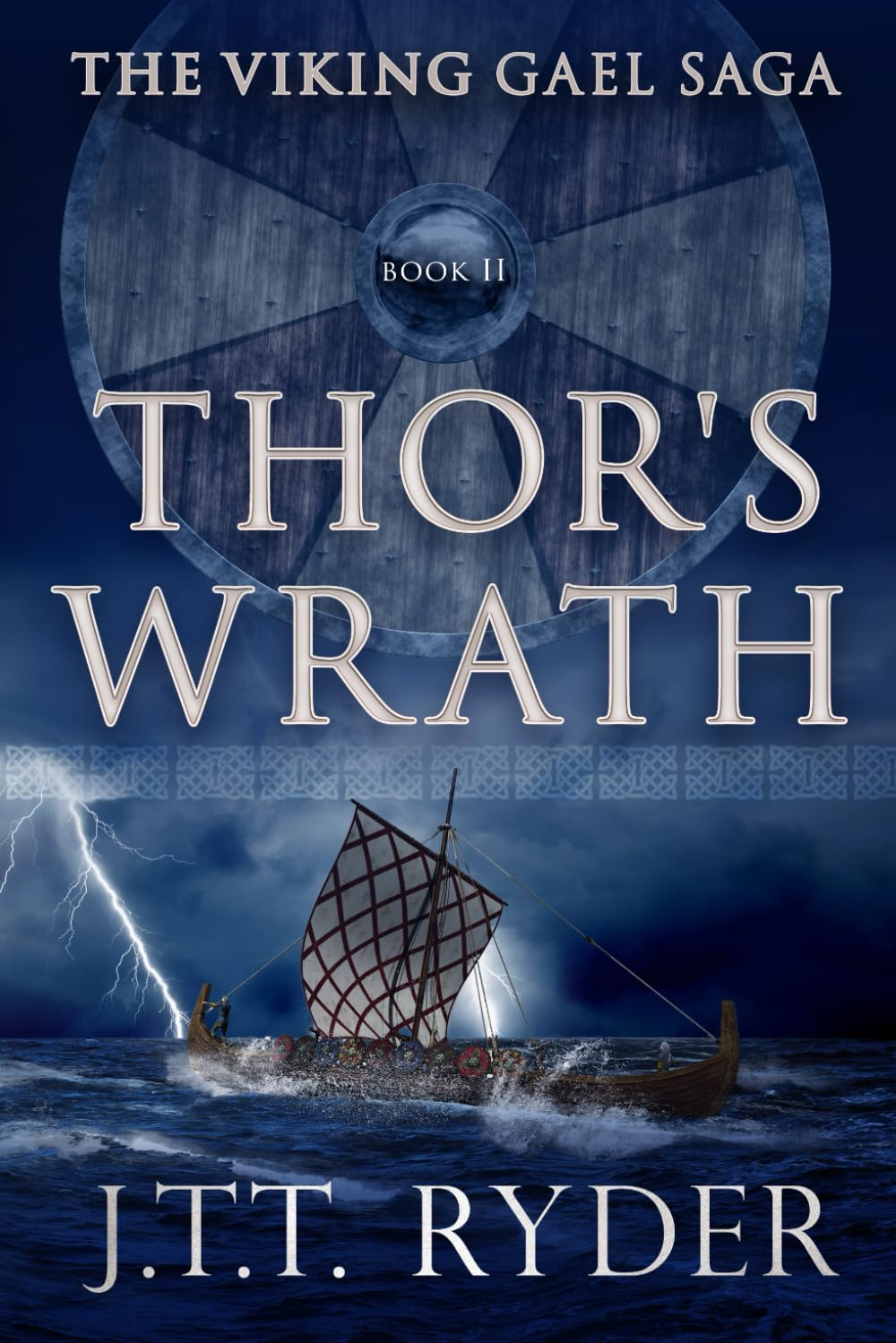
Thor’s Wrath: Book II of the Viking Gael Saga, by J. T. T. Ryder: A Review

When we left Asgeir in book 1, he had saved his life (and his cat) but lost his honour. Now, as Harold Finehair works to unite Norway, Asgeir lands in the Orkneys, into conflict and battle: a chance for Asgeir to overcome his shame and redeem himself in his eyes and his gods.

J.T.T. Ryder continues to draw on his extensive knowledge of the history and archaeology of the setting – both time and place – in recreating a 9th century north-western European world. While Asgeir (and his compatriots) worldview is not ours, it is convincing: enmity and friendship flipping back and forth; the importance of personal honour; the role of single combat over warfare. This is a world of foresight, of visits from gods, of visions and portents–all are real, all are to be taken seriously.

The story moves quickly; the reader and Asgeir together are given little respite as threats are overcome, peace is agreed, only for another threat or a betrayal to begin the action again. Ryder’s writing is sometimes lyrical, especially in his place-based descriptions: ‘A whirlwind of puffins blackened the sky over the rocky, chilly islet… Mist shrouded the horizon like unspun wool, and the wind bit as remorseless as a fox…” In other places it echoes the alliteration of the sagas: ‘shocked him with sleet sideways.’ Even the occasional unusual word choice adds to the story, creating a sense of a world different from ours, refracted through time and distance.

The story is perhaps Ryder’s best, the complexity of Asgeir’s choices and of his thinking deepening as the youth matures into manhood. The telling is excellent. The editing, I am sorry to say, is less so.

(I dislike on-screen reading, so whenever possible I buy the paperback, so these comments pertain to the first paperback edition published in 2023.) I am tolerant of a certain number of typographical errors: they appear in even the best edited books, traditionally published or independent. But repeated sentences, repeated scenes, should not. Nor should a leg of lamb in one paragraph become a leg of pork in another. These errors spoke of a rushed production, an incomplete editing process, and one, inevitably, that jolts the reader out of the story. A second, corrected edition* is strongly suggested.

But! Thor’s Wrath is still well worth reading, and I look forward to the next book in Asgeir’s saga. (And yes, the cat is still Asgeir’s companion at the end of this installment.)

*Update: correspondence with the author assures me these errors have been or are in the process of being corrected.

Myths in the Making: The Winter Knight by Jes Battis

Myths are mutable things, changing, overlapping, blurring—but persistent. They shape tropes and memes, underlie both the stories we tell ourselves and the stories we are told, and may create, at a level we may only barely understand,  our expectations of the world.

But what if you are a myth?

In a Vancouver where not all places (or inhabitants) belong to the world-as-we-know-it, myths live. Valkyries, Norns, the men and women of Arthurian legend. They are college students, translators, administrators, musicians, living, on the surface, apparently normal 21st century lives. But they have not forgotten who they are, their past lives recalled in snatches of memory and dream and stories told, and their power remains.

A series of grisly murders leads Wayne and Hilde deeper into their family stories, the repeating patterns that have shaped each iteration of their lives. Not every recurring story is the familiar one—Vancouver is not Camelot, but something closer to the castles and forest and lakes of medieval poems like Gawain and the Green Knight, with their potent, obscure symbols, multiple interpretations, and characters largely forgotten in recent retellings. And like those medieval stories, The Winter Knight is both a story of a surface quest, a tangible challenge, and a story we’d now call ‘coming of age’, of internal battles and internal change.

There’s always someone who goes after the beast and tries to tame it. Some knight who thinks they’ll turn it into a trophy. But you can’t. It’s as old as shadows, as old as flickers on the cave wall, as old as graves. You can’t bind that. Only live with it.

Battis creates moods and settings with a light touch, using a few words masterfully – and creates both a contemporary and a timeless sense to the story. Battles are fought with both the tools of the past and the tools of the present, and the two are sometimes melded into one. Ultimately, The Winter Knight is a hopeful story, for all its deep understanding of the difficulties and compromises of accepting the expectations of family, the stories that shape us and the pieces of each we keep and discard. Myths are mutable: perhaps, even when we are the myth, fate is not all.

The Winter Knight is published by ECW Press: https://ecwpress.com/products/the-winter-knight

The Abdication, by Justin Newland: A Review

Justin Newland’s The Abdication is a complex, layered, philosophical novel. Like Philip Pullman’s His Dark Materials, it explores the concept of free will against obedience to an authoritarian higher power: the protagonist, Tula, is seeking the guidance of the angels of the town of Unity in her quest for a spiritual life. To reach Unity, across the forbidden Via Angelica bridge, she must first pass through the human town of Topeth, ruled by avarice and corrupt religious leaders.

The Abdication is deceptively simple, seen through the eyes of a young woman on a journey to understand the visions she has and the voices she hears. The town – Topeth – she believes a haven is instead a place of terror and corruption, turned away from its founder’s vision of a community where human free will can be allowed to grow and develop. The proper expression of free will, she learns, is hard; it is easier to obey a set of rules, even when they are the rules of a vindictive, false religion in league with a destructive, profit-driven elite.

Newland has created a world that feels both familiar and strange. Tula inhabits a world that seems to be ours: there are references to ancient Earth cultures; the flora and fauna are real. The mythology of Unity and Topeth is based, in my limited recognition and understanding, on Abrahamic teachings – pre-Christian interpretations of both gods and angels and the powers of both.

Aspects of The Abdication reminded me of two books from my childhood: a youth’s version of The Pilgrim’s Progress, and Charles Kingsley’s The Water Babies: the former for the allegorical obstacles the protagonist must overcome on the journey to the city of their desire and enlightenment; the latter for the motif of the shedding of skins on the way to becoming the purest self.  Throughout the book, the image of winged beings, both helpful and threatening, repeats, reinforcing and reflecting the idea of angels as many people imagine them, and perhaps also suggesting the revelations of the ending.

If I have one niggle with The Abdication, it is the almost non-stop action of the last chapters. For a book asking hard questions about the balance – in a world where gods and angels are real and powerful – between blind obedience and the exercise of free will, there was little time for the reader to contemplate what Tula has learned and the choices she makes. It felt a little like the last chapters of a thriller, where, as the protagonists reach the climax of the plot, rapid reversals leave the reader barely able to draw breath.

Overall, The Abdication is an intriguing book, leaving me with the feeling that if my understanding of the religious underpinnings of its world-and-mythology building was better, I would have found it even more captivating. Even without that, its questions about what free will means and the choices made in its pursuit made it both challenging and compelling.

Justin Newland was born in Essex, England, three days before the end of 1953. He lives with his partner in plain sight of the Mendip Hills in Somerset, England.
Justin gives author talks in libraries and does books signings in Waterstones, WH Smiths and indie bookshops. He has appeared at literary festivals and regularly gives media interviews.
He writes secret histories in which real events and historical personages are guided and motivated by numinous and supernatural forces – that’s history with a supernatural twist.

https://www.justinnewland.com/

The old order changeth…

Yesterday all the planters and garden statuary that my cousin and her partner had collected over their forty years in this house were removed, going to new homes. Nearly at the top of the long sloping garden, one remains, a Grecian figure carrying wine jugs. It draws the eye, now all the distractions are gone.

The house is free of boxes and much of the furniture, too, cleared two days past by the auctioneers. A door long blocked by a bookcase is now open, creating flow and light in the house. There isn’t a lot left to do, except some cosmetic improvements and the slow bureaucracy of probate.

And with the clutter, both mental and physical, gone, my mind is bubbling with ideas and dialogue and scenes for  the book I’ve had to put off for the last few months. There is flow and focus and illumination, thoughts pushing themselves out of my subconscious like the bulbs bursting into bloom in the garden.  

Empire’s Passing, I already know, is a complex, multi-layered book, not surprisingly. The last book of a long saga has a lot of threads to bring together, questions to answer, farewells to be made. The title is a deliberate nod to ‘This too will pass’, the adage that reminds us that all things, good or bad, are fleeting. “For one brief shining moment…” But there will be hope too, at the end.

It’s going to be a challenge. But one I can finally give the time and attention it needs.

Image by Greg Montani from Pixabay 

You might just like….

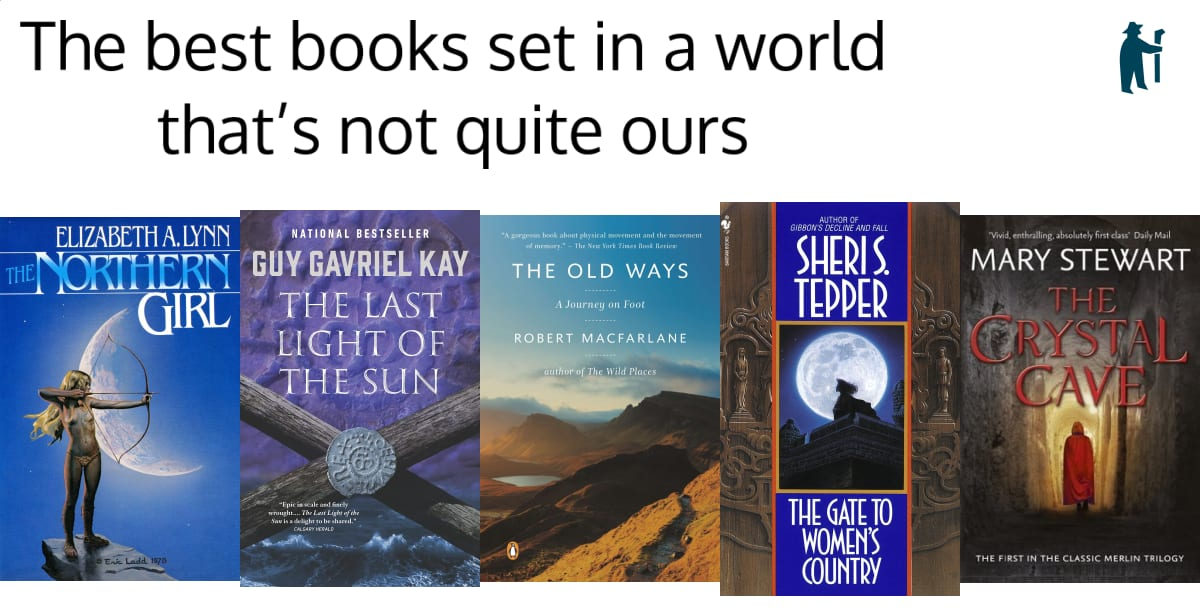
What are all these blue books?

This is my Shepherd.com list (find it at https://shepherd.com/best-books/set-in-a-world-thats-not-quite-ours)

(Hold on, you might be saying. What’s’ not our world’ about the non-fiction The Old Ways, by Robert Macfarlane? Well, it’s a way of seeing the world that isn’t, in my opinion, mainstream, although I wish it were, so I slipped it in. )

And if you’re a reader of my books, you probably think worldbuilding is important, so check out these other recommended books with outstanding worldbuilding.

The Silver Crystal, by Ryan Lanz


The Silver Crystal
is the first of The Red Kingdom trilogy, introducing the three major characters of the series: Rhael, a bounty hunter; Phessipi, the leader of a hated and persecuted minority, and Levas, a high-ranking officer of The Order. In a medieval world, the ‘Corrupted’ – men and women with abilities that go beyond those common to all people—are hunted down and mutilated in a way that destroys their extra powers. Hunting ‘Corrupted’ for The Order is Rhael’s job, when we meet him at the beginning of the story.

The Silver Crystal is more character-focused than action-focused, although it has its share of action too. In this first book, the usual hero’s journey of fantasy is given a twist, and the other main characters grapple with the decisions and consequences of leadership and rebellion – costs both personal and professional. Heavy on dialogue, including some passages of banter that are meant to lighten the mood but to this reader stood out as devices designed to do exactly that, not integral to the story – the story still moves along at a good pace, the point of view alternating between Rhael and Phessipi, until fairly far into the book, when Levas is introduced.

This late introduction of the third main character felt a little off-balance, but as this is the first book of a trilogy, in the context of the full story it makes sense. The world-building is sketched lightly but sufficiently, and characters fit their roles. Rhael’s sidekick, Gobo, might provide light relief for some readers, but I found him annoying, like an Ewok in Star Wars. (But then, other people love Ewoks.) Overall, an intriguing fantasy suitable in my judgement for readers twelve and above, with themes of discovery, acceptance, and understanding of differences running through the story.

How Has Writing Changed Me?

A guest post by Raina Nightingale

I hardly remembered when I first started to write. I was eight years old, having just learned to read. And what I wrote first was something that was at least half fanfiction: sometimes simply out of love and enjoyment, I would write stories very much like those I read, but other times, when it seemed to me there was something lacking in a book, or something that was wrong and not the way I wanted it to be, I would try to write a story that was like it, but different.

I think in stories. Both reading them and writing them is a big part of my thinking. In some ways, the exploration that comes from both is similar, but in some ways it is different, and different books are very different to read and very different journeys, though I do love some good escapism now and then (especially if it has nice world-building that speaks to me, more on that later)! In reading, I explore other people’s thoughts and am sometimes prompted to consider things about myself and what I like from angles I might not have considered on my own, and it does not take the same energy that writing does.

But writing, making up stories and exploring them as I will, is how I really think, how I discover, challenge my thinking, and consider new thoughts that I find in other places or other people suggest. Or sometimes thoughts that seem to come out of nowhere. Character, plot, and world-building can all be a part of thinking to me. A lot of my world-building, even – especially – the more magical parts of it, is inseparable from my appreciation for and understanding of this world, and helps me to articulate things I see better.

My characters are more wild. Sometimes I don’t understand them very well, and sometimes what I think I ought to have learned from them, whether their relationships with each other or their responses to their environments, I’m not at all sure that I do.

Probably most of my characters share some likeness with me, even if it’s as trivial as an aesthetic appreciation or a taste in cuisine. Some of them are very unlike me, while others can be largely deep explorations of aspects of my personality, dreams, or desires, or questions about these might be, but in general I don’t think too much about whether a character is like or unlike me, or how. Yet I always find it fascinating when I’m writing a character like none that I have ever written before, and I keep having moments of, “Oh, this is how someone who is like this thinks!” It’s really quite surprising. Yet, in real life, I sometimes feel like my empathy, my ability to understand and feel for people, is far behind my characters. Yet what would it be if I didn’t try? Or what would my stories be if I didn’t try in real life?

It’s hard to enumerate, or even really define, how writing and stories have been a part of my life and thinking, since it is so interwoven altogether. I don’t think there’s anything where it can be fully separated: sometimes I learn, through writing a character who enjoys something, to have more appreciation for it myself. Some recent examples are that I see the beauty in the ocean so much more after having written Corostomir, a man who is in love with the ocean, and writing a dry plains-loving people sharpens my appreciate for desert climates, something that used to not exist at all: the greener and the wetter the better, I thought.


Raina Nightingale has been writing fantasy since she could read well enough to write her stories with the words she knew (the same time that she started devouring any fiction she could touch). She enjoys rich characters and worlds where magic and the mundane are inseparable. She calls her fiction ‘Dawndark’.

Author/Review Website: https://www.enthralledbylove.com

Universal Book Link for all my books: https://books2read.com/raina_books

Twitter: https://twitter.com/Areaer_Novels

Goodreads: https://www.goodreads.com/author/show/20243136.Raina_Nightingale


Are you a writer who’d like to contribute to this series? Leave a comment below and I’ll get back to you!