You Scratch My Back, I’ll Scratch Yours.

“We ourselves have seen Manius Manilius walking across the forum; a signal that he who did so, gave all the citizens liberty to consult him upon any subject; and to such persons, when thus walking or sitting at home upon their seats of ceremony, all people had free access, not only to consult them upon points of civil law, but even upon the settlement of a daughter in marriage, the purchase of an estate, or the cultivation of a farm, and indeed upon any employment or business whatsoever.” Cicero, De Oratores, Book III:XXXIII 

https://pages.pomona.edu/~cmc24747/sources/cic_web/de_or_3.htm
aeneid
DEA / G. Dagli Orti / De Agostini / Getty

Manius Manilius, whoever he was*, is represented in this passage by Cicero as a patron: an important position and concept in the hierarchical structure of the Roman social contract.

In the Roman world, a patron-client relationship was a form of noblesse oblige, although with the loyalty and support of the client expected. Based on the Roman ideal of ‘fides’, loyalty, the patron – (the word derives from ‘father’) – the head of a high-status family, dispensed advice, loans, and influence to his clients – men of lower status, in exchange for political support, respect, and sometimes the physical presence of their clients for protection.

In Empress & Soldier, we see this in action when Salvius, Druisius’s father, goes to ask his patron for help in acquiring certain licenses he needs as a merchant. He takes his oldest son (Druisius) with him, as part of his education. They go early in the morning, are admitted to a waiting room, where they and the others waiting are seen in order of their social status. I based this on the salutatio, the morning greeting of clients to their patrons, and also the opportunity to ask the patron for a favour.

By the late Roman Empire, the patron-client relationship had changed quite a bit, to a more self-serving relationship between the two. But one of the advantages of writing a fictional world is I can pick and choose what aspects of history I want to use and adapt – and so I’ve kept patronage in my city of Casil to reflect patronage in the Roman Republic.

* an orator and jurist of the Roman Republic, c 150 BCE, actually.

Lucius Primus’s Unauthorized War

Look back over the past, at the empires that rose and fell, and predict the future.  Marcus Aurelius (or Catilius, in my fictional semi-parallel world.)

There are – as there are in almost all multigenerational sagas – two areas of focus in my books: the personal arcs of my characters, and the political/social background against which those character arcs unfold, and by which they are challenged and tested and developed. In Empress & Soldier, the political plot was a different challenge for me, the writer, because my knowledge of Roman political history outside the major events in Roman Britain and a few highlights elsewhere is fairly limited.

Map

Description automatically generated

The Odrysian Kingdom, which existed from the early 5th century BC at least until the mid-3rd century BC, was one of the most powerful of its time. Throughout much of its early history it remained an ally of Athens; eventually, Philip of Macedon, Alexander the Great’s father, would conquer it. But in the early part of the common era it was under Roman control, and in one jurisdiction, there was a proconsul governor named Lucius Primus.

According to Dio (54:3:2) Lucius Primus (or he might have been Marcus Primus) stood trial in 22 CE for starting a war against the Odrysae. The Odrysae were Thracian, and Thrace had been an important ally of Rome, especially in the Battle of Actium. Why Lucius Primus started this war I haven’t yet been able to find out, but apparently it was ‘unauthorized’ by Augustus. (Starting a war against allies doesn’t appear at first glance to be a good move on a governor’s part.)  He swore he had Augustus’s approval; Augustus said he didn’t…and Lucius Primus was eventually executed.

The event is mentioned by Dio because it’s important in Augustus’s gradual expansion of power: the jurisdiction Lucius Primus governed was a senatorial province, and it should have been the senate that decided the governor’s fate without Augustus’s interference. That’s not what caught my attention. In furthering the history of my fictional world, I needed a reason for my antagonists (a family) to have a grievance against the Emperors. So this little bit of history served as a template. A governor who starts a war he shouldn’t have, a trial and execution….and then imagination created a son who, exonerated because he was serving in another province nurses his grievance and plans a long, multi-generational game of revenge – a game he trains his nephew in as well.

The Place Below: The Maer Cycle Book III, by Dan Fitzerald

In The Place Below, Dan Fitzgerald brings his Maer Cycle to a satisfying conclusion. A generation after the first two books of the series, Sasha, daughter of human and Maer, is now an adult. Empathic, sensitive to touch, her natural skill with languages and communication enhanced as needed by magic, Sasha is searching out the tombs of the Ka-lar, the ‘forever kings’ laid to rest in a form of stasis hundreds of years earlier.  Then one day, her empathetic connection to the minds of the dead encounters an awakened, living Ka-lar among a branch of the Maer who themselves are legendary: the underground-dwelling Skin Maer.

The book alternates between the viewpoints of Sasha and Kuun, the awakened Ka-lar, and they serve as counterbalances to each other: Kuun, who at first presents as confident and powerful, slowly reveals motives and doubts; Sasha, who presents as unsure and solitary by nature, grows into her own competence and agency. Familiar characters—Sinnie, Finn, Tcheen—are reintroduced, but as characters to support Sasha in her quest, not to direct and overshadow her.

Kuun, the scholar-scientist Forever King, choosing stasis in the face of unfinished research in a time of plague, is a nuanced and ambiguous character, his motives slowly revealed over the course of his narrative. Again, Fitzgerald’s themes of communication and understanding play into the development of his character and his actions.

Like Fitzgerald’s first two books, this is fantasy with few battles and heroics of a martial sort, but with questions asked and answered about the power of language; about acceptance of differences that are superficial; about what we might sacrifice for the good of the whole. Commonalities that connect, not contrasts that divide. Sasha, neither human nor Maer, embodies both the possibility and the questions that arise about differences between Maer and human, a question that will be, finally, answered through Kuun’s determination. Recommended (as is the whole series) for readers wanting character-centred fantasy that makes them think.

Find The Maer Cycle, including an omnibus edition with bonus features here.

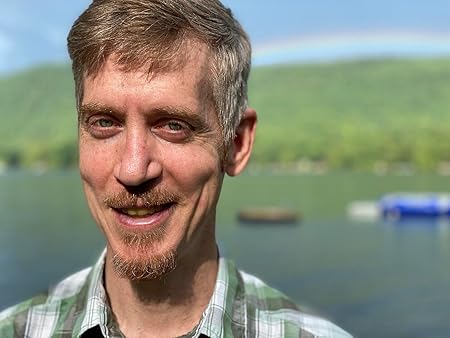
Dan Fitzgerald

Dan Fitzgerald is the fantasy author of the Maer Cycle trilogy (character-driven low-magic fantasy) and the upcoming Weirdwater Confluence duology (sword-free fantasy with unusual love stories). The Living Waters comes out October 15, 2021 and The Isle of a Thousand Worlds arrives January 15, 2022, both from Shadow Spark Publishing.

He lives in Washington, DC with his wife, twin boys, and two cats. When not writing he might be found doing yoga, gardening, cooking, or listening to French music.

He can be found on Twitter or Instagram as danfitzwrites, or on his website, www.danfitzwrites.com


Release Day Reality

My sixth book is out today.

The cat just loudly deposited a hairball on the rug. Her retching woke me.

The dishwasher needs emptying; the birdbath filling.

My day planner tells me I have a guest post due today, reading to do for a book review, and various tasks related to my volunteer job as editor of our community newsletter, as well as feedback notes to write for a first-time author I’m mentoring.

In other words, the world hasn’t stopped because I have a new book out, and, you know, that’s ok.

Brian and I will go out for ice cream at our favourite place by the river a little later today, to celebrate. (Normally, we go out for a meal, but as it’s also our 40th wedding anniversary this week, we’ll do that on Friday.) Friends are sending congratulations. I am suffused with the sense of accomplishment and pleased with the book’s reception so far. It’s the sixth book in a series; there will be a small spike in sales this week, and then it will trail off, to be purchased as people work their way through the first five. Six years and six books into the life of an indie author, I know it’s a long game.

Next week I’m taking a holiday, travelling a couple of hours north to Lake Huron and Georgian Bay, for a few days walking and birding, leisurely brunches on outdoor patios, some pleasure reading, and whatever else catches my fancy. After this short break. Heir will take up some of my time – guest blogs, interviews, a blog tour, perhaps some readings, but it’s out in the world, no longer mine alone but belonging too to its readers, to make what they will of it. Both the next two books – Empress & Soldier and Empire’s Passing – are nudging me: work needs to start in earnest there.

As it will. Alongside dishwashers to empty, and meals to cook, and community work…and hairballs.

Gaffes in Historical Fiction by Mercedes Rochelle

Historical Fiction authors have all experienced it…blissfully writing away, unaware that we have just committed an anachronism. And chances are, we won’t even know until a reviewer calls it to the world’s attention—months, or even years later. Oh no! 

I hate to admit it, but outside of my knowledge of historical events, I don’t know everything about everything historical. Trust me: it’s a tall order (according to the OED, earliest use of this phrase was 1893). Not every animal or plant was native to England (or America!). Sometimes they were introduced later than the period we are writing about. One time a reader penalized me for having Canute the Dane eat a rabbit because he said they were brought over with the Normans. D’oh! I looked it up and discovered a Roman recipe (in England) for rabbit, so they must have brought over the little buggers. That doesn’t excuse me, unfortunately. It never occurred to me to look up the origin of rabbits in England.

One little slip like giving King Alfred a tomato can wreak havoc with an author’s credibility. Potatoes are another bone of contention, as are turkeys, sugar, and chocolate, to name a few. Such foods may have existed but may not have made their way to England until late in the period. Not everyone agrees on the timing.

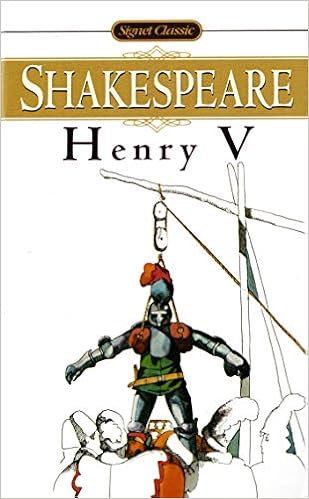
So where is the fine line between innocent errors and unforgiveable lapses? Laurence Olivier had Henry V in armor hoisted onto his horse with a crane-like contraption. He was warned against this inaccuracy by his historical advisor but preferred the dramatic effect. This gaffe is imprinted on our cultural memory!

Henry V (Signet Classics) (c) 1998

What about language? Idioms are another trap for the unwary. When I am writing, I run etymonline.com in the background, as well as phrases.org.uk. There are certain words and phrases that wouldn’t have been used in the early days. You can’t explode before the use of gunpowder. Can you really be nervous before the discovery of nerves? Of course, etymology is only a guide; the first known use of a word would be in writing. But I doubt if it would be in general use verbally for more than a century or two previously. So if a word was first discovered in 1650, for example, I would hesitate to use it in 1400. The trick is being cognizant of an anachronistic word in the first place.

Bottom line? The writer is going to make mistakes. We can’t forgive ourselves, but maybe our readers will cut us some slack (first use mid-1900s).

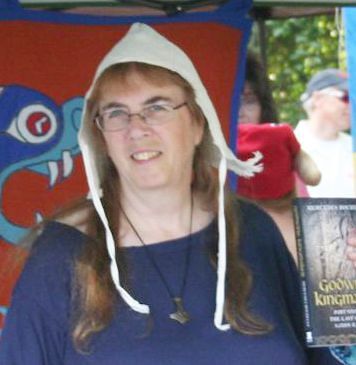
Mercedes Rochelle is a historical fiction author. Her latest release is The Usurper King; find all her books here.

From Concept to Finished Novel(s): Part II: Beginning with the End

With Empire’s Heir coming out in just over a week, my mind has inevitably moved on to the next book. While still set in my fictional work, and with familiar characters, Empress & Soldier will be something a little different.

As the title suggests, it focuses on two characters: the Empress Eudekia, and the soldier Druisius. In my third book, Empire’s Exile, we are introduced to both characters in the last half of the story.  Empress & Soldier will overlap with those chapters from Exile, although it will begin much earlier in the lives of both Eudekia and Druisius.

Empress & Soldier will – or can – serve as a second entry point into my world, so it creates some structural and conceptual challenges. In the overlapping part of the story, I will be writing scenes from either Eudekia or Druisius’s point of view. Sometimes these are scenes that are in Exile; sometimes they are scenes that happened ‘off page’ in that book, and are only referred to. 

I can’t skimp on this by assuming the reader has read Exile.  Nor should I just reverse the POV. What happens –  what either Druisius or Eudekia think, want, act on – is what matters. And that may be the opposite of what the main or supporting characters in Exile think, want, or act on. In fact, I already know it is, in some cases. A friend who has read some of the early draft scenes said, “I thought I knew Druisius. I was wrong.”

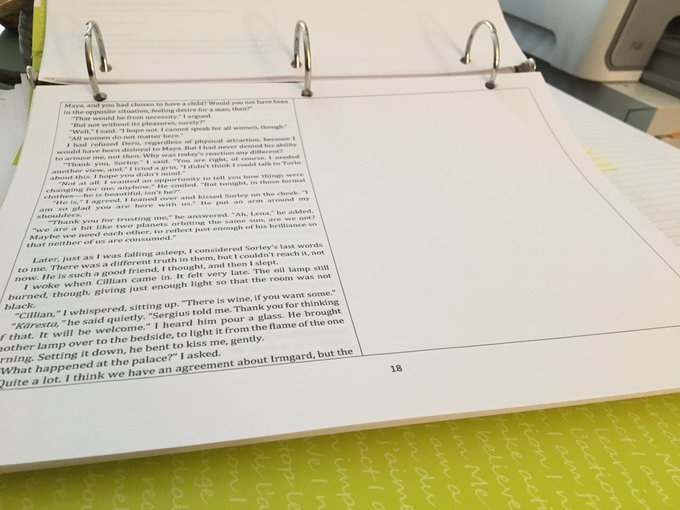
I’ve created a planning document, with the entire section from Exile on half the page, and blank space on the other. Now I’ll start going through each scene, thinking about the purpose of a parallel or supporting scene from the viewpoints of my two new main characters – but still conveying the important parts of the arcs of the other characters, those whose actions and reactions we saw in Exile.

I expect to spend a good chunk of time on this. Planning now will save a lot of energy and words later. I also intend to write this last section of Empress & Soldier first, because what happens here tells me what I need to show in the character development as Eudekia and Druisius grow up in much different ways in Casil, my Rome-analogue city. The plot, which will include some antagonists familiar to readers of my other books, has a framework, with details to be worked out which also depend on these last chapters.

There’s also an enormous amount of research to be done, and another advantage of writing these last chapters first is that I can juggle writing and research, because this section will require the least – I did most of what’s needed when I was writing Exile.

My last challenge – or I should say the last challenge I know about now! – is how Druisius wants to tell his story. Unlike my previous protagonists, for whom the written word either is or becomes their preferred mode of expression in journals or histories, song or poetry, Druisius is an oral storyteller with a distinctive voice – and a desire to tell his story in present tense.

“Druisius!”  My captain’s voice. What does he want? I am off duty. Friends are waiting to dice.  I turn.

“I’m reassigning you. A ship arrived this afternoon from the west. One of the passengers might be a queen, or something. They’ve asked for an audience with the Empress. The harbourmaster says they look like barbarians to him, but,” he shrugs, “they’ve been assigned a house, and guards, and you’re one of them.”

“Why me? And who’s the other?”

He snorts. “As if we don’t all know how bored you are.” He drops his voice. “Anyhow, it was the Magistere Quintus who suggested you. You know what that means.”

Can I/he maintain this?  I don’t know yet. (Nor do I know Eudekia’s voice at all, right now.) But this is a new adventure, in more ways than one!

Featured Image by Clker-Free-Vector-Images from Pixabay

Wings of Wax and Feather

Colm pointed to the gulls hanging in the sky. “Birds fly. Why can’t someone make wings so people can?”

“You know the tale of Vikar, whose father built wings of wax and feathers.”

“That’s a story,” Colm said, a little impatiently. “About setting our ambitions neither too high nor too low. I mean really fly.”

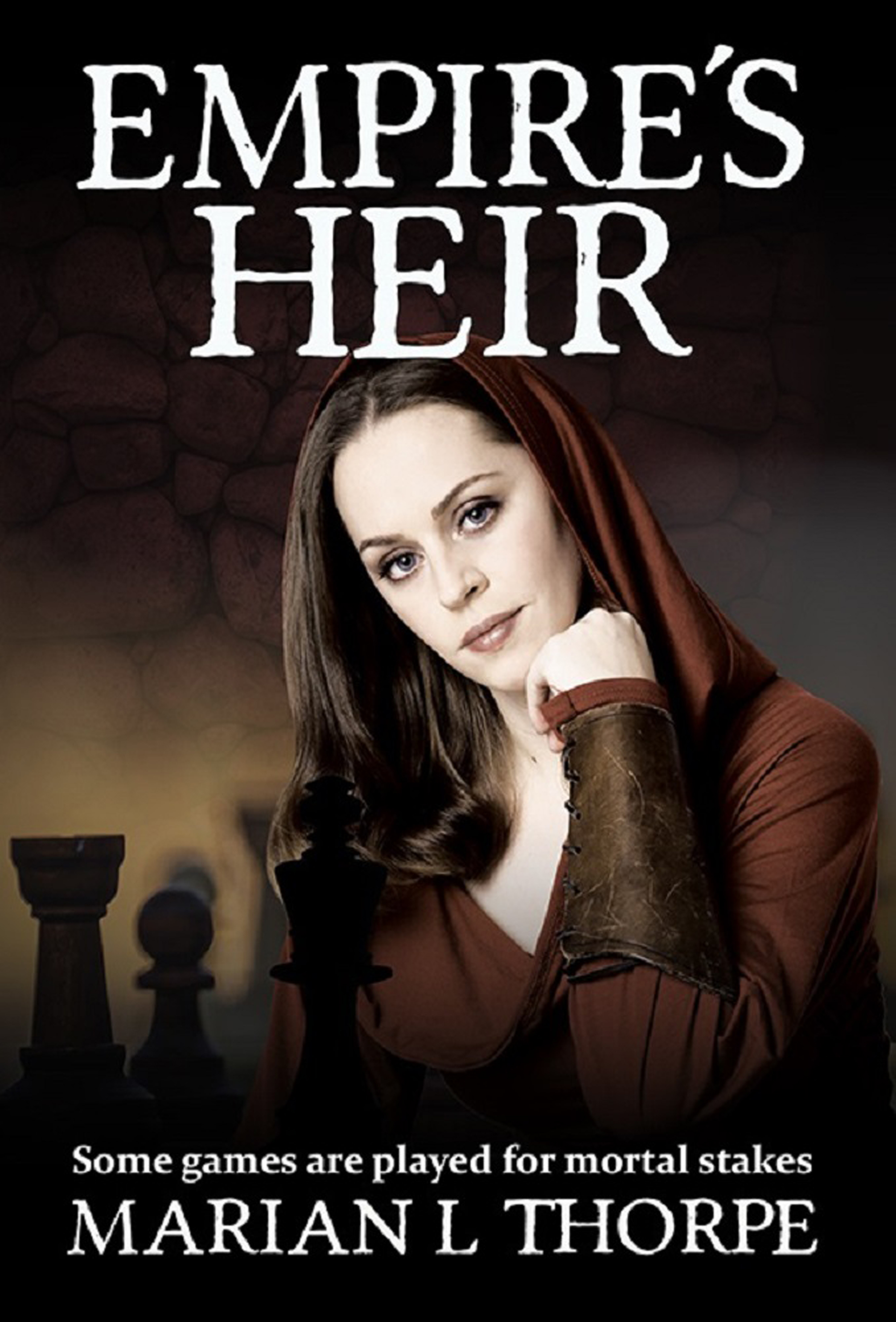
Empire’s Heir

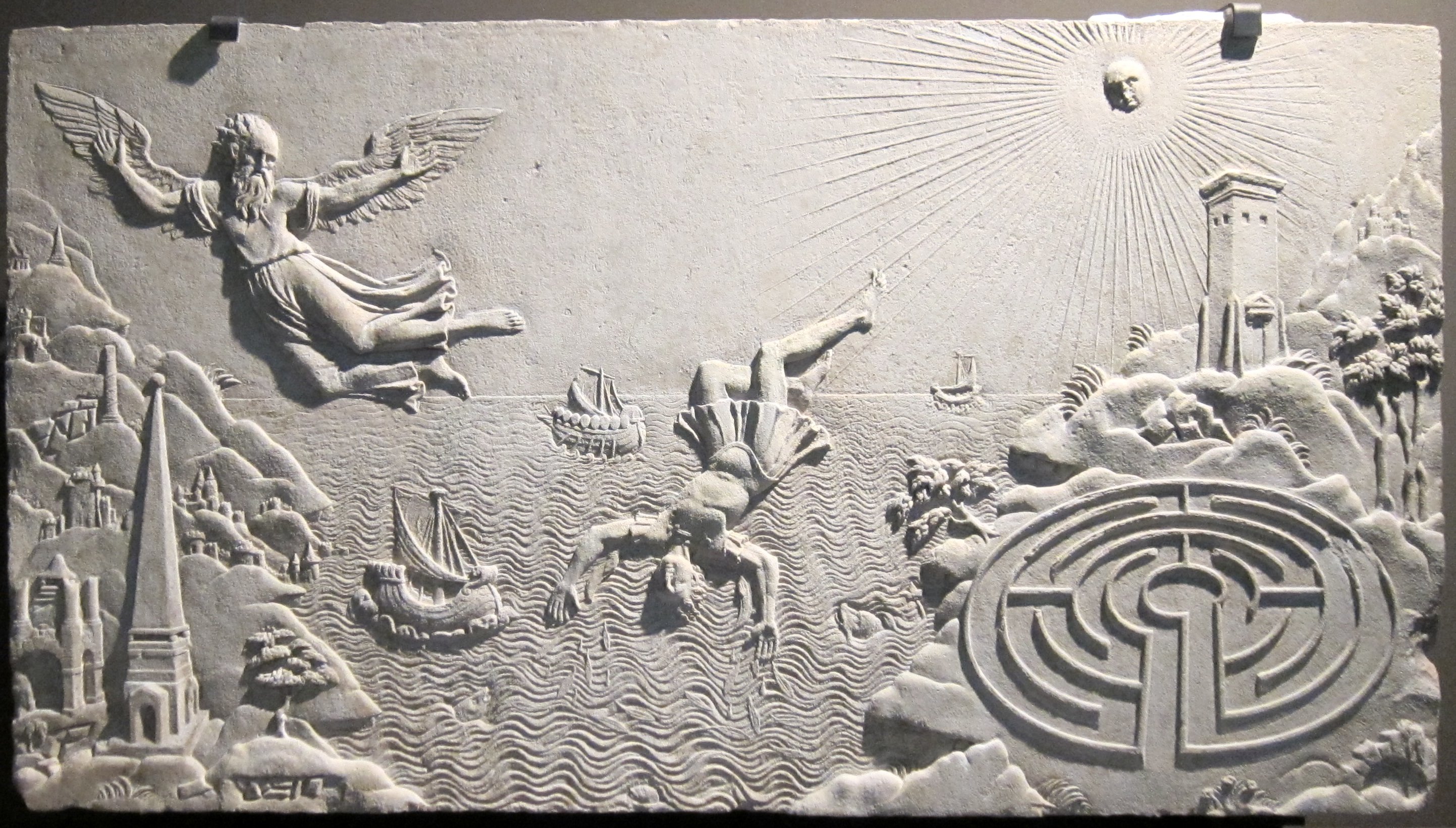
The legend of Icarus, which has come down to us from Greek mythology, is often interpreted as a warning not to set our goals too high. But Daedulus, Icarus’s father (Vikar, the name used in Empire’s Heir, is from the Etruscan name for Icarus, Vikare) warns his son against flying both too low, too close to the sea, where the waves might take him, and against flying too high, where the sun’s heat will melt the wax of the wings. A warning, as Colm says, not to set our ambitions too high or too low.

As I biked to and from the farmers’ market this morning, I contemplated what this meant for authors, or indeed, for any artist. At the market, I bought veggies from local farmers, and artisanal cheese, and looked at hand-made cards and jewellery; outside, I listened to buskers and took photos of the street art. So much art, so much talent…how do we as artists set our ambitions, so that neither the waves of despair nor the often-brief sun of recognition destroy us?

The Fall of Icarus, 17th century, Musée Antoine Vivenel. Public domain.

There is, of course, no one answer. Knowing why we create art, what purpose it serves in our lives, can help us understand where our flight path is. I write for the love of words, their cadence and rhythm and sound, for the look of them on the page, to explore ideas, and to tell my characters’ stories. Structure challenges me intellectually, a puzzle to solve. I love both the constraints and the freedom I grant myself in writing.

I have to remind myself of this, more often than I like. Our society tends to equate value with money, and more and more with celebrity. But the quiet satisfaction I find from the words of a reader who loves my books, or a review that appreciates my prose or worldbuilding, help keep me at the right height for my wings, although I will not pretend I don’t feel the desire for the sun, nor the darkness of the depths.

But these are my wings, my fragile construct not of wax and feather but of dreams and love. All my art has to do, in the end, is satisfy me, not pay my bills. This is only my flight path, not a judgement of other artists with different needs and different goals. But when I look up from my computer, from social media and sales charts and review stats, and take some time to consider and remember where writing has taken me – and, more importantly, what it has given me – I think I’ll keep flying for as long as I can.

Featured image: Jacob Peter Gowy’s The Flight of Icarus (1635–1637), public domain.

Fantasy and Me: From Puck to Aslan

In the previous installment of this occasional series, I wrote about Rudyard Kipling’s Puck of Pook’s Hill, and mentioned the influence I perceived it had on later works. Today, I’m going to focus on its influence on one series: C.S. Lewis’s Narnia books.

‘Ah, but you’re a fairy,’ said Dan.

‘Have you ever heard me use that word yet?’ said Puck, quickly.

‘No. You talk about “the People of the Hills,” but you never say “fairies,”’ said Una. ‘I was wondering at that. Don’t you like it?’

‘How would you like to be called “mortal” or “human being” all the time?’ said Puck; ‘or “son of Adam” or “daughter of Eve”?’

‘I shouldn’t like it at all,’ said Dan.

Puck of Pook’s Hill, Rudyard Kipling

“Sons of Adam” and “Daughters of Eve”, of course, is how Aslan, the Christ-figure lion in the Narnia series, refers to the children Peter and Edmund,  Susan and Lucy. 

“Down at Cair Paravel there are four thrones, and it’s a saying in Narnia time out of mind that when two Sons of Adam and two Daughters of Eve sit in those four thrones, then it will be the end not only of the White Witch’s reign but of her life.”

The Lion, The Witch, and The Wardrobe, C.S. Lewis

Yes, but, you may be saying – it’s coincidence. It could be, except for something else:  the Narnia’s children’s last name is Pevensie.  In Puck of Pook’s Hill, Pevensey – the Pevensey Levels (which is a real place, and Pevensey a real town), the Manor of Pevensey, and the Lord of Pevensey – are an important part of the story.

Antique Prints of Pevensey Sussex
Pevensey Castle, Sussex. Engraver & Publisher:
G. Rowe, & G. Wooll, High Street, Hastings

Why?  Pevensey is referred to as ‘England’s gate’ in Kipling’s story (it’s where William the Conqueror landed in 1066), and perhaps it was nothing more than the idea of the wardrobe in Narnia also being a gate between countries (or worlds.) You could perhaps argue that Lewis was attempting to replace Kipling’s ‘People of the Hills’ as the oldest, lost mythology of England with Christianity. Or maybe it was completely unconscious. Writers borrow, often without knowing they are.

I was – full disclosure here – never a fan of the Narnia books. I was not fond of Charles Kingsley’s The Water Babies, or the child’s version of A Pilgrim’s Progress I had, either. I didn’t like being preached at as a child (or adult), even subtly. What I did – and do – like is the continuity, the fantasy stories of one generation influencing the next, and the next.

Next time, a look at Susan Cooper’s The Dark is Rising series, which I still re-read every few years.

A Conversation with Susan Hancock

Dr. Susan Hancock is a retired university lecturer, now writing a unique science fiction series. Set in Elizabethan England, Anstey’s Kingdom involves travel in time and space and the conflicts between love, safety, and freedom in a dangerous world. I’m waiting to finish the first trilogy before reviewing the books, but the premise was so intriguing I asked Susan to chat with me about her books.

Tell a new reader a bit about your books: setting, concept, main characters.

The setting for my Anstey’s Kingdom trilogy is split between sixteenth-century Devon, England and a planet in the Auriga Constellation. Since the latter is the home world of my protagonists, I have named the planet Domum-Orbis. There is a rationale behind the Latinate oddments, but I can’t reveal it without giving a massive spoiler relating to Anstey’s Legacy: No Greater Love (the third book.)

The books began with a series of ‘what if’ questions. What would it feel like to suddenly discover that you weren’t human? What would it be like, as a refugee fleeing from war on a far planet, to find yourself in the power of the man who had appeared to offer you freedom…at a price? How would you cope with being so very different in a time and place where such difference could endanger your life?

Kat (Kathryn Wrenn) is my female lead. She has been brought up in a comfortable household in Elizabethan England and has no idea at all that, while she has a human father, her mother is from Auriga and not human at all.

Thomas Alban escaped to Earth with his parents when he was just 5 years of age. He knows his origins, but is contracted to work for the eponymous Anstey for the rest of his life, as one of the technicians running the underground complex in which the exiles hide.

Do you have a favourite character? If so, why?

Oh yes, Thomas is such a lovely, mixed-up man. Book two, Anstey’s Revenge: Will Love be Enough? Is really his book, as he struggles to come to terms with extreme depression and thoughts of self-harm. I suppose, in a bizarre way, I feel guilty about everything I’ve put him through. I’ve certainly cried at my laptop over his struggles.

Given the time period and setting, it’s possible to read your books as an allegory for religious persecution in Tudor times. Is there any basis for that, or is that just the Tudor history geek in me reading too much in?

I can see how you might read it in that way, but it’s more of a distanced comment on the endless persecution of the vulnerable, for whatever reason, and the ways in which refugees can be exploited. I’m thinking, in particular, of people smugglers and sex-traffickers here. I’m not underplaying the extreme dangers of existing in the Tudor times, but it is perhaps telling that James, whose relationship with human Robert would mean death if they were caught, prefers to take his chances in the outside world rather than endlessly labour, unpaid, in Anstey’s Kingdom. A freedom/safety conundrum. The violence of the times is more than matched by the violence perpetrated by Anstey, and his resident thugs, on anyone who defies him.

How did you research the period, specifically regarding the setting and the real places mentioned?

I spent a lot of time working in the North Devon Records Office in Barnstaple, Devon. Everyone there was very helpful and it was fascinating to read so many books relating to the history of the area, together with maps and reproductions of wood-cuts, all giving a real ‘feel’ for the period. Of prime interest—details of the pirates who occupied Lundy Island at that time (I later visited Lundy) and information on the floods which swept down the Bristol Channel during the period covered in book 2. I had to shift the date of the floods slightly, but was able to make reference to specifics of a scene which is the subject of a woodcut from 1607.  

Staying at the Royal and Fortescue Hotel in Barnstaple, which was once the Fortescue Arms where Kat and Thomas also stayed, gave me a really shivery feeling, particularly looking at the ceiling in their bistro which dates from 1620. [Forgive the tendency to refer to my protagonists as if they are real people—they have come to feel as if they are to me.]

I also researched on-line and made good use of books such as Ian Mortimer’s invaluable The Time Traveller’s Guide to Elizabethan England.

Your academic specialty, if I’ve done my research correctly, is children’s literature, especially the concept of the child within literature. So, two questions arising from this: Do you have a favourite children’s book – and if you do, why that book? Second question: what drew you to write adult books?

My instinctive reaction to your first question is to say Ursula Le Guin’s Earthsea books. However, I’m conscious that this is the choice of the adult reader in me (perhaps evidenced by the fact that Tehanu, the perhaps-adult fourth book, is my favourite of these.) Going back to my own childhood, I was totally enthralled by the books of Rosemary Sutcliffe, Geoffrey Trease and Henry Treece. As a rather solitary child, I used to creep about the house and garden in my favourite emerald green dress, pretending to be one or other of the Celtic or Ancient British characters from fiction (only occasionally a Roman.)

I’m sure, however, that I’ve missed out loads of other significant books and will immediately think of them once this interview is concluded!

There is a fairly lengthy hiatus between my non-fiction writing on children’s literature and my embarking on writing adult books. For a relatively long period I was wrestling internal demons and had no desire to write anything (in fact I did a lot of very inexpert painting and was convinced I would never write again.) I can’t really explain why I suddenly became obsessed with a story and a ‘people’ taking shape in my mind (answering the ‘what if’ questions I outlined earlier.) All I know is that the words fairly poured out of me, and the characters took a firm grip on my psyche, demanding that their stories be told. I think of myself more as a story-teller than a writer, and perhaps that is a legacy of my children’s literature studies. So many incredible plots and happenings people that world. That said, my books are, I confess, very violent and sexually explicit.

I have only a superficial knowledge of Jungian thought, but I believe you have quite a bit more. How has this influenced your writing? Are there aspects of your book that should be viewed through Jungian concepts?

My interest in Jungian psychoanalytic criticism arose from my research into the ways in which child-characters are formed in literature for children and in myth, legend and folk tale. A part of that involved looking at miniature characters, giants (the ultimate hyperbolic child), and what such constructions—from Tom Thumb to Tommelise to Nils Holgersson to Issun-Boshi—reveal of the societies in which they come to life. So, the short answer to your question is “no” I don’t think it has influenced me (consciously at least!) A psychoanalytic critic might well have a field day analysing my books, but that critic is no longer me.

Did you read science fiction prior to writing your series? If so, what are your favourite books? And if not, what drew you to this genre?

I enjoy an eclectic mix of books, with my science fiction reading coming from books such as Anne McCaffrey’s early dragon books, concerning colonists from Earth who settle on the fictional planet of Pern, and the Crystal series. My late uncle, who had a PhD in nuclear physics from Cambridge and was at one time President of the British Interplanetary Society, loved her more space-oriented books, in particular the ‘Brain and Brawn Ship’ series, and introduced me to some of them.

Do you listen to music for inspiration? Did any songs (or poems or other books or movies/tv) inspire or shape your concepts or characters in your series?

Words from poems and plays do float through my head while I’m writing. Certain lines suggest themselves as analogous with certain characters and actions. For example, my WIP currently involves my character feeling the compulsion to share her story, no matter who it is with—in this case her sleeping baby daughter. It made me think, inescapably, of Coleridge’s The Rime of the Ancient Mariner.

I enjoy listening to music, but my choices are more about mood than any influence on my writing. Although, thinking of it, perhaps love songs for some of my scenes.

Who are your greatest support people for your writing?

My husband Peter, who loves to read my work and is quick to point out plot holes and bits that don’t work, is my main person. My neighbour, Yvonne, is also very supportive and encouraging as a rough draft reader. Latterly my granddaughter (who has an MA in publishing) did some excellent editing work (pointing out problem areas rather than a line-by-line edit) but refused, point-blank, to look at any ‘sex’ scenes written by me.   

And is there a four-legged furry friend (or two) who helps out?

Sadly, my furry friends did not survive to see the publication of my books. I’m sure they would have enjoyed sitting on them. Jasper and Rosie (ginger tom and sister tabby) were our much-loved feline friends and dear Lucy, a rescue cross between a Jack Russell terrier and a German shepherd (I know, the mind boggles) was our canine companion. They were a great age when they finally succumbed (18, 17 and 16 respectively) and we haven’t had the heart to replace them.

What’s next?

I have just completed a sequel to the ‘Anstey’ books, which concerns Kat’s and Thomas’s three children. This is currently away for editing, cover design etc. and should be out in September. Work is also in progress with a prequel, which is currently giving me problems—the form of the solo narrator’s voice and single POV are not my usual mode of working…we shall see.  

This last question is very personal. As one cancer survivor to another, there is a theme of anger, of violation and PTSD among your characters. Do you think this is a reflection of what we go through in diagnosis and treatment, expressed in your books? If so, was this conscious – a form of therapy?

Yes, the writing was definitely cathartic: there is also a lot of me written out in Thomas, plus the books gave me a way of regaining a feeling of purpose in my life. A couple of things about the cancer affected me badly: the first was developing a sense of guilt that I was still alive when so many weren’t. I became very numb, depressed and uncertain why I should be living. What was the point of my survival? How many better and more purposeful lives could have been saved in my place? Also affecting me was a certain anger at the complete loss of agency in my life. I had difficulty in coming to terms with damage to the nerves in my spine (a mix of the effects of radiotherapy and the activity of the original tumours themselves.) It took a while to get used to not being able to walk about, to being stuck in the house, totally dependent on help to go out. Starting writing was a little like a dam bursting. A point to my life and something I didn’t need to be able to walk to do.

I appreciate being given the opportunity to talk about it.

Thank you, Susan. Your answers will make your second and third books (still on my TBR list) all the more intriguing!

An image posted by the author.

You can find more information about Susan on her website, or connect with her on Twitter.

Featured Image: Eighteenth century view of Barnstaple, Museum Of Barnstaple And NorthDevon. Public Domain.

Mood Music

Songs and music have always been part of my stories, but it wasn’t until the musician Sorley moved from minor character to supporting in Empire’s Exile that I started to create playlists for part or all of my books. In Exile, it was only one song: there exists, in my fictional world, a song about two brothers separated forever by war. Sorley sings this one night, ‘for all we have loved, and all we have lost.’ Before and during writing this scene, I listened to Danny Boy, over and over again, trying to capture the sense of loss and love embodied in both its tune and its words.

Oh, Danny boy, the pipes, the pipes are calling
From glen to glen, and down the mountain side….

Then Sorley moved from supporting character to main character, and the story he had to tell was one of love and betrayal, both in the immediate and looking back on it, and I needed songs to tell me of his pain and longing. The playlist started with Runrig’s This Beautiful Pain:

All that’s constant
And wise I still see in your eyes.
It was always this way from
The start. Right here where I
Stand on the last of the land.
But you’re still breaking the
Heart….

and Stan Rogers’ Turnaround:

…yours was the open road,
The bitter song, the heavy load
That I couldn’t share
Though the offer was there
Every time you turned around. 

Eventually it included Blue Rodeo, Gordon Lightfoot, more Runrig, Cat Stevens and CSNY. And one more, by the end: the song Sorley writes himself (or, rather, I did, of course – capturing the mood of Archie Fisher’s Dark Eyed Molly), his beautiful Paths Untrodden.

Then I started writing Empire’s Heir, which is the first of my books to have two narrators: the aging Cillian and his adult daughter Gwenna. There were two separate moods I needed to capture, along with a sense of a world changing, the torch being passed. I had Gwenna’s quickly: another Runrig song, Always the Winner

When you close your eyes there’s
A frightened pride that lives
For you. That your mother’s life
And your father’s eyes can’t
Hide. You had no choice, didn’t
Ask the dice to fall for you.
Still your courage comes like
Thunder through the skies. 

Cillian’s song took much longer – until a comment on Twitter discussing Leonard Cohen’s best songs took me to Alexandra Leaving – and it was perfect.

Suddenly the night has grown colder
The god of love preparing to depart
Alexandra hoisted on his shoulder
They slip between the sentries of the heart…

Now, as I contemplate the two planned books – Empress & Soldier, the stories of Druisius and Eudekia before Lena and Cillian and Sorley enter their lives, and the last book of the series, Empire’s Passing, which will be narrated by Colm and Lena – I’ll have to go looking for appropriate songs again. They’ll be out there, somewhere.

Danny Boy lyrics:  Frederic Weatherly, 1913; copyright expired.

This Beautiful Pain: Songwriters: Calum Macdonald, Rory Macdonald lyrics © BMG Rights Management

Turnaround: © Stan Rogers, Fogarty’s Cove & Cole Harbour Music

Always The Winner Songwriters: Calum Macdonald, Rory Macdonald lyrics © BMG Rights Management

Alexandra Leaving: © Leonard Cohen, Sharon Robinson and Sony/ATV Music Publishing Canada Company.