We are used to fantasies that involve either the magical, fey beings of Northern Europe, or  those of Victorian horror novels. Darrell Drake’s historical fantasy A Star-Reckoner’s Lot introduces us to the mythology of Sassanian Iran, its beings of good and evil, and the complex idea of star-reckoning, a type of sorcery that channels the warring powers of the heavens to the benefit – or detriment – of humankind.
Revolving around three main characters: Ashtadukht, the Star-Reckoner; Tirdad, her cousin and bodyguard, and Waray, a half-div (half-demon, more or less) stray befriended by Ashtadukht, A Star-Reckoner’s Lot is a long story in terms of passing time; it unfolds in a series of vignettes; the reader may sometimes have difficulty in grasping the immediate importance of the events, or the connections between them. Nor is the reader given much backstory; the world, both seen and unseen, its characters, and the interactions between them unfold gradually, but the story moves inexorably towards its climax and conclusion.
Ashtadukht is a difficult character to get to know, and perhaps too a difficult character to truly like, stoic and bitter, but our understanding of her and what drives her develops over the story; in the end, we understand her, and likely have sympathy for her. Tirdad is perhaps the least developed of the three main characters, but he too is a character of dimension faced with difficult choices. Waray, the half-div, is on the other hand the most developed character: at times appealing, at times annoying, and at times amusing, all those facets hide a depth of sorrow and regret, and a desire for redemption that drives her.
It would be easy to read A Star-Reckoner’s Lot as a simple adventure set in an unfamiliar mythos, but the themes of love and honour, exclusion and belonging, and regret for the prices paid for actions raises it above many fantasy novels. Do not be misled by the author’s light hand (and occasional bad puns); this is a story with some haunting imagery and deep themes, and not one I’m going to forget quickly. Five stars.
I received a copy of this book in exchange for an honest review.

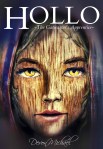
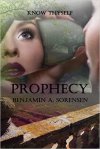


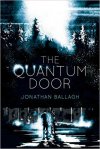

 but Ayahuasca is at least a linear narrative. If this makes no sense to you, go look up Burroughs and The Naked Lunch on Wikipedia. Do this before you buy the book, and consider that they share themes and actions.
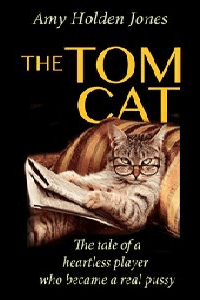 fiancee by running out on her only a few days before the wedding. Ashamed of himself, he ends up in a bar called The Black Cat, where he meets a graceful, beautiful older woman apparently on the prowl, a cougar. They drink together, and the next morning, Tom wakes up….as a cat.
 tradition of Terry Brooks, with gaming influences also apparent. Fast paced, and with a unexpected twist towards the end, A Noble’s Quest suitably entertained me. The gaming influences, I think, are most apparent in the pace of the story, and the characters’ self-awareness, tending towards ‘kill now, think about it later’ rather than the more reflective nature of some fantasies.
 McCusker’s The Extraordinary Temptation did exactly that. From a medieval monastery site in Ireland to a ranch in Texas to Vatican City, the story for the most part kept me turning pages, entertained.
 to enter fully into the world the author has created. Visualizing the action as a movie may help; when I could do that, I found parts of the story to be quite fun, although I could never really take it seriously.
 Hunt. Freya, now more aware of her magical heritage and powers (although not completely) accepts a work experience placement in London, only to discover that her employer has chosen her for her magical abilities, and her assignment is to track down a missing Oracle. The problem is, does this Oracle want to be found?
 Guidoccio’s A Season for Killing Blondes, a cozy mystery set in Sudbury, Ontario. While followers of my blog and reviews on Amazon and Goodreads know that this is not my usual genre to review, every so often, I like to read something different, just as while my preference in cinema is for small, independent, international films, once in a while I watch with complete enjoyment a rom-com, or a Hollywood blockbuster.
 the weapons, five disparate young people from across the land become the weapons-bearers. Magically linked to the weapons, each must learn its powers and its responsibilities, evade those who want to use them for ill, and find each other across a wide and dangerous land. David J. Normoyle’s book The Silver Portal, the first book in a planned series, introduces us to the five protagonists: street urchin Twig; would-be-adventurer Lukin; noble Suma; Mortlebee, outcast from his religious community, and rebellious Simeon. Each character stands as individuals; each has their own difficulties with their unexpected weapons. Struggles with trust, ethics, personal convictions and the expectations of upbringing are central to each character’s growth and development through the story, but not in a heavy-handed or preachy way. Instead, these dilemmas are an integral part of the story, handled for the most part deftly and naturally.
 marianlthorpe.com
You must be logged in to post a comment.