The Extraordinary Temptation, by Patrick McCusker: A Review

Any book that starts with an archaeologist in the field is likely to pull me in, and PatrickThe Extraordinary Temptation - Front Cover McCusker’s The Extraordinary Temptation did exactly that. From a medieval monastery site in Ireland to a ranch in Texas to Vatican City, the story for the most part kept me turning pages, entertained.
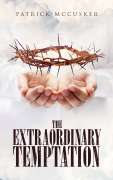
Ed Weaver is a young archaeologist overseeing a routine construction project when the ditch-digger uncovers a marble cube deep in the Irish bog, but he is without the funds to continue its appropriate excavation. An American donor steps in, promising the funds, setting off a tragic sequence of events for Ed and the theft of the precious contents of the cube. With those contents, a scientific experiment is begun, one with life-and-world-changing potential. Ed is determined to pursue of the chain of events that began with the discovery of cube, even if it takes him over twenty years to learn the truth.

The Extraordinary Temptation is sufficiently well-researched to be plausible, without going into so much detail to be pedantic. The writing is competent and the plot flows smoothly for the most part. I had a few niggles: one clearly evil character’s background or motivation is never satisfactorily explained; another, central to the plot, perhaps needed a better explanation of the myths and tales of sacred duality for readers unfamiliar with the concept. Overall, I found the first two-thirds of the book, leading up to the major crises and climax of the story, to be better written than the actual climactic events, which lacked sufficient impact. A pivotal chapter, which should fully engage the reader’s emotions, fails to do so (at least for me), because the reader is primarily told what is happening and not shown through the characters’ reactions and responses.

Niggles aside, I still found The Extraordinary Temptation to be entertaining and mostly enjoyable reading, worthy of a couple of lazy summer afternoons. My rating is 3.5 stars.

I received a copy of this book in exchange for an honest review.

The Fall of The Gods (Elynx Saga Book 1) by Nicola Bagalà: A Review

The Fall of The Gods (Elynx Saga Book 1) by Nicola Bagalà requires a major suspension of disbeliefFall of the Gods to enter fully into the world the author has created. Visualizing the action as a movie may help; when I could do that, I found parts of the story to be quite fun, although I could never really take it seriously.

The writing, as far as the adherence to the rules and conventions of grammar and spelling of the English language, is quite good, perhaps more so as English is not the author’s first language and he has translated the work from Italian. There were one or two mis-steps (snickers for sneakers, as one example) but overall the translation is competent and sentence flow is good; there are fewer mistakes than I usually see in any self-published work. It’s in the structure of story-telling that the problems arise. Mix together a sentient artificial intelligence that is the ‘soul’ of a building (and can appear as a solid hologram), a missing genius scientist, a Japanese grad student who is a mathematics and martial arts specialist, some equipment and action straight out of comic books and video games, dream sequences, and aliens crashed in the Sonora desert…well, can you mix all that together and write a coherent storyline? Not in one book, I’m afraid. There are too many plot lines and too many genres combined here for the story to hold together well. As it is the first book in a series, it is possible that once the other(s) are written that the whole series will coalesce into a solid and meaningful story. As it stands now, it’s too many flavours in one pot.

Standing out for me among the characters of the book was the sentient, holographic AI Hex. Perhaps an homage to Hal of 2001: A Space Odyssey, (although he also reminded me of the ‘soul of the Tardis’) as revealed in the Doctor Who episode The Doctor’s Wife), I found the character appealing and amusing, and oddly enough more fully realized than most of the other characters. (Which may, of course, say more about me as a reader than it does about the writer.)

Overall 2.5 stars, which translates to 3 on Goodreads and Amazon.

I received a copy of this book from the author in exchange for an honest review.

Oracle (Freya Snow Book 4) by L.C. Mawson: A Review

The fourth installment in L.C. Mawson’s Freya Snow series continues the story begun in oracleHunt. Freya, now more aware of her magical heritage and powers (although not completely) accepts a work experience placement in London, only to discover that her employer has chosen her for her magical abilities, and her assignment is to track down a missing Oracle. The problem is, does this Oracle want to be found?

Switching between the Shadow Realm and everyday life, the story provides more explanation of Freya’s background and foreshadows one possible future. It also acts as an exploration of some of Freya’s deepest fears and the choices she needs to make. But I also found parts of this book had, for me, a deeper resonance as a metaphor for the difficulties and choices people on the autism spectrum disorder face. I hesitate to write this, because I am allistic (non-autistic), but my husband is autistic (Asperger’s diagnosis), and after thirty-eight years of living with him, I may have a few valid insights. When Freya (or her Shadow Realm counterpart, to be precise) is told this about her possible bond with another magical creature: “The only way the two of you can bond is if you form a real and lasting attachment to the Human world. We always knew you were too closed off to others for that ever to be likely….” it struck me as the truth about relationships many autistic people live with. It can be easier to invest in other sorts of relationships – with computers, games, or, as Freya does, as a bounty-hunter of evil magical creatures – than it is with other humans…especially when the powers you hold – whether it is Freya’s magic or the ability to envision and analyse and discard dozens of answers to a word-game problem in a few milliseconds (don’t play Tribond® with my husband) – separate you from allistics.

Even with that possible interpretation aside, this is a fast-paced magical adventure. It should not be read without having read the previous books, and perhaps the related short stories too: I have read all the books, but not the stories, and there were occasionally times when I found myself confused about past events, which could be due either to my poor memory or to something happening or revealed in a story I haven’t read. But overall the four books have provided a coherent narrative and a developing story. I’m giving this installment four stars.

I received a copy of this book in exchange for an honest review.

A Season for Killing Blondes, by Joanne Guidoccio: A Review

An extended Italian family, lots of food, and four murders are at the heart of Joanneseason for killing blondes Guidoccio’s A Season for Killing Blondes, a cozy mystery set in Sudbury, Ontario. While followers of my blog and reviews on Amazon and Goodreads know that this is not my usual genre to review, every so often, I like to read something different, just as while my preference in cinema is for small, independent, international films, once in a while I watch with complete enjoyment a rom-com, or a Hollywood blockbuster.

And enjoyment is what A Season for Killing Blondes gave me. It’s a fairly quick read, at 264 pages on my iPad Kindle app, perfect for a lazy Sunday or as a beach book. Competently written and plotted, it gained points for me by not only being set in my home province, but by its protagonist being middle-aged. Gilda Greco is fifty-ish, setting up a new business as a career counsellor after winning a major lottery, when a body is found in the Dumpster behind her office. The investigation reunites her with police detective Carlo Fantin, a high-school crush of Gilda’s. Family secrets, rivalries and jealousies factor into the escalating crimes. Can Gilda clear her name while helping to find who is responsible?

There are sufficient clues dropped, along with a few red herrings, to keep the reader engaged in the mystery and at the same time guessing. I had a minor niggle with a plot point which I felt rang untrue, and characters tend to be a little two-dimensional, but no more so than they are in an Agatha Christie mystery, so that’s not really a criticism. A nice addition to the book is the inclusion of several recipes at the end. Overall, 4 stars.

Hollo: The Gatecaster’s Apprentice, by Devon Michael: A Review

“There was a pool of darkness in the midst of the light, where the wind had come in Hollo The Gatecaster's Apprentice fullaccompanied by a shadow, a shadow with shoulders and a head that stretched into the lighted space on the floor at the bottom of the stairs.”

Reminiscent of Neil Gaiman, of the darkest episodes of Doctor Who, of some of the madness of Tim Burton, Devon Michael’s Hollo: The Gatecaster’s Apprentice is an artfully told, dark, and frightening coming-of-age tale with a twist. Hollo, the title character and protagonist, is a puppet made of wood, but one that can think and feel and move autonomously, created by her ‘father’ Fredric. (This might remind you of Pinocchio, but it shouldn’t.)

When Hollo reaches her twelfth birthday, Fredric takes her out into the world, a place far more complex and menacing than her sheltered world of Fredric’s house and the metal-casters workshop next door. Here she first hears the name Bander-Clou, and the words ‘Zygotic Pneuma’. Just what is she? And who is her father, really?

Clock-work soldiers of metal and wood pursue her. Hollo befriends a human girl; statues come to life; elemental forces protect her. Hollo’s world is under siege, and she is caught in a larger story, one older than she but one to which she belongs, and one in which she has an integral part to play. Michaels writes fluidly and effectively, his words invoking horror, happiness, fear and joy, the pacing moving the plot along quickly, but not so quickly the world-building is overlooked. This is a well-realized and developed world, one that the author leads the reader into by hints and clues: the reader learns the world along with Hollo.

Characters are well-developed, especially Hollo, whose innocence at the beginning is lightly but effectively shown, but also the supporting cast, from the malapropistic statue ‘The Countess’ to the marvellously conceived Lightening Man. And they all have a role to play; none of these characters, some of whom would not be out of place in Alice Through the Looking-Glass, are superfluous to the story.

Hollo: The Gatecaster’s Apprentice earns a rare five stars from me. I didn’t want to put it down, and yet conversely I rationed myself as to how much I read on any day, so as to savour the book and anticipate where it was going: it was far too good to read in one gulp. One caveat: in the e-book version I read, there were a few production errors, and a few errors that slipped through editing. In several places ‘won’t’ was written as ‘wont’; the common error of ‘broach’ for ‘brooch’ appeared a few times, along with the newly-frequent (in my experience of 55 years of reading) confusion of ‘piqued’ with ‘peaked’. One’s interest is piqued (excited); one’s interest in something can ‘peak’ (reach a height). Both can be correct, but are often, these days, confused. BUT: sometimes, as I wrote here, the overall quality of a book or a movie outweighs a few production errors, and this is one of those few cases. Regardless of the (easily-corrected) errors, Hollo deserves five stars.

I received a copy of the book in exchange for an honest review.

Throne of Lies, by Sara Secora: A Review

On long-haul flights, I occasionally watch animated films, usually from Disney/Pixar, enjoying their satisfying simplicity; they’re a pleasurable, escapist way to pass a couple of hours. Throne of Lies, from new author Sara Secora, falls squarely into this category. If you’re a fan of Disney’s princess films, you’ll like this book.

Princess Amethysta Serelle of Northwind is the heir to the throne….but she doesn’t want to be. Betrothed to a man she dislikes, bored and irritated by the restrictions on her life, and puzzled by the odd and frightening things that happen when strong emotion grips her, she attempts to escape the expectations of her parents. Her journey of self-discovery is both aided and frustrated by her newest personal guard, the disturbingly handsome commoner, Soren.

Throne of Lies is a charming fairy-tale incorporating many of the aspects of classic, Disneyfied fairy-tale, but with a modern twist. Fingers are pricked on thorns, apples are eaten, shoes are tried on…but these are all peripheral to the story, background reminders of the genre. Nor is it the cautionary fairy-tale of the Brothers Grimm: there is nothing terribly dark here, although one scene does not flinch from the realities of what can happen to a young girl alone. But not all apparent monsters are what they seem, either.

The ARC I read had the usual number of production errors, which is to be expected from a pre-publication version. There were also a few grammatical errors, odd changes of tense within sentences, and non-traditional uses of words that affected flow and comprehension. The story, I felt, was a bit slow to get going; there are some early scenes that are too detailed or drawn out without substantially adding to either the world-building or the plot; this might discourage some readers.

I would have recommended this book for readers eleven and up, but two scenes in the book suggest that thirteen and up is a better age recommendation. My personal rating is 3 1/2 stars; this will be 4 stars on Goodreads and Amazon.

Book Review Policies

I’ll post this on the book review page on my website as well.

For everyone who has asked (and those who might wish to) I review published or pre-publication work from indie authors.  My preference is for young-adult fantasy/dystopia/sci-fi but will consider other work.  I do accept e-books (actually, I prefer them).

My practice is to share the review with the author before I post to anywhere except my website.  As well as my website, I post reviews to the following sites:  Goodreads, Amazon in the UK, Canada, and the US, and Kobo and Smashwords – but don’t unless the author requests it.

My contact details are marianlthorpe at gmail.com.

A Review of Chained by Susanne Valenti

Chained, by Susanne Valenti

A fast-paced, well-plotted young-adult dystopian novel by first-time author Susanne Valenti, Chained is concerned with the familiar theme of teenage protagonists challenging the structures and tenets of their society in a post-apocalyptic world. While this theme is the basis for most dystopian novels, the characters of and the story told in Chained are original enough to keep readers interested. Before I write anything else, let me say this: Chained is worthy of a read if young adult dystopian fiction is a genre of choice. Fans of the Divergent series, The Hunger Games series, and similar works should enjoy this book and look forward to the sequel.

Now, for a few niggles.

The society against which Maya, the heroine, and her companions rebel is imagined and described in enough detail to give the reader a sense of how this world works. The society into which she escapes is less well realized, perhaps because it reflects, more or less, current Western society, and therefore is supposed to be already familiar to the reader. I found I had questions about the functioning of the society outside of the city from which Maya and her companions flee which were not answered in the narrative.

Maya’s thoughts and reactions to situations were not always made clear, and at times she appeared to observe what was happening to her and narrate rather than respond. In one or two cases – especially after a scene in which she is brutally assaulted – her reactions did not to me ring true. Overall, though, this does not impede the action of the narrative, and should not be a barrier to enjoying the the story.

A few production issues were mildly irritating, and perhaps the manuscript could have benefited from one final copy-edit. The author’s use of ‘alright’ rather than ‘all right’; the contraction of ‘going to’ to ‘gunna’ rather than the more familiar ‘gonna’; inconsistent capitalization of City in “Harbour City”, and an unconventional use of quotation marks in multi-paragraph dialogue were all distractions for me, pulling my focus away from the writing – which overall is effective – when they occurred.

But these are niggles only. Let me repeat that Chained, overall, is a well-told story, and I will be reading the sequel when it comes out. My overall rating for Chained? 3 ½ stars out of 5.

Chained by Susanne Valenti is available as an e-book from Amazon.

This is an independent review of a purchased book. The review was not sought by the author nor written for any benefit. The opinions stated here are mine alone.

My Favourite Review

It’s one thing to have your book reviewed by family or friends.  It’s another to have a complete stranger review it.  Over on Kobo.com, this review of Empire’s Daughter appeared:

“A story both hard and beautiful, Empire’s Daughter handles with depth and eloquence the issues of its time. The Empire is so like a past that our culture could hold, and creates a reflection on our decisions and traditions and their impact. For all its insight it still drives a narrative of growth and action.”

It’s written by someone I don’t know at all, who had no reason to be polite or to hold back on what he/she really thought. For that reason, it’s (so far) my favourite review.

Interested in reviewing Empire’s Daughter?  You can download the e-book it for free for a limited time from www.smashwords.com for no cost, using coupon code: ML72W.