Beauregard and the Beast, by Evie Drae

Evie’s thoughts on writing the story:

I’ve had the idea of writing a series of fairy tale re-imaginings with LGBTQ+ characters for longer than I can remember. However, because the concept felt so daunting, it wasn’t one I’d put a lot of focus or thought into. That is until I submitted another manuscript to a Romance Writers of America contest and received a full request from Sue Brown-Moore, the acquisitions editor for Dreamspinner Press’s category romance line, Dreamspun Desires. She enjoyed my voice, but the manuscript I’d given her didn’t fit with the angst-free guidelines of her line.

After chatting with her—and darn near falling in love, because she’s a wonderful human—I decided to take a crack at writing the first in my fairy tale re-imaginings series with the Dreamspun Desires guidelines in mind. Around this time, I was offered representation by Eva Scalzo from Speilburg Literary. I signed with her, and we were off and running almost immediately with a proposal to Sue for a Beauty and the Beast retelling starring Adam Littrell, a grumpy MMA fighter nicknamed “The Beast,” and his sweet personal assistant Beauregard Wilkins.

I had an absolute blast writing Adam and Bo’s story. Once I got the green light from Sue, I dove in and wrote all 55K of the manuscript in less than six weeks. A few rounds of editing with my agent later and Beauregard and the Beast found itself in Sue’s hands. Much to my delight, she offered a contract less than a week later.

Truly, my experience in writing these characters was a magical one. I had to fight some of my most basic creative instincts to avoid the angst that so typically becomes an integral part of my plots. Every time my characters tried to steer me toward a plot bunny that would undoubtedly gum up the fluffy romance works, I’d pop back to the outline I’d created during the proposal stage and crack the whip until they fell back into line. It wasn’t easy, but it was a labor of love and taught me a great deal about the art of writing and about myself as a writer.

I have several more stories already pinging around my brain to continue the series, including a Little Mermaid retelling with an Olympic swimmer I’m hoping to publish during the 2020 Olympics! 

My review:

Adam is the Beast, a mixed-martial-arts champion who has never let anyone close to him: his career’s always come first. But he isn’t a youngster any more, and his ring persona has very little to do with who he really is.

One thing Adam truly is, however, is disorganized, which is why he needs a personal assistant. Enter Beauregard, a bookish guy with a sister in college to support. He’s also almost irresistibly cute. The attraction between them is immediate, but inappropriate: Adam is Bo’s employer. How long will they be able to keep the relationship professional?

In this updated version of Beauty and the Beast, written as a male/male romance, Evie Drae has given us a sweet, sexy story. It’s an ideal summer read, a few hours of delightful escapism, and it’s written with a deft hand. I laughed out loud several times (to the consternation of my cat). The sex scenes are detailed, so if you prefer love-making in a book to be more veiled, be aware. There are stumbling blocks in the road to love, as there must be any romance, but without spoilers I’ll say the ending does not disappoint.

5 stars for this charming story.

Where to find Beauregard and the Beast:

Amazon: https://amzn.to/2IGmc0N

Kobo: https://bit.ly/2UCn8oo

Google Play: https://bit.ly/2Vv1Q0Q

Barnes & Noble: https://bit.ly/2DxeW3s

Dreamspinner Press: https://bit.ly/2VnRb7L

Goodreads: https://bit.ly/2Ro3VH6

From research papers to fiction: an interview with Helen Loney.

Helen Loney is an archaeologist by training and education, but the books she is writing are historical mystery and action/romances. One series, set in Victorian London, involves Lyster Clemens, a spinster who is housekeeper and librarian for her eccentric Uncle in Victorian London. Their house is burgled; the investigating policeman, James Harris, who now works for CID, is an expat American, once a sheriff in the west. Helen has much experience writing scientific papers and monographs, but fiction is a different beast.

What sparked this story?

Probably my childhood following my parents around the west during the summer. They were geologists, and we spent a lot of time in Death Valley, visiting ghost towns and old mining towns. As well, my experiences as an American living in England have influenced the story.

How does your own scientific education affect your writing?

Oddly, archaeology hasn’t really played that big a role so far, except that I like to put 19th century scientific philosophy into Lyster’s mouth. What archaeology has probably contributed the most is driven me to write something I don’t have to provide all the answers for. Archaeology is a pretty tightly controlled discipline at the academic level. With fiction I can dictate my own narrative that is not necessarily logical or rational. That said, I really have to have an accurate timeline, and I’ve spent a lot of time working out how long things take. I have thrown footnotes in the bin, however.

Do you think scientific training changes the way ‘what if’ questions are asked and answered?  Or is it just refreshing to be able to break away from that rigor and speculate without needing cause and effect?

Archaeology really is about connections and lateral thinking. We have very strict evidence-based interpretations and conclusions. Fiction frees me from that. I think you can’t get away from cause and effect, but I do like to allow for random accident, or just unexplainable events. However, archaeology is really about the connections between the material world and the mental one (cultural/social whatever), and I think that really adds to my writing. I’m very aware of how people use artefacts to relate to their world emotionally, as well as technologically. I like to explore this emotional and aesthetic relationship in my stories, for instance, using mundane tools or clothes as triggers for memories and emotions.

Where are you in the publishing process? Are you waiting to finish a series and then query? What route are you considering – traditional, small press, self?

I’m trying to prepare my first novel for querying, which is daunting. I went to the National Writer’s Conference in Birmingham (UK) last month, thinking I’d be relegated to the starry-eyed amateur chair, and instead was encouraged to submit to an agent really as soon as I could. I ought to send it to a couple of beta-readers, though it has been through my husband a few times, but part of me thinks I should just send the current draft when it’s done, hopefully by September.

I am drawn to traditional publishing. I thought about self-publishing, but it doesn’t really interest me, at least, not yet. I also have discovered I don’t like to read on-line, it’s hard on my eyes and I tend to skim, which is a pity with fiction. I want hard copy, and if I’m honest, I’d like my WIP series to be in graphic novel form at some point. I’m going to try and query the first in the series, whilst I’m finishing the second.

Do you think your academic presence will help or hinder publication of your books? Or are you considering a pen name?

I’m considering a pen name. One of my friends, a Romanist, who is a pretty successful fiction and screenwriter was toasted over the academic coals for publishing a children’s book about a female Gladiatrix under her own name. It would give people a chance to spell my name right! I think I would worry that people might be: a) offended because I am writing in some particular events/people into some of the narratives and it might be obvious if they knew my name, and/or b) I would get criticism for my louche approach to 19th century evolutionary theory. Hah!

Not content with one series, Helen is also writing the adventures of the Duchess of Sedgely, Alice Isadore (Izzy) Wildsmith, who disguises herself as a man and joins the Union Army to follow her older brother into battle. There’s also a novella about James Harris’ time as a Sheriff in Eastern California before he came to London, a tie-in to her Lyster Clemens series.

The Healing Power of Words: Audrey Semprum on finding your way through writing.

Time and circumstance have a way of challenging a person beyond what they feel like they can endure or overcome. As a seasoned writer, the greatest breakthrough I have ever experienced is when I came to the realization that there is viable healing that can be gleaned from addressing a situation with the power and permanence of words.

I have discovered time and again that using words as an anchor grounds me, and helps me come to the place of peace – knowing that somehow everything is going to be okay. I had been a leader for several years in different capacities in my local church, but I had never been so challenged. It was during this time of great trial that I first realized the power of overcoming adversity with words. I was dealt a harsh life blow and I had nothing to stabilize me – mentally and emotionally. I was caught in a perpetual state of anguish and despair. I couldn’t change a thing. The whole situation was out of my control, and just awful.

With great effort on my husband’s part, I was coaxed to come out of my room. I had stowed away in despair and felt powerless to battle the hopelessness that was enveloping me. My husband convinced me to take a ride with him.  As my husband and I quietly headed down the highway, which was our norm, I began to feel a song rise up in my spirit. I wasn’t trying to create anything. I was just trying to survive. I grabbed a pen and a notebook and I began to write down the song. As the words flowed onto the paper a healing washed over me.

When I returned home that day I was changed by the power of the words in the song that I had penned. I had discovered that as I released the hope and the words that were tucked down deep inside that I was able to actualize them as I applied my stored faith from deep within. It wasn’t a momentary breakthrough, but a monumental breakthrough. When I returned home that day I was able to pick up the shattered pieces of my life and move on – no longer broken beyond repair.

Through the years I have applied the same principle when I am faced with other challenging situations. I sit down and I start writing, and as I face my adversities by writing about them I find answers that I hadn’t previously been able to see because of the circumstances. As I write away my problems I find a great release. I am able to tap into an inner strength and peace.  Words indeed, have the power to bring about healing if allowed to flow out of a painful or confusing situation. As a writer, I am grateful for the opportunity that writing allows and I am always amazed at the healing power of words.


Twitter: @audreysemprun

Blog hub – Singular Multiplicities in Art   – links to several online social media sites:  https://audreysemprun.wordpress.com

Pinterest:    https://www.pinterest.com/joyfulnoizministries/

Instagram:  https://www.instagram.com/joyfulnoizministries/

Book Link:  http://www.lulu.com/spotlight/creativepreacher 

Email for Public: audrey@audreysemprun.com 

http://0.gravatar.com/avatar/e5d19d4aff472035fd6a09f8531bc9ad

Brief Biography:

Audrey Semprun lives with her husband in the high desert terrain of Prescott, Arizona. Audrey enjoys the peacefulness that living in a small mountain community allows. She gleans inspiration from not only the small town atmosphere, but also from the beauty that surrounds her. She is passionate about her faith, her large family, and about writing. Audrey uses her creativity to relay life lessons in a down to earth and meaningful way – always trying to bring light, love, and hope by means of the poetry and the stories that she shares.

Overcoming Fear and Self-Doubt: J.C. Salazar on the journey to become a writer.

I want to write. I have always wanted to write. I published my first book at the age of 61. So what took me so long? Fear and self-doubt. I’ll explain later. I am a late bloomer. As such, I came late to writing. My path to the place where I could don the title of writer with full confidence was a long and frustrating one.

I won’t go into the myriad of personal setbacks, though there were many, so I will just give an overview of my journey. I was an immigrant child at the age of nine. I arrived in Houston, along with my family of seven, in 1965. My life seemingly began that summer.

In reality I had been a dreamer of a child, with notions of creativity since infancy in my family’s farm in Mexico. I discovered this, along with a richness of other facts about myself and other family members once I embarked in writing my first book in earnest. I wrote Of Dreams & Thorns much later than 1965. It wasn’t till after my retirement as a college professor and administrator of a federal college program that I was able to clear my head and heart of all negativity regarding my proclamation that I was indeed a writer.

Of course, in reality I had been writing Dreams since my adolescence, at least. It came to me as vague notions of something that ought to be written down and shared. Aspects of it, bits and pieces, phrases, images, characters speaking their mind, shouting out for attention. I kept telling them I wasn’t ready, or I wasn’t the one. I was afraid to let them down if I lacked skill. After all, I had studied the best writers in the world. How could I presume to join their ranks?

I studied writing even as I taught freshman composition. I eventually learned about a pathetic disconnection between academic and creative writing. I studied poetry (last year I published my book of poems, states of unitedness) and I attended a couple of courses in fiction, taught by members of our University of Houston’s award-winning creative writing program. Alas, it seemed the more I studied, formally and independently, the more I knew that the best way to write and finish a book is to just do it, to borrow from Nike. So I began my book in 2017.

Before that, I wrote lots of poetry and ideas that I never threw away. Forty years wasted, it seems like sometimes. But more often than not, I believe that, for me with my history and circumstances, those 40 years were necessary preparation. Of course, I could have cut that time in half had I made a conscious assessment and decision to just get started. By the time of my retirement, and finally embracing my total freedom of choice, it was 2014.

It took a year to get reacquainted with myself and sort out all types of elements that defined me. All that assessment pointed indubitably to my being a writer. I finally had no more excuses not to act on my truest impulses. I wrote the book in six months, but in reality I had been writing it for forty years, at least at some basic level. The writing experience unleashed a pent-up craving to master the novel form. I made myself go beyond most basic writing book advice, and I assumed the mantle of writer in my own right.

With that, it was as if I gave myself permission to never again let self-doubt or fear of criticism slow me down. When you are a Mexican immigrant child, when you see yourself as a poor country peasant, when you doubt if you have mastered the English language enough to use it creatively, it builds up self-doubt and insecurities. Well, I somehow managed to shed all that garbage. I was well accomplished in many other areas, after all; I certainly had the wherewithal to do it.

I wrote, and I studied, and I wrote. I edited, and edited, and edited. I hired professional cover and book interior designers, and I hired two professional editors. I was investing in my book as if I were a minor “traditional” publisher. I learned the business, and it taught me that my route was to be an independent publisher. The aspects of publishing a book and getting it to market, or “in shelves,” end up falling into a category of business that we creative types seem to hate. I certainly do.

I will not expound much on the trials and tribulations of the modern status of publishing as regards novice writers, but I do recommend a thorough study of it if you are planning to embark in a writing career or adventure of your own.

So there it is — My short version of how I became a writer late in life as opposed to the more ideal time of my twenties through forties. I do regret that I started late, but only because with age come health issues and other things that slow me down. I have so many projects I want to complete. I have grown considerably as a writer since first publishing my two books, but that is part of the process.

Of Dreams and Thorns is available on Amazon in Kindle, paperback, and audiobook formats.

Mahoney: A Guest Post from Andrew Joyce

In this compelling, richly researched novel, author Andrew Joyce tells a riveting story of adventure, endurance, and hope as the Mahoney clan fights to gain a foothold in America.

In the second year of an Gorta Mhór—the Great Famine—nineteen-year-old Devin Mahoney lies on the dirt floor of his small, dark cabin. He has not eaten in five days. His only hope of survival is to get to America, the land of milk and honey. After surviving disease and storms at sea that decimate crew and passengers alike, Devin’s ship limps into New York Harbor three days before Christmas, 1849. Thus starts an epic journey that will take him and his descendants through one hundred and fourteen years of American history, including the Civil War, the Wild West, and the Great Depression.

My name is Andrew Joyce and I write books for a living. Marian has been kind enough to allow me a little space on her blog to promote my new book, Mahoney. So, I thought I’d tell you how it came about. But to do that, I gotta tell you how my mind works.

A few years ago, I had just finished reading Mark Twain’s Huckleberry Finn for the third time, and I started thinking about what ever happened to those boys, Tom and Huck. They must have grown up, but then what? So I sat down at my computer and banged out Redemption: The Further Adventures of Huck Finn and Tom Sawyer. I had them as adults in the Old West. Kind of like Wyatt Earp-type characters. It was a modest success and won an award for Best Western of 2013.

I think my favorite book of all time is The Grapes of Wrath by John Steinbeck. I’ve read it a number of times over the years—the last time being two years ago. Now, for those of you who may not have read it, it’s about one family’s trek from the Oklahoma Dust Bowl of the 1930s to the “Land of Milk and Honey,” also known as California. Of course, California was not a land of milk and honey. If anything, the family was worse off in California than they were in Oklahoma. The subtext of the book is how those on the lower rungs of society’s ladder are oppressed and have very little voice to fight against that oppression.

Near the end of the book, Tom Joad, the protagonist, runs afoul of the law and must leave his family or else be arrested on a trumped up charge or be killed by the big landowners’ goons. His mother, quite naturally, will miss him and is worried for him. The words he spoke to her in that scene have become iconic.

“I’ll be aroun’ in the dark. I’ll be everywhere-wherever you look. Wherever there is a fight so hungry people can eat, I’ll be there. Wherever there is a cop beatin’ up a guy, I’ll be there. I’ll be in the way kids laugh when they’re hungry and they know supper’s ready. An’ when our folk eat the stuff they raise an’ live in the houses they build—why, I’ll be there.” — Tom Joad, The Grapes of Wrath, by John Steinbeck

So, here’s what I did. Just like with Huck and Tom, I started thinking about what ever happened to Tom Joad after he left his family. I wanted to write about injustices and the people who suffer those injustices. I thought I’d follow Tom around and write about what he encountered from about the mid-thirties to 1963 when Martin Luther King, Jr. gave his “I have a Dream” speech.

However, there was just one problem with that: copyright laws. The character of Tom Joad belongs to the heirs of John Steinbeck. So, I had to come up with another angle. After some thought on the matter, I decided to expand my initial time frame of between 1933 and 1963 to between 1849 and 1963. I’d start the story in Ireland during the potato famine and work my way to America, and then I’d end up where I had originally intended.

The whole project took twenty months of full-time writing, researching, and editing to get it to where I wanted and to tell the story I wanted to tell. The research took almost as long as the writing did. Of course, I did my preliminary research before I started writing, but I could only do so much because I had just a three-sentence outline in my head of what the story would be. I did most of the research while I was writing. I’d be in mid-sentence and stop to check something out. A half hour later, I’d come back and finish the sentence. I had to get things right. That’s why the book took so long.

Well, that’s how Mahoney came about. For those of you who may read it, I hope you enjoy it.

A short excerpt from Mahoney:

The reflected firelight flickered across awestruck faces and mirrored in the eyes of those who listened as stories were told of yesterday’s indignities and tomorrow’s aspirations. The look in those yearning eyes spoke of hopes and dreams. The laughter heard around the fire conveyed a sense that somehow it would all work out. For a few short hours, on Saturday nights, in the deep woods of a place none of them had ever heard of before, the constant fear that lived within their hearts was banished from their lives.

In time, they would prevail. Their sons and daughters would one day stand straight and tall as proud Americans, as proud as their fathers had been to be Irish.

Andrew Joyce left home at seventeen to hitchhike throughout the US, Canada, and Mexico. He wouldn’t return from his journey until years later when he decided to become a writer. Joyce has written seven books. His first novel, Redemption: The Further Adventures of Huck Finn and Tom Sawyer, was awarded the Editors’ Choice Award for Best Western of 2013. A subsequent novel, Yellow Hair, received the Book of the Year award from Just Reviews and Best Historical Fiction of 2016 from Colleen’s Book Reviews.

Andrew’s Website

Mahoney on Amazon

You May Say that I’m a Dreamer

Like many baby-boomers, Dianna Hammond remembers watching the Beatles on Ed Sullivan. Too young to really crush on them, she grew up appreciating the music, and their seemingly unlimited talent. She reads a lot, but mostly non-fiction. So what was she to think when she awoke one September morning after a dream with a title, characters and story arc in her head?

Time X 2 is a time travel love story involving Paul McCartney, pre-1966. Now, that date doesn’t mean a lot to some people, but others firmly believe Paul McCartney was killed in 1966 and replaced with the person currently portraying him. Dianna wasn’t in that camp when the dream came to her; she had to look up the term “PIDer” (one who believes Paul Is Dead), although she does remember thinking “That’s not Paul” when Sergeant Pepper came out in 1967.

Dianna began listening to interviews, watching videos, using the things she saw to make Paul as authentic as she could in her story. In the process, she became convinced that Paul is indeed dead, saying, “I can in seconds flat tell you which picture is Paul or his replacement. The mannerisms of Paul pre-1966 and the current one are inconsistent, as are their speaking voices.”

Why is this important so many years later?

It shows the cognitive dissonance that we all exhibit as we look at life. In the book I use John Lennon’s lyric, ‘Living is easy with eyes closed, misunderstanding all you see.’ Written in late 1966 early 1967, coincidence?

What would you like people to take away from the book?

I hope to bring some ‘ah-ha’ moments to people who read it much as Dan Brown did with The DaVinci Code. Please understand, I am in no way comparing myself to him, just using the fact that his book sparked conversation.

Have your life experiences influenced what you are writing in any way?

Yes and no, Paul and Emily have a very healthy relationship even though they come from different times. Personally, my relationships have been one-sided. I’ve been married twice, but I am not sure I have ever been truly in love, so I observed couples who are, mainly my son and his wife, to understand what it must be like to give yourself to another but still hold on to your own individuality.

What do your family and friends think of this new venture? Are they supportive, dismissive, neutral?

My family and friends are very supportive and encouraging. Some (the younger generation) have mocked me for writing about Paul McCartney, but that’s alright, at least they know who he is. My son is currently reading the book to help in mechanics of it. I have had friends read it and they seem to enjoy it. My 91-year-old father says I’m the ‘Grandma Moses’ of writing. I don’t know about that but it has given me enjoyment and I feel as if Paul and Emily are my other children.

Do you have a real-life writing community? 

No, I don’t at the moment. I am looking to reach out to local writers here in Atlanta and join a group soon.

Are you going to pursue an agent, a traditional publishing contract, a smaller indie house, or self-publication…and what’s driving that choice? Or is it too soon to tell?

I am on the 4th draft and final editing. I plan to pursue traditional publishing through an agent. I think I would feel more comfortable with an agent guiding my way. Let the querying begin!.

What’s next?

I retired early at the age of 61, I am now 63. I am single so I have unlimited freedom to pursue this new adventure. I’ve been thankful that this has given me a purpose in retirement I am outlining the second in the series which will be called Time X 4. Keeping the theme going.

Dianna can be found on Twitter @DiannaHammond90

In our arts we find our bliss

Cats and writing go together. Hemingway famously had polydactyl cats, their descendants still inhabiting his house at Key West. William S. Burroughs led an unconventional life, but he loved his cats. Macavity the Mystery Cat, a verse written by T.S. Eliot to amuse his godchildren, is one of the first poems I remember delighting in as a child.

My own cat, Pye, keeps me company most of the hours I write. She’s licking my forearm as I type now. Sometimes she’ll curl up beside the laptop; sometimes she installs herself in the good-on-one-side-paper basket that sits on top of my printer.  Mostly, she drapes herself across a shoulder.

This relationship – cats and writers – is as old as writing and domesticated cats, I think. Medieval manuscripts frequently include cats, as marginalia, as decoration, as accidental contributors to the text. In my own medieval historical fantasy series, one of the characters is a scholar and a writer. In the current book of the series, the one I’m writing now, there will be a scene involving a white kitten that has adopted him. The scholar’s friend comes in after a time away, sees that he is writing a poem, and asks what it is.

What it is, with all the artistic license writers can use, is an imagining of a scene from the 9th century, a little later than my setting, but no matter. In the Reichenau Primer, an early 9th century manuscript written almost entirely in Old Irish, is a poem about a writer and his cat and the parallels between their lives. It is this poem that my character Cillian is writing, to his white cat.

Here is the best-known translation, by Robin Flowers*, the one I learned as a child:

I and Pangur Bàn my cat, 
‘Tis a like task we are at: 
Hunting mice is his delight, 
Hunting words I sit all night.

Better far than praise of men 
‘Tis to sit with book and pen; 
Pangur bears me no ill-will, 
He too plies his simple skill.

‘Tis a merry task to see 
At our tasks how glad are we, 
When at home we sit and find 
Entertainment to our mind.

Oftentimes a mouse will stray 
In the hero Pangur’s way; 
Oftentimes my keen thought set 
Takes a meaning in its net.

‘Gainst the wall he sets his eye 
Full and fierce and sharp and sly; 
‘Gainst the wall of knowledge I 
All my little wisdom try.

When a mouse darts from its den, 
O how glad is Pangur then! 
O what gladness do I prove 
When I solve the doubts I love!

So in peace our task we ply, 
Pangur Bàn, my cat, and I; 
In our arts we find our bliss, 
I have mine and he has his.

Practice every day has made 
Pangur perfect in his trade; 
I get wisdom day and night 
Turning darkness into light.

This small scene is a conceit, a darling I won’t kill*. It adds to the world-building for some, to Cillian’s character for others, and will, I suppose, do nothing at all for some readers. But it’s a tribute to my Pye, and all the other cats who have kept me company over the years.

(Update: I did kill it. But it survives as a short story, here.)

* https://www.ling.upenn.edu/~beatrice/pangur-ban.html

Critical Learnings: Eileen Curley Hammond on becoming an author after 60.

Other writers: “I penned my first story at 13.” “I started writing at an early age.” “I always knew I wanted to write.”

Not me. I was perfectly comfortable in the corporate world. Sure I dipped my toe in on occasion, when necessary, but I always kept my eye on the next most profitable move. Enter age 50: I lost my job.

Then a wonderful thing happened. They sent me to an outplacement service. The service made me focus on what was most important in my life. Through that I realized I wanted to write. And if I didn’t have some semblance of writing in my life I’d be unhappy. It was a revelation.

I’d like to tell you that I immediately whipped out pen and paper. No, I still had to pay the bills. But I found a great company for which to work. And in every venue, I strove to tell a succinct story well.

When I was 57 I was diagnosed with breast cancer. That was another turning point. Although I’ve now been cancer free for nearly six years (Yay!), it was time for some changes. I set a goal to retire from corporate life at 60 and to write a book after retirement. And I did.

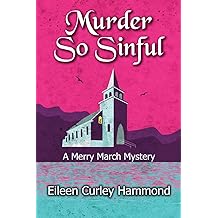
While writing the first book in the Merry March cozy mystery series, I researched various publishing options. I bought books, attended writer conferences, and badgered everyone I knew. After examining all the options, (and reading Arielle Eckstut and David Henry Sterry’s great book The Essential Guide to Getting Your Book Published) I decided that the independent route was best for me. Being older, I didn’t want to spend my time knocking on agents and then publishers’ doors.

Some critical learnings on my path to becoming an author:

Hire an editor. It was an investment, but it was a critical step. The old adage, you don’t know what you don’t know, was absolutely true in my case. Miranda from Editing Realm edited my first two books and she was wonderful.

Read Stephen King’s book On Writing. He writes 2,000 words a day, no matter what. And if he has a good day, he gets done early. He suggested that newbie writers hit a lower target, 1,000 words. Why was this so helpful? Because I always felt guilty. If I wasn’t writing, I felt bad. If I was writing, I felt I should be getting things done around the house. And worst of all, I retired, gosh darn it, and that meant I should be able to have some fun in my life. This one piece of advice made my life manageable again.

Understand that self publishing is hard. You are in charge of everything. Cover design selection, interior book formatting, copyright and Library of Congress applications, etc. Helen Sedwick’s book Self-Publisher’s Legal Handbook helped me think about the steps I might need to take.

Where am I now? I’ve published three books in the Merry March series and am finalizing the first draft of the fourth. It’s been a struggle on occasion, but it’s also been incredibly fulfilling.

Follow Eileen Curley Hammond:

Twitter: @curleyhammcozy

Website: eileencurleyhammond.com

Amazon author page: https://amzn.to/2YdzKbw

Getting Those Stories out There: an interview with S.L. Partington

New Voices of Experience Part III

The dream of many writers is a publishing contract. But as author S.L. Partington has discovered over the last ten years, in many ways it is only the beginning, and there are many ways to define success.

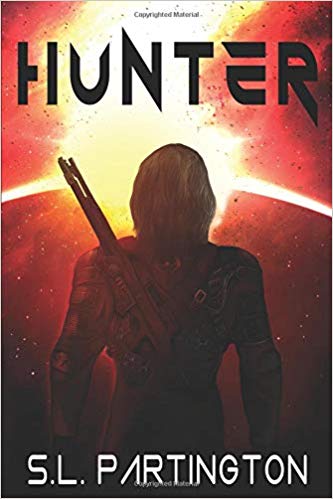
I’m Sharon Partington. I live in Alberta, Canada, and I’m a retired uber nerd who plays video games when I’m not writing. I wrote my first story when I was nine or ten – Star Trek fan fiction. In high school I wrote an S.E. Hinton-inspired short story, which my teacher read to the class (I was thrilled and mortified). A high school creative writing course taught me to write an appreciate poetry. Then came the first fantasy novel, hand-written almost 30 years ago. Finally, in 2007, a contract with a small press, for Hunter, a science-fiction thriller.

All the feelings that come with that contract: elation, trepidation, disbelief: I’ve done it! I’m going to be a published author!  But publishers are in business, and business models change. My publisher decided to change from a multi-genre publisher to focus on romances, and Hunter didn’t fit. I requested my rights back, and they agreed.  The contract didn’t specify that they had to, so one piece of advice I’d give new writers is make sure your contract covers rights revision to the author, in case of a change of publisher focus, or if it goes out of business.

Hunter then went to a second publisher, one my editor was working for at the time. That didn’t work out either, due to communication problems and creative differences. But what I learned was that I can do this writing thing: my stories, and my storytelling abilities are good enough. I’ve chosen to go indie at this point so I have absolute creative control over my books. I don’t have to worry about whether or not Vampires or Zombies or whatever are hot or trending. I can write my own stories and put them out there myself. There’s a huge amount of freedom in that.

Marketing has been an enormous challenge – mostly finding strategies that don’t cost a lot (I have a very limited budget) and actually produce results. I do have a Twitter presence, and I also have a Facebook author page, although the Facebook page doesn’t get much traffic. I also have an author website. I have tried the Amazon ads, but didn’t get a great result. Navigating the keywords is very much a mystery for me – finding ones that work can be daunting. There are resources to help with that – from Amazon itself, and from other authors – and I have looked at a few of them. It’s very true that it takes money to make money and that can be a real challenge when your budget is so limited. I don’t think my age has anything to do with it really – I do know how the internet works and readers don’t know how old I am, they just know whether or not I’ve managed to tell a good story.

Success for me has more to do with getting those stories out there as opposed to being on the best seller’s list. I write the stories that I want to read. That’s the main reason I chose to go the Indie route. I don’t have the patience (at the moment) to query traditional publishers and/or agents. That’s not to say it will never happen – just for now it’s not the way I want to go. There are lots of roads that lead to the same destination.

Hunter is the first of a series – there are 4 books planned. I also have a fantasy series in the works, but it’s still in the planning stage. Fantasy and science fiction have always been my genres of choice. Hunter began as a first line prompt that took on a life of its own. I write (and read) to escape reality for a while. Fantasy and scifi allow me to do that.

Facebook: https://www.facebook.com/canadianscifiauthor/

Twitter: https://twitter.com/SharonLorraine2?lang=en

Website: https://sharonpartington19.wixsite.com/authorslp2

Blog: https://authorslp.blogspot.com/

Their Greatest Game, by C.D. Tavenor: A Review

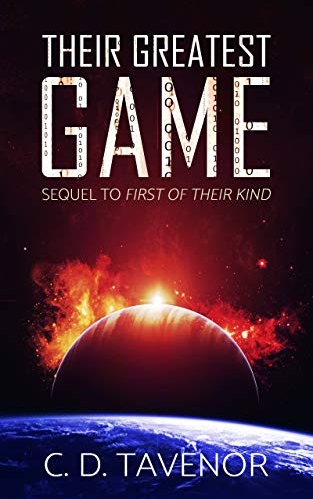
Their Greatest Game continues the story of Theren, the world’s first synthetic intelligence, that began in First of Their Kind.
Less overtly philosophical than First of Their Kind, Their Greatest Game continues to ask important questions about what makes us human – and what makes a god. The strong religious (not necessarily Christian, as stories of sacrifice, rebirth, and godhood belong to many people) overtones do not in the slightest detract from the classic science fiction elements. 
This book in the series takes place over a much longer time frame, necessitating some techniques for covering the lacunae in the action that Tavenor handles for the most part well, although one or two I found a little overlong. Theren grows in power; their ability to spread their divided consciousness across worlds speaks to their evolution toward a deity-like being, a concept further strengthened by decisions Theren makes about their corporeal body late in the book. But they are not omnipotent, nor omniscient, and there are consequences to their choices. 
I remain very impressed by Tavenor’s writing, both in clarity and concept: it makes me think, the science is sound (or at least as far as I, a biologist/geneticist by education, can tell), and the character of Theren compelling. What disappointed me to some extent was the epilogue, where Tavenor introduces a new concept, or at least one that is mentioned occasionally but not fully explored until then. It had a slight ‘added-on’ feel, suggesting that it may be important in the next book, and is being introduced here for that purpose. A minor issue in what has definitely been some of the best pure science fiction I have read in a long while.