Getting Those Stories out There: an interview with S.L. Partington

New Voices of Experience Part III

The dream of many writers is a publishing contract. But as author S.L. Partington has discovered over the last ten years, in many ways it is only the beginning, and there are many ways to define success.
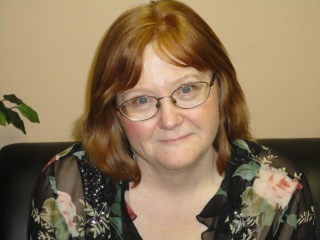
I’m Sharon Partington. I live in Alberta, Canada, and I’m a retired uber nerd who plays video games when I’m not writing. I wrote my first story when I was nine or ten – Star Trek fan fiction. In high school I wrote an S.E. Hinton-inspired short story, which my teacher read to the class (I was thrilled and mortified). A high school creative writing course taught me to write an appreciate poetry. Then came the first fantasy novel, hand-written almost 30 years ago. Finally, in 2007, a contract with a small press, for Hunter, a science-fiction thriller.

All the feelings that come with that contract: elation, trepidation, disbelief: I’ve done it! I’m going to be a published author!  But publishers are in business, and business models change. My publisher decided to change from a multi-genre publisher to focus on romances, and Hunter didn’t fit. I requested my rights back, and they agreed.  The contract didn’t specify that they had to, so one piece of advice I’d give new writers is make sure your contract covers rights revision to the author, in case of a change of publisher focus, or if it goes out of business.
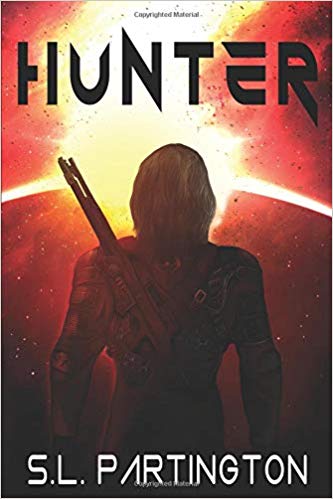
Hunter then went to a second publisher, one my editor was working for at the time. That didn’t work out either, due to communication problems and creative differences. But what I learned was that I can do this writing thing: my stories, and my storytelling abilities are good enough. I’ve chosen to go indie at this point so I have absolute creative control over my books. I don’t have to worry about whether or not Vampires or Zombies or whatever are hot or trending. I can write my own stories and put them out there myself. There’s a huge amount of freedom in that.

Marketing has been an enormous challenge – mostly finding strategies that don’t cost a lot (I have a very limited budget) and actually produce results. I do have a Twitter presence, and I also have a Facebook author page, although the Facebook page doesn’t get much traffic. I also have an author website. I have tried the Amazon ads, but didn’t get a great result. Navigating the keywords is very much a mystery for me – finding ones that work can be daunting. There are resources to help with that – from Amazon itself, and from other authors – and I have looked at a few of them. It’s very true that it takes money to make money and that can be a real challenge when your budget is so limited. I don’t think my age has anything to do with it really – I do know how the internet works and readers don’t know how old I am, they just know whether or not I’ve managed to tell a good story.

Success for me has more to do with getting those stories out there as opposed to being on the best seller’s list. I write the stories that I want to read. That’s the main reason I chose to go the Indie route. I don’t have the patience (at the moment) to query traditional publishers and/or agents. That’s not to say it will never happen – just for now it’s not the way I want to go. There are lots of roads that lead to the same destination.

Hunter is the first of a series – there are 4 books planned. I also have a fantasy series in the works, but it’s still in the planning stage. Fantasy and science fiction have always been my genres of choice. Hunter began as a first line prompt that took on a life of its own. I write (and read) to escape reality for a while. Fantasy and scifi allow me to do that.

Facebook: https://www.facebook.com/canadianscifiauthor/

Twitter: https://twitter.com/SharonLorraine2?lang=en
Website: https://sharonpartington19.wixsite.com/authorslp2

Blog: https://authorslp.blogspot.com/

Their Greatest Game, by C.D. Tavenor: A Review

Their Greatest Game continues the story of Theren, the world’s first synthetic intelligence, that began in First of Their Kind.
Less overtly philosophical than First of Their Kind, Their Greatest Game continues to ask important questions about what makes us human – and what makes a god. The strong religious (not necessarily Christian, as stories of sacrifice, rebirth, and godhood belong to many people) overtones do not in the slightest detract from the classic science fiction elements. 
This book in the series takes place over a much longer time frame, necessitating some techniques for covering the lacunae in the action that Tavenor handles for the most part well, although one or two I found a little overlong. Theren grows in power; their ability to spread their divided consciousness across worlds speaks to their evolution toward a deity-like being, a concept further strengthened by decisions Theren makes about their corporeal body late in the book. But they are not omnipotent, nor omniscient, and there are consequences to their choices. 
I remain very impressed by Tavenor’s writing, both in clarity and concept: it makes me think, the science is sound (or at least as far as I, a biologist/geneticist by education, can tell), and the character of Theren compelling. What disappointed me to some extent was the epilogue, where Tavenor introduces a new concept, or at least one that is mentioned occasionally but not fully explored until then. It had a slight ‘added-on’ feel, suggesting that it may be important in the next book, and is being introduced here for that purpose. A minor issue in what has definitely been some of the best pure science fiction I have read in a long while.

Deal with the Pain

Øle Ø is a former member (retired 2016) of SAG-AFTRA – the Actors’ union, and has a B. A. in Theatre and a minor in communication from the University of Minnesota, Duluth.(2000). He’s also worked in the construction trades in NYC (carpenter’s union) and many other various jobs in the Mid-West – too numerous to list. He puts memories on paper in humorous, sometimes sad ways.

“I’ve recently started calling my memories: “Bones,” after reading Natalie Goldberg’s book – Writing Down The Bones and when I write, I consider my writing as: “Crushing Bones”.

Think about being worried, in a hospital or going to the doctor “AGAIN.” Dealing with bad times or unexpected times – life issues stopping you cold from that deadline.

Why should I start writing again? I mean, I go from one uncompleted project for three weeks to another, because of my health.

I’ve been on crutches and can’t go to the bathroom without – excruciating pain. Who can write?!

But wait, I can deal with the pain. No one knows the pain I’ve been through. A small virus in my intestines is nothing like having your chest cracked open 3 times since you were 5 years old. OMG. No one knows that pain.

I swear at my parents. I swear at my doctors. I swear at myself. I swear at the gods that did this to me and realize I can’t do a fucking thing about it.

I AM THE PAIN. I LEARN THE PAIN. I DEAL WITH THE PAIN. (then I thank the doctors and nurses for the meds that temporarily stop my pain…)

My leg or arm wasn’t blown off in a bomb attack. I can’t think of that type of pain. Yet, pain is pain. It impedes a good writing session.  No argument – hands down.

When I’m healthy, I can work – either with my hands or my head. Things are much easier then. Much simpler. AND, all those teachers and professors since the third grade saying to me: “You Should Write!”

HELLO?

It’s difficult when I can’t feel creative or looking at my heart rate monitor in a hospital and I’m being held hostage for four days because they can’t figure out what the hell is going on with my heart rhythm.

Yet I feel fine. They try to convince me otherwise and I start to wonder if I’m in a Twilight-Zone episode. Everyone in the hospital – especially the administration idiots in pig masks are messing with my head. Most of all, they’re LIARS. I threaten legal action and they take their masks off.

They can’t wait to sign me out.

But I won’t sign a damn thing. I get back at them for messing with my creative writing. Making them pay for their lack of knowledge.

I know my body better than anyone.

I get home and self-doubt enters my consciousness as I worry about my blood pressure rising every time I take it, 5 times in a row, starting to think I should call 911, when I’m trying to write.

But, I stop and rest and think hard.

Yes – I ate 5 pieces of bacon at the Windmill restaurant. They made a mistake with the “small order” of sausage links and brought five delicious, smelly bacon slices and my wife is on a plane to Denver for a week and she won’t know I’m eating them and the waitress swore allegiance to me and won’t tell.

I love her.

Did she know it could kill you? No. Anyway – It’s not her fault. She doesn’t know I’m a writer. Where are the words?

American writer Ernest Hemingway (1899 – 1961) working at a portable table while on a big game hunt in Kenya, September 1952. (Photo by Earl Theisen/Getty Images)

Reblogged from: https://storiesofoleo.blog/2019/07/10/challenges-in-writing-at-sixty-or-older/

Follow Øle Ø on Twitter: https://twitter.com/doleolesen

A Community Creating Books: developing a publishing collective.

“An artist collective is an initiative that is the result of a group of artists working together, usually under their own management, towards shared aims.”

Creativity flourishes in an environment that fosters it, and feeds on ideas and energy from other artists. The city I live in – Guelph, in southern Ontario – has an amazing arts community, with a vibrant book culture, incredible music, visual arts, dance, slam poetry, and several small presses. But those small presses, as wonderful as they are (I have a short-story chapbook published by one of them, so yes, I’m a little biased) are primarily focused on literary fiction, poetry, and experimental writing. A genre press wasn’t part of the mix.

When I began Arboretum Press, I wasn’t sure where I was going with it. I’d had an indie publisher for my first book; they went out of business. I decided – with some encouragement from other small press folks here – to set up my own. The first book written by someone else that Arboretum Press published was under a financial arrangement, a percentage of sales. That money went towards sponsorship of our local book festival. But even that didn’t sit well with me. I have no need to make money, and I have a deeply ingrained belief in cooperatives and collectives as a way to build community and make resources available to a wide range of people.

What I began to envision was a group of people sharing skills to help each other produce the best books we could, utilizing e-book and print-on-demand technologies and distribution systems, at the least possible cash outlay needed to create a professional, high-quality product. I started to talk about it, at my writers’ groups, and the informal coffee-shop hang-outs organized by a non-profit organization that supports and promotes writers here in Guelph. And after not very long, I had a group of people willing to give it a try. We range from 30ish to 70+ in age; our skill-sets – other than writing – include all the aspects of editing, layout and design expertise, face-to-face promotion, workshop leadership – and other skills we probably don’t know we have yet.

We’re still evolving, but what we’re doing right now looks like this:  N has a manuscript they’d like to publish. One or more of us read it (we may well already have been beta-readers or critique partners, though) and if there’s agreement that it’s worthy, we take it on. K is a good copy-editor, and great at dialogue. T knows every aspect of structure. M (that’s me) is good at interior book design and layout.

So we agree to publish the book. T works with N to review structure, and revise if necessary. K reads the revised book and gives feedback. I line edit. Someone else copy-edits. This may go on for a round or two. Meanwhile, N, whose book it is, is beta-reading or copy-editing someone else’s manuscript. When N’s book is ready for publication, I handle layout and interior book design, knowing that when my next book is ready, I have my critique and editorial team in place. Our promotion and workshop expert L handles the arrangement for the book launch, and MCs it, because that’s what she’s good at, in exchange for the editorial and production work on her book.

We don’t (yet) have the expertise to do everything. Cover design is still contracted out. A social media/SEO person would be very useful. But our limitations are known up-front to everyone who participates, and people are free to leave with their book at any time, even after publication (although without the ISBN, which is registered to the press. But this is Canada, where they’re free, and the process of deregistering and applying for a new one is a few clicks of a mouse.)

Our local indie bookstore, which carries our paperbacks, has been very complimentary of our books. They look professional, they tell me, with high production values. Each book looks better than its predecessor, as my expertise increases in that area.

Our average cost to a member of the collective to produce a finished book is running about $250 Canadian dollars right now, if they use the recommended cover designer (and if they want a paperback. Not everyone does. It’s less than half that if it’s e-book only.)  We’re demanding about cover design: it must look professional, not mislead as to genre, and work as an Amazon thumbnail. At least three of us see the cover designs, and we have to agree about which one is going to be used. Each author sets up their own KDP account (and other distributors if that’s their choice) and royalties go directly to them.

At this point I’m still the central organizer, in part because I am the layout and design person, and the number of books we can handle depends largely on that aspect right now. (And the business is registered in my name, for now.) But someone else will learn layout, sooner or later, or someone who already has those skills will join us for a year or two. Collectives are fluid, usually, meeting for some a short-term need, and for some a longer one.

Finally, the beauty of this age of electronic communication is that we don’t all need to be in the same place. Our face-to-face meetings take place in one of several downtown Guelph indie cafes that welcome writers and laptops and long discussions over coffee. But I spend winters away, and our cover designer is in England. As long as we all have computers and the internet, the work gets done, books are produced and published, and another dream is fulfilled, for an investment primarily of time, passion, and commitment to each individual in the collective. A community creating books.

The Unfortunate Expiration of Mr David S. Sparks, by William F. Aicher: A Review

A world made uninhabitable by pesticides and dirty bombs, genetically-engineered crops and pollution, and within this world, the inevitable division of human society into classes, factions, revolutionaries and those who turn their back on society. A world where science is both savior and slayer. This is the world David Sparks wakes into, to be immediately threatened by a man with a chain saw.

The story, while set in the near future, is strong in elements from folk tale and mythology: the dangerous wild wood, the wise hermit, the ‘wizards’ who abuse their power; the glass castle where food is abundant; the concept of the sacred twins. Rich in world-building, asking questions about the limits of science and the definition of humanity, The Unfortunate Expiration of Mr David S. Sparks follows the protagonist’s physical and intellectual journeys to understand the world he is in – and who he is.

Is the book successful in delineating these quests? Perhaps not entirely. World-building takes precedence over character-building, and there are times when too much information is handed to the reader in a chunk of exposition. There are enough hints leading to the climax to keep a reader wondering if they’ve worked the story out or not, and the overall idea is compelling.

Sorley’s Song for Cillian

“Another soft, mournful descent of notes faded into the dark, and with the next, Sorley began to sing. Nothing disturbed the music: drinking cups were lowered, conversation ended. His voice, deep and slightly rough, told his anguish and grief to the night, to the stars, to all the world. A lament, I knew, for what he could not have…”

Paths Untrodden
(c) 2019 Marian L Thorpe
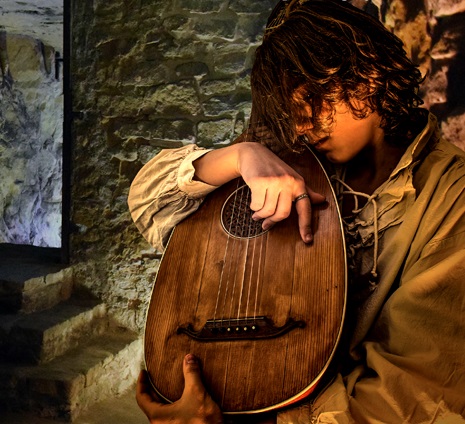
Sorley ladhar crop

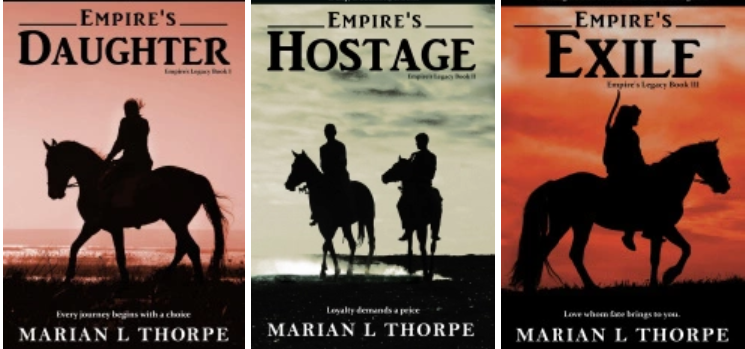
Sorley, who is the narrator of the novella Oraiáphon and Empire’s Reckoning first appears in Empire’s Hostage as a minor character and becomes an important supporting character in Empire’s Exile, is in love with Cillian, the main male character of Hostage and Exile, and has been since he was sixteen. Sorley is a musician, and as all musicians and poets do, he’s written a song about his unrequited love.

Paths Untrodden

My true love’s eyes are darkly gleaming

In candlelight and music’s lure;

One night alone, at spring’s fair dawning

To keep me longing through the years,

To leave my soul bereft and mourning.

You danced that night with grace unfettered,

A glance my way, a touch bestowed.

Your dark hair swept by supple fingers.

Too soon the day, the calling road,

The shaken head when asked to linger.

A long, long path, and distance boundless,

Years of sorrow and empty days

Till chance or fate together brought us,

So far from home, in summer’s blaze,

With war behind and war before us.

The gods and time have blessed us both

With love’s reward for all our years

Of wandering on lonely ways;

A respite offered for our cares,

A soul to hold ours, all our days.

But candlelight and music’s memory,

Dark eyes gleaming over wine

Revive that youthful love and longing

For graceful fingers touching mine

For kisses left at day’s first dawning.

My life’s companion loves me truly

My heart is his and his is mine,

But older love is not forgotten

There is, by fate, or god’s design

A yearning still for paths untrodden

You danced that night with grace unfettered,

A glance my way, a touch bestowed.

Your dark hair swept by supple fingers.

Uncharted ways might be explored,

Still dreams this wistful, loving singer.

Between Two Minds: Awakening by D C Wright-Hammer

D C Wright-Hammer on the genesis of Between Two MInds: Awakening

Between Two Minds: Awakening was the culmination of a lot of personal experiences. Nearly five years ago, I was working as a data migration specialist, and I had some serious health issues. I subconsciously blended my job and my condition, and I thought, “What if my mind is still good but my body isn’t? What if minds could be digitized and migrated, so to speak, into healthy bodies?” While the reality transferring consciousness (or mind migration as I call it) isn’t so simple, it’s been theorized for hundreds of years. Descartes’ Evil Demon thought experiment (and Harman’s updated ‘brain in the vat’ model) posited that a person’s mind could be manipulated by an omnipotent demon (or supercomputer) that could simulate your experiences. This includes your body (or the one you perceive to be in) as well as all external stimuli. As the experiment goes, a mind would have no way of knowing whether you truly exist in a world or a simulation. This was the basis for “The Matrix” series. Descartes is quoted in Latin, “dubito, ergo cogito, ergo sum” or in English, “I doubt, therefore I think, therefore I am.” People often forget “doubt” in the phrase, and I think it’s very important. The ability to doubt our own existence is proof that we exist.

With that in mind, I wanted to take the concept of mind migration a little more seriously. I wanted to make it believable. It was then that I began melding my personal experiences, the philosophy, and the fiction into a science fiction thriller. Set in the near future, Ryan D. Carter (a play on Rene Descartes) is a paraplegic who has always dreamed of walking. He orders this mind migration, a common but expensive procedure in his time, and he gets his mind uploaded into a physically fit body. It was here that I knew I wanted things to go wrong for Ryan. Every advancement in technology can bring about side effects. Add in corporate interests, money, and nefarious characters jockeying for power, and you have a situation ripe for disaster. But sometimes disaster isn’t so obvious. I wanted Ryan’s, and by extension, the reader’s experience to be subtle.

To that end, I tell the story from the first person past tense POV to make it more personal to the reader. Eventually, an interleaved or zippered narrative is established where the reader is given a compelling back and forth between Ryan’s experiences and that of another main character. Details from both perspectives give clues to where the story is going, but even the most adept readers will have difficulty predicting the plot twists at the end. And yet most readers swear that the finale is very satisfying. Can Ryan solve the puzzle unraveling in his new brain before it’s too late? Or does he suffer the consequences of being between two minds?

D C Wright-Hammer
Author: Between Two Minds Series
Following on Twitter
Like Me on Facebook
Visit the Hammerstone Creative Website

My Review

Are we our bodies, or our minds? A philosophical question explored by many writers over time, with most believing our truest selves lie in our thoughts, not the physical shell that houses them. Believing this, would you risk leaving behind an imperfect body to migrate your mind to a new one?

Ryan, the protagonist of Between Two Minds: Awakening does exactly that, exchanging his paraplegic physical self for a new body. The process is touted as almost problem-free, safe and effective. But Ryan experiences strange side effects – or are they? Or is there really another mind inhabiting his new body?

As Ryan searches for answers, he finds more questions: what is the connection between this other consciousness and himself? The line between his life and his co-consciousness blurs: who is real? What is real? Whose memories can be trusted?

The premise of Between Two Minds: Awakening is not new (few premises are) but Wright-Hammer’s interleaving of two stories, chapter by chapter, effectively brings the reader into each character’s wildly differing worlds, inciting in the reader the desire to keep reading to work out how the two will come together.  Without spoilers, my advice is to read carefully, because apparently insignificant things will prove to be important as the story moves towards its climax.

I’m giving the book four stars, not five, from the cumulative effect of a number of small things that jarred: dialogue that didn’t ring true, some awkward transitions, a few continuity questions. There are a lot of small details, perhaps too many for some readers, but a writer cannot hide items of significance in a narrative if they stand out as obvious! The overall story kept me interested and trying to guess where it was going (I didn’t) and that tells me the author has done his job. It would make a compelling movie!

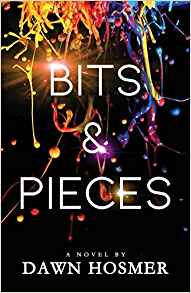
Bits and Pieces, by Dawn Hosmer: Empathy, Terror, Bravery.

Imagine you are an empath, capable of feeling – physically and emotionally – what others feel. Imagine that when you touch someone, their thoughts and memories may pass to you in a flash of colour. Imagine not knowing if the things you know, the things that drive you, the things you desire, are yours – or someone else’s.

Tessa, the protagonist of Dawn Hosmer’s debut novel, is an unsurprisingly troubledbits and pieces and withdrawn woman, trying to cope with her personal reality. Her family have treated her as mentally ill, shunting her off to institutions for treatment. She relies on her therapist and one brother to support her – until she meets a charming professor in her college town, and feels an immediate connection.
But Jonas has his own secrets, and as it becomes clear there is a serial rapist and murdered stalking young women, Tessa is drawn into the search for the killer – with devastating personal results. If I could say nothing else about Bits & Pieces, I would laud the author’s bravery and strength in addressing a difficult and horrifying subject in such a gutsy and unexpected manner.

For the most part, Bits & Pieces is a satisfyingly well-written novel, the language clear and clean, the dialogue believable. Hosmer handles the descriptions of violence well, evoking the characters’ terror without dwelling on too much detail, but not leaving everything to the reader’s imagination. The action rises and falls it grows towards the climax, and Tessa’s confusion and growing disorientation are conveyed effectively.

What happens in the denouement, however, I found less satisfying: a twist in the story that has a role in terms of character development, but that I also found detracted from the shock of the primary narrative, and, by focusing on the twist, took away from the reality of how Tessa deals with what she has experienced. Knowing there is a sequel planned means I’m reserving final judgment on this, because it may have a role in the next book.

4 out of 5 stars for an impressive and unusual debut. Bits & Pieces is available from Amazon. Keep reading to learn what the author has to say about her work!

Dawn, tell us a bit about yourself, and what inspired Bits & Pieces.dawn hosmer

I am the mother to four amazing children, a wife, and a lifelong Ohioan. I spent my career in Social Work but have always had a passion for writing and dreamed of one day being a published author. I was diagnosed with Crohn’s disease fifteen years ago and had to quit working outside of the home a little over two years ago. I now devote myself full-time to writing and marketing.

While Bits & Pieces is a Psychological Thriller, I have not yet found one genre to call home. I enjoy writing suspense, thrillers and contemporary fiction. All of my work has several things in common, however. I like to dive deep into the psyche of my characters to explore their emotions and thoughts on the events happening around them. My tagline is Exploring The Mind, One Book at a Time. It perfectly sums up what I attempt to do in my writing. Because I write with such a deep Point of View, I tend to write in first person. My goal with writing is to also explore the many gray areas of life because no one is all good or all bad just as no experience is either. I also dive into rather dark themes in most of my work, not because I’m a fan of the macabre; rather, because life is full of difficult things. Through my years in social work, I’ve seen countless times how the resilience of the human spirit is stronger than the hard situations people must deal with. In addition, my ideas are usually inspired by true stories. Part of the inspiration for Bits & Pieces came to me when my son was a freshman in college. A female student went missing and was later found murdered. Her killer was linked to several other rapes and murders in the area. I tend to process events that frighten me or create anxiety through writing about them. It helps me feel a sense of control over situations that I am powerless over.

I was asked recently what I hope readers gain from my books. My goal as an author is to give my readers a place to escape the real world, and all of its demands, for a while. Life is hard. For me, nothing rejuvenates me like losing myself in a good book. I want my books to be that place of renewal for those who read them. Even though they often cover such dark and heavy topics, I try to always instill a sense of hope, forgiveness and/or redemption.

My next book, The End of Echoes, is contemporary fiction and will be published late summer 2019.

Instagram @dawnh71

Facebook https://www.facebook.com/Dawn-Hosmer-Author-663110834084197

Goodreads https://www.goodreads.com/author/show/18534695.Dawn_Hosmer

Bookbub https://www.bookbub.com/profile/dawn-hosmer

Amazon http://bit.ly/BitsPieces7

C.D. Tavenor: The Mind, Synthetic Intelligence, and Morality.

Let’s talk about the mind.

As humans, we assume the way we think is the only way people can think. We see this over and over again, even in intraspecies relationships. When someone perceives the world differently, we view them as “weird” or “abnormal” or “different.” In extreme cases, we take our pitchforks and chase them out of town . . . or we engage in even worse violence.

Yet the arrogance of our brains to believe the way we think is the only way to think. Just consider the diversity of people across the planet, and the millions of ways a person might answer the question, “what is good?” Even within the American culture, that question doesn’t have an answer. When we explore the perspectives of the thousands of religions, cultures, and ethos of the world . . . the possibilities are endless.

So humans have millions of ways to view the world. Millions of ways to approach problems. Yet those approaches are fundamentally constrained by the way the brain works. We’re products of evolution; we can only see the world with two eyes, hear sounds with two ears, taste with one tongue. Imagine how evolution could have produced a different mind.

Then what would happen if we developed a different mind. An artificial one, inspired by the way we think, yet fundamentally its own creature.

In First of Their Kind, I explore what it would mean for humanity to create a conscious,first of their kind thinking, non-programmed mind. I call it synthetic intelligence, because it is distinctly different from what we traditionally consider “artificial” intelligence. Whether in literature or our cultural zeitgeist, we always think of A.I. as a computer program, designed for sapience and capable of thought on levels unimaginable. You see it in Terminator, I, Robot, 2001: A Space Odyssey, and countless other films.
Often, these A.I. are terrifying beings; when they reach their moment of omniscience, they transform into a monster that the human protagonist must defeat.

I propose an alternative take on intelligence. On consciousness. Instead of a program, what if we could create a synthetic brain, a construct capable of producing thought similar to that of a human? Modern AI research is exploring this type of mind, so it’s not too far-fetched.

In First of Their Kind, I call the “synthetic brain” a “Synthetic Neural Framework.” Composed of materials capable of mimicking neurons, the molecules connect and form pathways naturally through perceptions attained through sensory inputs, just like an animal. The Synthetic Neural Framework is the backbone of Synthetic Intelligence, and it forms the mind of my main character: “Test Forty-Three.” You’ll need to read the book to find out what name they choose for themself!

I challenge you to consider, when reading First of Their Kind—what thoughts, what perceptions, what conceptions about the world could this Framework have that humans could not? At the core, I’m endeavoring to answer that question in First of Their Kind and its sequels.

Some readers will empathize with “Test Forty-Three,” others will not. But I challenge everyone to consider why they do or do not connect with a mind fundamentally different from their own. Is a Synthetic Intelligence’s vision of morality really that different than a human who lives halfway across the globe, when compared to your own?

Test Forty-Three just wants a place within humanity too, just like the rest of us. They want friends. They want family. They might think differently, but they deserve love just like the people who created them.

C.D. Tavenor

__________________

First of Their Kind released April 30, 2019, in paperback and digital formats! You can find it on Amazon, or check out its book trailer on Youtube!

and you can read my review here.