I asked Silvia Hildebrandt to write an introductory piece to Dear Comrade Novak, her second novel, published in 2018. In it, she explains how she came to write the book, and its effect on her personal identity.
We fled Romania for Germany in 1990, after the revolution and the civil war between  Hungarians and Romanians. For the most part, we were looked down upon as poor, illiterate gypsies. So I denied I was born and raised in Romania, in an attempt to assimilate with German culture. Over the years, my teachers recognized my talent for writing. Somehow, I always wrote stories set in the USA. But my 6th grade literature teacher encouraged me to write something about Romania. ”You have so many unique stories to tell,” she said. But at that time, I’d buried my identity deep within me. No, never. Never would I write a novel set in Romania.
Twenty years later, after my first published novel – A Century Divided, set in New York City – I needed a new idea for a second. By happenstance, I landed back in Romania. I wanted a story set in Eastern Europe because I loved Russian novelists like Tolstoy and Pasternak and their very own strong, melancholic narrative. And because I’m a lazy bitch and didn’t want to do research on Russia, I decided to set my next piece in Western Romania, where I was born. As the plot developed over the weeks, I was stuck in the middle and in order to finish a novel, I need to know the end in an early stage of writing. But I didn’t know where it should lead, so I reached out for the writer’s best friend. Google.
“Romanian History 1980s” was my search query. And if an old agent of the Securitate monitored me, he would’ve thrown up his hands in despair as to my ignorance. “Romanian Revolution 1989” was the first answer and I nearly fainted. Of course! I had totally forgotten. Like a black hole in my memories and my brain, this event no longer existed in my life. Slowly, from an author’s point of view, I dug into the Romanian history and into my own. While writing, I had to remind myself that I was there; in that scene, with my characters walking around in Timișoara and in that Romanian village they call their hometown; this wasn’t just their story, but my own as well.
It’s borderline crazy describing such a feeling. Like living in two alternate universes, I re-discovered my own heritage. Near the end of writing Dear Comrade Novák, I watched Ceaușescu’s last speech conserved on youtube. The piece of footage every Romanian knows and love-hates to this day. The footage my beta readers and editors still remember, shown on US and British TV. But for me, it was the first time I witnessed that confused old man become lost in the sudden uprising of the people he oppressed for so many years. To this day, the turning point of my own childhood had always been the opening of the Berlin Wall. I didn’t know anything about the events in December 1989 in Romania. But with every documentary I watched while writing Dear Comrade Novák, I felt like reclaiming my own identity. No, not the Berlin people dancing on the ruins of the Wall had shaped me, but the December events of 1989. Ceaușescu, the last bastion of communism in Europe, fleeing in his helicopter. The Romanian flag with the cutout communist sigil in the middle. The people in Timișoara lighting a thousand candles for the murdered masses, shot on 17th December. There: forty kilometers from my hometown, the bloodiest, most epic of the 1989 revolutions began.
“Why wander into the distance, when the good is so close?” is a popular German saying. And it’s true. I’m excited what future ideas I’ll have in my writing career. But I know one thing: Romania will continue to play a big part in it.
silviahildebrandt.wordpress.com
My Review
Dear Comrade Novák is one of the most devastatingly honest and brutal books I have 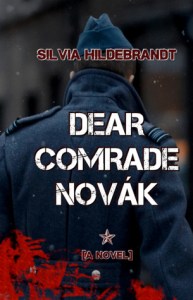 ever read, yet I could not put it down. I read the last 65% of it in one sitting.
Set in Romania in the 1980s, Dear Comrade Novák follows three school friends: the ethnic Hungarian Attila; the Romanian Tiberius, and the Roma Viorica, through the last decade of Nicolae Ceaușescu’s despotic rule, culminating in the Revolution of 1989.
Hildebrandt is unsparing in her descriptions of the functioning of the country under the eye of the Securitate (the secret police). Who is a friend? Can family members be trusted? Can lovers? And when a man carries a secret – that he is gay – something that is not just forbidden in Romania, but denied completely – what does he do?
Weaving major events of the 80s – Chernobyl, the fall of the Berlin Wall, the devastating rise of AIDS – into the narrative, Hildebrandt paints a bleak and unwavering picture of people trying to find a way forward in a corrupt and cruel society, a society layered by ethnicity and political allegiance. Some may stay true to their inner selves; others cannot; heroism is easy to imagine, but personal survival is a strong imperative, even when the violence and fear of everyday life overwhelms happiness.
Dear Comrade Novák is not escapist fiction. It is an uncomfortable book, one that should leave you shaken. I will remember it long after I have forgotten many other books I have read or will read. Five stars.
 J.C Salazar, the author of Of Dreams and Thorns, grew up as the child of immigrant parents in Houston, Texas. With a B.A. in English, a MS in Linguistics and another MA in Literature, plus some doctoral courses in English, Salazar values language and writing. Of Dreams and Thorns is his first novel. He is also the author a book of poetry, states of unitedness.
 us or brought us as babies to North America share some experiences, regardless of our parents’ native languages, religion, or the shade of our skin. Among our common experiences is the clash between the adults’ wish to maintain traditions, and the children’s wish to assimilate.
 human? And if so, what is a synthetic intelligence that learns, reasons, extrapolates, infers, and doubts?
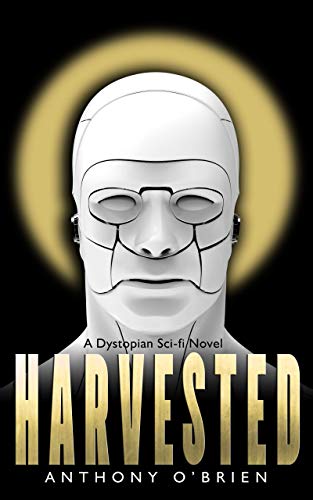 the key to the inner workings of one’s mind. My latest novel Harvested is a dystopian sci-fi that reflects my inner fears.
 writing and writers.
 century, Bjørn Larssen’s debut novel Storytellers explores the multi-generational effect of the evasions, embellishments and outright lies told in a small village. The book begins slowly, almost lyrically, pulling the reader into what seems like situation borrowed from folktale: a reclusive blacksmith, Gunnar, rescues an injured stranger, Sigurd. In exchange for his care, Sigurd offers Gunnar a lot of money, and a story.

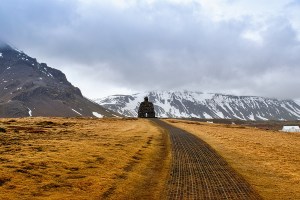 At the same time, and in the previous few years, I’ve been obsessed with the singer Ásgeir, whose debut album Dýrð í dauðaþögn (Glory in the silence) was my album of the year… for two years in a row, since nothing better came out. The English version, In The Silence, featured lyrics so beautiful they almost hurt, translated by John Grant. As I was listening to In The Silence for the 150th time, it dawned on me that there was a country called Iceland, which was cold and produced both Björk and Ásgeir. So I decided to investigate it a bit.
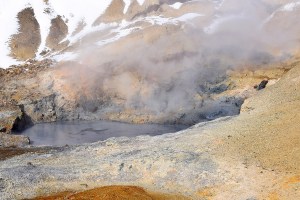 Wasteland With Words. Everything came into place. Iceland was not only a perfect setting for my novel, it felt as if the country was created especially so that I could write about it. It would take a while until I realised that the Old Gods worked the other way round, but at that point I started doing serious research. “A village in Iceland” still wasn’t enough of worldbuilding. I needed to know more. Whilst most Icelanders wrote diaries and memoirs, most of them were never translated to any language other than Icelandic. I realised I needed to go there – and talk to someone who would know much more than me.
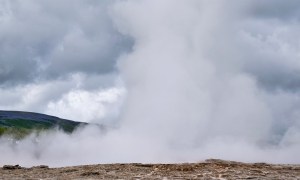 We went for four days. I needed to spend a day in Árbærsjafn, the open air museum the name of which I couldn’t even spell at the time, much less pronounce. Other than that, we intended to see the touristic parts – Thingvellir (which my husband still calls “the Game of Thrones place”), Geysir, and other attractions by the Golden Circle. I met up with a wonderful historian, Helga Maureen, got answers to most of my questions, then we drove around until all of a sudden a wave of heavy depression fell upon me. My husband and my friend went to see the Öxararfoss waterfall, I stayed in the car. And then something unexpected happened. Twenty minutes later, when they returned, my depression was gone and I was in the perfect mood to continue driving around.
 know them today, came up with two possible origins for the elves. One of them was that they were the “unclean” children of Eve, hidden from God when he came to visit (those are not my words). God, who was not pleased with this turn of events, decreed that what is hidden from Him will be hidden from everyone else as well. This is where the phrase “hidden folk” came from. The other story was even better, as it suggested that Eve was such an – ahem – lively lady that neither Adam nor God could control her. After some deliberation, God created a second man for her, naming him Elf. Therefore humans are descendants of Adam and Eve, and elves – of Elf and Eve.
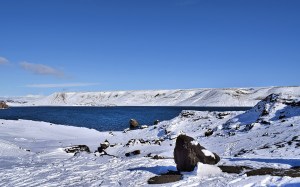 Snorri had to come up with something to avoid danger. The thirteenth century was not a good time to announce the existence of mythical beings that had nothing to do with the Christian God. Yet the belief in elves was widespread in Nordic countries even before Iceland became inhabited in the 9th century. The heathen faith lists Nine Worlds, one of which is Álfheim (the home of the elves), and another – Svartálfheim (the home of the dark/black elves). Back when the Old Gods ruled the worlds, their subjects did not use the phrase “hidden people”, but regarded them as natural spirits, same as the many species of wights guarding homes, land, trees. They had no need to come up with explanations why the elves existed. They simply did, same as Odin, Freya, Thor, and everyone knew that.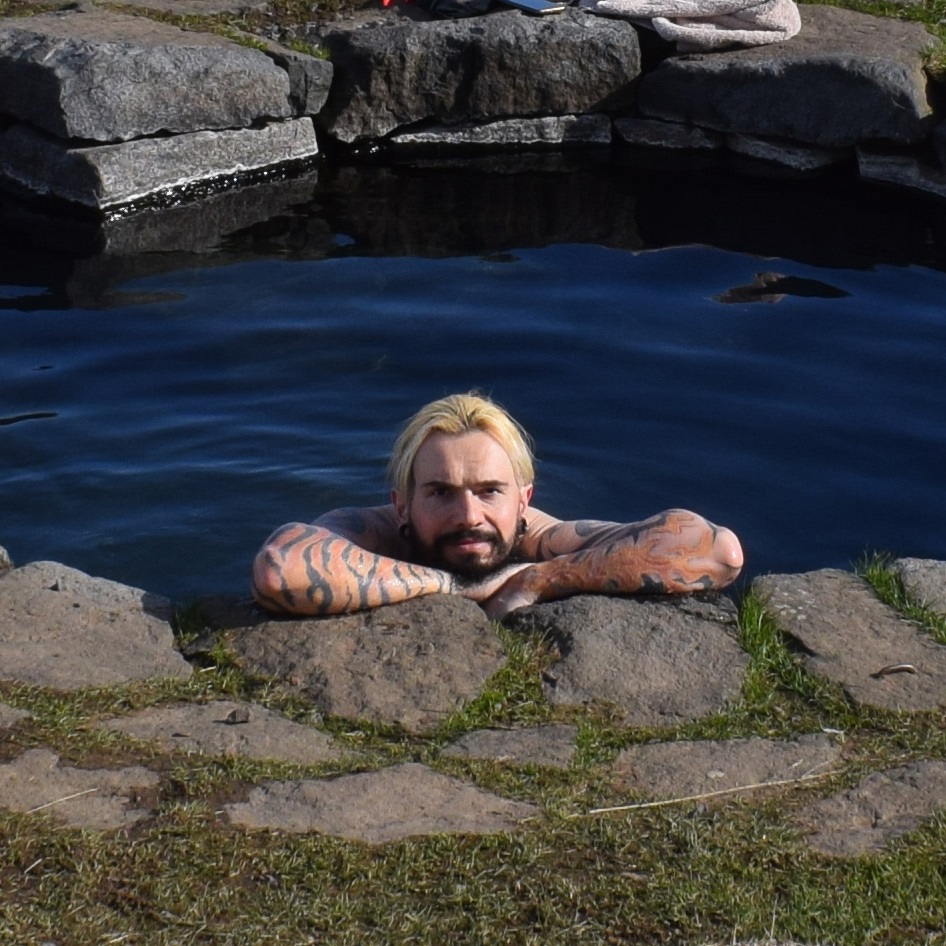
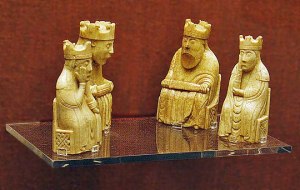 Lewis Chessman. If you don’t know the Lewis Chessmen, they are intricate, oddly beautiful 12th century chess pieces, carved from walrus ivory. Found in 1831 on Lewis, they are now mostly in the British Museum (I was looking at some of them only a couple of weeks ago) and the National Museum of Scotland, plus a few on permanent loan on Lewis.
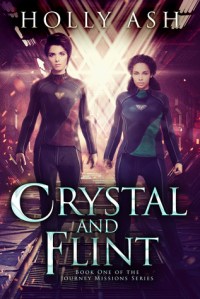 well-crafted and delivers all the tension expected of this genre, moving both the main plot and subplots along nicely to the explosive climax and a denouement that leads into the next book in the series


You must be logged in to post a comment.