Launching a Book – and an Idea.

Five thousand kilometers away from where I currently am, a book is being launched this afternoon. I didn’t conceive of this book, or write it, but I have a lot invested in it, and I’m sorry to be missing the launch.

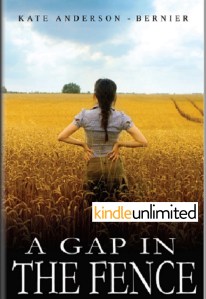
A Gap in the Fence, by Kate Anderson-Bernier, is the first book other than my own EBOOK COVER kuthat I have published as the sole proprietor of a tiny publishing company, Arboretum Press. I’m also an editor, and Kate and I met at a writers’ discussion group. She was looking for an editor, so we started to work together. While Kate’s wasn’t the first book I’d edited by far, she was the first client who lived in the same town as me. And over the months we worked together, I started to see a new vision for the press.
What if, I’m wondering, the press is a cooperative? I’m already doing a lot of work on an exchange-of-skills basis – and – (and I realize this is important) – I don’t need the press to make money, just not lose it. Right now, I operate Arboretum Press as a not-for-profit company, so all income beyond the royalties on my books, and only my books, go to a literacy charity.

But what if (the starting point for all good stories) there were a group of writers and editors and cover designers running Arboretum Press? What if we shared expertise and talents and marketing (and that’s a big, big one in this business) but at little or no financial risk: an investment of time and talent, not money. As long as we stay small, focus on the local independent bookstore market (as well as distribution through the big on-line retailers, if the author chooses) I think it’s workable. I envision it being fluid, people moving in and out of the co-op as their time and interest allow.

I’ll be discussing the idea with some of my writing friends-and-colleagues when I get home in April. We’ll start very small, if we start, and if it doesn’t fly, well, I’ll just keep on with the press as it is, publishing a few books a year – I have three lined up for the next 18 months. But writing and indie publishing can be a very solitary business, and perhaps a publishing cooperative can help alleviate that. It’s worth a try.

If you’ve ever been involved in anything like this, drop me a line with your experiences!

Legion of Mono, by C.D. Tavenor: A Mini-Review

legion of monoLegion of Mono captures the resolve of a people’s last military leader in the hours before what he knows will be a final battle. His grief at leaving his partner and their child; his pride in his family’s honour; his strong bonds with his fellow soldiers: all are skillfully expressed. The author has created, in twenty-five pages, a glimpse into a world that feels solid and complete, a remarkable achievement. The ending left me wanting more, of both the world and the story. Highly recommended.

A Writer’s Hard Truth

A hard truth about being a writer is that we mine everything that happens in our lives, if not to recreate the actual event, then to use the emotions involved.

My brother died last week, too young at sixty-four, taken by an aggressive cancer diagnosed too late, a lack of symptoms until it had spread irrecoverably. I am devastated; even writing these words is hard.

There is a difficult balance to maintain, too: I am the bereaved sister, but I also must be the strong adult aunt, the practical sister-in-law, all at once. Not easy, and tiring, on top of the jet lag.

But. There is that detached observer in my brain, saying: remember this. Remember how you feel, every bit of it. Watch how your family members are reacting, remember it. Remember how the two days and 5000+ miles of travel felt, the exhaustion. Remember that peanut M&Ms and Tim Horton’s coffee made you cry, because that’s what we shared on birding trips. Remember the deep breaths you took before facing your sister-and-law and the nieces and nephew. Remember everything, because some day, you’ll use it. Not in its present form, but you’ll use it.

And part of me hates that. I can’t stop it, though; it’s who I am. I shape and define and explain my world with words, some of them – most, these days  –  fiction. Imagination can take a piece of writing only so far; it needs to be fed by honest emotion as well.

So I accept that detached observer in my mind, recording dispassionately what’s happening. Some day these feelings will make their way into a story. I have no idea when, or what story.  Maybe they’ll generate their own. It won’t be soon. But when they do, that story will be, in its way, a memorial for my brother, whom I loved, and love, and will miss forever.


Language and Meaning

dictionaryIn the third book of my Empire’s Legacy trilogy, my protagonist Lena is thinking about language:

I tried to sort out the inchoate ideas forming in my mind. About language, and meaning, and if all concepts were universal, and could be translated. About the gap between intent and comprehension, between what was meant and what was understood, and the assumptions and shared experience encompassed—or not—in any exchange.’

While this is a theme in the Empire’s Legacy trilogy, and the sequel currently in progress, it’s also recently become of immediate personal interest to me. Exactly how to categorize the series for Amazon’s keywords and classifications is very far from simple, because of that gap between what is meant, and what is understood.

I’ve always called the series ‘historical fantasy’. But that has resulted in some vocal protest: it’s not fantasy, because there is no magic. But the world is not real, I would counter, so doesn’t that make it fantasy?  Not in everyone’s mind. I tried ‘alternative history’. Again, disagreement, because there is no historical event being mirrored, only an echo of the Roman Empire and its provinces. Speculative fiction? Perhaps, but a term misunderstood or not familiar to too many.

This is minor, of course: I’m marketing books, not trying to create a shared understanding of world-changing issues. But in Book III, Empire’s Exile, and more so in the work-in-progress, Empire’s Reckoning, that’s exactly what my characters are doing, trying to negotiate treaties that change the world. Which makes me think about Lena’s question, and its applicability to both my fictional world and our real one. How do you reach a shared understanding when simple words like ‘fantasy’ – or ‘equality’ or ‘citizen’ – mean such different things to different people? When a word like ‘immigrant’ conjures up positives in one mind and only negatives in another?

As writers we often strive for clarity (unless perhaps you are a poet, or James Joyce), but there will always be a gap between what is meant by the writer and what is understood by the reader. That is good, because it makes the world the reader enters theirs alone: shared by others, but always comprehended slightly differently. As long as we recognize that, and recognize too that another reader’s experience may different from yours. A starting place to discuss assumptions and shared experience, not a reason to end a conversation that might enlighten, illuminate and surprise.

As for the series?  How about ‘imaginative fiction’?

Of Worlds in Words, part 1

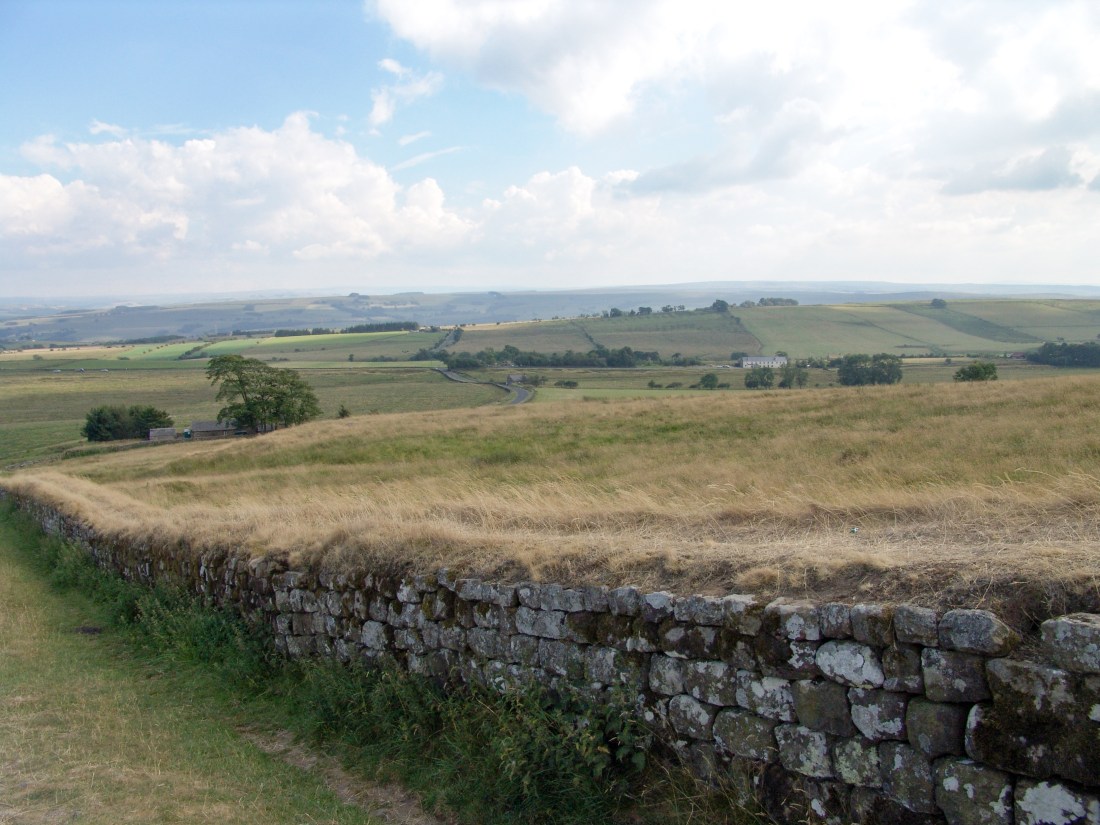
08-Hadrians_Wall-037

The newest review of one of the books in my Empire’s Legacy series says, in part, “I am amazed at the complexity of her world building…. ” It’s a common response from readers and reviewers. Without being too self-congratulatory (and because I am giving a talk on world-building for fantasy writers in the spring), I’m going to do some musing about the subject here.

A little bit of background: the Empire’s Legacy series is set in a world reminiscent of Northern Europe after the decline of the Roman Empire. An analogue world, I call it, full of things that are familiar to anyone who knows even the slightest bit about this period, but not a slavish recreation.

‘You must have done a lot of research’. I hear this quite a bit, too. Well, yes, and no. Full disclosure here: I’m 60. So I’ve had fifty-plus years of reading to assimilate and internalize a lot of information about the history and landscape and culture of Britain, before and after its colonization by Rome, from iron-age culture through to the Viking invasion and beyond. I’ve also walked extensively in the UK,  completely across the country, once (it took me three weeks); I’ve walked on iron-age trackways and on Roman roads, wandered among standing stones,  stood at Hadrian’s Wall on a windy, cold March day to see what it felt like. I know what my character Sorley hears when he misses ‘The scream of gulls over the harbour; the endless sigh of the wind in the grasses, the curlew crying. Waves, always beating, like a heart.’ (That’s from the work-in-progress.) I’ve stood on a beach on the northwestern tip of Scotland, and heard all those things.

Other ‘research’ came from entertainment: from Mary Stewart’s timeless books about Arthur: The Hollow Hills and The Crystal Cave, for their settings; from Guy Gavriel Kay’s Sarantium Mosaic; from books I read as a child, and can’t remember properly; from dozens of Time Team episodes, along with Digging for Britain; and Vikings… I could go on. Tidbits of information, or whole chunks. My husband is used to me scribbling notes.

Some of it was purposeful: on-line courses on the history of Hadrian’s Wall, and the archaeology of Portus, one of Rome’s ports. A course on the history of Europe 400 – 1000 AD (I focused on Viking expansion in Europe, which became important in Empire’s Exile, book III.) Two courses on landscape archaeology, to learn to read the landscape even better – not just for the books, but because it is a private passion. Many many books…the one I am currently reading is Roman Provincial Administration, by John Rogan.

All of this is a long-winded way to say that I believe you need to know the landscape of your fictional world, because landscape shapes culture, and culture shapes characters. If your principal character – as mine is in the work-in-progress – is a young gay musician from a culture where homosexuality is taboo, I have to know not only why that is, but what that looks like in a world of windswept, isolated estates, a hierarchical social structure, and primogeniture in inheritance of land, a world where marriage is to bind neighbours together against a common enemy, join lands, and create children for the good of both families but also the community. Maybe I’m lacking in imagination, but it’s easier for me to learn what I can about the Norse-Gaelic culture of the highlands and islands of Scotland, and then think ‘what if?’ within the basic structure of that culture, than it is for me to create a whole new culture.

My personal belief as a writer is that there are two choices: base your world on a historic one which readers will find at least a little familiar (e.g, The Lord of the Rings – another analogue of northern Europe; The Earthsea Trilogy – based (in memory) on an analogue of the Mediterranean islands) and create a culture that does not align with reality, or create a culture that aligns with reality in its important facets, and place it in an alien setting (e.g. Dune). To do both may overly challenge a reader.

More on this subject in future posts. You’re my test audience; all these thoughts – and your responses – will be winnowed down to a 40-minute talk by the spring. All respectful  comments are welcome!

Hadrian’s Wall photo: Tilman2007 [CC BY-SA 3.0 (https://creativecommons.org/licenses/by-sa/3.0)%5D, from Wikimedia Commons

The Eagle and Child

This is a reflection about coincidence, or synchronicity, or possibly about me seeing connections where there are none, except in my mind. It doesn’t matter, really.

I am, by training and education and part of my working life, a scientist; an applied geneticist, precisely, and that training and education spills over to my avocation as a birder and amateur field biologist. But by possibly a deeper inclination, a desire for a mythological interpretation of existence that goes beyond the seeming black-and-white of science, I find deeper truths in the worlds created by certain writers: JRR Tolkien first and foremost.

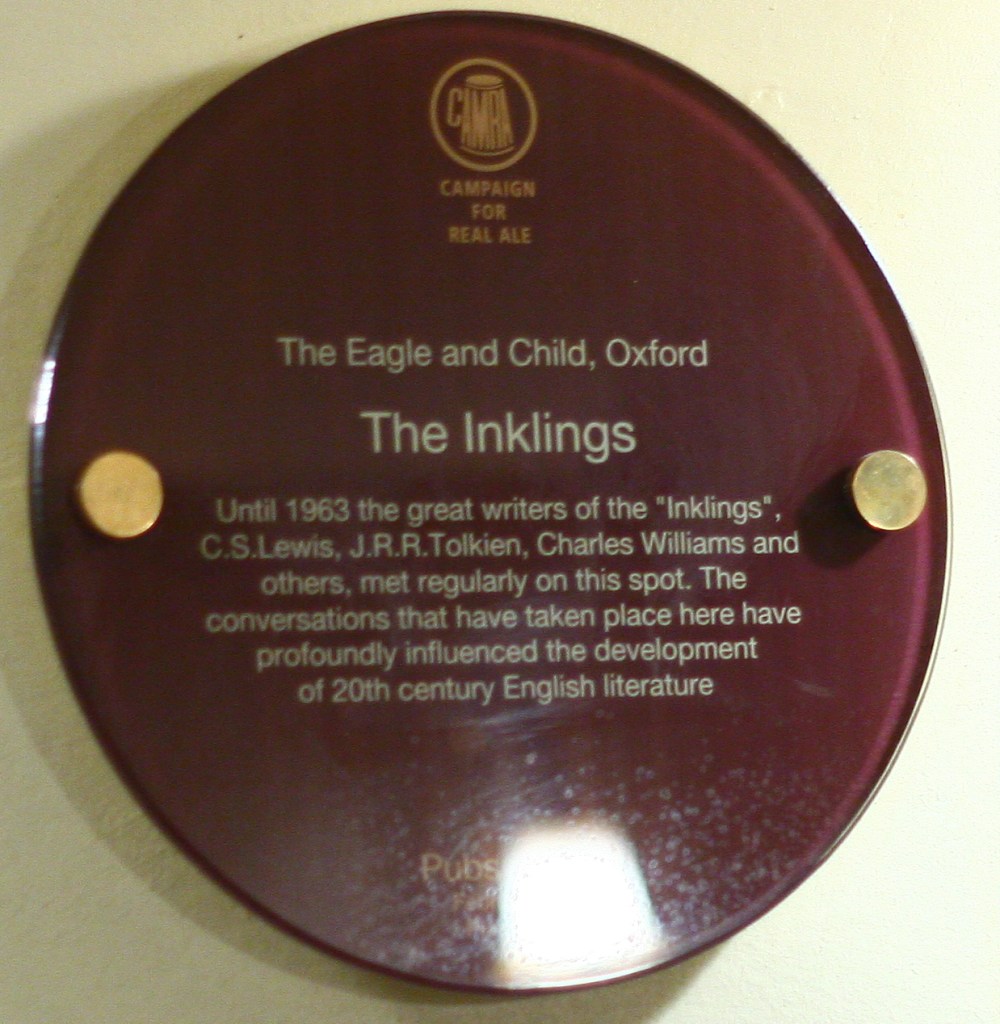
A friend of mine is groaning at this point…not elves, he is thinking, much as CS Lewis said at the meetings of the Inklings. Which brings me back to the coincidence, or synchronicity, I mentioned at the beginning. The Inklings, or more precisely their meeting place, are part of this: for many years, their famed Oxford writing group met at a pub called the Eagle and Child, better known as the Bird and Baby, in St Giles’ Street. Here CS Lewis and Tolkien and many others shared and discussed their writing, giving feedback on what are some of the most influential fantasy and science fiction novels of the twentieth century, the books that made me, first, want to be a writer, and then taught me how to write.

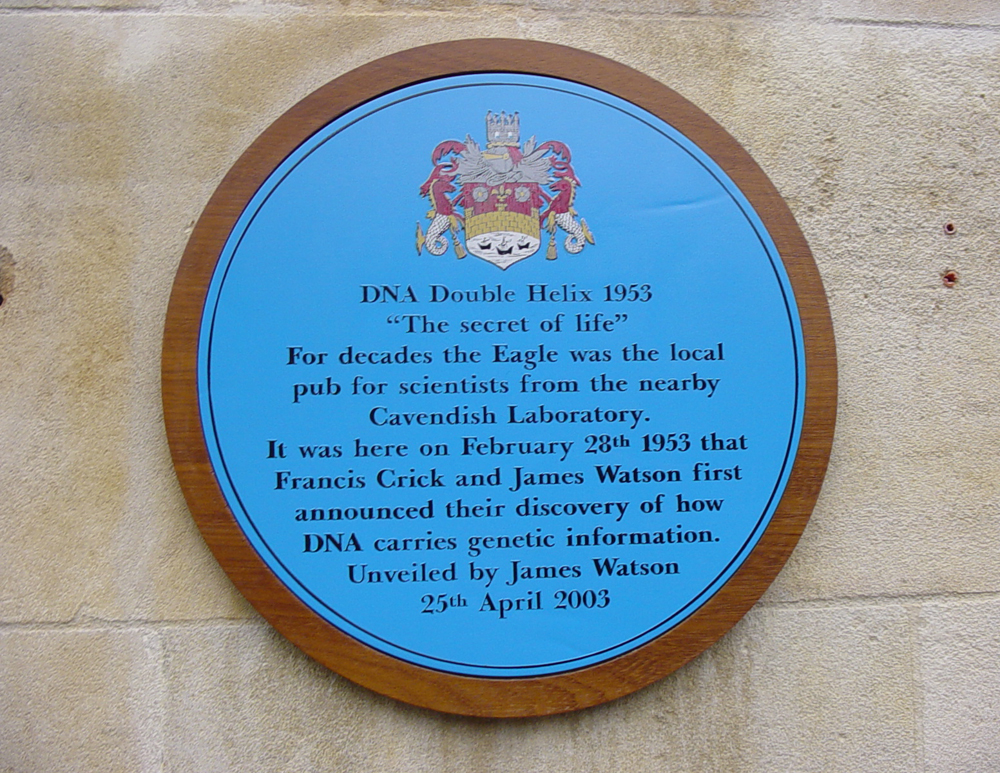
But about 75 miles away, and a few years later, at the pub named the Eagle (but once the Eagle and Child, too)  in Cambridge, Francis Crick and James Watson announced their discovery of the structure of DNA at lunchtime one day. This too, later, caught my imagination, in a different part of my brain: there is another magic in unravelling the secrets the double helix carries, deciphering the language written in the pairings of arginine and guanine, thiamine and cytosine.  Nor are the day to day processes of scientific research – the planning, the first attempts, the repetition and the fine-tuning, interspersed with moments of inspiration and realization – very different from those of writing.

There is a place – not a physical place, or not one in this world – where the helix of life and the helix of story intersect. The axle-tree of all the worlds, Guy Gavriel Kay called it: Spiral Castle, the still point around which the worlds spin, a mystical, sacred place from Welsh mythology, where resurrection is possible and life can be created, or recreated. As it can be, from DNA, or from story.

DNA writes our stories in one way; words write them in another. That both these crucibles of meaning in my life occurred in part at pubs that at one time shared the name of The Eagle and Child is only coincidence, but out of such connections we create meaning. Or perhaps, recognize it.

Guelph and Area Readers!

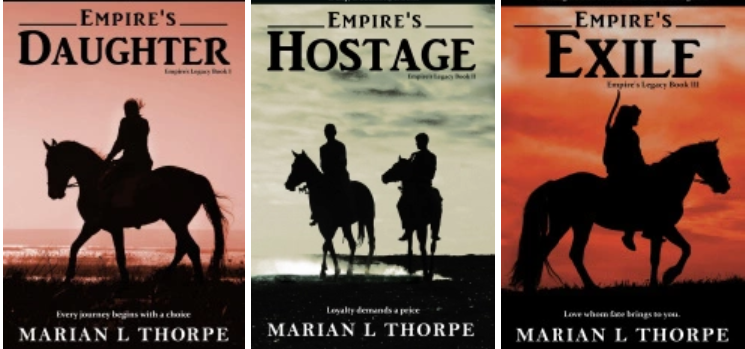
cover trio

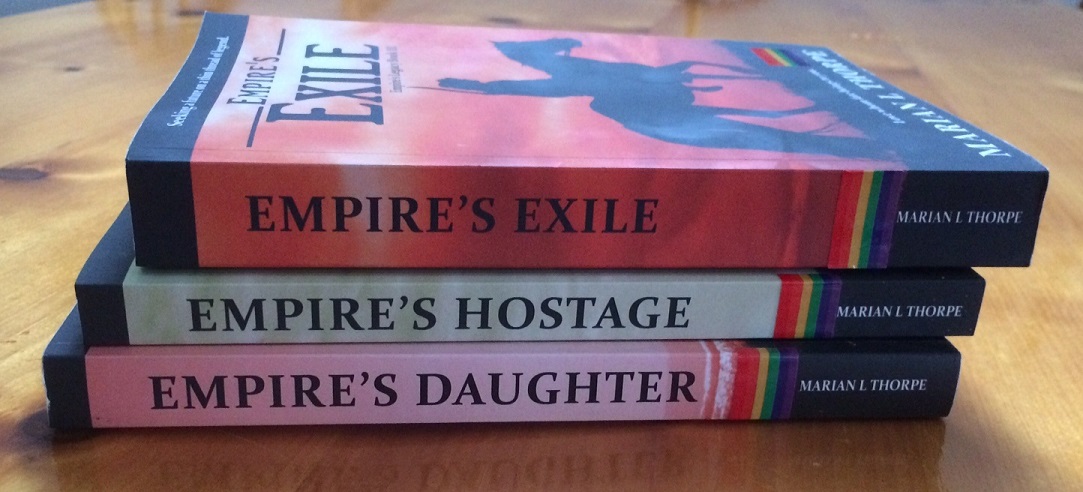
If you are lucky enough to live in Guelph, Ontario, or nearby, your options to purchase any or all of the Empire’s Legacy trilogy, including the third book, Empire’s Exile, include:

The Bookshelf – this would always be where I would direct purchasers first, as buying here supports both the business and myself

or

directly from the publisher arboretumpress.com (which includes free delivery in Guelph and nearby).

In a world reminiscent of northern Europe after the fall of the Roman Empire, this historical fantasy series explores the meaning of loyalty and love in a rapidly changing society. Following the protagonist, Lena, over a period of four years, from the day a soldier rides into her small village with an audacious request – that women learn to fight – to a last, desperate battle to save her land – Empire’s Legacy considers the impact of war and violence on men and women, and the price we pay for freedom.


“Involving, evocative, intelligent – an outstanding historical fantasy…Lena is many-sided—soldier, sailor, horsewoman, hunter, student of history. She is also appealingly complex—bisexual, willful, sensitive, caring…” Maria Luisa Lang
“The consistency of the ever-evolving plotlines and character development has been nothing short of brilliance…” Cover to Cover

3 books for under $3.00!

“Lena is many-sided—soldier, sailor, horsewoman, hunter, student of history. She is also appealingly complex—bisexual, willful, sensitive, caring…”  Maria Luisa Lang

“..a goldmine of anticipation, apprehension, joys and hardships, survival and all-consuming, accepting love.”  Liis Scanlon, Cover to Cover

99 cent weekend continues on Amazon

https://tinyurl.com/empireslegacy

three spines rainbow flag wp


$0.99 E-Book Weekend!

cover trio

Available Nov 29 – Dec 4 for 0.99 cents each on Amazon


In a world reminiscent of northern Europe after the fall of the Roman Empire, this historical fantasy series explores the meaning of loyalty and love in a rapidly changing society. Following the protagonist, Lena, over a period of four years, from the day a soldier rides into her small village with an audacious request – that women learn to fight – to a last, desperate battle to save her land – Empire’s Legacy considers the impact of war and violence on men and women, and the price we pay for freedom.


“Involving, evocative, intelligent – an outstanding historical fantasy.” Maria Luisa Lang

“The consistency of the ever-evolving plotlines and character development has been nothing short of brilliance…” Cover to Cover