Two scary stories to read at Hallowe’en.
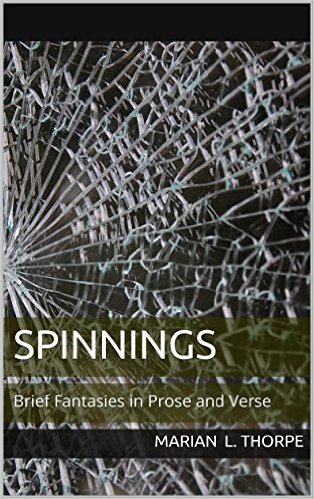
Free on Amazon
October 28-November 1
A look at one set of marketing strategies,presented with C.J. Hartwell’s indomitable humour,
There are dozens (hundreds?) of writer’s how-to guides out there, but for the processes of editing and revision, this article from my friend and fellow writer Robert Bruce Young is one of the most concise yet informative pieces I’ve come across, and one I’m going to keep in my favourites for easy reference. Take a look!
In the iterative process of drafting a novel — and especially during the final draft — I’ve found editing at the scene level to be most comfortable and efficient.
That is, I proceed scene by scene, going through the following eagle-eye checks. This article presents a step-by-step guide to the elements you need to address….read more
At the end of today’s guest post by author Andrew Joyce, I’ve added a few thoughts of my own. Meanwhile, keep reading – this is a really interesting post!


My name is Andrew Joyce and I write books for a living. I would like to thank Marian for allowing me to be here today to promote my latest, Yellow Hair, which documents the injustices done to the Sioux Nation from their first treaty with the United States in 1805 through Wounded Knee in 1890. Every death, murder, battle, and outrage I write about actually took place. The historical figures that play a role in my fact-based tale of fiction were real people and I use their real names. Yellow Hair is an epic tale of adventure, family, love, and hate that spans most of the 19th century.
Now that the commercial is out of the way, I can get down to what I really came here to talk about: the Sioux people. The people we know as the Sioux were originally known as the Dakota, which means ally. The name Sioux came from the Chippewa and the French. The Chippewa called them Nadonessiou, which means adder, or enemy, and then the French shortened the name to Sioux.
Every culture has an origin myth. We in the West have Adam and Eve. The Ancient Greeks had Gaia. Odin and Ymir founded the earth according to the Norse people. If you will allow me, I’d like to tell you the creation story of the Dakota.
In the beginning, before the creation of the earth, the gods resided in the sky and humans lived in darkness. Chief among the gods was Ta՜kuwakaŋ, the Sun, who was married to Haŋyetuwi, the Moon. He had one daughter, Wohpe. And there was Old Man and Old Woman, whose daughter, Ite, was wife to Wind, to whom she gave four sons, the Four Winds.
Of the other spirits, the most important was Iŋktomi, the devious trickster. Iŋktomi conspired with Old Man and Old Woman to increase their daughter’s status by arranging an affair between the Sun and Ite. His wife’s discovery of the affair led Ta՜kuwakaŋ to give the Moon her own domain, and by separating her from himself, created time.
Old Man, Old Woman and Ite—who was separated from Wind, her husband—were banished to Earth. Ite, along with her children, the Four Winds, and a fifth wind—the child of Ite but not of Wind—established space. The daughter of the Sun and the Moon, Wohpe, also fell to earth and later resided with the South Wind. The two adopted the fifth wind, who was called Wamŋiomŋi.
Alone on the newly formed Earth, some of the gods became bored. Ite prevailed upon Iŋktomi to find her people, the Buffalo Nation. In the form of a wolf, Iŋktomi went beneath the earth and discovered a village of humans. Iŋktomi told them about the wonders of the Earth and convinced one man, Tokahe, to accompany him through a cave to the surface. Tokahe did so and, upon reaching the surface, saw the green grass and blue sky for the first time. Iŋktomi and Ite introduced Tokahe to buffalo meat and showed him tipis, clothing, hunting clubs, and bows and arrows. Tokahe returned to the underworld village and appealed to six other men and their families to go with him to the Earth’s surface.
When they arrived, they discovered that Iŋktomi had deceived Tokahe. The buffalo were scarce; the weather had turned bad, and they found themselves starving. Unable to return to their home, but armed with a new knowledge about the world, they survived to become the founders of the Seven Council Fires.
The Seven Council Fires . . . or Oćeti Šakowiŋ . . . are the Mdewakanton, the Wahpeton, the Wahpekute, the Sisseton, the Yankton, the Yanktonai, and the Lakota.
After Tokahe led the six families to the surface of the earth, they wandered for many winters. Sons were born and sons died. Winters passed, more winters than could be counted. That was before Oćeti Šakowiŋ. But not until White Buffalo Calf Woman did the humans become Dakota.
Two scouts were hunting the buffalo when they came to the top of a small hill. A long way off, they observed the figure of a woman. As she approached, they saw that she was beautiful. She was young and carried a wakiŋ. One of the scouts had lustful thoughts and told the other. His friend told him that she was sacred and to banish such thoughts.
The woman came up to them and said to the one with the lustful thoughts, “If you would do what you are thinking, come forward.” The scout moved and stood before her and a white cloud covered them from sight.
When the woman stepped from the cloud, it blew away. There on the ground, at the beautiful woman’s feet, lay a pile of bones with worms crawling in and among them.
The woman told the other scout to go to his village and tell his people that she was coming, for them to build a medicine tipi large enough to hold all the chiefs of the nation. She said, “I bring a great gift to your people.”
When the people heard the scout’s story, they constructed the lodge, and put on their finest clothing, then stood about the lodge and waited.
As the woman entered the village, she sang:
‘With visible breath I am walking.
A voice I am sending as I walk.
In a sacred manner I am walking.
With visible tracks I am walking.
In a sacred manner I walk.’
She handed the wakiŋ to the head chief and he withdrew a pipe from the bundle. On one side of the pipe was carved a bison calf. “The bison represents the earth, which will house and feed you,” she said.
Thirteen eagle feathers hung from the wooden stem. White Buffalo Calf Woman told the chiefs, “The feathers represent the sky and the thirteen moons. With this pipe, you shall prosper. With this pipe, you shall speak with Wakaŋ Taŋ՜ka (God). With this pipe, you shall become The People. With this pipe, you shall be bound with the Earth for She is your mother. She is sacred. With this pipe, you shall be bound to your relatives.”
Having given the pipe to the People, and having said what she had to say, she turned and walked four paces from the lodge and sat down.
When she arose, she was a red-and-brown buffalo calf. She walked on, lay down and came up as a black buffalo calf. Walking still farther, she turned into a white buffalo and stood upon a hill. She turned to bow in the four directions of the four winds and then she vanished.
Because of White Buffalo Calf Woman, the Dakota honor our mother the Earth; they honor their parents and their grandparents. They honor the birds of the sky; they honor the beasts of the earth. They know that Wakaŋ Taŋ՜ka resides in all animals, in all trees and plants and rocks and stones. Wakaŋ Taŋ՜ka is in all. They know that Wakaŋ Taŋ՜ka lives in each of us.
Because of White Buffalo Calf Woman, they have become Dakota.
Marian here….
The history of European-First Nations conflict and cooperation is complex and has rarely been told from the First Nations’ viewpoint. Andrew Joyce has written – both here and in the book Yellow Hair – in a way that honors and recognizes the humanity of the Dakota, and by extension all First Nations. Some years ago I stood on the plains at Wounded Knee, the wind blowing, as it always does, and thought about what had happened there. It felt like the land itself held the memory of the massacre, a feeling I’ve only had once before, at Glencoe in Scotland, the site of another infamous massacre. This poem was my response:
Wind and Silence: December 29, 1890 (July 30, 2001)
The wind is the first thing; that,
And the silence. Dry land, brown bent grasses,
Blue sky.
In the valley, where the tents were,
Where the children were,
There are dreamcatchers for sale.
On the hill, against the carven stone,
A buffalo skull and flowers lie
Beside rolled tobacco and a teddy bear.
What dreams are caught at Wounded Knee?
Yellow Hair is available from the following retailers:
Andrew Joyce left high school at seventeen to hitchhike throughout the US, Canada, and Mexico. He wouldn’t return from his journey until decades later when he decided to become a writer. Joyce has written five books, including a two-volume collection of one hundred and fifty short stories comprised of his hitching adventures called BEDTIME STORIES FOR GROWN-UPS (as yet unpublished), and his latest novel, YELLOW HAIR. He now lives aboard a boat in Fort Lauderdale, Florida, with his dog, Danny, where he is busy working on his next book, tentatively entitled, MICK REILLY.
Independent reviewers can be asked to review some strange and wonderful works, but Wonderworld is the most unusual independent project to cross my desk. I’m not even sure what to call it: there is a book, but there is also a YouTube video, and an audio-book musical, and songs to be downloaded from iTunes. And it’s all – well – wonderful.

Wonderworld is the story of Max, a boy who has difficulty relating to the real world. He prefers his fantasy world, the world he creates in his art. Max could be a lot of the students I used to work with: maybe he has an anxiety disorder, maybe he is on the autism spectrum, maybe he’s just really shy, but it doesn’t really matter. Authors/composers/artists Brett Scheiber and Tree (aka the musical duo Arcanum) and illustrator Simona Poteska have meshed words, music and art to bring Max and his difficulties to life in a way that children and adults can both understand. The story isn’t told in a complicated way (but neither are Max’s fears and feelings diminished); the songs have straightforward messages and are easy to learn, but aren’t cutsey children’s songs, and the artwork captures Max and his fears in style that is neither too dark nor too upbeat, but that fits the mood of the story perfectly.
This is a story about overcoming fears and obstacles, about believing in yourself and your talents. It could be argued that this process is simplified in Wonderworld, but no more so than the story of the redeeming power of faith and love is simplified in The Grinch Who Stole Christmas. Were I still working in education, I can think of a dozen situations where I’d have used Wonderworld in both classroom and individual situations.
Wonderworld has been produced with artistic integrity and professionalism. I’d also say it’s been produced with great love and deep empathy. I’m giving it 5 stars.
You can watch Wonderworld on YouTube, and download the audiobook musical and each individual song (including instrumentals) on iTunes, Amazon, and Bandcamp. The hard cover, full colour book is also available on Amazon, Barnes and Noble, and https://store.bookbaby.com/book/Wonderworld-The-Musical.
I received a copy of this book in exchange for an honest review.
I gave this book a 4-star rating in the past year – it’s well deserving of 100 votes in this contest.
Many fantasy books start out well but lose their way somewhere in the middle. Xan and Ink does the opposite: I found the first third of th e book fairly rocky going, but once the author had his characters where he wanted them – trying to stay alive in the insect jungle of Kalparcimex, caught up in the feud between the Ranger Xan and the sorceress Ink – the story found its feet.
Banished brothers Sandros and Gregary, and their companions Brakkar and Osolin, are on a quest, to find a way to rid Joymont of the insectine creatures that are destroying it. Chance takes them in search of the legendary Xan, scholar and ranger of the Kalparcimex, to ask for his help. Both the world and the characters the author has created are complex and multi-layered, and we are given only glimpses of the back-story and motivations of the four sworn to find help for Joymont. We learn the most about Osolin, the escaped, condemned slave. Nor do we learn much more about Xan or Ink, except hints and little tastes of what made them who they are, and the past history between them. I found this intriguing; others may find it disappointing. We are only beginning to understand the complexity of the characters when the book ends, but as the ending demands a sequel, more may be revealed if that sequel is forthcoming.
The insect jungle, the Kalpa, is one of the most unusual and creative ways to pit the environment against the protagonists that I’ve come across. The insects – ranging from annoying to fatal, from mindless to sentient – are antagonists that most of us can easily imagine – anyone who’s hiked in a mosquito-laden wetland, or fought off blackflies or sand-fleas or leeches (or the black wasp of Uganda that stings just for the love of it) – can extend that experience to the horror of the Kalpa. It had me shuddering more than once.
Sexually explicit, this is a book for adults, not younger readers. Xan and Ink was far from the usual fantasy that crosses my desk, and I appreciated it more for that. Four stars.
I received a copy of this book in exchange for an honest review.
We are used to fantasies that involve either the magical, fey beings of Northern Europe, or  those of Victorian horror novels. Darrell Drake’s historical fantasy A Star-Reckoner’s Lot introduces us to the mythology of Sassanian Iran, its beings of good and evil, and the complex idea of star-reckoning, a type of sorcery that channels the warring powers of the heavens to the benefit – or detriment – of humankind.
Revolving around three main characters: Ashtadukht, the Star-Reckoner; Tirdad, her cousin and bodyguard, and Waray, a half-div (half-demon, more or less) stray befriended by Ashtadukht, A Star-Reckoner’s Lot is a long story in terms of passing time; it unfolds in a series of vignettes; the reader may sometimes have difficulty in grasping the immediate importance of the events, or the connections between them. Nor is the reader given much backstory; the world, both seen and unseen, its characters, and the interactions between them unfold gradually, but the story moves inexorably towards its climax and conclusion.
Ashtadukht is a difficult character to get to know, and perhaps too a difficult character to truly like, stoic and bitter, but our understanding of her and what drives her develops over the story; in the end, we understand her, and likely have sympathy for her. Tirdad is perhaps the least developed of the three main characters, but he too is a character of dimension faced with difficult choices. Waray, the half-div, is on the other hand the most developed character: at times appealing, at times annoying, and at times amusing, all those facets hide a depth of sorrow and regret, and a desire for redemption that drives her.
It would be easy to read A Star-Reckoner’s Lot as a simple adventure set in an unfamiliar mythos, but the themes of love and honour, exclusion and belonging, and regret for the prices paid for actions raises it above many fantasy novels. Do not be misled by the author’s light hand (and occasional bad puns); this is a story with some haunting imagery and deep themes, and not one I’m going to forget quickly. Five stars.
I received a copy of this book in exchange for an honest review.
I wrote my first review on this site a year ago this week. Since then, I’ve reviewed 65 books. These are my top ten, in alphabetical order. All these received 5 stars from me; coincidentally, this were the only 5-star reviews for the year, so I didn’t have to make a decision of what to include or leave out!
Citizen Magus, by Rob Steiner
Falcon Boy, by Barnaby Taylor
Hollo: The Gatecaster’s Apprentice, by Devon Michael
Magic of the Gargoyles, by Rebecca Chastain
Prophecy by Benjamin A. Sorenson
Sailor to a Siren, by Zoë Sumra
Sapphire Hunting, by J SenGupta
The Quantum Door, by Jonathan Ballagh
The World, by Robin Wildt Hansen
Tom Cat, by Amy Holden Jones




You’re a writer. You write something – a short story, say; you think it’s good. Other people read it; you read it out loud at a couple of open mic nights. People like it.
But hearing it read by someone else, someone who is a really really good reader, is a whole new experience.
Bob Daun at Bob’s Short Story Hour reads my short story A Spider’s Spinning so well, it sent shivers up my spine. (Which it is supposed to do – it’s a scary story – but I didn’t expect to have that reaction, given I’d written it.)
Got 10 minutes or so? Click on the link above and listen, while you’re cooking dinner or folding laundry or just sitting back with a cup of coffee or a glass of wine. Not just to my story, but to the music and other readings on this episode. You won’t be disappointed.
 marianlthorpe.com
You must be logged in to post a comment.