Temporary Shift, by E.V. Baugh: A Review

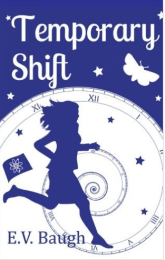
Temporary Shift by E.V. Baugh is a cute little sci-fi romance with appealing characters:temporary-shift
essentially, chick-flick sci-fi. Klutzy temp worker Sally is assigned to a private physics laboratory….and when she drops her phone and accidentally bumps into some controls as she bends to retrieve it, the results send her into a series of multi-universe existences, playing out different scenarios in her possible lives. The attractive physicist whose lab it was, and to whom she feels a distinct pull, is a part of all of these different lives: he’s clearly important to her, but in what way?

I’ll be clear; this isn’t technical science-fiction. The time-travel is a device to play out different scenarios in Sally’s life, and that’s all. It reminded me of the film Sliding Doors, but with more alternatives than just two parallel universes. It’s amusing and there’s just enough twist to the romantic angle to keep the ending from being completely obvious.

The writing is competent and the voice appropriate to the story. I had a few niggles with the pacing, with perhaps too much time in the first third of the book taken up by one (or two) too many different scenarios in Sally’s possible lives. Even after that, some of the story was repetitious, but perhaps with so many early scenarios, the author needed to clarify which issues were important. Characters are fairly stock for this type of book, but nicely described and realized.

Temporary Shift is a quick read, good for a lazy Sunday afternoon (alternatively, I’d find it a good commuter-train read, not so demanding of concentration you’d miss your stop) for those who enjoy a light romance. Overall, 4 stars.

I received a copy of this book in exchange for an honest review.

Changes!


I’ve updated my website (and my social media sites) with a new name: Words & Birds. This is a better reflection of my two ruling passions and of how I spend my time.  I also updated the home page of the website, to make it, I hope, a little more navigable.  Let me know what you think!

cropped-img_1232.jpg
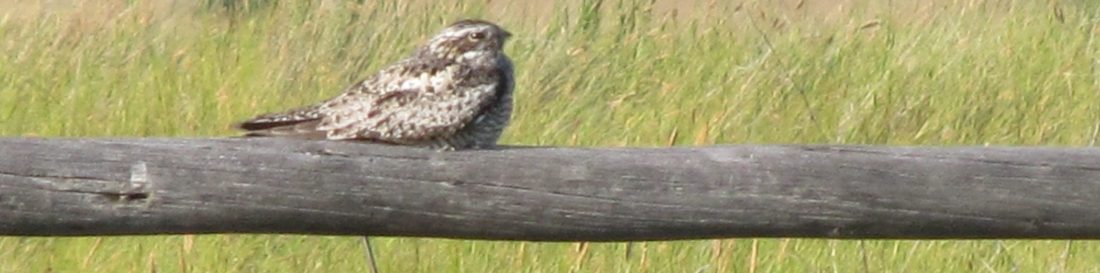
Common Nighthawk, Val Mar1e, Saskatchewan 2013

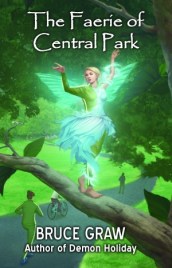
The Faerie of Central Park, by Bruce Graw: A Review

Dave is a first year student at Columbia University in New York city, unsure and adrift –faerie-central-park until the day an injured faerie lands on the windshield of his car. Thinking it is a high-quality doll he can use to impress a girl, he takes it home – only to find that it is an honest-to-goodness live faerie.

Tilly, the faerie, is the genius loci of Central Park, keeping its natural rhythms in place, taking care of the Land. She desperately needs to return – but Men are the age-old enemies of the Fey, so how can she trust Dave?

The Faerie of Central Park is a gentle, amusing story, a romance in the old meaning of the term. The story begins light-heartedly, describing Tilly’s actions in Central Park and Dave’s at university. Even after they meet, the story continues in a fairly predictable ‘human meets non-human and get to know each other’ vein, but well written and enjoyable.

The story bogged down for me in the middle, with too much description and repetition of situations that did not differ enough from each other to warrant inclusion. But it picked up again in the last third of the book as the story approached its climax and then came to an almost-satisfying conclusion.

I can’t fault the writing: author Bruce Graw constructs sentences and paragraphs with skill. The characters are as developed as one would expect in a light urban fantasy, with the characters of Tilly and Dave the most developed, as is appropriate. The e-book was extremely well edited, without the common errors that spell-check misses. Only the actual story-telling wobbled, in the too-long and too-repetitious middle section, and an ending that left me with one fairly large niggle, which I won’t describe so as to avoid spoilers.

Overall, three-and-a-half stars for a enjoyable urban fantasy, suitable for both young adults and older.

I received a copy of this book in exchange for an honest review.

Ayahuasca, by Jonathan Huls: A Review

This actually may be the shortest review I ever write.  William S Burroughs did it better, ayahuascabut Ayahuasca is at least a linear narrative. If this makes no sense to you, go look up Burroughs and The Naked Lunch on Wikipedia. Do this before you buy the book, and consider that they share themes and actions.

I read Ayahuasca in one sitting, finding it rather horribly compelling. I didn’t like it (I didn’t like The Naked Lunch, either) but I can’t deny its fascination. Not for the easily disturbed….or maybe for the very disturbed. Four stars.


Community

Yesterday I read at the Eden Mills Writers’ Festival, in the tiny Ontario hamlet of Eden Mills. I was reading because the two pieces I had submitted to the Fringe contest, for not-yet-widely-published authors, had been chosen by the jury. Four poems in the first submission, and a short story in the second.

eden-mills-wall

I’ve been going to this festival on and off for the last twenty-five years. Eden Mills, a hamlet of many 19th century limestone and clapboard houses, spans the Eramosa River. Readings are done outdoors, mostly, in back yards running down to the river; in a sculpture garden, on the grounds of the old mill, in a re-purposed chapel. It’s been a way to spend a lovely September afternoon, listening to people read, eating ice cream, browsing the books in the publishers’ way.

Yesterday I saw a glimpse the other side of it, the heart and soul and sweat and generosity, of time and talent and spirit, that makes the festival. The Fringe readers were treated no differently from anyone else reading: we were invited to the authors’ lounge, (which had taken over the ground floor of a resident’s house) where there was coffee and breakfast pastries available when we got there, then lunch, and later wine and nibbles. Conversations were open and welcoming; I talked to Steven Burrows, another birder and author of birding mysteries (we talked about birding, not writing), and then I talked to the Parliamentary Poet Laureate of Canada, George Elliott Clarke, about the surreality of beginning a writing career in my fifties. (His take on it? It’s a good time; fewer distractions).

I read in a natural half-ampitheatre with the river behind me and people ranged in lawn chairs, on blankets, on the grass, on the hill in front of me. My readings both went well – I was sure I was going to stumble over the line “No survey stake or draughtsmen’s pen rules here” (try saying that!) in one of my poems, but I didn’t.

In between the readings, I mostly worked the table of Vocamus Press, the Guelph-based small press that also promotes and publicizes the work of other Guelph writers. This too is hard work, lots of chatting to people (many aspiring writers), selling a few books, handing out cards for the book promotion Vocamus is doing in October. I was a poor backup for Luke, the founder, whose natural salesmanship is far better than mine.

At the end of the day, in the middle of a conversation about literary theory and criticism with a young poet, after a glass of well-earned wine at the lounge, we took ourselves to the village hall for the dinner for all the authors and publishers. Salads, rolls, butter chicken and rice for the first course – and wine on the table, replenished when we’d emptied a bottle – but it was the desserts that were the crowning touch. Because residents of Eden Mills take it on to bake pies – goodness knows how many – for this annual event. How many pies do you need to feed more than fifty hungry writers, plus publishers, volunteers, and organizers? However many it is, they did it. And they were goooood.

There are two – or maybe three – intertwined communities here: the community of Eden Mills, which welcomes, organizes, hosts, bakes, provides food, opens homes, washes dishes (and puts up with writers taking over the village once a year): the supportive, involved people who don’t live, perhaps, in the village, but who are nonetheless integral parts of the Festival, whether it’s organizing the Fringe, arranging the buses, selling books on the Publishers’ Way, and doing a thousand other things I’m not aware of. And then there are the writers themselves, who were again most welcoming, generous, and open, with their time and their thoughts. I was proud to be, in a small way, part of these communities on Sunday.

Thank you, Eden Mills Writers’ Festival!
Symbiosis

Currently, I’m working on three different writing processes at the same time. I’m writing the first draft of my next novel; I’m doing a heavy copy-edit on a manuscript-in-progress for a client, and I’m doing a substantive edit (I prefer the term analytical edit) on a finished manuscript for a different client.

Let’s look at the differences. In the novel draft I’m writing, I’m mostly concerned with getting the story-telling right, although I will rewrite awkward sentences and will go back to add or subtract from an earlier part of the novel if it no longer agrees with how the story evolves. But I’m certainly not trying to write a finished product – it will need a lot of work once the first draft is done.

The first client’s got a good story to tell, but he’s not a natural writer. Here, my job is about grammar, style, and flow. I rearrange sentences and paragraphs, cut things out, occasionally make suggestions about things to add. I change punctuation where needed. This time round we’re working together from the first chapter, so I’m also keeping track of things I’ll need to know for the next type of edit, the analytical edit.

The analytical edit, in my experience, is the most demanding. With the second client’s manuscript, which has been fairly well copy-edited, I’m mostly looking at it scene by scene, and, within the scenes, action by action. I weigh every sentence, and almost every word. Does the sentence matter? does it add anything to the action, the story, the mood? If not, it goes. Does the action within a scene contribute? “I turned my head to look at her,” tells me where the protagonist’s attention is. “I turned my head to look at her, picking up my sunglasses as I did,” may tell me the protagonist is eager to leave, so that her attention is divided (or many other things), but if the sunglasses have absolutely nothing to do with the scene or a later scene, out goes that phrase. At this point, I’m talking to the writer a lot – because those sunglasses might be important twenty chapters later, especially in a mystery novel.

At the same time, I’m analyzing for changes in value: if the protagonist is happy at the beginning, she should be in a different mood at the end of the scene. Conflict, even little changes of mood, is what keeps a reader interested. The conflict also needs to build progressively, peaking to a greater conflict, dropping down again (pacing), peaking again to a higher level, until the final crisis, the climax of the novel, is reached.

Meanwhile I’m also doing a next-to-final copy edit, because sometimes removing phrases and sentences requires that, keeping track of clues (it’s a mystery novel), and checking continuity. I use a lot of notes in an analytical edit!

The more I do this, the easier it is to write that first draft of my new novel. In part, it’s why I accept editing projects while I’m writing. I’m almost automatically checking my own writing as I write for many of these considerations. I seriously under-write in a first draft, adding emotion and sometimes description in the first re-write, adjusting the pacing, adding and subtracting, doing my own analytical edit on the manuscript.

I like editing almost as much as writing (and some days, more). There’s something deeply satisfying about working with another writer to bring out the best story they have it in themselves to tell. When the shoe is on the other foot, I thoroughly enjoy working with my editors, as they go through the same process with my manuscript. What we produce together is better than anything produced alone.

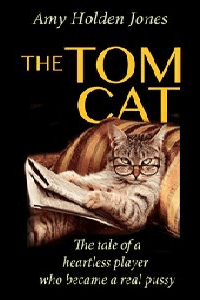
The Tom Cat, by Amy Holden Jones: A Review

Tom Knightly is a rich man-about-town who can’t commit; he breaks the heart of his tom-catfiancee by running out on her only a few days before the wedding. Ashamed of himself, he ends up in a bar called The Black Cat, where he meets a graceful, beautiful older woman apparently on the prowl, a cougar. They drink together, and the next morning, Tom wakes up….as a cat.

As a cat, Tom survives a few escapades before making it back to the apartment of his fiancee, Kaylie. The fat old labrador, Henry, who serves as a guard dog, welcomes him, and begins to teach him a few life lessons. Tom will need to learn what true love and sacrifice is before he can become human again, and win his Kaylie back.

The Tom Cat is a delightful romp of a story, without a missed beat or loose end. Sure, the characters are a bit two-dimensional, and there’s no real doubt it’s going to end happily, but I thoroughly enjoyed it. Author Amy Holden Jones has a number of screenwriting credits to her name, and the professionalism is apparent. In fact, The Tom Cat itself would make a good summer movie. (Twenty years ago, I would have cast Hugh Grant in the title role.)

This isn’t great literature, but I couldn’t fault it. Five stars to this light, offbeat romance.

I received a copy of this book in exchange for an honest review.

A Noble’s Quest, by Ryan Toxopeus: A Review

Elves and dwarves, men and halflings, gnomes and orcs…this is a high fantasy story in thea-nobles-quest tradition of Terry Brooks, with gaming influences also apparent. Fast paced, and with a unexpected twist towards the end, A Noble’s Quest suitably entertained me. The gaming influences, I think, are most apparent in the pace of the story, and the characters’ self-awareness, tending towards ‘kill now, think about it later’ rather than the more reflective nature of some fantasies.

But if it is adventure you are after, A Noble’s Quest has it in spades. Thomas and Sarentha, the two protagonists, are peasants working as lumberjacks until Thomas accidentally kills the boss’s son. Forced to flee, they are caught up in a quest that involves an ancient map, the branch of a magical tree, and silver dragons that breath frost, not fire. (I liked that dragon, a neat inversion of the usual.)

There’s a bit of a fan fiction feel to parts of the world Ryan Toxopeus has created, strengthened by his use of the terms orcs and mithril, but to some extent Middle-Earth belongs to the generations now, part of a shared consciousness and the foundation of much of high fantasy, whether the authors realize that or not. The characters are a bit predictable (well, most of them – no spoilers!), but that’s less important in a story shaped by the adventure, not by the personalities. Sometimes the solutions to problems seemed a bit ‘deux ex machina‘, especially towards the end, again reflecting (in my opinion) the influences of gaming.

A Noble’s Quest is followed by its sequel, A Wizard’s Gambit, which I will be reading as soon as I get through my backlist! Overall, 3.5 stars from me for The Noble’s Quest, which translates to 4 on Goodreads and Amazon.

I received a copy of this book from the author, in exchange for an honest review.

Reading about Writing


I’ve just finished reading two diametrically opposed books on writing.  One is Robert McKee’s Story, which is really about screenwriting but almost all of it is applicable to any writing.  He’s an advocate of the ‘plan everything out in detail’ style of writing, with some very good insights on conflict and pacing. 

The other was Stephen King’s On Writing (King is up there in my favourite writer category, when he’s at his best), in which he says basically: think up a situation, and let the characters take the story wherever it goes. No planning.  Which is exactly how I wrote Empire’s Daughter, so I automatically favour his approach (confirmation bias, that’s called) – but I think McKee has some very good advice as well.

The key to any advice on writing is to pay attention to what lies underneath the overarching organizational structure of the advice. I’m not going to plan out every scene before I write it, as McKee suggests, but his discussion of how scenes need to move the protagonist and the story from one place to another (physically, emotionally, spirituallly); that each scene must involve meaningful change, now that’s useful for me. But I need to let my subconscious guide that meaningful change, let my characters speak and do and think and react for themselves. I can’t force them to do something that isn’t right for them, and my understanding of my characters’ temperaments and beliefs and emotions resides somewhere that I can’t reduce to lines on an index card or in a notes file on my laptop. On the other hand, when I have a fair idea of the overall story arc and the major conflicts inside that arc, then that place that knows who my characters are and what they’ll do has more time to develop a deeper response from them.

Both books agreed on a couple of things, the biggest one being: don’t write what isn’t necessary. Every word should be there for a reason. That doesn’t mean we all have to write like Ernest Hemingway, nor does it preclude description, but there should be more to describing a setting or a person or a facial expression than just filling space: the invocation of character, of mood, time, familiarity or alien-ness, joy or desolation. If we’re showing the reader something important, good. If we’re over-describing instead of showing character through dialogue or reaction, bad.

Related to this is the need for dispassionate editing. You may have written the best scene of your writing life, but if it doesn’t play a part in the story, why is it there? “Kill your darlings,” King quotes. (I never got to see the movie Genius, about the relationship between Thomas Wolfe (not Tom), author of Look Homeward, Angel, and his editor Max Perkins, but I gather this was part of the conflicted relationship between them.) King says if the writer’s reaction to the advice to cut a scene is ‘Yeah, but…”, then the scene most likely needs cutting.

McKee and King both discuss the difference between writing and story-telling; the first is a matter of having the skill to put words together in a way that is literate and has style, a way that evokes emotion and captures setting and mood. But you can do all that, and still not have a story to tell. Some of the world’s best story-tellers have no or limited written literacy skills, but they know all about character and pacing and tension and crises and climaxes, and that a story – any story – must contain some universal features – the struggle for identity, the conflict between life and death, a facing of horror: a personal journey of some sort. But of course, a good story is not necessarily well written.

A writer can learn the elements of style, and a story-teller can learn to structure her stories for maximum impact. When the two are skillfully put together, in a story told in a way that is truthful, honest to the characters, and concise, then the result should be a book (or a movie or a play) that is remembered by its audience.

What have been your most useful books on writing?

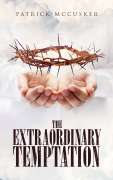
The Extraordinary Temptation, by Patrick McCusker: A Review

Any book that starts with an archaeologist in the field is likely to pull me in, and PatrickThe Extraordinary Temptation - Front Cover McCusker’s The Extraordinary Temptation did exactly that. From a medieval monastery site in Ireland to a ranch in Texas to Vatican City, the story for the most part kept me turning pages, entertained.

Ed Weaver is a young archaeologist overseeing a routine construction project when the ditch-digger uncovers a marble cube deep in the Irish bog, but he is without the funds to continue its appropriate excavation. An American donor steps in, promising the funds, setting off a tragic sequence of events for Ed and the theft of the precious contents of the cube. With those contents, a scientific experiment is begun, one with life-and-world-changing potential. Ed is determined to pursue of the chain of events that began with the discovery of cube, even if it takes him over twenty years to learn the truth.

The Extraordinary Temptation is sufficiently well-researched to be plausible, without going into so much detail to be pedantic. The writing is competent and the plot flows smoothly for the most part. I had a few niggles: one clearly evil character’s background or motivation is never satisfactorily explained; another, central to the plot, perhaps needed a better explanation of the myths and tales of sacred duality for readers unfamiliar with the concept. Overall, I found the first two-thirds of the book, leading up to the major crises and climax of the story, to be better written than the actual climactic events, which lacked sufficient impact. A pivotal chapter, which should fully engage the reader’s emotions, fails to do so (at least for me), because the reader is primarily told what is happening and not shown through the characters’ reactions and responses.

Niggles aside, I still found The Extraordinary Temptation to be entertaining and mostly enjoyable reading, worthy of a couple of lazy summer afternoons. My rating is 3.5 stars.

I received a copy of this book in exchange for an honest review.