

I’ve just finished reading two diametrically opposed books on writing. One is Robert McKee’s Story, which is really about screenwriting but almost all of it is applicable to any writing. He’s an advocate of the ‘plan everything out in detail’ style of writing, with some very good insights on conflict and pacing.
The other was Stephen King’s On Writing (King is up there in my favourite writer category, when he’s at his best), in which he says basically: think up a situation, and let the characters take the story wherever it goes. No planning. Which is exactly how I wrote Empire’s Daughter, so I automatically favour his approach (confirmation bias, that’s called) – but I think McKee has some very good advice as well.
The key to any advice on writing is to pay attention to what lies underneath the overarching organizational structure of the advice. I’m not going to plan out every scene before I write it, as McKee suggests, but his discussion of how scenes need to move the protagonist and the story from one place to another (physically, emotionally, spirituallly); that each scene must involve meaningful change, now that’s useful for me. But I need to let my subconscious guide that meaningful change, let my characters speak and do and think and react for themselves. I can’t force them to do something that isn’t right for them, and my understanding of my characters’ temperaments and beliefs and emotions resides somewhere that I can’t reduce to lines on an index card or in a notes file on my laptop. On the other hand, when I have a fair idea of the overall story arc and the major conflicts inside that arc, then that place that knows who my characters are and what they’ll do has more time to develop a deeper response from them.
Both books agreed on a couple of things, the biggest one being: don’t write what isn’t necessary. Every word should be there for a reason. That doesn’t mean we all have to write like Ernest Hemingway, nor does it preclude description, but there should be more to describing a setting or a person or a facial expression than just filling space: the invocation of character, of mood, time, familiarity or alien-ness, joy or desolation. If we’re showing the reader something important, good. If we’re over-describing instead of showing character through dialogue or reaction, bad.
Related to this is the need for dispassionate editing. You may have written the best scene of your writing life, but if it doesn’t play a part in the story, why is it there? “Kill your darlings,” King quotes. (I never got to see the movie Genius, about the relationship between Thomas Wolfe (not Tom), author of Look Homeward, Angel, and his editor Max Perkins, but I gather this was part of the conflicted relationship between them.) King says if the writer’s reaction to the advice to cut a scene is ‘Yeah, but…”, then the scene most likely needs cutting.
McKee and King both discuss the difference between writing and story-telling; the first is a matter of having the skill to put words together in a way that is literate and has style, a way that evokes emotion and captures setting and mood. But you can do all that, and still not have a story to tell. Some of the world’s best story-tellers have no or limited written literacy skills, but they know all about character and pacing and tension and crises and climaxes, and that a story – any story – must contain some universal features – the struggle for identity, the conflict between life and death, a facing of horror: a personal journey of some sort. But of course, a good story is not necessarily well written.
A writer can learn the elements of style, and a story-teller can learn to structure her stories for maximum impact. When the two are skillfully put together, in a story told in a way that is truthful, honest to the characters, and concise, then the result should be a book (or a movie or a play) that is remembered by its audience.
What have been your most useful books on writing?
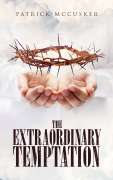 McCusker’s The Extraordinary Temptation did exactly that. From a medieval monastery site in Ireland to a ranch in Texas to Vatican City, the story for the most part kept me turning pages, entertained.
 to enter fully into the world the author has created. Visualizing the action as a movie may help; when I could do that, I found parts of the story to be quite fun, although I could never really take it seriously.
 Hunt. Freya, now more aware of her magical heritage and powers (although not completely) accepts a work experience placement in London, only to discover that her employer has chosen her for her magical abilities, and her assignment is to track down a missing Oracle. The problem is, does this Oracle want to be found?
 Guidoccio’s A Season for Killing Blondes, a cozy mystery set in Sudbury, Ontario. While followers of my blog and reviews on Amazon and Goodreads know that this is not my usual genre to review, every so often, I like to read something different, just as while my preference in cinema is for small, independent, international films, once in a while I watch with complete enjoyment a rom-com, or a Hollywood blockbuster.
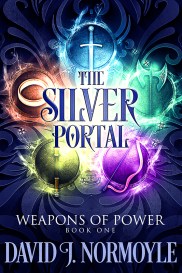 the weapons, five disparate young people from across the land become the weapons-bearers. Magically linked to the weapons, each must learn its powers and its responsibilities, evade those who want to use them for ill, and find each other across a wide and dangerous land. David J. Normoyle’s book The Silver Portal, the first book in a planned series, introduces us to the five protagonists: street urchin Twig; would-be-adventurer Lukin; noble Suma; Mortlebee, outcast from his religious community, and rebellious Simeon. Each character stands as individuals; each has their own difficulties with their unexpected weapons. Struggles with trust, ethics, personal convictions and the expectations of upbringing are central to each character’s growth and development through the story, but not in a heavy-handed or preachy way. Instead, these dilemmas are an integral part of the story, handled for the most part deftly and naturally.

You must be logged in to post a comment.