Deal with the Pain

Øle Ø is a former member (retired 2016) of SAG-AFTRA – the Actors’ union, and has a B. A. in Theatre and a minor in communication from the University of Minnesota, Duluth.(2000). He’s also worked in the construction trades in NYC (carpenter’s union) and many other various jobs in the Mid-West – too numerous to list. He puts memories on paper in humorous, sometimes sad ways.

“I’ve recently started calling my memories: “Bones,” after reading Natalie Goldberg’s book – Writing Down The Bones and when I write, I consider my writing as: “Crushing Bones”.

Think about being worried, in a hospital or going to the doctor “AGAIN.” Dealing with bad times or unexpected times – life issues stopping you cold from that deadline.

Why should I start writing again? I mean, I go from one uncompleted project for three weeks to another, because of my health.

I’ve been on crutches and can’t go to the bathroom without – excruciating pain. Who can write?!

But wait, I can deal with the pain. No one knows the pain I’ve been through. A small virus in my intestines is nothing like having your chest cracked open 3 times since you were 5 years old. OMG. No one knows that pain.

I swear at my parents. I swear at my doctors. I swear at myself. I swear at the gods that did this to me and realize I can’t do a fucking thing about it.

I AM THE PAIN. I LEARN THE PAIN. I DEAL WITH THE PAIN. (then I thank the doctors and nurses for the meds that temporarily stop my pain…)

My leg or arm wasn’t blown off in a bomb attack. I can’t think of that type of pain. Yet, pain is pain. It impedes a good writing session.  No argument – hands down.

When I’m healthy, I can work – either with my hands or my head. Things are much easier then. Much simpler. AND, all those teachers and professors since the third grade saying to me: “You Should Write!”

HELLO?

It’s difficult when I can’t feel creative or looking at my heart rate monitor in a hospital and I’m being held hostage for four days because they can’t figure out what the hell is going on with my heart rhythm.

Yet I feel fine. They try to convince me otherwise and I start to wonder if I’m in a Twilight-Zone episode. Everyone in the hospital – especially the administration idiots in pig masks are messing with my head. Most of all, they’re LIARS. I threaten legal action and they take their masks off.

They can’t wait to sign me out.

But I won’t sign a damn thing. I get back at them for messing with my creative writing. Making them pay for their lack of knowledge.

I know my body better than anyone.

I get home and self-doubt enters my consciousness as I worry about my blood pressure rising every time I take it, 5 times in a row, starting to think I should call 911, when I’m trying to write.

But, I stop and rest and think hard.

Yes – I ate 5 pieces of bacon at the Windmill restaurant. They made a mistake with the “small order” of sausage links and brought five delicious, smelly bacon slices and my wife is on a plane to Denver for a week and she won’t know I’m eating them and the waitress swore allegiance to me and won’t tell.

I love her.

Did she know it could kill you? No. Anyway – It’s not her fault. She doesn’t know I’m a writer. Where are the words?

American writer Ernest Hemingway (1899 – 1961) working at a portable table while on a big game hunt in Kenya, September 1952. (Photo by Earl Theisen/Getty Images)

Reblogged from: https://storiesofoleo.blog/2019/07/10/challenges-in-writing-at-sixty-or-older/

Follow Øle Ø on Twitter: https://twitter.com/doleolesen

Sorley’s Song for Cillian

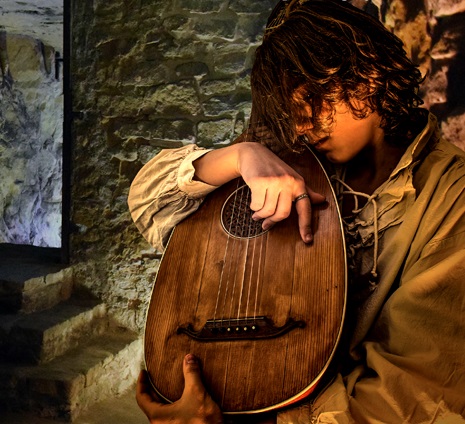
“Another soft, mournful descent of notes faded into the dark, and with the next, Sorley began to sing. Nothing disturbed the music: drinking cups were lowered, conversation ended. His voice, deep and slightly rough, told his anguish and grief to the night, to the stars, to all the world. A lament, I knew, for what he could not have…”

Paths Untrodden
(c) 2019 Marian L Thorpe
Sorley ladhar crop

Sorley, who is the narrator of the novella Oraiáphon and Empire’s Reckoning first appears in Empire’s Hostage as a minor character and becomes an important supporting character in Empire’s Exile, is in love with Cillian, the main male character of Hostage and Exile, and has been since he was sixteen. Sorley is a musician, and as all musicians and poets do, he’s written a song about his unrequited love.

Paths Untrodden

My true love’s eyes are darkly gleaming

In candlelight and music’s lure;

One night alone, at spring’s fair dawning

To keep me longing through the years,

To leave my soul bereft and mourning.

You danced that night with grace unfettered,

A glance my way, a touch bestowed.

Your dark hair swept by supple fingers.

Too soon the day, the calling road,

The shaken head when asked to linger.

A long, long path, and distance boundless,

Years of sorrow and empty days

Till chance or fate together brought us,

So far from home, in summer’s blaze,

With war behind and war before us.

The gods and time have blessed us both

With love’s reward for all our years

Of wandering on lonely ways;

A respite offered for our cares,

A soul to hold ours, all our days.

But candlelight and music’s memory,

Dark eyes gleaming over wine

Revive that youthful love and longing

For graceful fingers touching mine

For kisses left at day’s first dawning.

My life’s companion loves me truly

My heart is his and his is mine,

But older love is not forgotten

There is, by fate, or god’s design

A yearning still for paths untrodden

You danced that night with grace unfettered,

A glance my way, a touch bestowed.

Your dark hair swept by supple fingers.

Uncharted ways might be explored,

Still dreams this wistful, loving singer.

What can writers learn from visual artists? World-building and the Elements of Design, part 1


A random interaction on Twitter earlier this year began me thinking about how the Elements_of_artelements and principles of design can be linked to writing. I’m trained in design, both for graphic art and landscape design, so the concepts were known to me. But I’d never thought about applying them to writing.
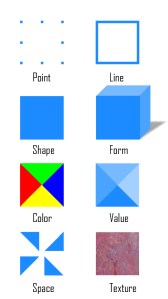
In this first analysis, I’m going to be considering them in the context of world-building, in preparation for a talk I’m giving in May, I’ll be doing a series of blog posts on this concept…and this is the first one. I won’t be talking about all the things that should be included in world-building – there are dozens (hundreds?) of resources for that, but rather  how the design concepts can be used to integrate world building into the narrative.

Today, I’ll look at how the element of line can be used. In visual art, line refers to linear marks, or edges where shapes or positive and negative space meet. There are two ways to consider this in world-building.

The equivalent of visual art’s linear marks in writing is movement: journey, regardless of the method. Journeys are prime places for showing us the world: what is the traveller experiencing? What are their senses telling them, and how are they reacting? (I wonder sometimes if this is why fantasy worlds and hero’s journey story arcs go together – there is so much scope for world-building!) If these reactions or impressions add to the character’s growth or reveals things about them – either directly to the reader or to another character – then the world-building slides seamlessly into the story.

In this snippet from Book 1 of my Empire’s Legacy trilogy, Empire’s Daughter, here is the protagonist Lena at the beginning of a physical journey:

The track widened, allowing Garth and me to ride abreast, behind Casyn. Looking back, I could no longer see even the smoke from Tirvan’s chimneys. Stop that, I told myself. Look around you. This is new. The plateau we rode on was rocky, heathland and bog, without trees. A raven croaked from a boulder.

We came to the road. I had expected a cobbled track, but the builders had made it wide enough for two wagons to pass. Paved with squared stone, it spoke of permanence and age. Casyn signalled a stop. We rode up beside him.

“North,” he said, pointing, “the road goes to Serra and Delle, and beyond it to Berge where it turns east again to run below the Emperor’s Wall on the northern border. South, it meets the sea near Karst, and then again turns east to Casilla. The closest inns are an easy day’s ride in either direction.”

A map nestled in my saddlebag, drawn by Casyn, showed the villages and inns on the road. If no one at the first southward inn had news of Maya, I would accompany Garth to Karst, riding northward again as spring approached. The northern road, Casyn had counselled, would be treacherous for a lone traveller in a matter of weeks.

“Is there an eastern road?” I asked. When Casyn had brought me the map, I had focused on the inns, knowing that I was most likely to find Maya—or at least hear word of her—at one of them.

We learn a number of facts about Lena’s land in this passage: a bit about its ecology and its comparative eco-region: ‘…heathland and bog, without trees. A raven croaked…’ Most readers will be able to picture this and relate it to a northern setting. But we also learn that it is new for Lena: a short ride from her village, and she’s never been there. It tells us about the insularity of her upbringing and the expectations of her village.

“I had expected a cobbled track, but the builders had made it wide enough for two wagons to pass. Paved with squared stone, it spoke of permanence and age.”  Here we learn that this country has a history, a past that is still to be revealed – but one that the character Casyn takes for granted, while Lena does not.

“North,” he said, pointing, “the road goes to Serra and Delle…. So we have map of Lena’s country laid out in words, grounding both her and the reader. Lena has this map, she’s seen it, but we also learn the geography isn’t her focus: she wants to find Maya, and she’s looked at the map only in relation to that goal.

World-building, using the linearity of the journey as the vehicle, has given the reader insight into the northern setting of this world, hinted at the age and technology of the culture, revealed a bit about the limits of Lena’s village’s worldview, and provided an brief overview of the settlement structure of the country – and shown us there is another country to its north. But because it is in the context of Lena’s experience, it blends into the narrative.

 The second way to consider the concept of line is the intersection of shape or space: edges. In writing, the equivalent is meetings: the edges of culture, personality, gender, religions, politics, language…. Again, showing how protagonists react to these edges combines the world-building with character development.

In this excerpt from much later in Empire’s Daughter, Lena has reached a crowded southern inn, another new experience for her:

Only women occupied the tables and benches. The men had a separate room. Here in the south, where villages and farms crowded closer together, and with regular traffic on the road between Casilla and the Emperor’s camp, custom kept men and women apart. Voices and bodies filled the room. I went to the serving bar to order ale and food. When it came, I paid, then made my way to an empty place at the far end of a table. My room-mates sat at the opposite end. They each raised a hand in greeting but made no effort to include me in the conversation. I ate my stew, listening.

I heard talk of crops and herds, of a good year for wine, of births and deaths. Women bet on a dice game at a table behind me, and someone played a stringed instrument of some kind in the far corner, quietly and without accompaniment. I thought of the map Casyn had drawn for me, trying to picture this inn. As far as I could remember, it sat at the hub of several roads, leading out to a semi-circle of villages—Ballin, Karst, two or three others. When I finished my food, I turned slightly to watch the dice game behind me. It seemed friendly, with much laughter and joking. One of the women looked up. “D’you want to join us?”

I shook my head. “I’ve never played. May I just watch?”

“Sure,” she answered. “But where are you from, that you’ve never thrown the dice?”

In this scene of meetings – a new space, with different rules, new people, a new game – there are lots of opportunities for world-building. What do we learn?

Only women occupied the tables and benches. The men had a separate room. Here in the south, where villages and farms crowded closer together, and with regular traffic on the road between Casilla and the Emperor’s camp, custom kept men and women apart.

Fairly self-explanatory, and in all honesty if I were writing this book again, I might leave out that last sentence and just let the first two show us the difference in cultural practices between the south of Lena’s country and the north. (Or reframe the last sentence as Lena’s direct thought).

I heard talk of crops and herds, of a good year for wine…While the reader is picturing Lena sitting alone, listening (which gives more insight into her character), they are also learning that this is an agricultural area; coupling that with villages and farms crowded closer together tells the reader that the south is a more fertile area, with better conditions for crops, and warmer, if wine can be produced.

As far as I could remember, it sat at the hub of several roads, leading out to a semi-circle of villages—Ballin, Karst, two or three others. Here, as Lena remembers, the reader is reminded of the geography and infrastructure of roads and villages; the sentence also reinforces the higher population of the south.

The dice game gives the reader insight into recreational pastimes (as does the instrument being played quietly in the background); the fact Lena does not know how to play again emphasizes the cultural differences between north and south. It’s also a jumping-off point for a conversation that will lead the narrative (and the journey) forward.

Lena’s experiences here are mostly that of hearing and sight. I could have included other sensory information – the taste of the food, the smells in the air, the temperature of the room – but I’d done that in other inn scenes, so while repetition (a principle of design, rather than an element) is important, so is variation within that repetition. More on that in another post!

 Elements of Design graphic By Mtpanchal – Own work, CC BY-SA 4.0, https://commons.wikimedia.org/w/index.php?curid=74316457

The Elves of Iceland


Today’s post is by author Bjørn Larssen, author of the wonderful Storytellers, set in Iceland. I’m about half-way through the book, and I’ll be posting my review soon, but until then, here’s Bjørn with some background on the setting and genesis of the novel.

(Storytellers on Amazon.com:  https://amzn.to/2OgxUiW)

The Elves of Iceland

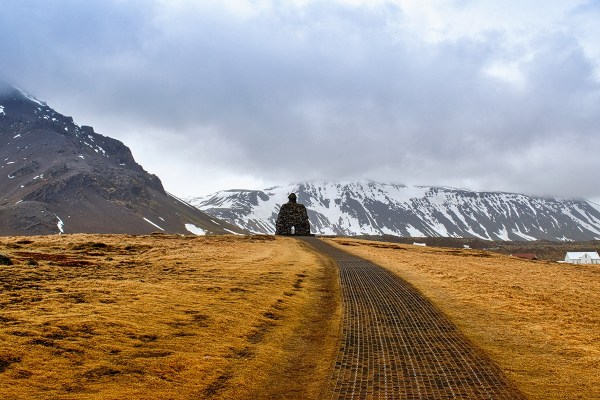
I started working on my first novel, Storytellers, on January 1st, 2017 – an easy date to remember. The novel was inspired by a dream I had. Writing down – rather than writing – the first draft took me two weeks. The second draft took two months, but I still had one problem. The setting was “a village”, which didn’t seem precise enough for historical fiction. What I described was a community both isolated and widespread, living largely from fishing, in a place where nature was not calming and pleasant, but actively trying to kill people.

arnarstapiAt the same time, and in the previous few years, I’ve been obsessed with the singer Ásgeir, whose debut album Dýrð í dauðaþögn (Glory in the silence) was my album of the year… for two years in a row, since nothing better came out. The English version, In The Silence, featured lyrics so beautiful they almost hurt, translated by John Grant. As I was listening to In The Silence for the 150th time, it dawned on me that there was a country called Iceland, which was cold and produced both Björk and Ásgeir. So I decided to investigate it a bit.
The first two books I picked up were a novel by Halldór Laxness, Independent People, and an introduction to Iceland’s more recent history – Sigurður Gylfi Magnusson’s krysavikWasteland With Words. Everything came into place. Iceland was not only a perfect setting for my novel, it felt as if the country was created especially so that I could write about it. It would take a while until I realised that the Old Gods worked the other way round, but at that point I started doing serious research. “A village in Iceland” still wasn’t enough of worldbuilding. I needed to know more. Whilst most Icelanders wrote diaries and memoirs, most of them were never translated to any language other than Icelandic. I realised I needed to go there – and talk to someone who would know much more than me.
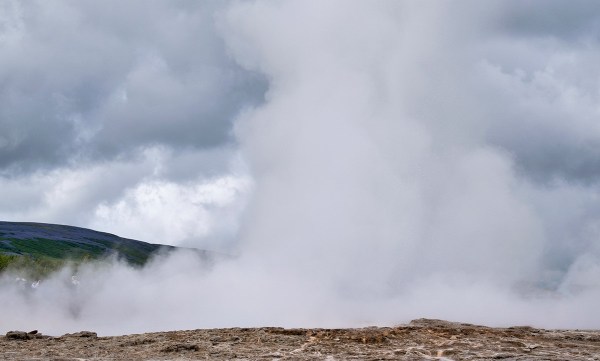
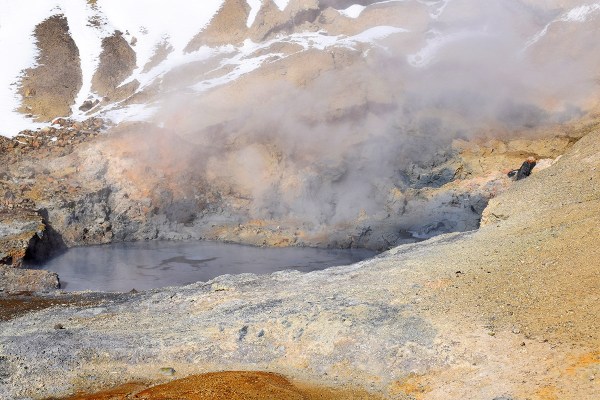
geysir (2)We went for four days. I needed to spend a day in Árbærsjafn, the open air museum the name of which I couldn’t even spell at the time, much less pronounce. Other than that, we intended to see the touristic parts – Thingvellir (which my husband still calls “the Game of Thrones place”), Geysir, and other attractions by the Golden Circle. I met up with a wonderful historian, Helga Maureen, got answers to most of my questions, then we drove around until all of a sudden a wave of heavy depression fell upon me. My husband and my friend went to see the Öxararfoss waterfall, I stayed in the car. And then something unexpected happened. Twenty minutes later, when they returned, my depression was gone and I was in the perfect mood to continue driving around.
*

According to a survey conducted in 1998, 54% of Icelanders declared that they either believed in elves or at least did not want to deny their existence. The second option feels like a perfect definition of an elf: a creature whose existence can be neither denied, nor proven via scientific means.

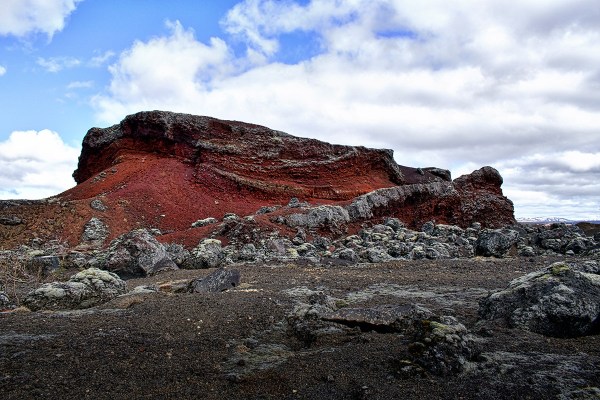
In December 2013, the elves and Icelanders’ approach towards them made the front pages of worldwide newspapers. The local authorities decided that a new road needed to be built between the towns of Hafnarfjörður and Álftanes. The road would lead through the Garðahraun lava field – where a large rock or pillar of lava was a well-known church for the elves dwelling in the area. This was enough for the foreign journalists. “Iceland’s Hidden Elves Delay Road Projects,” declared the articles. At the time, this only caused me to raise my eyebrows politely before moving on to the interesting stuff (politics).

The truth was much less exciting, at least for the foreign journalists. A group called Hraunavinir (“Lava Friends”) protested against causing massive damage to one of the few completely untouched parts of the country. Their protests were ignored, and activists arrested. The protest against disturbing the elves’ settlement was simply one of the ideas they came up with, but surprisingly it proved to be the most difficult one for the authorities to ignore. Whilst no official statement was issued declaring the road impossible to build due to the elves’ presence, the authorities didn’t dare to simply announce elves didn’t exist. Gunnar Einarsson, the mayor of Álftanes has contacted Ragnheiður Jónsdóttir, a well-known psychic, to communicate with the elves. It was announced that the elf church was relocated, and the elves moved out. Work on the road commenced, and has been completed by now.

*

Snorri Sturluson, a scholar who wrote down most of the Sagas and myths as weheidmork2 know them today, came up with two possible origins for the elves. One of them was that they were the “unclean” children of Eve, hidden from God when he came to visit (those are not my words). God, who was not pleased with this turn of events, decreed that what is hidden from Him will be hidden from everyone else as well. This is where the phrase “hidden folk” came from. The other story was even better, as it suggested that Eve was such an – ahem – lively lady that neither Adam nor God could control her. After some deliberation, God created a second man for her, naming him Elf. Therefore humans are descendants of Adam and Eve, and elves – of Elf and Eve.
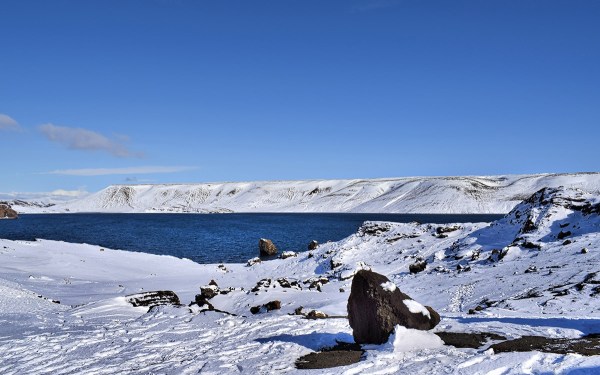
Obviously, none of those stories appear in the Bible. My personal theory is that kleifarvatn-lakeSnorri had to come up with something to avoid danger. The thirteenth century was not a good time to announce the existence of mythical beings that had nothing to do with the Christian God. Yet the belief in elves was widespread in Nordic countries even before Iceland became inhabited in the 9th century. The heathen faith lists Nine Worlds, one of which is Álfheim (the home of the elves), and another – Svartálfheim (the home of the dark/black elves). Back when the Old Gods ruled the worlds, their subjects did not use the phrase “hidden people”, but regarded them as natural spirits, same as the many species of wights guarding homes, land, trees. They had no need to come up with explanations why the elves existed. They simply did, same as Odin, Freya, Thor, and everyone knew that.
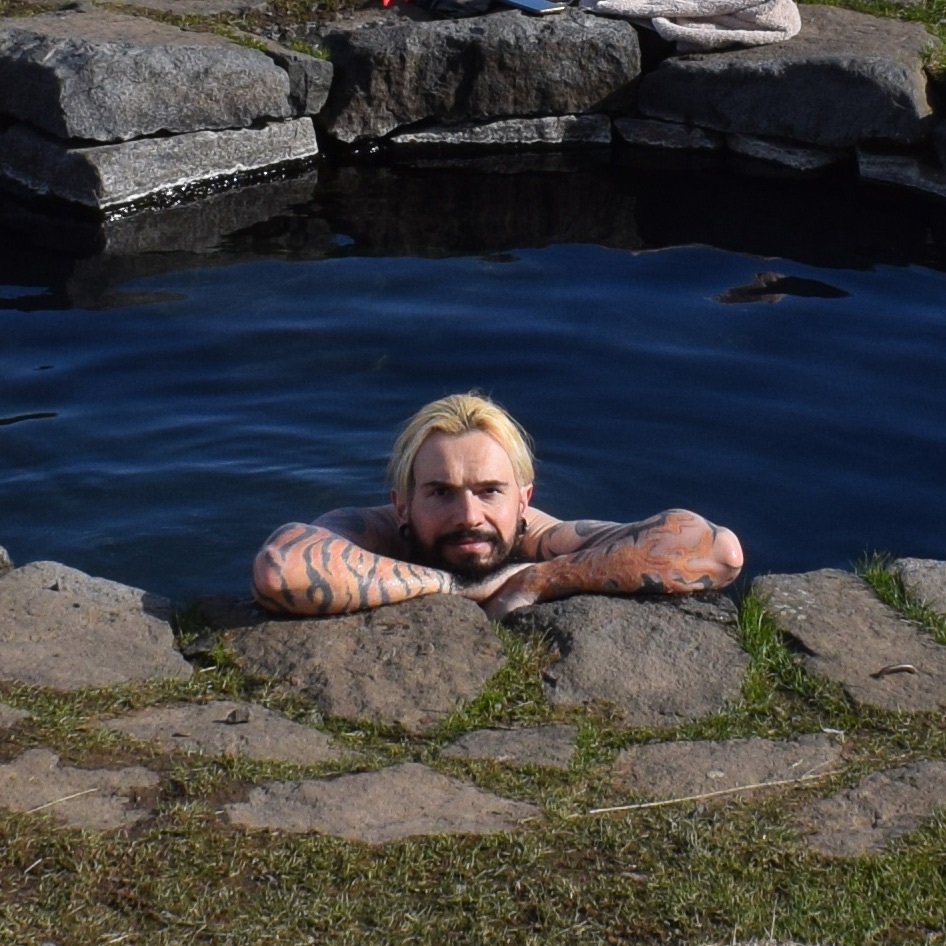
*To quote Gunnar, the blacksmith from my novel, elves are beautiful, colourful, always happy, and they also don’t exist. The elf who haunts Gunnar doesn’t particularly care about his non-existence. He is, however, miffed by the idea that Gunnar might not find him beautiful, and the blacksmith quickly apologises. It’s not wise to argue with supernatural beings.

Storytellers was never intended to be the sort of book that featured supernatural beings, but the elf not only didn’t care for Gunnar’s feelings regarding his existence. He had no interest in my opinion regarding his presence in the book either. I briefly considered forcefully removing the elf, but at the end I didn’t dare. After all, who was I to deny his existence? I was rewarded with a show of the Northern lights and ran back to rewrite the chapter that was previously based on my YouTube viewings and photographs.

The elf church in the Garðahraun lava field was moved to accommodate the elves’ needs. The psychic, Ragnheiður (Icelanders address each other with the first names, rather than the paternal names) was able to discuss things with them and come up with a compromise. Where humans demanding to preserve the lava field failed, the elves ultimately won. And I got out of depression so rapidly that no doctor would be able to explain what happened.

Of course, I don’t believe in elves. That would be silly. I am not going to deny their existence, though. Just in case.

Bjørn Larssen

raypool

Legion of Mono, by C.D. Tavenor: A Mini-Review

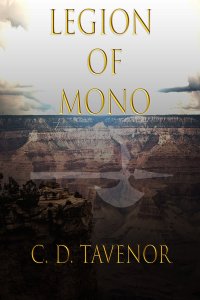
legion of monoLegion of Mono captures the resolve of a people’s last military leader in the hours before what he knows will be a final battle. His grief at leaving his partner and their child; his pride in his family’s honour; his strong bonds with his fellow soldiers: all are skillfully expressed. The author has created, in twenty-five pages, a glimpse into a world that feels solid and complete, a remarkable achievement. The ending left me wanting more, of both the world and the story. Highly recommended.

A Writer’s Hard Truth

A hard truth about being a writer is that we mine everything that happens in our lives, if not to recreate the actual event, then to use the emotions involved.

My brother died last week, too young at sixty-four, taken by an aggressive cancer diagnosed too late, a lack of symptoms until it had spread irrecoverably. I am devastated; even writing these words is hard.

There is a difficult balance to maintain, too: I am the bereaved sister, but I also must be the strong adult aunt, the practical sister-in-law, all at once. Not easy, and tiring, on top of the jet lag.

But. There is that detached observer in my brain, saying: remember this. Remember how you feel, every bit of it. Watch how your family members are reacting, remember it. Remember how the two days and 5000+ miles of travel felt, the exhaustion. Remember that peanut M&Ms and Tim Horton’s coffee made you cry, because that’s what we shared on birding trips. Remember the deep breaths you took before facing your sister-and-law and the nieces and nephew. Remember everything, because some day, you’ll use it. Not in its present form, but you’ll use it.

And part of me hates that. I can’t stop it, though; it’s who I am. I shape and define and explain my world with words, some of them – most, these days  –  fiction. Imagination can take a piece of writing only so far; it needs to be fed by honest emotion as well.

So I accept that detached observer in my mind, recording dispassionately what’s happening. Some day these feelings will make their way into a story. I have no idea when, or what story.  Maybe they’ll generate their own. It won’t be soon. But when they do, that story will be, in its way, a memorial for my brother, whom I loved, and love, and will miss forever.


Language and Meaning

dictionaryIn the third book of my Empire’s Legacy trilogy, my protagonist Lena is thinking about language:

I tried to sort out the inchoate ideas forming in my mind. About language, and meaning, and if all concepts were universal, and could be translated. About the gap between intent and comprehension, between what was meant and what was understood, and the assumptions and shared experience encompassed—or not—in any exchange.’

While this is a theme in the Empire’s Legacy trilogy, and the sequel currently in progress, it’s also recently become of immediate personal interest to me. Exactly how to categorize the series for Amazon’s keywords and classifications is very far from simple, because of that gap between what is meant, and what is understood.

I’ve always called the series ‘historical fantasy’. But that has resulted in some vocal protest: it’s not fantasy, because there is no magic. But the world is not real, I would counter, so doesn’t that make it fantasy?  Not in everyone’s mind. I tried ‘alternative history’. Again, disagreement, because there is no historical event being mirrored, only an echo of the Roman Empire and its provinces. Speculative fiction? Perhaps, but a term misunderstood or not familiar to too many.

This is minor, of course: I’m marketing books, not trying to create a shared understanding of world-changing issues. But in Book III, Empire’s Exile, and more so in the work-in-progress, Empire’s Reckoning, that’s exactly what my characters are doing, trying to negotiate treaties that change the world. Which makes me think about Lena’s question, and its applicability to both my fictional world and our real one. How do you reach a shared understanding when simple words like ‘fantasy’ – or ‘equality’ or ‘citizen’ – mean such different things to different people? When a word like ‘immigrant’ conjures up positives in one mind and only negatives in another?

As writers we often strive for clarity (unless perhaps you are a poet, or James Joyce), but there will always be a gap between what is meant by the writer and what is understood by the reader. That is good, because it makes the world the reader enters theirs alone: shared by others, but always comprehended slightly differently. As long as we recognize that, and recognize too that another reader’s experience may different from yours. A starting place to discuss assumptions and shared experience, not a reason to end a conversation that might enlighten, illuminate and surprise.

As for the series?  How about ‘imaginative fiction’?

Of Worlds in Words, part 1

08-Hadrians_Wall-037

The newest review of one of the books in my Empire’s Legacy series says, in part, “I am amazed at the complexity of her world building…. ” It’s a common response from readers and reviewers. Without being too self-congratulatory (and because I am giving a talk on world-building for fantasy writers in the spring), I’m going to do some musing about the subject here.

A little bit of background: the Empire’s Legacy series is set in a world reminiscent of Northern Europe after the decline of the Roman Empire. An analogue world, I call it, full of things that are familiar to anyone who knows even the slightest bit about this period, but not a slavish recreation.

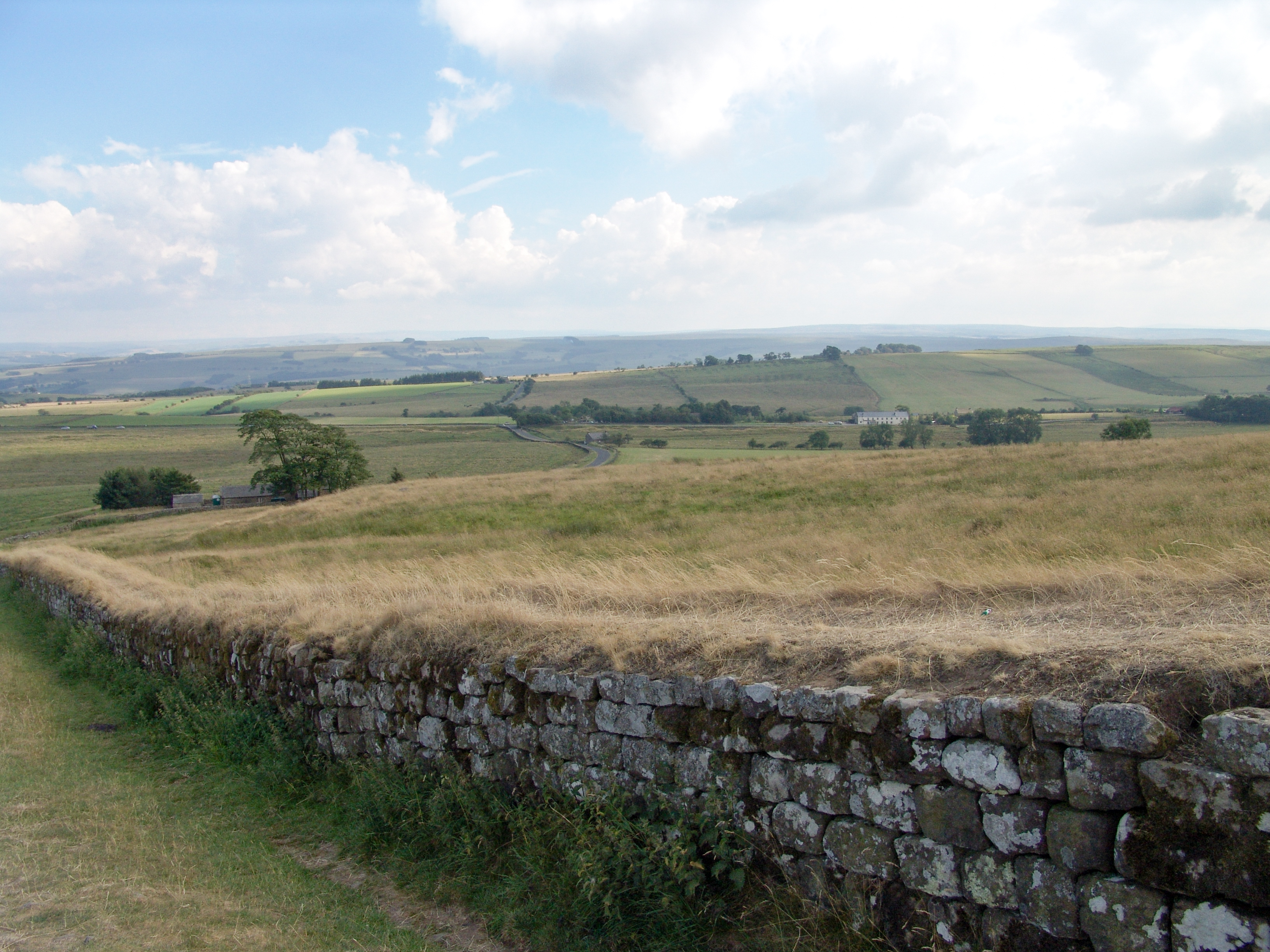
‘You must have done a lot of research’. I hear this quite a bit, too. Well, yes, and no. Full disclosure here: I’m 60. So I’ve had fifty-plus years of reading to assimilate and internalize a lot of information about the history and landscape and culture of Britain, before and after its colonization by Rome, from iron-age culture through to the Viking invasion and beyond. I’ve also walked extensively in the UK,  completely across the country, once (it took me three weeks); I’ve walked on iron-age trackways and on Roman roads, wandered among standing stones,  stood at Hadrian’s Wall on a windy, cold March day to see what it felt like. I know what my character Sorley hears when he misses ‘The scream of gulls over the harbour; the endless sigh of the wind in the grasses, the curlew crying. Waves, always beating, like a heart.’ (That’s from the work-in-progress.) I’ve stood on a beach on the northwestern tip of Scotland, and heard all those things.

Other ‘research’ came from entertainment: from Mary Stewart’s timeless books about Arthur: The Hollow Hills and The Crystal Cave, for their settings; from Guy Gavriel Kay’s Sarantium Mosaic; from books I read as a child, and can’t remember properly; from dozens of Time Team episodes, along with Digging for Britain; and Vikings… I could go on. Tidbits of information, or whole chunks. My husband is used to me scribbling notes.

Some of it was purposeful: on-line courses on the history of Hadrian’s Wall, and the archaeology of Portus, one of Rome’s ports. A course on the history of Europe 400 – 1000 AD (I focused on Viking expansion in Europe, which became important in Empire’s Exile, book III.) Two courses on landscape archaeology, to learn to read the landscape even better – not just for the books, but because it is a private passion. Many many books…the one I am currently reading is Roman Provincial Administration, by John Rogan.

All of this is a long-winded way to say that I believe you need to know the landscape of your fictional world, because landscape shapes culture, and culture shapes characters. If your principal character – as mine is in the work-in-progress – is a young gay musician from a culture where homosexuality is taboo, I have to know not only why that is, but what that looks like in a world of windswept, isolated estates, a hierarchical social structure, and primogeniture in inheritance of land, a world where marriage is to bind neighbours together against a common enemy, join lands, and create children for the good of both families but also the community. Maybe I’m lacking in imagination, but it’s easier for me to learn what I can about the Norse-Gaelic culture of the highlands and islands of Scotland, and then think ‘what if?’ within the basic structure of that culture, than it is for me to create a whole new culture.

My personal belief as a writer is that there are two choices: base your world on a historic one which readers will find at least a little familiar (e.g, The Lord of the Rings – another analogue of northern Europe; The Earthsea Trilogy – based (in memory) on an analogue of the Mediterranean islands) and create a culture that does not align with reality, or create a culture that aligns with reality in its important facets, and place it in an alien setting (e.g. Dune). To do both may overly challenge a reader.

More on this subject in future posts. You’re my test audience; all these thoughts – and your responses – will be winnowed down to a 40-minute talk by the spring. All respectful  comments are welcome!

Hadrian’s Wall photo: Tilman2007 [CC BY-SA 3.0 (https://creativecommons.org/licenses/by-sa/3.0)%5D, from Wikimedia Commons

The Eagle and Child

This is a reflection about coincidence, or synchronicity, or possibly about me seeing connections where there are none, except in my mind. It doesn’t matter, really.

I am, by training and education and part of my working life, a scientist; an applied geneticist, precisely, and that training and education spills over to my avocation as a birder and amateur field biologist. But by possibly a deeper inclination, a desire for a mythological interpretation of existence that goes beyond the seeming black-and-white of science, I find deeper truths in the worlds created by certain writers: JRR Tolkien first and foremost.

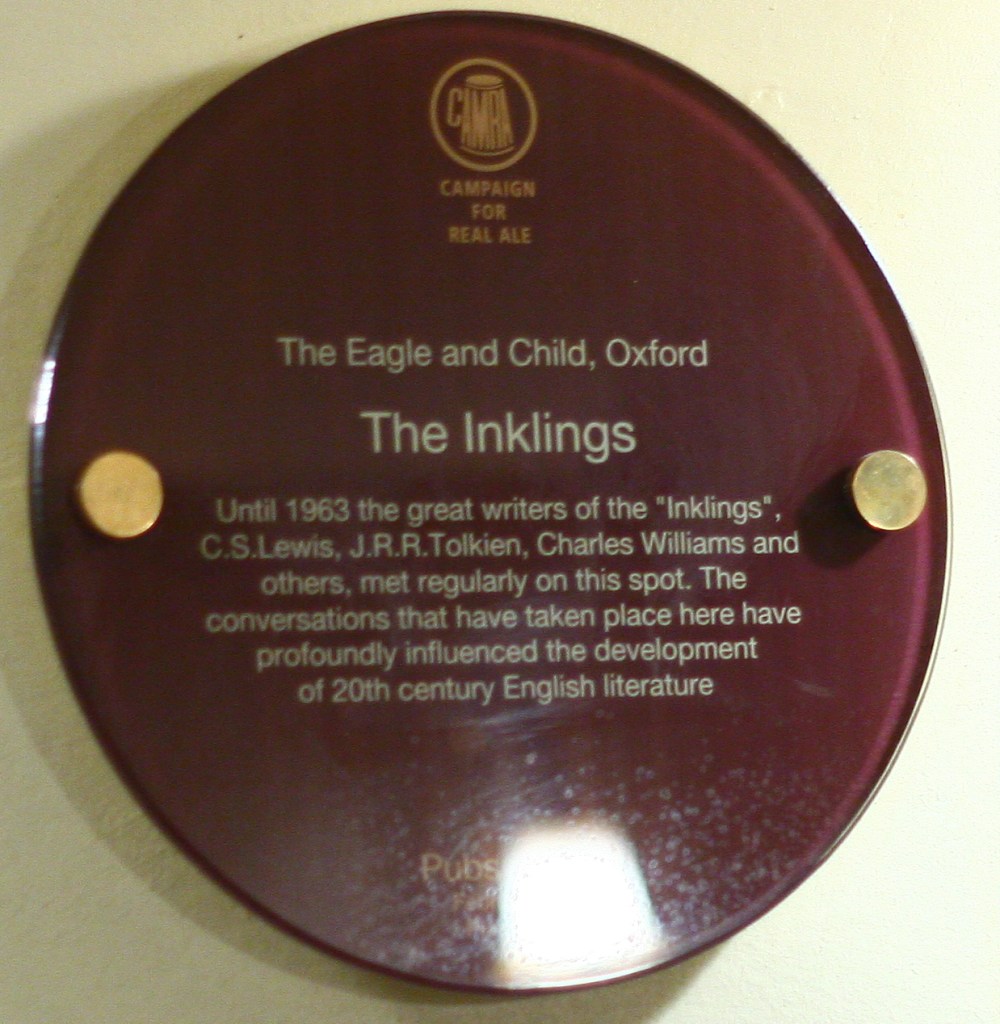
A friend of mine is groaning at this point…not elves, he is thinking, much as CS Lewis said at the meetings of the Inklings. Which brings me back to the coincidence, or synchronicity, I mentioned at the beginning. The Inklings, or more precisely their meeting place, are part of this: for many years, their famed Oxford writing group met at a pub called the Eagle and Child, better known as the Bird and Baby, in St Giles’ Street. Here CS Lewis and Tolkien and many others shared and discussed their writing, giving feedback on what are some of the most influential fantasy and science fiction novels of the twentieth century, the books that made me, first, want to be a writer, and then taught me how to write.

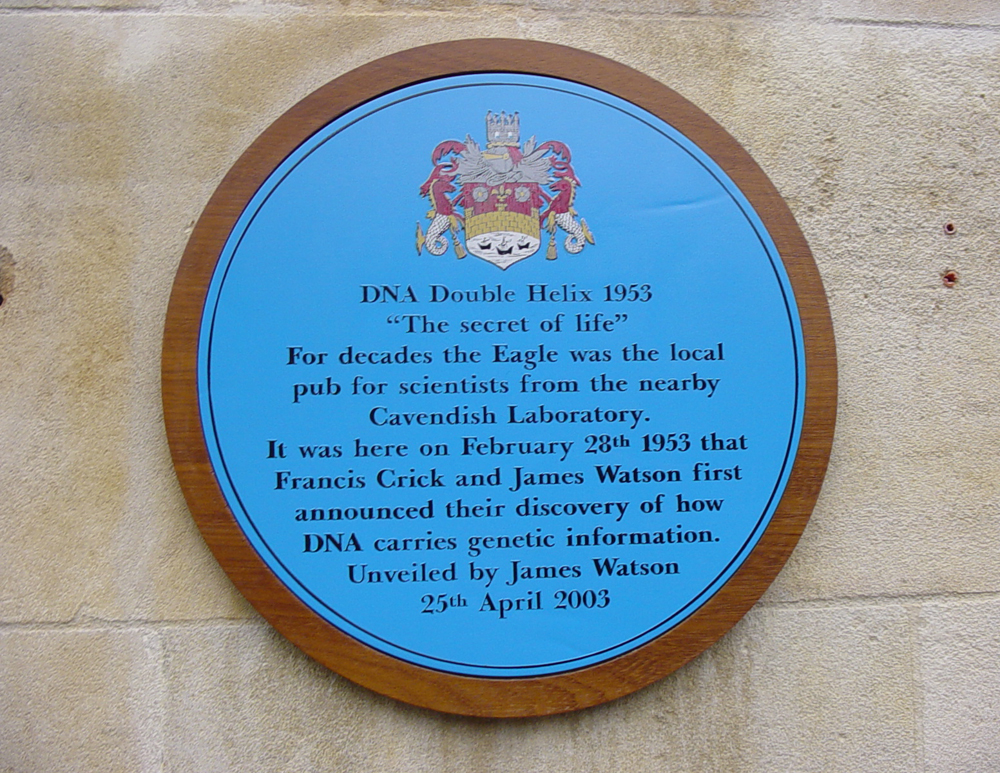
But about 75 miles away, and a few years later, at the pub named the Eagle (but once the Eagle and Child, too)  in Cambridge, Francis Crick and James Watson announced their discovery of the structure of DNA at lunchtime one day. This too, later, caught my imagination, in a different part of my brain: there is another magic in unravelling the secrets the double helix carries, deciphering the language written in the pairings of arginine and guanine, thiamine and cytosine.  Nor are the day to day processes of scientific research – the planning, the first attempts, the repetition and the fine-tuning, interspersed with moments of inspiration and realization – very different from those of writing.

There is a place – not a physical place, or not one in this world – where the helix of life and the helix of story intersect. The axle-tree of all the worlds, Guy Gavriel Kay called it: Spiral Castle, the still point around which the worlds spin, a mystical, sacred place from Welsh mythology, where resurrection is possible and life can be created, or recreated. As it can be, from DNA, or from story.

DNA writes our stories in one way; words write them in another. That both these crucibles of meaning in my life occurred in part at pubs that at one time shared the name of The Eagle and Child is only coincidence, but out of such connections we create meaning. Or perhaps, recognize it.