Show, Tell, Hint

Working with one of my editorial clients a few weeks ago, I pointed out to him that he had several dropped story threads in his novel.  “But,” he said, “the entire action takes place over only a few days. Not everything can be resolved in that time.”

My response?  There’s a difference for the reader in leaving a story thread in a place where the reader can speculate about it, and just dropping it.  In one case in my client’s novel, the protagonist had expressed (to himself) his interest a woman he worked with. And that was it. The brief scene was there for a number of reasons, but mostly to show that, regardless of personal grief and a building complex political situation, the protagonist wasn’t entirely wrapped up in those two things. But it went nowhere, leaving the reader unsatisfied.

I made a few suggestions, and in the next draft there were a two more brief scenes of interaction between the two which fit smoothly into the narrative, and leave the reader with the hint that this relationship’s going somewhere. We don’t know it, but we can sense it, and that’s enough. Readers don’t need every thread tied up neatly; in fact, it’s good to leave a few minor open-ended questions for them to speculate about, a technique that helps keep a book in their minds.

In my own work, I have a few of these, the most prominent being a question of what happened to two of my characters. No one really knows, but suggestions are made, the search for them has a role, but in the end, I leave it to the reader to decide whether they’ve survived or not.

There’s another way to use ‘hints’ instead of showing or telling, again to leave questions in the reader’s mind, and that’s to be ambiguous. Not often, but this is the classic ‘is Deckard a replicant or not?’ question from Blade Runner. But the ambiguity doesn’t need to be that central; it can be about a characters’ motivation, or the nuances of a relationship.

Here’s an example from one of my books:

“Cannot we both just be content with what we have, at least for a little while?” I said, straightening. “You are alive, and recovering, and you have Lena, and the baby very soon.”

His hand was still on my arm. “And you, mo duíne gràhadh?”

My beloved man. A sudden restriction in my throat made my voice hoarse. “I have enough,” I managed to say, “being here. With you.”

The first-person narrator here interprets the question ‘And you?’ to mean ‘can you be content?’ – a reasonable response to the first statement he makes to the second character.  But there’s a second interpretation: he has gone on to say ‘you have Lena, and the baby…’  The question ‘And you?’ can also mean: ‘Do I have you, too?’ 

In this case, I know which of these two questions was really being asked (and no, I’m not telling.) But occasionally, I don’t know the answer, or not at the time I write it. And sometimes these ambiguous hints get clarified later in the story, and sometimes they don’t – allowing, again, for speculation.

I believe that for a reader to be fully immersed in a story, there needs to be these unanswered questions that involve them in the world, not just show it to them. What did happen to the Entwives in The Lord of the Rings?  What was it Ada Doom saw in the woodshed? Does Shane ever return?

(By the way, I think Deckard is a replicant. Your thoughts?)

Let’s Talk Success – Again

I spent half an hour yesterday consoling? advising? a new indie writer about ‘success’.  They have one book out, another on its way. They’re worried about sales, about marketing, about making a name for themselves. Here’s what I, the ‘seasoned indie author’ told them.

We live in a world where the popular measure of success is celebrity; fifteen minutes of fame and making the big bucks. But the chances that you can make a living from writing novels, and only writing novels, is miniscule. Look around you, I said. In this very bookish town in which we live, we had three nominees for the Governor General’s Award (Canada’s major literary fiction award) this year. All but one have other careers, and the one who doesn’t is a retired professor. In the ‘before days’, when there was an open writing space freely available to all on Monday mornings, I’ve shared table space with yet another Governor General’s Award short-listed author (who also has another career) and an Edgar-nominated mystery author (who also has another career) and a Stephen Leacock award short-listed writer (who also, etc….). I’ve read at literary festivals with some pretty big names, too – and almost all these writers do something else other than write novels: teach, practice law or work in warehouses, are system analysts or build houses.  And these examples, I will note, are all (except two) traditionally published authors.

This doesn’t mean your writing is a hobby. It doesn’t mean it isn’t viable. It doesn’t mean there aren’t a few people who can make a living at it. And maybe you’re one of them.

And maybe you’re not. But if you’re not, you’re in very good company in the literary world. You shouldn’t think less of yourself, or that you’re a failure. I consider myself a successful writer, but the actual profit from my books isn’t a major part of my yearly income.

But:

  • ‘your books got me back into reading’
  • ‘your books are my go-to when I need to escape this world for a while’
  • ‘I dread the day when you stop writing this series’
  • ‘I’m waiting for your new release more than any other book in 2022’

and many other similar expressions of what some people find in my books is my measure of success. If your stories resonate with a few readers; if they bring smiles to their faces or make them ask themselves hard questions; if they read until 3 a.m. because they can’t put them down, or leave the light on to sleep because you terrified them – isn’t that success?

Did the new author take this in? I don’t know. But I hope so. Because they are talented, and have stories to offer to the world that some readers will fall deeply into. I’d hate them to waste their time and energy and talent worrying about only one definition of a successful writer.

Image by Gerd Altmann from Pixabay 

Reviews Without Stars

With a very few exceptions, I’ve stopped giving stars on book reviews. Why?

Some books I read entirely for entertainment. Some books I read and discover there are deeper themes, viewpoints that make me think, and may have a lasting impact on how I see the world. Some books I read and fall in love with the author’s writing: how they use words, the grace and precision of their sentences, their images, their skill with the craft. Some authors are journeymen, shall we say, conveying a good story competently, but without a master’s touch. In my eyes.

Books I love, others don’t. Books I dislike, others love. That’s a given for all art. But here’s my first reason not to give stars: my opinions change. A book I disliked (or didn’t understand) in its first reading – The Buried Giant, Kazuo Ishiguro’s dream-like story about the mutability of time and memory – refused to remove itself from my mind. On its second reading, I was entranced. It remains a difficult book, hard to categorize, allegoric, but if the purpose of art is to change the way we see or think about the world, it’s succeeded for me. But if I’d rated it back in 2015, I’d have given it 3 stars, or less.

That leads me into the second reason: how people perceive a star rating. Three stars to me says ‘it’s ok, an average book.’ And that’s fine. Not every book (or movie, or painting, or meal, or hotel) is a masterpiece, even within its genre. But more and more I see authors thinking their work automatically deserves five stars. I see some authors being upset with four-star ratings, focusing on the stars, not the words in the review. I’d much rather my review was read as meaningful critique. So: no stars. Take the time to absorb what I say – that’s what matters.

The third reason is one of respect. In today’s interconnected world, very often I know – at least through social media – the author whose work I’m reviewing. Writers reviewing other writers know how much blood, toil, tears and sweat goes into writing a book, and we are loathe to undermine that effort. Overall, I think perhaps we’re a little too nice to each other, because of that. But a review without a star rating, one written with skill and thought – a proper critique, not a criticism – should indicate to other readers – and the writer – what I thought the strengths, and perhaps the weaknesses, of the book are.

Will I ever give another star rating?  Yes, sometimes. I will star-rate a book for a debut author, especially if they have next to no reviews and if I can write an overall positive review. I will star-rate an exceptional book, one that a decade from now I’m pretty sure I’ll still be thinking about. And if I am reviewing for a blog tour, yes. But otherwise, no. Not any longer.

Enchanted Ground

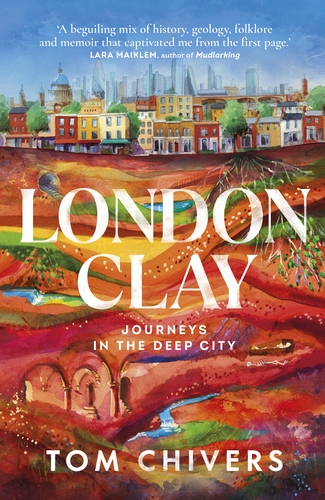
London Clay: Journeys in the Deep City, by Tom Chivers

London Clay

All my life I have had recurring dreams of paths, of underground tunnels and caves, of the liminal space between land and water. And so I am drawn to explorations in prose of these places, other writers’ experiences. London Clay: Journeys in the Deep City is one of these books.

But it is more than a record of author Tom Chivers’ experiences in exploring what lies beneath the ever-changing city – the layers of history and prehistory exposed by construction, reimagined from old maps, seen in the lines of minor streets. (This too attracted me to the book, landscape history and archeology, as many of you reading this will know, is an avocation of mine.) London Clay chronicles the author’s experiences in the wastegrounds of London – sometimes literally in sewers, sometimes in the abandoned expanses of what was once the industrial docklands, sometimes in the sterility of modern developments, as he searches for traces of the past.

London Clay kept me both entranced and contemplative, thinking of what lies under other cities I know – York, Seattle, my own. History both visible and invisible, traces left from names we know and names we don’t. Throughout the book, Chivers returns to holes: entrance places into the underground pushed up by geology or dug down by humans through the London Clay of the title. Like Orpheus, he goes down into the dark, returning with only shards and shadows and stories to tell – both of London and himself. In his own words:

London is enchanted ground…a glorious hyperreality: a hundred million possible Londons, present and past, imagined, intended, forgotten and reborn. Time is all around us….

I had set out, armed with a tattered map, to discover what lies beneath the streets. But I have found myself descending deeper into the layers of my own life than I had expected…

As I embark on a modest project on the history of the city on which I live – not a book, simply a collection of articles for our community newsletter, only some of which I will write – I cannot help but think Chivers’ book will influence it. Mine is a much smaller city, and much younger, its visible history easier to find. An intended city, imagined on paper, planned. But it too has the past hidden below what is seen today, and I can’t look at it the same way as I would have before reading London Clay.

Limits

Did I unfollow you on Twitter? Don’t take it personally. You didn’t offend me.

Like most of us, after 21 months of pandemic, I’m tired. I don’t need to go into the reasons why: we all know them.

Social media is both a blessing and a curse; a place to connect and relax, and a place to be embroiled in controversy. A place where I find readers, and researchers to connect with, and things about archaeology and late-antiquity/early medieval history I didn’t know, and a place to find authors and books to read.

But there is just too much of it. My Home feed isn’t giving me what I’m on Twitter for, primarily. I have to search for the people I want to interact with, whose tweets I want to read, with whom I want to check in. It’s not that you’re not all valuable members of the Writing Community – it’s that I don’t have enough mental energy left to appreciate you all. I need, for a while at least, to focus on history, archaeology, birding and nature, and the writers who write and/or tweet about these subjects. Mostly.

So I am culling who I follow down to fewer than 2000. How many fewer, I don’t know. Already my Home feed is looking better, frustrating me less, giving me the connections I’m looking for.

I probably – almost certainly – have unfollowed people I didn’t mean to. I hope I’ll figure that out over the next few weeks. If you’re upset by what I’m doing, I apologize for my actions inducing those reactions in you – but not for doing what I need to for myself.

Social media’s not the only place I’m pulling back. I’m not planning on doing any serious work on the WIP for a couple more months. Too many responsibilities, some self-imposed, others not, have come together just now. I’ll be culling those, too, as I can.

Let’s hope 2022 is a better year for us all.

Offerings

Midwinter’s eve, and the fire burned high. Food had been shared, and beer, and for once the sheep were unguarded, the fire and songs thought to be enough to dissuade the wolves. We sat with Fél and Kaisa and Aetyl, and beside me Audo and his three dogs. His brindle bitch, who had taken a liking to me, lay with her head on my feet.

Kaisa had instructed me in the expectations for tonight: come newly washed and in clean clothes, and bring something to give to the fire. The more precious, the better. The sun must be honoured, she said.

I had struggled to find something to bring. Audo sat with an ermine skin on his lap, his gift to the sun. My most precious possession was Colm’s history of the Empire, and I certainly wasn’t sacrificing that. Cillian had devised a solution for himself: a poem, written on a small piece of his carefully rationed paper. In the end, I gave an arrow, one of the small ones from the bird bow that had kept us fed on our journey across the mountains.

One by one, people rose to throw their offering to the fire, the men first. When they were finished, the women gave their gifts, and finally, me. Drumbeats had sounded throughout, and now the men began to sing. Audo, on one side of me, growled the words, not keeping time, but Cillian sang true. When did he learn the words? His singing voice was light, but clearly trained: Dagney’s hand there, I thought.

Aivar rose as the song ended. Everyone quieted. The two boys who became men tonight stepped forward. They both looked tired and a little disoriented: I guessed they had fasted for at least a day. There had been rituals earlier for them, attended only by the village men.

In any other year they would now just be presented to the village as men, but I had something to do, first. Aivar, leaning on his stick, called my name. He and I had spoken a few days earlier about what I should do.

“This village has never had a devanī,” he told me, “but others have. I remember what their vēsturni told me. A blessing from you is all I ask. Will you do that?”

I told him what Cillian and I had discussed. “Very good,” he said.

I rose, the two arrows in my hand, walking to where the two boys waited. At a word from Aivar they both knelt. I kissed each boy on his forehead and placed an arrow in each waiting hand. “The huntress guides your hand,” I told them as I did. Aivar had chosen those words.

The devanī should give her blessing to us all for the new year,” Ivor shouted, as I turned to leave. Other voices joined his. I thought I heard Gret’s among them. Aivar raised his hand.

“We…” He began to cough, a deep, racking cough. He tried again. “We do not ask for what we do not need,” he rasped. “Our men hunt well. If we need the devanī to give luck to a hunt, she will give it at the time. Do not waste the gift.”

Aivar’s edicts could not be disputed. Ivor and his friends quieted. The drumbeats began again, and this time women began to sing, and a few to dance. More beer made the rounds, Cillian, as usual, refusing. In the northern sky, green lights flickered; shadows rose and fell in the firelight. Fél wrapped a fur around himself and Kaisa, holding her against him. “Keep Lena warm,” he told Cillian, “or she’ll have to cuddle Audo, or his dog.” I glanced at Cillian. We had never touched in public.

“Then I better,” he said. I moved close, tucking the fur around us, leaning into him. We listened to the drums.

Ivor walked by, dressed only in a light tunic, spurning the cold. The empty mug in his hand told me what he searched for. He gave us a scornful look. “Devanī,” he said. “Why waste yourself on this man?” One of Audo’s dogs snarled. “Incapable vēsturni and idiots,” Ivor spat. “I will show you what a real man is one day.” He kept walking.

“Be careful of him, Lena,” Fél warned.

“I am,” I assured him. The drumbeats continued, faster; the dancing grew wilder. Under the fur, Cillian’s hand began a gentle caress.

“Shall we go to our bed?” he murmured.

We rose. Fél looked up. “Sleep well,” he said, “when you finally remember to sleep, that is.” Kaisa laughed. “Can we send Aetyl to sleep with her cousins?” I heard him say to her, as we left.

In our hut the fire had burned to coals. Cillian added wood. “Do you need to make tea?”

“I did, earlier.” My mouth was dry. I dropped the fur on the bed. We regarded each other across the space, in the light of the newly blazing fire. “It is a new year,” I said softly. “Don’t you have a fancy to fulfill?”

He crossed the room to me, beginning to smile; not his usual, quickly-gone smile, but one slow and genuine, lighting his whole face. My breath caught. He looks so much younger, I thought, and so beautiful. I saw tenderness in this smile, and vulnerability. He took me in his arms. I raised a hand to his face.

“This is something I haven’t seen before,” I murmured. “Why have you kept such a beautiful smile hidden?”

He turned his head to kiss my fingers. “My one legacy from my mother, I am told,” he said. “As to why, it is just reticence, Lena, like much else about me, long habit.” He bent to kiss me, a long, exploratory kiss. “Perhaps I will have more reason to let it show after tonight.”

I didn’t need to damp down desire now. My hands, low on his back, found his skin. I pulled him closer. Part of my mind noted the ridges of a scar under my fingers, but it wasn’t important. Nothing was, except his lips on mine and his hands, under my tunic now, making me gasp.

“You are very sure?” he asked, his voice low and barely controlled. “Tell me now, if you are not.”

“Yes.” I fought to speak. “Are you?”

“I am.” His mouth came down again, demanding now, insistent. How long has it been for him? I wondered, before I gave myself up to my need, and his. He hesitated once, just for a moment, and then there were only lips and hands and cresting pleasure, and unexpectedly, tears that were not mine.

(c) 2018 Marian L Thorpe

Image: geralt / 23743 images

On Restless Pinions

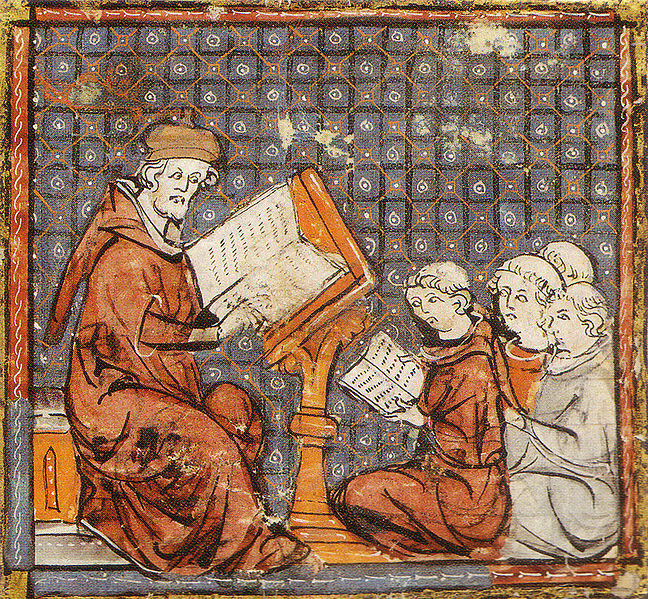
Imagine, if you will, a child at a table, pen in hand. He, or possibly she, is learning to write a legible hand. But not on paper: on a thin sheet of wood, with ink made from carbon and gum Arabic and a pen with a metal nib.  One side of this sheet has been used, a letter begun and discarded, but the other side is fine for a child to use for practice.

Outside, the soldiers and officers of a Roman fort are going about their business. There are patrols to ride, to keep an eye on the Brittunculi, the soldiers’ derogatory nickname for the native inhabitants. Drills to practice, swords and armour to clean, cooking to be done, board games or dice to be played.

Would the child prefer to be out watching the soldiers drill on the practice field? Or perhaps hang around the stables, breathing in the scent of horse?  No such luck: not when you are the child of an officer. Restless or not, your education comes first.

So you write. Perhaps you are copying, perhaps you are writing from dictation. But here, in this northern fort at the edge of Empire, in the year 100, you are writing a line from Virgil:  interea pauidam uolitans pinnata perurbem (Aeneid 9:473). A line we know, can still read, can still write today. (On restless pinions to the trembling town had voiceful Rumour hied…)1

Fájl:Philo mediev.jpg
 Cours de philosophy du Paris; Grande Chroniques de France.  Public Domain

This fragment from Virgil, copied nearly two thousand years ago, is tablet 118 of the Vindolanda letters. From this brief glance into the (probable) life of a child, perhaps one of the children of the Prefect Flavius Cerialis, I have extrapolated: my characters Perras and Cillian use the ‘classics’ in this way as they teach; the children of my books, of the right rank, learn to write a fine hand, and know the words of my world’s equivalent of Virgil and others. Even at a northern fort at the edge of an Empire that never, quite, existed.

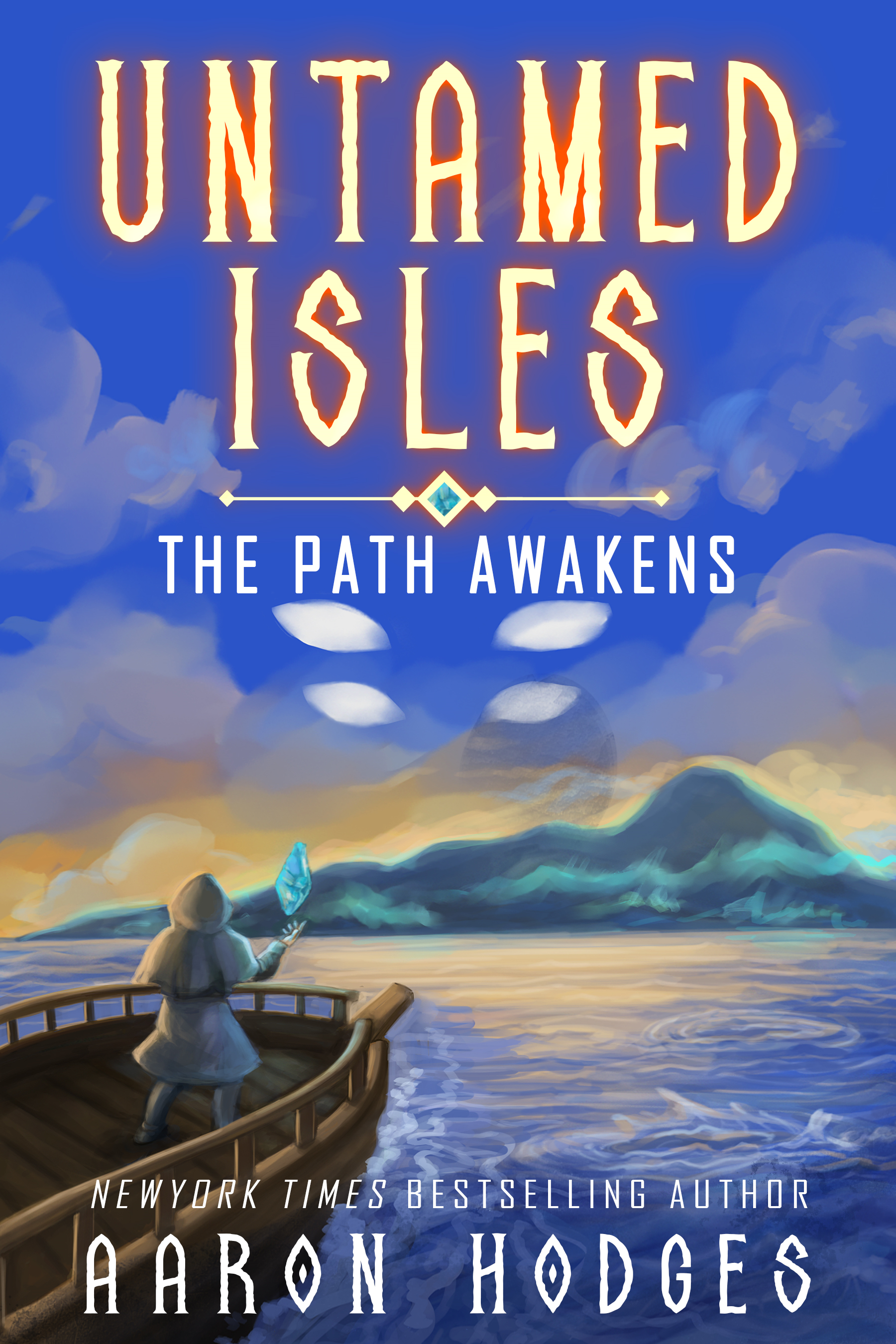
Spotlight on Aaron Hodges and Untamed Isles: The Path Awakens

I’m pleased to be shining a spotlight on Aaron Hodges today, with an exciting new book – but not just a book! Aaron’s new release, Untamed Isles: The Path Awakens, is linked to an MMO game, also called Untamed Isles, releasing soon.

On a still and peaceful night, the world shook, and light split the sky asunder.

The seas parted, an island rose.

And beneath the earth, an ancient power stirred.

Zachary Sicario thought he’d finally turned his back on the underworld. For ten years he was content with his cottage in the highlands of Riogachd. But a master thief never truly retires. When Zach is struck down by a wasting illness, he is left with two options: accept his fate, or return to his criminal past in search of a cure.

It isn’t a difficult decision.

With rumours of a mysterious island circulating the kingdom, Zach goes in search of old contacts. They speak of strange lights and disappearing ships, of treasure and riches promised for the first to reach its distant shores. Zach has little interest in trinkets—but there’s another tale, one that whispers of the power to change a man’s fate.

With a secret expedition departing in the coming days, Zach decides to roll the dice. But he’s not the only one interested in magic. His competition are warriors and thieves, noblemen and assassins, all in their prime. And Zach is far from the man he once was.

Can a master thief beat the odds one more time?

Here’s an excerpt from Untamed Isle: The Path Awakens

The deck rocked beneath Garret’s feet as the ship rose on a swell, then plunged back down. Water crashed over the stern as men screamed, helpless before the storm’s wrath. Garret clung to the tiller as lightning flashed, darkness giving way momentarily to a brilliant light. Sailors stumbled in its glow, grasping at ropes and loose cargo, anything that might save them from an icy plunge.
Another surge broke across the hull and swept the deck, collecting broken rigging and men alike in its wake. Garret watched, helpless, as his people were dragged through the broken gunwales and disappeared into the dark waters of the Northern Sea.
Silhouettes of their desperate faces danced before Garret’s eyes as the lightning faded, returning the ship to darkness. And still the ocean roared, still the thunder boomed, still the men screamed.
The storm had come upon them suddenly, appearing on the distant horizon and surging across the Northern Sea, turning calm waters to whitecapped waves before they could flee. The rains had struck first, drenching every soul aboard the Blackbird. It hadn’t been long before the winds followed, carrying such power that their sails had lasted only heartbeats before they had torn loose. The waves had arrived last, crashing upon the hull of the Blackbird, smashing oars from sailors’ hands and hurling men from their feet.
Now, caught in the grips of the storm, there was nothing the crew of the Blackbird could do but cling to their ropes and pray to the Old Gods of Riogachd for salvation.
And yet Garret struggled on, hands locked to the tiller, desperate to see his crew to safety. Above, the remnants of the sails still flapped from the mast, gifting the Blackbird just enough momentum for him to steer. Miles from shore, there would be no escaping to a shallow cove, no safe birth in which to shelter. Instead, Garret watched the darkness, seeking the next rolling behemoth.
And again and again, he directed their ship into the maw of those beasts, sending the Blackbird climbing over the great mountains of water. His arms ached and the icy air burned his lungs, but still he fought, struggling to save those he could—even as he washed yet another loyal sailor washed to their doom.
He stumbled as the ship crashed down from the crest of another wave. Spray whipped across his face, stinging like a thousand tiny lead bullets. Garret gritted his teeth as the boom of lightning illuminated the next wave. It rolled towards them, white waters breaking at the peak, threatening to come crashing down upon the fragile vessel.
The Blackbird rocked as Garret through himself against the tiller, and slowly, ponderously, they turned towards the mass of water. Holding them steady, Garret closed his eyes, sucking in fresh lungfuls of air. This was it, the end of his strength. The icy power of the storm had drained his energies, leaving him empty, listless, all but spent. How much longer must be hold on, pitting wit alone against the endless fury of the ocean?


You can download the first six chapters of Untamed Isles: The Path Awakens here, or purchase from Amazon.

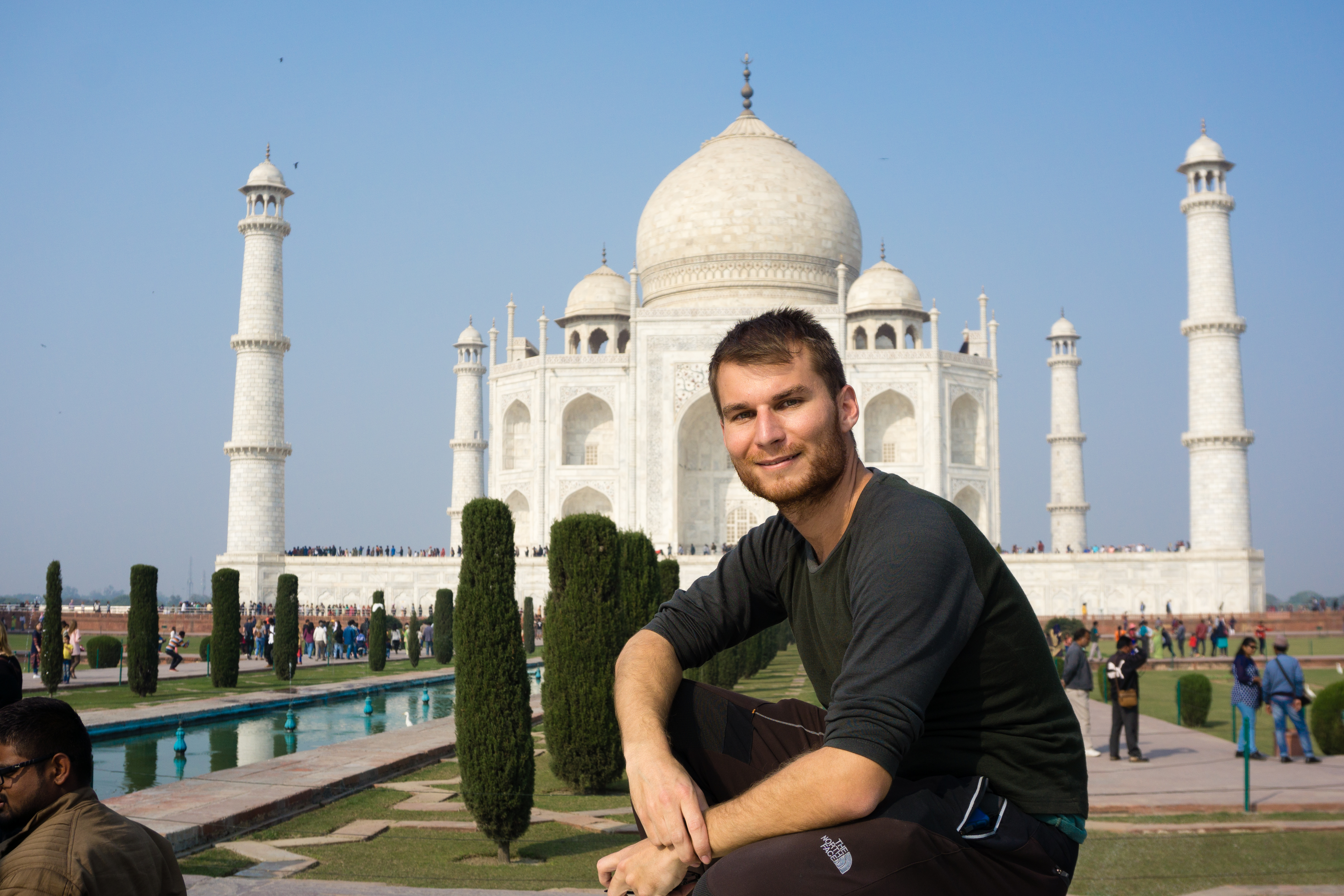
Aaron Hodges was born in 1989 in the small town of Whakatane, New Zealand. He studied for five years at the University of Auckland, completing a Bachelors of Science in Biology and Geography, and a Masters of Environmental Engineering. After working as an environmental consultant for two years, he grew tired of office work and decided to quit his job in 2014 and see the world. One year later, he published his first novel – Stormwielder – while in Guatemala. Since then, he has honed his skills while travelling through parts of SE Asia, India, North and South America, Turkey and Europe, and now has over a dozen works to his name. Today, his adventures continue…

Sex and Sexuality in Ancient Rome, by L J Trafford: A Review

Many long years ago, I took courses from a Scottish Studies professor who, hands down, was the most entertaining lecturer I ever had. He combined serious scholarship with stories – sometimes scurrilous – that made us howl with laughter. L J Trafford’s Sex and Sexuality in Ancient Rome fits that model: solid research told in an accessible manner, and it too had me howling with laughter in places.

Divided into sixteen chapters covering everything from ideals of beauty, the sex lives of Emperors, and what constitutes good sex (from the point of view of a Roman male), this is all presented in a fairly light-handed manner. While Trafford does acknowledge that Roman morals and behaviour cannot always be judged by 21st century standards, she also does not shy away from pointing out the inequalities and lack of choice for many Romans, especially those who were enslaved.

I was pleased to see that women’s sexuality was not ignored, as it often is in books on this subject. The information (opinion) still comes from men, who were doing most of the writing at the time, and much of it is as eyebrow-raising as men’s thoughts on women’s sexuality often are…but then we have Ovid, who wrote that mutual pleasure was the goal of sex, and that women’s orgasms were important and desirable. I learned more about women’s sexuality in ancient Rome than any other topic, and for that alone the book was worth reading.

Trafford also shows how some things never change. The sex lives of prominent people, including (maybe particularly) the emperors and their wives, were topics of discussion, and the reputation of many an emperor was dragged in the dirt by the poets, satirists and orators of the day. What we would now view as homophobic slurs were common insults, but this isn’t how the Romans saw it. The gender of your sexual partner was (almost) irrelevant; what position you took – the active or passive partner – was. The passive role was unmanly, and Roman men could not be unmanly. Some of the insults remain the same to this day.

I read Sex and Sexuality in Ancient Rome as a novelist, judging it for its usefulness in world-building. It is full of tidbits that, judiciously adapted, would certainly add to the verisimilitude of historical fiction set in ancient Rome. That along the way I was entertained, educated, but also made to think reflects Trafford’s grasp of her subject as well as her skill as a writer. Highly recommended.

Striking Fear

File:Slingers on Trajan's Column.JPG
Slingers portrayed on Trajan’s Column.
Public Domain via Wikimedia Commons

Smooth stones shot with a sling…are more dangerous than any arrows, since while leaving the limb intact they inflict a wound that is still lethal, and the enemy dies from the blow of the stone without loss of blood…This weapon should be learned by all recruits with frequent exercise, because it is no effort to carry a sling. It often happens too that warfare is carried on in stony places, that some mountain or hill has to be defended…

Vegetius: De Re Militari

Druisius, one of the main characters in my newest book, Empress & Soldier, is a new recruit facing his first battle, defending a mountain pass. In the vanguard of the troops facing the enemy are the slingers. (No, this isn’t historically correct: what I write isn’t. It’s a created world that looks a lot like ours, but I’m not bound by absolute accuracy.)

Slings are an ancient weapon, most likely in use long before any written record. The first written record in the western world is the story of David and Goliath in the Old Testament of the Bible (1st Samuel), thought to have been written about the 6th century BCE. Used across the world, the oldest-known slings are from coastal Peru, radio-carbon dated to c. 2500 BCE.

Roman slingers, which I am using as my model, used lead sling-bullets: the density of lead means that the mass of a sling-bullet made from the metal is much greater than one of stone. Lead sling-bullets could therefore be small, able to travel further than a stone of the same mass due to less resistance in the air, and difficult to see in flight. A painful projectile, with larger ones capable of speeds up to 160 kph.  As archaeologist John Reid of the Trimontium Trust told Scientific American, it could take the top of a head off. Romans (and Greeks) literally added insult to injury: bullets were sometimes inscribed with images of snakes or scorpions, or inscriptions such as ‘catch!’.

File:Romans used also small sling bullets of lead.jpg
Peter van der Sluijs, CC BY-SA 3.0 via Wikimedia Commons

Perhaps the most interesting of all the sling bullets found from the Roman period are those from Burnswark, or Birrenswark, Hill in southwestern Scotland. In the second century CE, troops under the command of Quintus Lollius Urbicus, the Roman governor of Britannia (himself following orders from Antonius Pius, the Roman Emperor) attacked the hillfort of the Caledonian people here. Archaeological investigations at the site discovered about twenty percent of the sling bullets were smaller than average, and had holes drilled into them. These bullets whistle as they fly. Their assumed purpose is to terrify the enemy: small, stinging, whistling projectiles, almost like a swarm of biting insects.

Druisius isn’t a slinger; he’s infantry, a foot soldier using shield and sword. But he sees the value of the sling in his first battle.  Will he ever use it?  You may have to read Empress & Soldier to find out!

References:

Translated Texts for Historians Volume 16: Vegetius: Epitome of Military Science. N.P. Milner, Translator. Liverpool University Press, 1996. pp 16-17  

Whistling Sling Bullets Were Roman Troops’ Secret Weapon. Tom Metcalfe, LiveScience on June 14, 2016: https://www.scientificamerican.com/article/whistling-sling-bullets-were-roman-troops-secret-weapon/

Burnswark Hill: https://en.wikipedia.org/wiki/Burnswark_Hill#Battle_details