Enhanced: Book 6 in the Freya Snow series: A Review

Enhanced, the sixth book of the Snowverse series by L.C. Mawson, is the most enhancedaccomplished and polished book of the series. Freya Snow, the magical, autistic, bi-sexual protagonist, has grown up; no longer a frightened and unsure teen, she’s a competent, capable woman no longer afraid to ask for help. And she falls in love for the first time.

Freya is still young, so she’s still growing into her powers, and still determining her place in the magical universe. Her self-understanding and her willingness to accept responsibility have matured along with her (or are those parts of the definition of maturity?). But she’s still making mistakes, of course, or there wouldn’t be much of a story!

I found this book to be tighter in terms of story structure and pacing than some of the earlier books, more focused and with some needed reminders of previous occurrences that influence the events in Enhanced. Freya’s central conflict regarding her Dark and Light bloodlines is furthered without dominating the story.

The author has created a complex and evolving world in the Snowverse, and I definitely recommend reading the books from the beginning to fully appreciate the character and conflict development. Five stars for Enhanced.

Introducing Geoffrey Saign

In today’s blog, I’m chatting with award-winning  author Geoffrey Saign, whose newest book, Wyshea Shadows, is the first in his new series, Divided Draghons. Geoff is, as well as a writer, a biologist, teacher and sailor…I’m not sure how he finds time to write! His first novel, WhipEye, won the International Book Award; Readers’ Favorite Children’s Fantasy; Outstanding Children’s Fiction in IAN Book of the Year Award; Top Choice, LitPick.com; a Bronze in the eLit awards; and Notable Indie—Best Indie Book, Shelf Unbound. His second novel in the WhipEye Chronicles, Gorgon, was selected as a Finalist, Midwest Book Award; Outstanding Children’s Fiction in IAN Book of the Year Award—third place in Book of the Year, and Top Choice, LitPick.com.wyshea-shadows

Geoff, tell us a bit about yourself. 

I love to bake/cook healthy food, hike, swim out to the center of lakes, snorkel, am a black belt in kung fu, and sail big boats, around 42’, to islands and beaches to swim. I don’t watch TV, but I love movies—stories. I spent 11/2 years traveling in the South Pacific, and it taught me that beauty is everywhere and you don’t have to go anywhere to find it—as long as nature is present. I teach in special education to very bright young adult students, which is both gratifying and worthwhile.

What is the premise of Wyshea Shadows?

Wyshea Shadows is an epic fantasy with three main women characters whose lives are intertwined with war, mystery, a common enemy, and love. As a thriller, it also has enough elements of romance, world building, and mystery that it probably is one of my best books. The wyshea are able to be around animals without scaring them—kind of like our world on the Galapagos Islands, and have a special relationship with nature. There are also elements of old mythology, like precursors to unicorns, wood sprites, and faeries that are only hinted at. The stories build dramatically, and the intertwining of characters is some of the best writing I have done. Each book (two others are written and will be released this year) has a very climactic ending, which always brings emotion out of me even after reading it 100 times. This is because the characters have so much at stake in the story, including protecting those they love. Nature and wildlife have major roles in all my writing.

Wow, that’s complex. How do you conceive your plot ideas?

Usually I think of one line, one situation. In WhipEye I imagined a boy walking into a pet store to talk to an animal. That became an 80,000 word award-winning fantasy novel. In Wyshea Shadows, I envisioned divided races, with good and evil in all the races, and the antagonist an evil that used individual weaknesses of greed and power to his advantage. Once I have a beginning, the rest seems to develop organically.

 Are any of your characters based on real people?

I have a character in WhipEye that reminds me of special needs young adults. All characters probably have bits and pieces of people I know. In WhipEye, the main character is grieving, and is in love with nature. I drew upon myself for both of those attributes at the time (I experienced a loss of not being able to be outside due to a difficult health problem for years, and when I got better, I grieved that loss.)

 Given how you describe Wyshea Shadows, you must have needed to do a fair bit of research!  Tell us about that. 

I usually have to research wildlife, nature elements, and also some of the weapons to understand limits and abilities. The world building is solid, and the magic in this world is concrete and explainable in a scientific kind of way. That doesn’t mean it’s based on science, but there is cohesion in understanding the underlying principles of energy in this world.


Do you outline your books or just start writing?

I write about 1/3-1/2 of the book, or at least the first few chapters, and then I might do a quick, one line outline for successive chapters to see where I’m going. It changes depending on the book and what type of story it is.

Given everything you do, how do you find time to write?

I write almost every day. Three hours or more in the evening after my education job, weekends 8 hour/day. There are breaks, friends, socializing, family, and play time. But I’m pushing 3 series now, plus 2 thrillers that I will come out with this winter, so 2017 will be a big year for me.

Is there a specific place in the house (or out of the house) that you like to write, or a specific mood you try to create with music?

The mood is in my head. I don’t mind listening to birds outside, or children playing, but music is distracting when I’m writing. Every writer is different in this aspect. I write at home, at my desk, and it’s comfortable and cozy.

Have you started your next project? If so, can you share a little bit about your next book?

I just finished 4 new books less than 2 months ago; Bubblegum Mike, Book 1, the YA epic fantasy, Wyshea Shadows, Divided Draghons, Book 1, the 3rd WhipEye Chronicles book, Drasine, and a stress reduction book (I teach that in my school)—so I’m taking a little break with marketing and rewriting an adult thriller. In the next 3-4 months I plan on finishing the 2nd Bubblegum Mike Book and 2nd Divided Draghons book, two thrillers, another young children’s book, and a nonfiction book. It’s a lot to do in one year. I also have some school visits in Minnesota and Chicago. It’s all very exciting!

And exhausting, I would think!  Links to Geoff’s social media and book sites are below. 


https://twitter.com/geoffreysaign?lang=en

https://www.goodreads.com/book/show/33259256-wyshea-shadows?from_search=true

https://www.facebook.com/geoffrey.saign

https://www.amazon.com/dp/B01NCQ0X8P/ref=dp-kindle-redirect?_encoding=UTF8&btkr=1

Empire’s Hostage: Status update and an excerpt.

Yesterday I typed the last words of the first draft of Empire’s Hostage, Book II of the Empire’s Legacy series. Beginning about eighteen months after the end of Empire’s Daughter, the book opens with Lena serving at the Wall, as the war with the north continues.

Now, finishing the first draft isn’t the same as having a publication-ready manuscript; there’s a lot of work to do still. I will now go through the book scene by scene, adding detail (or taking it away), delving further into the emotions and reactions of my characters. Then I’ll do an analysis of each scene: what purpose does it serve? Is it consistent with previous action, reaction, character traits? (including what happens in Empire’s Daughter) – and make the requisite changes. Have I carried themes and images through the book? Is Lena’s horse the same colour in every scene? Large things and small: they’re all important. Finally, I’ll do a copy-edit, looking for formatting errors.

Once I’ve done that – all on the laptop – I’ll print a copy, go through it at least twice, and then and only then, prepare the copies for my beta readers. I’m hoping to have that all done by April.

I’ll do a cover reveal in a couple of weeks (that’s a little dependent on my cover artist), but for now, here’s a look into the opening scenes of Empire’s Hostage.

Chapter 1

The rain slashed down unceasingly, half ice, stinging exposed skin and making it nearly impossible to see anything in the grey light. When the sun, hidden now behind the thick layer of clouds, set–not long now, I estimated–the stones of the Wall and the native rock would lose what warmth they held, and begin to ice over. Night watch would be treacherous, tonight. I counted it a small blessing that my watch had begun after the midday meal.

I wiped a gloved hand over my eyes yet again and scanned north and eastward, not focusing on anything, but looking for motion, or for something that didn’t belong, as Turlo had taught me; something that moved against the wind, or a shadow that hadn’t been there yesterday. I listened, too, to the sounds beyond the noises of the fort and the babble of the stream behind me: the hoarse cry of a raven, the soft chatter of sparrows settling into their roost: no alarm calls. I walked the few steps across the watchtower and began my scan again, to the northwest.

Footsteps sounded on the wooden steps. I did not turn; only when my relief stood beside me, looking out, could I look away.

“I think the minging gods have forgotten it’s the first day of spring,” Halle said. “Anything I should know?”

“There’s a raven in the usual tree,” I answered, still looking outward, “but it’s not alarmed, just making conversational croaks occasionally. I saw a fox about an hour ago, when I could still see, and its mind was on finding mice in the rocks. No owls today but maybe they’re not hunting in this rain. But there could be forty northmen out there, and as long as they moved with the wind and stayed low, I wouldn’t know. But I don’t think so; I’m guessing there is one, or maybe two, watching us, no more.”

“Wrapped up in their cloaks, under some rocks or furze,” Halle said. “I’d rather be here.”

“So would they,” I reminded her.

She laughed, but without mirth. “Go and get warm,” she said. “The hunting party brought back a deer, so there’s venison stew to be had.” I glanced over at her; her eyes were on the land beyond the Wall, watching.

“Good luck,” I said, and turned. I took the stairs down from the watchtower as quickly as I felt safe; the movement warmed me, slightly. At the bottom, I stepped over the gutter, running with rainwater, and onto the cobbled walkway that ran along the inner side of the Wall. The Wall itself broke the wind, and the rain fell with less force. Still, I pulled the hood of my cloak over my head as I walked to the camp.

All the discipline of the Empire could not build a finished fort in a time of war, and while the tents and a few stone and timber huts stood in orderly rows, the roads and pathways between mostly were earthen – or mud, right now. Since the skirmishes had died down, some weeks earlier, work had begun on paving the main thoroughfares through the camp. A narrow, cobbled track ran from the Wall to the centre of the encampment, just wide enough for two people to pass, and I noticed it extended a few feet further into the camp than it had when I had left for watch duty. I stepped off its comparatively clean cobbles onto the slick surface of the hard-packed earthen path. It had been built to drain, and two ditches ran on either side of it, but I could feel mud sticking to my boots.

At the kitchen tent, I scraped the mud off my boots on the iron blade mounted outside, and shook the worst of the rain off my cloak. Ducking inside, I met a blast of welcome heat. I stripped off my gloves and cloak, and the thick tunic I wore beneath the cloak and piled them on a bench. A gust of cold air told me someone else had come in; I turned to see Darel already loosening the clasps of his cloak. He’d been on watch duty at the tower east of the camp.

“Quiet?” I asked. He nodded, concentrating on pulling his tunic over his head.

“Very,” he answered, when his tunic was off. His red hair, streaked with rain, stood up in clumps. He sniffed the air. “I hear rumours of venison stew,” he said. Caro, on servery duty, spoke up.

“More like thick soup,” she said, “but, yes, it’s venison. With some root vegetables and barley in with it. Sit down, and I’ll bring it over.” We did as directed, and soon enough two bowls of soup, or stew, stood in front of us, with a loaf of dark, hard bread. Darel cut the loaf in half with his belt knife, and passed one piece to me. I ripped off a chunk, and dipped it in the soup, and ate hungrily.

Caro brought over two mugs of thin beer, and for a space of some minutes we did nothing but eat. Others had come in as we ate, and the smell of damp wool began to overpower the scent of venison stew in the tent. No-one said much; another day of rain and cold and mud dampened spirits as much as it did hide and stone. The rain drummed on the tent, ceaselessly.

Caro put more fuel in the brazier and then slipped onto the bench beside me. We had ridden north together, from Casilla, half a year earlier, when Dian had come south to requisition food and horses and other supplies for the army. I hadn’t really known her there; she had worked at one of the small food stalls near the harbour, and sometimes on my way to or from my work on the boats I had bought something from her.

“How’s the soup?” she asked.

“Fine,” I said. It was; thick enough to be satisfying, and reasonably spiced.

“It was only a yearling,” she said. “Not enough meat to go around, really, so we had to make soup.”

Food, I knew, was becoming a problem. At the end of the winter, with almost all the army ranged along the length of the Wall, game within a day or two’s hunting was scarce. Sending men – or more likely women – south to the villages for provisions meant fewer of us to defend the Wall if another raid occurred. The truce, called ten days ago, could end at any moment; the Emperor and his advisors spent their days at the White Fort, east of our camp, negotiating with the leaders of the northmen. Fifteen months of war: eight to drive the invaders back beyond the wall; another seven, now, keeping them there, until the ravages of winter, little food, and the deaths of so many, on both sides, had led to the request, and agreement, to parley.

“Who brought it in?” I asked idly.

“Dian,” Caro replied. “They got two, both yearlings, but one went to the White Fort. Have you had enough to eat?”

I shrugged. “Enough,” I said. “Is there any tea?” Darel looked up.

“I could eat more,” he said, “if there is any?” In truth, I could have too, but knew I shouldn’t. Darel was so young, and growing, and thin as a starveling cat. All the cadets looked the same.

“There’s a bit,” Caro said judiciously. “Give me your bowl, and I’ll bring it back, and your tea, Lena.” She slid off the bench and went back to the servery. Darel stretched. “Dice?” he suggested. “After we’re done eating?”

I shook my head. “Not tonight,” I said. “My tunic needs repairing; one of the shoulder seams is splitting.” Caro came back, and Darel fell on his bowl as if he hadn’t eaten the first helping. I curved my hands around the mug of tea. It smelled of fruit: rosehip, I thought.

I sat, sipping the tea. Darel finished his soup, wiping every trace of liquid from the bowl with the last piece of bread, and pushed his bench back. He took his beer and joined a pair of cadets at another table, pulling out his dice. They would sit here, playing, all the rest of the evening, if Caro let them; the servery tent was warmer than the barracks, and there was always the chance of some scraps of food.

I finished the tea, idly watching the dice game. “Minging dice,” one of the cadets growled.

“Language!” Caro warned. She allowed no obscenities in the kitchen tent: another slip and she’d make the cadets leave, and they knew it. I’d got used to the casual swearing among the troops; ‘minging’, a lewd term for urination, was one of the most frequently heard. I even said it myself, now. I stood to take the mug back to Caro, along with Darel’s forgotten bowl. Suddenly, the clatter of hooves on the cobbles rang out in the night. “Who?” Caro breathed. The cadets dropped the dice, and stood. The tent flap parted, and Turlo – General Turlo, now, and advisor to the Emperor – strode in. Darel straightened even more; the presence of his father always made him conscious of his decorum.

Turlo blinked briefly in the light of the tent. “General?” Caro said. “Would you like food, or drink?”

He smiled at her. “We ate well enough at the Fort,” he said, “but thank you. No, I came in search of two soldiers, and I’ve found them. Guard Lena; Cadet Darel: please go to your barracks; pack your possessions and come back here as quickly as you can. You two – Cadets Lannach and Samel, am I right? – go to the horse lines, please, and bring back two mounts. And then retire to your barracks,” he added. “Go!” he said, not unkindly; Lannach and Samel scurried to do his bidding.

Darel had not moved, but looked over at me. “General?” I said. “What is happening?”

“I will tell you,” he said, “when you return with your packs. Bring anything you cannot live without, and your warmest clothes and boots, if you are not already wearing them. Quickly, mind!” It was mildly said, but still an order. I glanced at Darel; he had already turned to put on his outdoor clothes. I did the same, conscious of the racing of my heart.

If this has piqued your interest, follow this blog for upcoming information on the release. The first book in the series, Empire’s Daughter, is available from Amazon as an e-book or paperback.

Witch (Freya Snow Book 5) by L.C. Mawson: A Review

Witch is the fifth book in the Freya Snow series, following the experiences of autistic, bi-witchsexual, non-human Freya as she learns to navigate both the human world and the world of magic, discovering the complexities of both.

In the human world, Freya has a job as a barista; in the non-human world, she is mostly concerned with finding a way to lift a curse that has placed a friend into a coma-like state. As she solves this problem – with noticeably more skill in negotiation and communication than in earlier books – she also learns more about herself, her non-human family and her place in the hierarchy of magic. Freya’s friends play a larger part in this book; her human family is barely seen, and this is appropriate given Freya is older and more independent.

Freya’s developing maturity is paralleled by author L.C. Mawson’s development as a writer. Witch is perhaps a more thoughtful book than earlier installments, with less physical action and more development of, and insight into, Freya’s character and personality. The ending of Witch is indicative of Freya’s ability to accept responsibility, moving her from adolescent to adult.

Four stars to a pivotal installment in the series. For an overview of all the Freya Snow books, I suggest the author’s site here.

A Guest Post from Andrew Joyce

At the end of today’s guest post by author Andrew Joyce, I’ve added a few thoughts of my own.  Meanwhile, keep reading – this is a really interesting post!

My name is Andrew Joyce and I write books for a living. I would like to thank Marian for allowing me to be here today to promote my latest, Yellow Hair, which documents the injustices done to the Sioux Nation from their first treaty with the United States in 1805 through Wounded Knee in 1890. Every death, murder, battle, and outrage I write about actually took place. The historical figures that play a role in my fact-based tale of fiction were real people and I use their real names. Yellow Hair is an epic tale of adventure, family, love, and hate that spans most of the 19th century.

Now that the commercial is out of the way, I can get down to what I really came here to talk about: the Sioux people. The people we know as the Sioux were originally known as the Dakota, which means ally. The name Sioux came from the Chippewa and the French. The Chippewa called them Nadonessiou, which means adder, or enemy, and then the French shortened the name to Sioux.

Every culture has an origin myth. We in the West have Adam and Eve. The Ancient Greeks had Gaia. Odin and Ymir founded the earth according to the Norse people. If you will allow me, I’d like to tell you the creation story of the Dakota.

In the beginning, before the creation of the earth, the gods resided in the sky and humans lived in darkness. Chief among the gods was Ta՜kuwakaŋ, the Sun, who was married to Haŋyetuwi, the Moon. He had one daughter, Wohpe. And there was Old Man and Old Woman, whose daughter, Ite, was wife to Wind, to whom she gave four sons, the Four Winds.

Of the other spirits, the most important was Iŋktomi, the devious trickster. Iŋktomi conspired with Old Man and Old Woman to increase their daughter’s status by arranging an affair between the Sun and Ite. His wife’s discovery of the affair led Ta՜kuwakaŋ to give the Moon her own domain, and by separating her from himself, created time.

Old Man, Old Woman and Itewho was separated from Wind, her husband—were banished to Earth. Ite, along with her children, the Four Winds, and a fifth wind—the child of Ite but not of Wind—established space. The daughter of the Sun and the Moon, Wohpe, also fell to earth and later resided with the South Wind. The two adopted the fifth wind, who was called Wamŋiomŋi.

Alone on the newly formed Earth, some of the gods became bored. Ite prevailed upon Iŋktomi to find her people, the Buffalo Nation. In the form of a wolf, Iŋktomi went beneath the earth and discovered a village of humans. Iŋktomi told them about the wonders of the Earth and convinced one man, Tokahe, to accompany him through a cave to the surface. Tokahe did so and, upon reaching the surface, saw the green grass and blue sky for the first time. Iŋktomi and Ite introduced Tokahe to buffalo meat and showed him tipis, clothing, hunting clubs, and bows and arrows. Tokahe returned to the underworld village and appealed to six other men and their families to go with him to the Earth’s surface.

When they arrived, they discovered that Iŋktomi had deceived Tokahe. The buffalo were scarce; the weather had turned bad, and they found themselves starving. Unable to return to their home, but armed with a new knowledge about the world, they survived to become the founders of the Seven Council Fires.

The Seven Council Fires . . . or Oćeti Šakowiŋ . . . are the Mdewakanton, the Wahpeton, the Wahpekute, the Sisseton, the Yankton, the Yanktonai, and the Lakota.

After Tokahe led the six families to the surface of the earth, they wandered for many winters. Sons were born and sons died. Winters passed, more winters than could be counted. That was before Oćeti Šakowiŋ. But not until White Buffalo Calf Woman did the humans become Dakota.

Two scouts were hunting the buffalo when they came to the top of a small hill. A long way off, they observed the figure of a woman. As she approached, they saw that she was beautiful. She was young and carried a wakiŋ. One of the scouts had lustful thoughts and told the other. His friend told him that she was sacred and to banish such thoughts.

The woman came up to them and said to the one with the lustful thoughts, “If you would do what you are thinking, come forward.” The scout moved and stood before her and a white cloud covered them from sight.

When the woman stepped from the cloud, it blew away. There on the ground, at the beautiful woman’s feet, lay a pile of bones with worms crawling in and among them.

The woman told the other scout to go to his village and tell his people that she was coming, for them to build a medicine tipi large enough to hold all the chiefs of the nation. She said, “I bring a great gift to your people.”

When the people heard the scout’s story, they constructed the lodge, and put on their finest clothing, then stood about the lodge and waited.

As the woman entered the village, she sang:

With visible breath I am walking.

A voice I am sending as I walk.

In a sacred manner I am walking.

With visible tracks I am walking.

In a sacred manner I walk.’

She handed the wakiŋ to the head chief and he withdrew a pipe from the bundle. On one side of the pipe was carved a bison calf. “The bison represents the earth, which will house and feed you,” she said.

Thirteen eagle feathers hung from the wooden stem. White Buffalo Calf Woman told the chiefs, “The feathers represent the sky and the thirteen moons. With this pipe, you shall prosper. With this pipe, you shall speak with Wakaŋ Taŋ՜ka (God). With this pipe, you shall become The People. With this pipe, you shall be bound with the Earth for She is your mother. She is sacred. With this pipe, you shall be bound to your relatives.”

Having given the pipe to the People, and having said what she had to say, she turned and walked four paces from the lodge and sat down.

When she arose, she was a red-and-brown buffalo calf. She walked on, lay down and came up as a black buffalo calf. Walking still farther, she turned into a white buffalo and stood upon a hill. She turned to bow in the four directions of the four winds and then she vanished.

Because of White Buffalo Calf Woman, the Dakota honor our mother the Earth; they honor their parents and their grandparents. They honor the birds of the sky; they honor the beasts of the earth. They know that Wakaŋ Taŋ՜ka resides in all animals, in all trees and plants and rocks and stones. Wakaŋ Taŋ՜ka is in all. They know that Wakaŋ Taŋ՜ka lives in each of us.

Because of White Buffalo Calf Woman, they have become Dakota.

Marian here….

The history of European-First Nations conflict and cooperation is complex and has rarely been told from the First Nations’ viewpoint.  Andrew Joyce has written – both here and in the book Yellow Hair – in a way that honors and recognizes the humanity of the Dakota, and by extension all First Nations.  Some years ago I stood on the plains at Wounded Knee, the wind blowing, as it always does, and thought about what had happened there.  It felt like the land itself held the memory of the massacre, a feeling I’ve only had once before, at Glencoe in Scotland, the site of another infamous massacre.  This poem was my response:

Wind and Silence: December 29, 1890 (July 30, 2001)

The wind is the first thing; that,

And the silence. Dry land, brown bent grasses,

Blue sky.

In the valley, where the tents were,

Where the children were,

There are dreamcatchers for sale.

On the hill, against the carven stone,

A buffalo skull and flowers lie

Beside rolled tobacco and a teddy bear.

What dreams are caught at Wounded Knee?


Yellow Hair is available from the following retailers:

Amazon

Barnes & Noble

iTunes

Kobo

Smashwords

Andrew Joyce left high school at seventeen to hitchhike throughout the US, Canada, and Mexico. He wouldn’t return from his journey until decades later when he decided to become a writer. Joyce has written five books, including a two-volume collection of one hundred and fifty short stories comprised of his hitching adventures called BEDTIME STORIES FOR GROWN-UPS (as yet unpublished), and his latest novel, YELLOW HAIR. He now lives aboard a boat in Fort Lauderdale, Florida, with his dog, Danny, where he is busy working on his next book, tentatively entitled, MICK REILLY.

Wonderworld: The Musical, by Brett Schieber & Tree: A Review

Independent reviewers can be asked to review some strange and wonderful works, but Wonderworld is the most unusual independent project to cross my desk. I’m not even sure what to call it: there is a book, but there is also a YouTube video, and an audio-book musical, and songs to be downloaded from iTunes. And it’s all – well – wonderful.

wonderworld

Wonderworld is the story of Max, a boy who has difficulty relating to the real world. He prefers his fantasy world, the world he creates in his art. Max could be a lot of the students I used to work with: maybe he has an anxiety disorder, maybe he is on the autism spectrum, maybe he’s just really shy, but it doesn’t really matter. Authors/composers/artists Brett Scheiber and Tree (aka the musical duo Arcanum) and illustrator Simona Poteska have meshed words, music and art to bring Max and his difficulties to life in a way that children and adults can both understand. The story isn’t told in a complicated way (but neither are Max’s fears and feelings diminished); the songs have straightforward messages and are easy to learn, but aren’t cutsey children’s songs, and the artwork captures Max and his fears in style that is neither too dark nor too upbeat, but that fits the mood of the story perfectly.

This is a story about overcoming fears and obstacles, about believing in yourself and your talents. It could be argued that this process is simplified in Wonderworld, but no more so than the story of the redeeming power of faith and love is simplified in The Grinch Who Stole Christmas. Were I still working in education, I can think of a dozen situations where I’d have used Wonderworld in both classroom and individual situations.

Wonderworld has been produced with artistic integrity and professionalism. I’d also say it’s been produced with great love and deep empathy. I’m giving it 5 stars.

You can watch Wonderworld on YouTube, and download the audiobook musical and each individual song (including instrumentals) on iTunes, Amazon, and Bandcamp. The hard cover, full colour book is also available on Amazon, Barnes and Noble, and https://store.bookbaby.com/book/Wonderworld-The-Musical.

I received a copy of this book in exchange for an honest review.

Xan and Ink, by Zak Zyz: A Review

Many fantasy books start out well but lose their way somewhere in the middle. Xan and Ink does the opposite: I found the first third of thxanandinkcovere book fairly rocky going, but once the author had his characters where he wanted them – trying to stay alive in the insect jungle of Kalparcimex, caught up in the feud between the Ranger Xan and the sorceress Ink – the story found its feet.

Banished brothers Sandros and Gregary, and their companions Brakkar and Osolin, are on a quest, to find a way to rid Joymont of the insectine creatures that are destroying it. Chance takes them in search of the legendary Xan, scholar and ranger of the Kalparcimex, to ask for his help. Both the world and the characters the author has created are complex and multi-layered, and we are given only glimpses of the back-story and motivations of the four sworn to find help for Joymont. We learn the most about Osolin, the escaped, condemned slave. Nor do we learn much more about Xan or Ink, except hints and little tastes of what made them who they are, and the past history between them. I found this intriguing; others may find it disappointing. We are only beginning to understand the complexity of the characters when the book ends, but as the ending demands a sequel, more may be revealed if that sequel is forthcoming.

The insect jungle, the Kalpa, is one of the most unusual and creative ways to pit the environment against the protagonists that I’ve come across. The insects – ranging from annoying to fatal, from mindless to sentient – are antagonists that most of us can easily imagine – anyone who’s hiked in a mosquito-laden wetland, or fought off blackflies or sand-fleas or leeches (or the black wasp of Uganda that stings just for the love of it) – can extend that experience to the horror of the Kalpa. It had me shuddering more than once.

Sexually explicit, this is a book for adults, not younger readers. Xan and Ink was far from the usual fantasy that crosses my desk, and I appreciated it more for that. Four stars.

I received a copy of this book in exchange for an honest review.

A Star-Reckoner’s Lot, by Darrell Drake: A Release-Day Review

We are used to fantasies that involve either the magical, fey beings of Northern Europe, or star-reckonerthose of Victorian horror novels. Darrell Drake’s historical fantasy A Star-Reckoner’s Lot introduces us to the mythology of Sassanian Iran, its beings of good and evil, and the complex idea of star-reckoning, a type of sorcery that channels the warring powers of the heavens to the benefit – or detriment – of humankind.
Revolving around three main characters: Ashtadukht, the Star-Reckoner; Tirdad, her cousin and bodyguard, and Waray, a half-div (half-demon, more or less) stray befriended by Ashtadukht, A Star-Reckoner’s Lot is a long story in terms of passing time; it unfolds in a series of vignettes; the reader may sometimes have difficulty in grasping the immediate importance of the events, or the connections between them. Nor is the reader given much backstory; the world, both seen and unseen, its characters, and the interactions between them unfold gradually, but the story moves inexorably towards its climax and conclusion.

Ashtadukht is a difficult character to get to know, and perhaps too a difficult character to truly like, stoic and bitter, but our understanding of her and what drives her develops over the story; in the end, we understand her, and likely have sympathy for her. Tirdad is perhaps the least developed of the three main characters, but he too is a character of dimension faced with difficult choices. Waray, the half-div, is on the other hand the most developed character: at times appealing, at times annoying, and at times amusing, all those facets hide a depth of sorrow and regret, and a desire for redemption that drives her.

It would be easy to read A Star-Reckoner’s Lot as a simple adventure set in an unfamiliar mythos, but the themes of love and honour, exclusion and belonging, and regret for the prices paid for actions raises it above many fantasy novels. Do not be misled by the author’s light hand (and occasional bad puns); this is a story with some haunting imagery and deep themes, and not one I’m going to forget quickly. Five stars.

I received a copy of this book in exchange for an honest review.

A Year of Reviewing: My Top Ten

I wrote my first review on this site a year ago this week. Since then, I’ve reviewed 65 books. These are my top ten, in alphabetical order. All these received 5 stars from me; coincidentally, this were the only 5-star reviews for the year, so I didn’t have to make a decision of what to include or leave out!

Citizen Magus, by Rob Steiner

Falcon Boy, by Barnaby Taylor

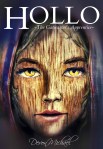
Hollo: The Gatecaster’s Apprentice, by Devon Michael

Magic of the Gargoyles, by Rebecca Chastain

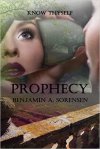
Prophecy by Benjamin A. Sorenson

Sailor to a Siren, by Zoë Sumra

Sapphire Hunting, by J SenGupta

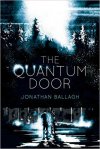
The Quantum Door, by Jonathan Ballagh

The World, by Robin Wildt Hansen

Tom Cat, by Amy Holden Jones

Community

Yesterday I read at the Eden Mills Writers’ Festival, in the tiny Ontario hamlet of Eden Mills. I was reading because the two pieces I had submitted to the Fringe contest, for not-yet-widely-published authors, had been chosen by the jury. Four poems in the first submission, and a short story in the second.

eden-mills-wall

I’ve been going to this festival on and off for the last twenty-five years. Eden Mills, a hamlet of many 19th century limestone and clapboard houses, spans the Eramosa River. Readings are done outdoors, mostly, in back yards running down to the river; in a sculpture garden, on the grounds of the old mill, in a re-purposed chapel. It’s been a way to spend a lovely September afternoon, listening to people read, eating ice cream, browsing the books in the publishers’ way.

Yesterday I saw a glimpse the other side of it, the heart and soul and sweat and generosity, of time and talent and spirit, that makes the festival. The Fringe readers were treated no differently from anyone else reading: we were invited to the authors’ lounge, (which had taken over the ground floor of a resident’s house) where there was coffee and breakfast pastries available when we got there, then lunch, and later wine and nibbles. Conversations were open and welcoming; I talked to Steven Burrows, another birder and author of birding mysteries (we talked about birding, not writing), and then I talked to the Parliamentary Poet Laureate of Canada, George Elliott Clarke, about the surreality of beginning a writing career in my fifties. (His take on it? It’s a good time; fewer distractions).

I read in a natural half-ampitheatre with the river behind me and people ranged in lawn chairs, on blankets, on the grass, on the hill in front of me. My readings both went well – I was sure I was going to stumble over the line “No survey stake or draughtsmen’s pen rules here” (try saying that!) in one of my poems, but I didn’t.

In between the readings, I mostly worked the table of Vocamus Press, the Guelph-based small press that also promotes and publicizes the work of other Guelph writers. This too is hard work, lots of chatting to people (many aspiring writers), selling a few books, handing out cards for the book promotion Vocamus is doing in October. I was a poor backup for Luke, the founder, whose natural salesmanship is far better than mine.

At the end of the day, in the middle of a conversation about literary theory and criticism with a young poet, after a glass of well-earned wine at the lounge, we took ourselves to the village hall for the dinner for all the authors and publishers. Salads, rolls, butter chicken and rice for the first course – and wine on the table, replenished when we’d emptied a bottle – but it was the desserts that were the crowning touch. Because residents of Eden Mills take it on to bake pies – goodness knows how many – for this annual event. How many pies do you need to feed more than fifty hungry writers, plus publishers, volunteers, and organizers? However many it is, they did it. And they were goooood.

There are two – or maybe three – intertwined communities here: the community of Eden Mills, which welcomes, organizes, hosts, bakes, provides food, opens homes, washes dishes (and puts up with writers taking over the village once a year): the supportive, involved people who don’t live, perhaps, in the village, but who are nonetheless integral parts of the Festival, whether it’s organizing the Fringe, arranging the buses, selling books on the Publishers’ Way, and doing a thousand other things I’m not aware of. And then there are the writers themselves, who were again most welcoming, generous, and open, with their time and their thoughts. I was proud to be, in a small way, part of these communities on Sunday.

Thank you, Eden Mills Writers’ Festival!