October Updates

This past month, when I wake in the night, there’s almost always a tawny owl calling outside – which is a hint that I’m not in Canada. Several things brought us to England in September, largely research for An Unwise Prince, my work-in-slow-progress: a chance to tour a medieval merchant’s house that’s only open a few times a year; the Silk Roads exhibition at the British Museum (and its medieval exhibits); Peterborough Cathedral, built as an abbey in the 13th C, which will become the physical model (more or less) for the school in the new book.

Peterborough Cathedral Precinct. My photo.

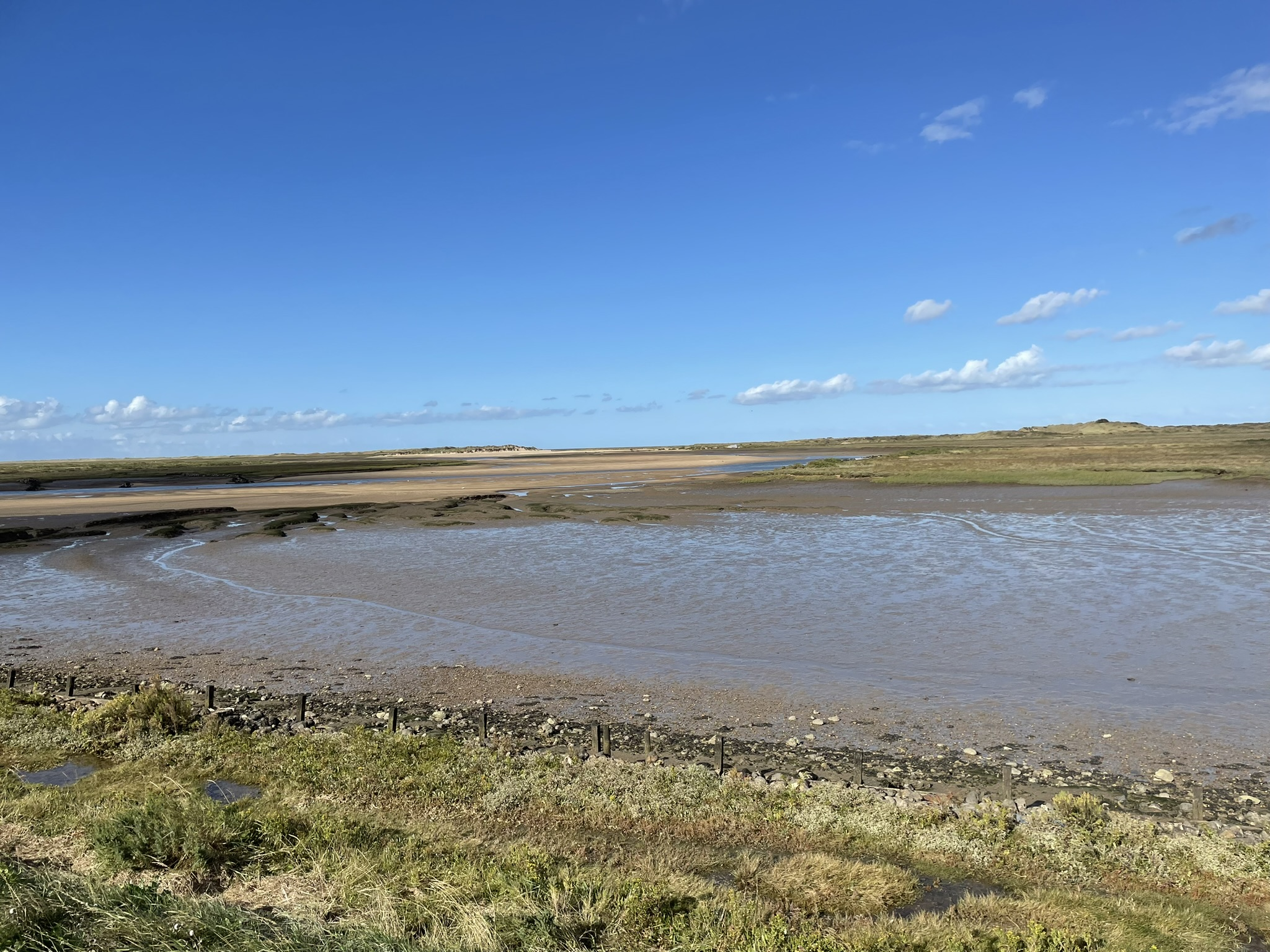
But also, of course, the birds, and the long walks, and in the four weeks we’ve been here we’ve had four days of serious rain. Most have been sunny. We caught the last of the summer birds, chiff-chaffs still singing, and the first of the winter migrants, pink-footed geese and redwings, as well as two birds new for the UK for us, yellow-browed warbler and cattle egret. The saltmarshes are washed pink with sea lavender, the hedges are bright with rose hips and hawthorn fruit and blackberries, and filled with red admiral and fritillary and cabbage white butterflies. Deer – roe and muntjac, fallow and Chinese water – browse field edges and park, and on the mud of the marshes probe godwit and golden plover, redshank and curlew.

Burnham Overy Staithe harbour. My photo.

Yes, but how’s the book coming, you ask? I’m about 30,000 words into the first draft of what’s going to be the most complex book(s) I’ve ever tackled. It’s already clear it isn’t one book. I thought there were four point-of-view characters. Ha! I’ll be lucky to get through the story without adding at least another four. I’m borrowing from the Hanseatic League, medieval universities, Byzantium-North African-Arabic interaction, 12th C silk roads trade, intellectual exchange around the entire Mediterranean, the Mongol invasion of both the middle east and eastern Europe, Genoa’s near trade monopoly in the eastern Med, and the first crusade. All I can do is trust the process – do the research, let it marinate, and write down the words my characters dictate.

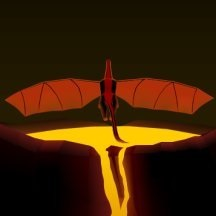
This are the tentative covers for the first two books. If it turns out to be more than a duology, the theme is easy to work with.

You may have noticed I’m not doing many updates here now. I will try to do monthly ones, but a much easier way to keep up with what I’m writing – short stories, poetry, non-fiction and a chance to read Empress & Soldier for free as a serialized novel – is to join me on Substack. My fiction site is History & Imagination; my non-fiction site is Landscapes of Memory.

Until November (I hope).

Marian

I Read Canadian

I Read Canadian Day is a day conceived as ‘a national celebration of Canadian books for young people, with the goal of elevating the genre and celebrating the breadth and diversity of these books.’  But in 2023, its own website acknowledges that it’s also  a day that celebrates the ‘richness, diversity and breadth of Canadian literature.’

As I walked this morning I thought about my own experience with Canadian writing, both as a child and an adult. I’m 65, so back in the early ‘60s, only a few  authors easily spring to mind:  Lucy Maud Montgomery, Morley Callaghan, and Farley Mowat. (Callaghan wasn’t primarily a children’s writer, but his young adult novel Luke Baldwin’s Vow was excerpted in one of our school readers.) A few years later, I read Who Has Seen the Wind by W.O. Mitchell.

All these books touch on what Margaret Atwood argued was the central theme of Canadian literature in the first half to 2/3 of the 20th century—survival. Sometime physical survival, as in Mowat’s Lost in the Barrens; sometimes psychological survival, finding one’s place, a theme in Montgomery and Callaghan and Mitchell. Survival isn’t a theme specific to Canadian literature, of course, and not every literary scholar agreed with Atwood, but it may be telling that when I was being interviewed by another Canadian about my own books last week, and I answered the question about deeper themes by saying that they were in part about the love of place, of a geography and landscape, his comment was, “That is SO Canadian.”

When Jack McClelland (and others) began to actively promote and publish Canadian authors telling Canadian stories in the 1970s, my earlier enjoyment of Mitchell and Callaghan and Mowat and Montgomery (a lot of ‘M’ s! – even Callaghan is ‘Morley” and prominent among Canadian writes of the time were Margaret Atwood and Margaret Lawrence….but I digress) made me predisposed to read what was being published. While those children’s books had been primarily rural stories, resonating with me and my own small farming town upbringing, I began to read of worlds I didn’t yet know: the Toronto-set books of Robertson Davies; the Montreal-set books of Mordecai Richler (another M!). And then into  worlds, too, that didn’t exist – Ottawa writer Charles deLint’s urban fantasies set in not-quite-Ottawa; Guy Gavriel Kay’s Fionavar Tapestry, that starts in Toronto but moves into another world altogether. At about the same time, British Columbia writer Wiiliam Gibson’s Neuromancer created language now part of our everyday speech (Gibson invented the term cyberspace in an earlier short story, but it was Neuromancer, his debut novel,  that brought it into common usage). Neuromancer is the only book to have ever won the Nebula Award, the Philip K. Dick Award, and the Hugo Award.

Perhaps a major turning point for Canadian children’s books came in  1979, Roch Carrier published Le chandail de hockey (The Hockey Sweater), a short story about a boy in rural Quebec who is sent the wrong hockey sweater – a Toronto Maple Leafs jersey instead of a Montreal Canadiens sweater.  Adapted by the National Film Board into a short film, then published as a picture book by Tundra in the early 80s, it is my impression that The Hockey Sweater helped change the demand for Canadian children’s stories, although the timing must also have helped!  The Canadian Children’s Book Centre had been created a few years earlier, and The Canadian Children’s Book News began publication in 1977.  Since then, organizations across Canada have sprung up to  promote Canadian writers of works for children and youth: the Forest of Reading program  run by the Ontario Library Association gives out 10 awards for Canadian children’s books yearly – and of course the  I Read Canadian organization’s mandate is to promote Canadian children’s books and reading.

Canadian children who read become Canadian adults who read (we hope!) and the breadth and depth of Canadian literature has never been wider. Indigenous voices, new-immigrant voices, voices of people marginalized for many and multiple reasons; memoir, poetry, fiction, non-fiction, graphic novels; short stories, novels, novellas, whether published traditionally (by big presses and small) or independently produced; verse on broadsheets, hand-sewn chapbooks and hand-bound books; limited editions and trade paperbacks, ebooks and internet serials – so much to explore, to enjoy, to learn from. And to contribute to, by so many talented, passionate Canadians.

The old order changeth…

Yesterday all the planters and garden statuary that my cousin and her partner had collected over their forty years in this house were removed, going to new homes. Nearly at the top of the long sloping garden, one remains, a Grecian figure carrying wine jugs. It draws the eye, now all the distractions are gone.

The house is free of boxes and much of the furniture, too, cleared two days past by the auctioneers. A door long blocked by a bookcase is now open, creating flow and light in the house. There isn’t a lot left to do, except some cosmetic improvements and the slow bureaucracy of probate.

And with the clutter, both mental and physical, gone, my mind is bubbling with ideas and dialogue and scenes for  the book I’ve had to put off for the last few months. There is flow and focus and illumination, thoughts pushing themselves out of my subconscious like the bulbs bursting into bloom in the garden.  

Empire’s Passing, I already know, is a complex, multi-layered book, not surprisingly. The last book of a long saga has a lot of threads to bring together, questions to answer, farewells to be made. The title is a deliberate nod to ‘This too will pass’, the adage that reminds us that all things, good or bad, are fleeting. “For one brief shining moment…” But there will be hope too, at the end.

It’s going to be a challenge. But one I can finally give the time and attention it needs.

Image by Greg Montani from Pixabay 

Storytellers: New Cover!

Like interior decoration and wardrobes, book covers can need updating. Bjørn Larssen has a new cover for his haunting novel Storytellers, and I’m pleased to show it to you today.

If you don’t tell your story, they will.

Iceland, 1920. Gunnar, a hermit blacksmith, dwells with his animals, darkness, and moonshine. The last thing he wants is an injured lodger, but his money may change Gunnar’s life. So might the stranger’s story – by ending it. That is, unless an unwanted marriage, God’s messengers’ sudden interest, an obnoxious elf, or his doctor’s guilt derail the narrative. Or will the demons from Gunnar’s past cut all the stories short?

Side effects of too much truth include death, but one man’s true story is another’s game of lies. With so many eager to write his final chapter, can Gunnar find his own happy ending?


My 2019 Review:

Set against Iceland’s harsh but beautiful landscape in the late 19th and  early 20th century, Bjørn Larssen’s debut novel Storytellers explores the multi-generational effect of the evasions, embellishments and outright lies told in a small village. The book begins slowly, almost lyrically, pulling the reader into what seems like situation borrowed from folktale: a reclusive blacksmith, Gunnar, rescues an injured stranger, Sigurd. In exchange for his care, Sigurd offers Gunnar a lot of money, and a story.

But as Sigurd’s story progresses, and the book moves between the past and the present, darker elements begin to appear. Gunnar’s reclusiveness hides his own secrets, and the unresolved stories of his past. As other characters are introduced and their lives interweave, it becomes clear that at the heart of this small village there are things untold, things left out of the stories, purposely re-imagined. Both individual and collective histories – and memories – cannot be trusted.

The book was reminiscent of Kazuo Ishiguro’s The Buried Giant, in both theme and mood. Both books deal with the unreliability of memory; both are largely melancholy books. And perhaps there is allegory in them both, too. Storytellers is a book to be read when there is time for contemplation, maybe of an evening with a glass of wine. It isn’t always the easiest read, but it’s not a book I’m going to forget easily, either.


Bjørn Larssen is an award-winning author of historical fiction and fantasy, dark and funny in varying proportions. His writing has been described as ‘dark,’ ‘literary,’ ‘cinematic,’ ‘hilarious,’ and ‘there were points where I was almost having to read through a small gap between my fingers.’

Bjørn has a Master of Science degree in mathematics, and has previously worked as a graphic designer, a model, a bartender, and a blacksmith (not all at the same time). He currently lives with his husband in Almere, which is unfortunately located in The Netherlands, rather than Iceland.

He has only met an elf once. So far.


Purchase links on Bjørn’s website.

Writing for Effect: A Dialogue with Mary L. Schmidt

Mary L. Schmidt writes under her given name and a pen name, S. Jackson with her freshman book a memoir, and she now has 30 books under her belt ranging from three memoirs to comic books, one recipe book, and a lot of children’s picture books. She chose to discuss three topic from three different books for this conversation.

  1. Childhood cancer is scary, horrific, and all consuming.

After surviving the cruel rage of tyranny from her mother and ex-husband, Sarah Jackson traveled a new path, a journey of loss, heartbreak, and ultimately strength. How do we survive the unthinkable, our child suffering from a terminal illness? They say there is no greater loss than that of a child; I say losing a child is the king of loss. Sometimes the thing that helps us survive it, is knowing we are not alone. Bestselling author, Sarah Jackson, will take you on her journey of hope and strength as she provides an intimate raw look at her life.

“I want to go to Heaven, Mom.” as my son lay in his hospital bed in the presurgical area.
“We don’t always get what we want in life, so you might have to come back to me.” I replied as my heart was breaking.

When Angels Fly

One cannot stop an angel from flying and when a child of age five wants to go to heaven, ask your child why, and what he or she knows of heaven. Don’t fear your child’s death but ask them. They will tell you what they know or have seen. My little boy had already spoken with Jesus.


Marian:
In this excerpt, you speak to the role of faith – both a mother’s and a child’s belief – in surviving the unthinkable. No parent should outlive their child, it is often said. But not all parents nor children will have a belief in a divine being. One of your stated goals is for people going through this life-altering experience to know they are not alone. Does your book speak to those who do not believe in a divine being or an afterlife, and if so, can you explain how?

Mary:

Great question! I can answer this one as my ex-husband is a practicing atheist and for his actions. My arm was wrapped around my son the final moments of his life. My ex wanted medicine for when my son’s heart stopped but no compressions. I wanted nothing done. I knew where my little boy wanted to go, and I knew he was moments away from death as he was in transition.  I had to beg my ex three times to let him go as his heart stopped for the third, and last time. He nodded his head yes. I rocked my dead son, after all tubes and such were removed. I talked to him in heaven. My ex simply watched. Then got up from the rocking chair and motioned for my ex to sit, after which I placed my son in his arms. He held him a few minutes then left the ICU. Essentially, as an atheist, my ex had to deal with his grief and such internally without help from the divine God. That led him to get drunk. But I turned to Jesus, and I was not alone.


2. A book on bullying evoking change in children.

In ‘The Big Cheese Festival’, we meet Stubby Mouse and his family and friends. We learn that Stubby Mouse has a secret, that he is being bullied by another mouse, simply because his tail is short. This story illustrates how everyone is different and unique, and it is a delightful read with adorable and eye-catching, cute illustrations for both children and adults. Take a stand against bullying today! 

“See! I did it! I stood up for myself and Cutter Mouse can’t bully me anymore.” replied Stubby Mouse.

The Big Cheese Festival

Thus, Stubby Mouse’s self-esteem increased, and he no longer allowed himself to be bullied by others.

Marian:

I’m curious to know what it is Stubby did to stand up to Cutter!  I like the choice of a simple thing like a short tail, because children can fixate on the smallest difference. How did you portray the bullying? Who helps Stubby stand up for himself?

Mary:

Stubby Mouse was happy and excited when he woke up on the morning of the Big Cheese Festival. All the mice in his neighborhood looked forward to this big event. There would be dancing and lots of cheese, and they would elect a King and Queen of the Festival. This was Stubby’s first Big Cheese Festival, but when Cutter Mouse came to pick up Stubby’s brother, Zippy, he made fun of Stubby’s short tail. Cutter laughed and said that no girls would want to dance with him. Zippy got angry with his friend for picking on his little brother, but the damage was done. After Zippy and Cutter left, Stubby began to cry. Cindy (a girl mouse) heard him crying inside the house, and she wanted to know what was wrong. She told Stubby that she liked him the way he was, and thought Cutter was an awful bully. They went to the festival together, and Cutter made fun of Stubby and knocked him down onto his short tail. Stubby informed Cutter that he would not be bullied anymore, and he pushed Cutter down on his normal size tail. This impressed all the mice attending as they loved Stubby and his bravery. Stubby became King of The Big Cheese Festival for his bravery.


3. A book regarding shyness in children as related by a turtle who was too shy to come out of his shell.

Tommy Turtle is a shy land turtle who likes to hide inside his shell. Tommy Turtle helps parents and teachers reinforce positive behaviors in an imaginative setting of a park and mud puddles as they learn about land turtles and shyness. Learning and sharing are essential for social development in all children.

“I’m scared to come out, I can’t splash the water puddles like the other turtles.” replied Tommy Turtle.

“I will be at your side, and you can jump when I jump. Okay?” said Jerry Turtle.

Tommy took a deep breath and poked his head out of his shell. He watched the other turtles playing, and finally decided to join in. Tommy made the biggest splash in the puddles, and learned that he could have fun, play, and be accepted by other turtles. Tommy also learned that he didn’t have to talk when he was a little more nervous. It was okay to watch, listen, and learn. It was okay to be shy at times. Tommy had the best afternoon, ever!

Tommy Turtle

Marian:

Is Jerry the same age as Tommy?  Or is he an older mentor?  Why does he take Tommy under his wing?  As you indicate, these are important skills for children to learn, but it is something they can do on their own without adult modelling? 

Mary:

Jerry and Tommy are nearly the same age. Tommy is new to the park this story is set in as some kids change schools, move around, and it’s natural to be shy. Tommy was shy and hid inside his shell because he didn’t know the other turtles. In Jerry’s case, he had been new to the same park the year before. Jerry befriended Tommy and drew him out of his shell. Tommy played and overcame his shyness. In the end, Tommy decided that he would help other new turtles when they arrived in the park, just like Jerry helped him. Children can read this book on their own and model their experiences to the experiences Tommy went through.


Find all books published as Sarah Jackson here and as Mary L. Schmidt here, or connect with Mary at her website www.whenangelsfly.net.

Would you like to be part of this series? Authors published or unpublished are welcome – leave a comment and I’ll get back to you.

How Has Writing Changed Me?

A guest post by Raina Nightingale

I hardly remembered when I first started to write. I was eight years old, having just learned to read. And what I wrote first was something that was at least half fanfiction: sometimes simply out of love and enjoyment, I would write stories very much like those I read, but other times, when it seemed to me there was something lacking in a book, or something that was wrong and not the way I wanted it to be, I would try to write a story that was like it, but different.

I think in stories. Both reading them and writing them is a big part of my thinking. In some ways, the exploration that comes from both is similar, but in some ways it is different, and different books are very different to read and very different journeys, though I do love some good escapism now and then (especially if it has nice world-building that speaks to me, more on that later)! In reading, I explore other people’s thoughts and am sometimes prompted to consider things about myself and what I like from angles I might not have considered on my own, and it does not take the same energy that writing does.

But writing, making up stories and exploring them as I will, is how I really think, how I discover, challenge my thinking, and consider new thoughts that I find in other places or other people suggest. Or sometimes thoughts that seem to come out of nowhere. Character, plot, and world-building can all be a part of thinking to me. A lot of my world-building, even – especially – the more magical parts of it, is inseparable from my appreciation for and understanding of this world, and helps me to articulate things I see better.

My characters are more wild. Sometimes I don’t understand them very well, and sometimes what I think I ought to have learned from them, whether their relationships with each other or their responses to their environments, I’m not at all sure that I do.

Probably most of my characters share some likeness with me, even if it’s as trivial as an aesthetic appreciation or a taste in cuisine. Some of them are very unlike me, while others can be largely deep explorations of aspects of my personality, dreams, or desires, or questions about these might be, but in general I don’t think too much about whether a character is like or unlike me, or how. Yet I always find it fascinating when I’m writing a character like none that I have ever written before, and I keep having moments of, “Oh, this is how someone who is like this thinks!” It’s really quite surprising. Yet, in real life, I sometimes feel like my empathy, my ability to understand and feel for people, is far behind my characters. Yet what would it be if I didn’t try? Or what would my stories be if I didn’t try in real life?

It’s hard to enumerate, or even really define, how writing and stories have been a part of my life and thinking, since it is so interwoven altogether. I don’t think there’s anything where it can be fully separated: sometimes I learn, through writing a character who enjoys something, to have more appreciation for it myself. Some recent examples are that I see the beauty in the ocean so much more after having written Corostomir, a man who is in love with the ocean, and writing a dry plains-loving people sharpens my appreciate for desert climates, something that used to not exist at all: the greener and the wetter the better, I thought.


Raina Nightingale has been writing fantasy since she could read well enough to write her stories with the words she knew (the same time that she started devouring any fiction she could touch). She enjoys rich characters and worlds where magic and the mundane are inseparable. She calls her fiction ‘Dawndark’.

Author/Review Website: https://www.enthralledbylove.com

Universal Book Link for all my books: https://books2read.com/raina_books

Twitter: https://twitter.com/Areaer_Novels

Goodreads: https://www.goodreads.com/author/show/20243136.Raina_Nightingale


Are you a writer who’d like to contribute to this series? Leave a comment below and I’ll get back to you!

September

Image by Brigitte Werner from Pixabay 

Even after years of retirement, I still plot the rhythms of the year by the start of school here in Ontario. The first week of September starts a new year, as it has since I was five and beginning kindergarten. New clothes, new shoes, new pencils and erasers, new teachers.

I left home for the first time, to attend university 500 km away, in this week in 1976.  44 years ago, I met the man who would become my husband in this week, and 41 years ago in early September, I married him.

For another 33 years, it was the start of the academic year, first studying, then teaching. Even when I was out of grad school and was doing research, no longer a teaching assistant, the university campus changed. Students arrived for the fall semester, and the summer quiet gave way to the buzz of autumn energy.

Eight years ago, I started the chemotherapy that saved my life in this week, too. The year after, when the calendar clicked over to September and neither I nor my husband went to work, it was the real start of retirement.

In the past eight years, I’ve written six books, every one between September and a date 6 to 12 months later. I finished the latest (finished the story; there’s still a lot of work to do) in the last week of August; I began the book in early September a year before. September is still for beginnings: new notebooks, fresh pencils, new courses, new students, new patterns, new books.

It’s new patterns I’m looking for this year. The next book might wait until the calendar’s new year, January. Complicated by the restrictions of the pandemic, I’ve spent far too much time in the last two years at my desk, writing, blogging, doing marketing and promotion, in Zoom meetings, on social media. I need a breather, and I intend to take one.

Across the road in the university’s arboretum, and along the river trails, September brings fall warblers, migrating south. Kettles of turkey vultures will circle above; great egrets and sandhill cranes will move from marsh to marsh; blue jays will gather in flocks, calling raucously. The hedgerows are laden with berries, and the crabapples hang heavy on the trees this year. Thrushes and waxwings and blackbirds gather. September is a new start for many birds, too, the beginning of their long journey to wintering grounds.

I expect I’m wintering here in Ontario again this year, and when it’s cold and the snow is deep and the paths icy underfoot, I’ll be glad of the work to keep me engaged and the computer to keep me connected. But for the next couple of months, I’m putting life away from both first.

A Dialogue on Writing for Effect: Submissions Wanted

Image by congerdesign from Pixabay 

In planning this blog for the next year(?) or so, I’d like to do a series of author spotlights with a difference – a dialogue rather than a guest post or interview.  This is how I envision it working.

Part One

You tell me (via a Word document) about all or some of your work (not plot, but in terms of genre, themes, setting, mood), then identify three things you care passionately about in your writing. (Examples could be evoking setting, witty dialogue, thought-provoking themes, raising awareness of social issues, complex plot….whatever it is YOU care about most.)

Then you choose an excerpt (up to 100 words or so) that illustrates each of those three topics (so three separate pieces, from any of your works)  and discuss how this excerpt meets the goals you had for it.

Send those to me  (along with all the usual links). You don’t need to be published.

Part Two.

I will describe my own reactions to those excerpts and ask questions about them. I won’t be negative, but I might ask about your reasons to choose tense, POV, specific words, etc. 

I’ll send those questions (and others that occur to me as I read your submission) back to you; you answer them to create a blog post which is a dialogue about your writing. The idea is not only to spotlight your work, but illustrate the variety of ways the techniques of writing can be used, and how styles differ.

Scheduling will be likely first come/first served, unless there is a specific date you want for promo purposes. Frequency will depend on the number of submissions I get! 

Let me know if you’re interested via an email to marianlthorpe at gmail dot com. I’m happy to have both submissions from you for ‘How Writing Changed My Life’ and this one. I reserve the right to choose whose submissions I decide to use.

Research, Imagination, Empathy

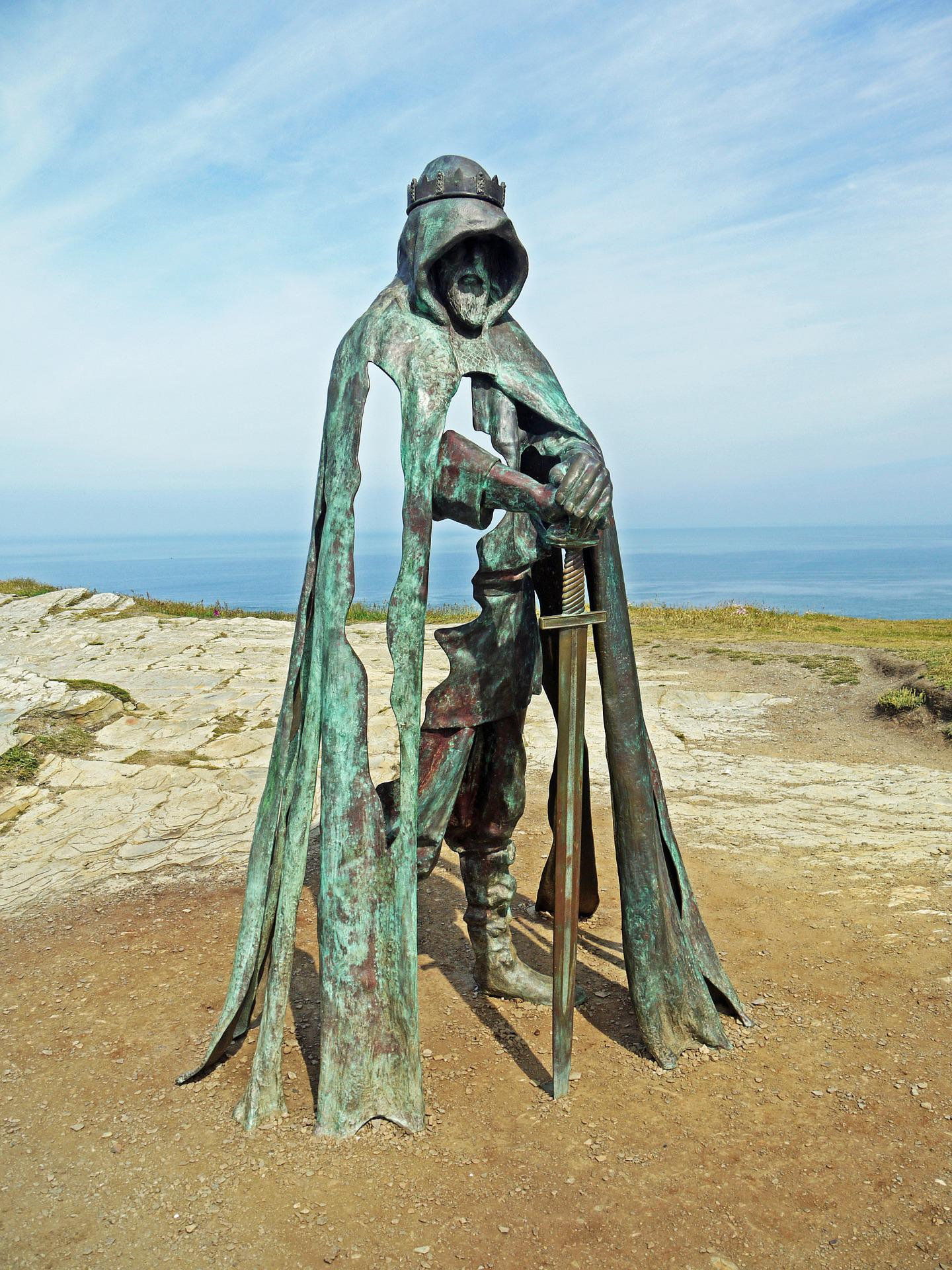
Bernard Gagnon, CC BY-SA 4.0 https://creativecommons.org/licenses/by-sa/4.0, via Wikimedia Commons

In both my next two novels, the work in progress, Empress & Soldier, and the planned last book of my series, Empire’s Passing, death and grief play an important role. In Empress & Soldier deaths transform my central characters in different ways. For both, deaths are the pivots that change the directions of their lives. One grieves in ways he cannot articulate (he may not even realize he is grieving); one is forced by circumstance to pick up the pieces of a shattered life far too soon.

The personal relationships of the characters of my Empire’s Legacy series have always been a metaphor, or a reflection, of the political relationships among their countries, their creation of an unusual ‘found family’ and the depth and expression of love among them echoes their work towards understanding and cooperation among their nations. The loss, in Empire’s Passing,  of two of these central characters, deeply loved, deeply grieved, will also reflect the fragility of the political alliance; both families and political unions can be strengthened or destroyed by catastrophic events.

I am 64 years old. In my life death has, of course, touched mine. But not yet the deep, life-changing grief of losing life partners that my characters will experience. My parents died at 93 and 99: I mourned them, miss them still, but life didn’t change in any significant way. My brother’s too-early death came closer, hit harder, but I wasn’t left to find a way forward alone.

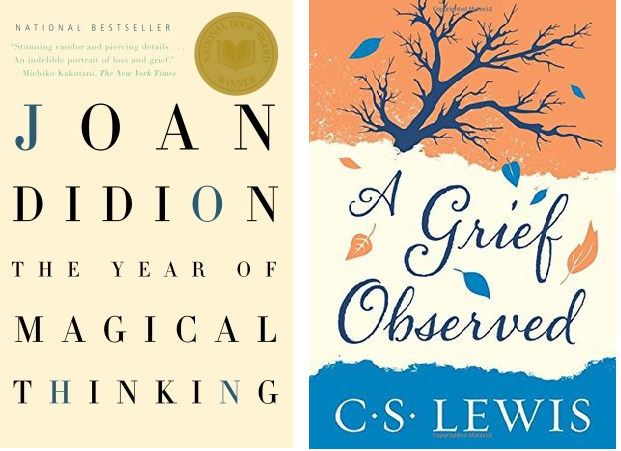
So I turned to others accounts: CS Lewis’s A Grief Observed, Joan Didion’s The Year of Magical Thinking. Personal accounts, too: friends, family – not interviews, but remembering what they said or described. Listening, squirreling away words and concepts, as writers do.

I know what my characters do, in response to their losses. The challenge is entwining the feelings, the mental response, the confusion and darkness and irrationality with their actions in a way that is plausible and to some extent explanatory. Grief is universal but intensely personal, and in what I am attempting I am conscious I am not writing from lived experience,  but from research, imagination, and empathy.  Will my characters, who live only on the page and in a world that has never existed, express their pain and grief and love in ways that speak to readers? I will find out in time, I suppose.

Featured Image: Stele of Titus Fuficius in Split Archaeological Museum, Split, Croatia